
Reviewed · VALLEY OF THE KINGS TOURS
All-Inclusive Full Day To Explore Luxor’s East & West Bank
Ancient Egypt gets very real in Luxor. This private six-hour tour links the city’s major temples and tombs in one carefully packed day, taking you from the colossal columns of Karnak to the painted burial chambers of the Valley of the Kings. I especially like the private transportation and the chance to explore with an Egyptologist rather than simply walk from monument to monument. I also like that the main entrance fees, bottled water, and hotel pickup are included.
The main caution is the pace. Five major stops in about six hours leaves little room to linger, and the title’s all-inclusive wording does not cover lunch, drinks, or special tomb tickets. Still, at $89 per person, this is a strong value if you want Luxor’s essential sights handled in one day.
In This Review
- Key points to know before booking
- Why this Luxor tour works well in one day
- Karnak Temple: begin among colossal columns
- Luxor Temple: festivals, reused sacred ground, and layered history
- Crossing to the West Bank and the Valley of the Kings
- Hatshepsut’s Temple and the story of Punt
- Colossi of Memnon: a quick stop with enormous scale
- What the guide adds to the day
- Is $89 a fair price?
- Who should book this experience?
- Booking details and cancellation
- FAQ
- How long does the Luxor East and West Bank tour last?
- Is hotel pickup included?
- Is this a private tour?
- Are entrance fees included?
- Are special tomb tickets included?
- Is lunch included in the price?
- Which sites are visited?
- Is the tour suitable for all fitness levels?
- What is the cancellation policy?
- Should you book it?
Key points to know before booking
- Karnak and Luxor temples anchor the East Bank: You see two major religious centers before crossing the Nile.
- The Valley of the Kings includes standard admission: Special tombs such as Tutankhamun, Ramses VI, and Seti I cost extra.
- The private format gives your group the guide’s full attention: Only your party participates.
- The West Bank has the day’s strongest visual contrast: Tombs, cliffs, a tiered temple, and the Colossi of Memnon follow one another quickly.
- Guiding is the tour’s biggest strength: Guides praised by name include Rania Raouf, Shimaa Arabi, Ghada Kamel, Emil, and Ahmed Aziz.
- Six hours means an efficient introduction, not a slow archaeological study: You will see a lot, but you may want extra time at one or two sites.
Why this Luxor tour works well in one day
Luxor is split by the Nile, with major monuments on both banks. The East Bank was the center of temples, festivals, and daily religious life. The West Bank became the land of royal burial and memorial temples.
That division gives this outing a sensible shape. You begin with the vast temple precincts of Karnak and Luxor, then cross to the royal tombs and funerary monuments on the western side. It is a lot of ancient Egypt in one sitting, but the sequence helps you understand how the city functioned.
Your air-conditioned vehicle matters here. Luxor can be intensely hot, and the ride between sites gives you a short break from sun and stone. Pickup and drop-off are provided from hotels on the East Bank and in downtown Luxor, making this especially useful if you do not want to arrange taxis between monuments.
Because the tour is private, you are not sharing the day with a large mixed group. That can make a real difference at the Valley of the Kings, where you may want to ask about tomb decoration, burial customs, or the difference between a royal tomb and a temple. The guide can also adjust the explanation to your interests, though the overall six-hour schedule still limits how much time you have at each stop.
More All-Inclusive Day Trips in Luxor
- Luxor: West and East Banks All-Inclusive Tour & Balloon Ride
★ 4.5 · 415 reviews - Luxor: West Bank Kings and Queens All-Inclusive Tour & Lunch
★ 4.5 · 298 reviews - Hurghada: Luxor Highlights All-Inclusive Tour & Balloon Ride
★ 4.4 · 241 reviews
Karnak Temple: begin among colossal columns
Karnak is the grandest opening stop. This is not one temple in the simple sense, but a huge complex of pylons, chapels, courts, columns, and damaged structures built over many centuries. Work began during the Middle Kingdom under Senusret I and continued into the Ptolemaic period.
The complex was mainly devoted to the Theban triad: Amun, his consort Mut, and their son Khonsu. Your guide’s job here is important because the site can feel like a maze of stone without a clear explanation of who built what and why.
Allow about an hour. That is enough to grasp Karnak’s scale and see its major features, but not enough for a slow inspection of every court and chapel. I suggest staying close to your guide at first, then using any remaining time for photographs and a second look at the parts that caught your attention.
Karnak is also the place where the tour’s pace becomes clear. You are not spending half a day at one monument. You are getting a guided introduction to several of Egypt’s greatest sites, with transportation doing the hard work between them.
Luxor Temple: festivals, reused sacred ground, and layered history
Luxor Temple feels more compact than Karnak, but its location and design make it just as rewarding. The inner section was built by Amenhotep III, while Ramses II added much of the outer portion. Reliefs on the walls show scenes connected with ancient festivals, giving you a glimpse of public religious celebrations rather than only royal burial customs.
One of the most interesting details is the mosque of Abu Al-Haggag inside the temple area. It was built over the remains of a church, which itself had been built within the ancient temple. This is a useful reminder that Luxor was not frozen after the pharaohs. Later communities reused and reshaped these sacred places.
Chapels associated with Thutmose III and Alexander the Great are found toward the rear. A good guide can help you notice these later additions instead of treating the monument as one single construction project.
The planned visit lasts about an hour. That works well after Karnak because you get a second temple with a different feel, but you should not expect time to read every inscription or study every relief. If temples are your main interest, ask your guide at the beginning how the available time will be divided.
Crossing to the West Bank and the Valley of the Kings
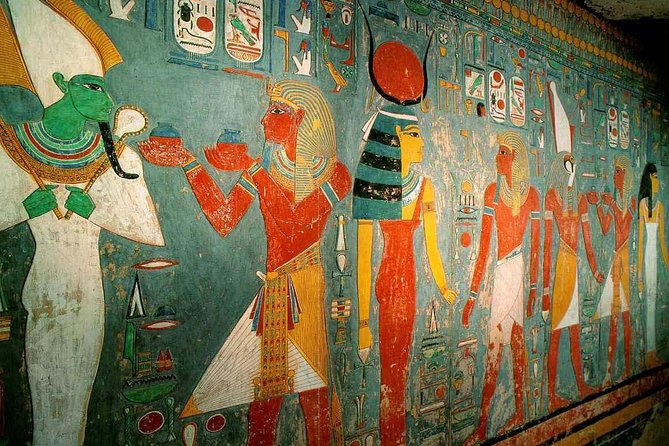
The Valley of the Kings is the emotional center of the day. Here, New Kingdom rulers were buried in rock-cut tombs rather than in freestanding pyramids. The setting is stark, dry, and enclosed by desert hills, a sharp change from the open temple spaces on the East Bank.
Standard entrance fees are included, but special tombs are not. The extra-ticket choices listed for this experience include the tomb of Tutankhamun, Ramses VI, and Seti I. This is an important budget point. The base price gets you into the valley and its regular selection, but you should expect to pay more if you want one of the separately ticketed tombs.
The tomb of Tutankhamun is famous, but fame does not automatically make it the best choice for every visitor. It is closely tied to the young king and the discovery of his burial, while other tombs can offer more extensive painted decoration. Ask your Egyptologist guide which option best matches your interests before buying an extra ticket.
The visit is scheduled for about an hour. That can cover several standard tombs, but conditions inside are physical. You may walk over uneven ground, use steps, and move through narrow passages. The tour asks for a moderate level of fitness, and that is fair advice. Bring modest clothing, water, and shoes you can walk in comfortably.
More West Bank and Valley of the Kings days:
- Hurghada: Luxor Valley of the Kings & Tutankhamun Tomb Trip
★ 4.7 · 13,208 reviews - Luxor Day Tour: Valley of Kings & Queens & Hatchepsut Temples
★ 5.0 · 1,496 reviews - Luxor: Valley of the Kings and Hatshepsut Temple Day Tour
★ 4.4 · 1,404 reviews - Hurghada: Luxor Tour with Valley of Kings, Karnak & Tut Tomb
★ 4.6 · 1,082 reviews
Hatshepsut’s Temple and the story of Punt
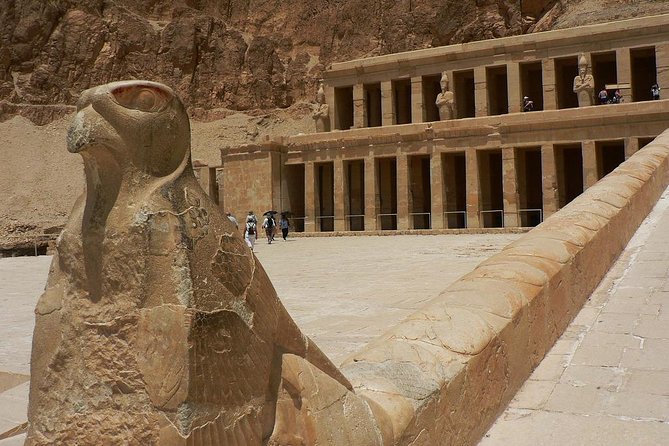
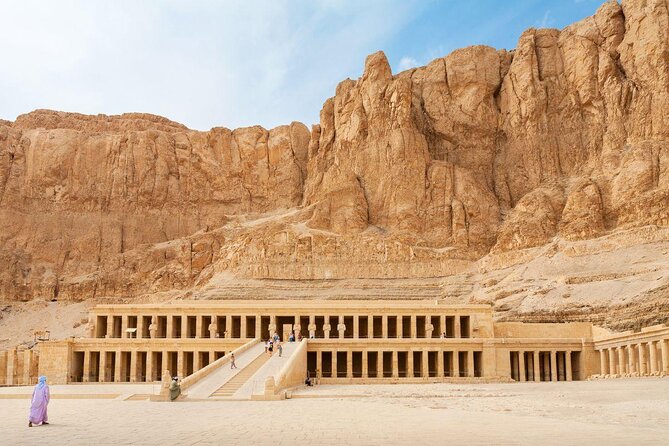
The Mortuary Temple of Hatshepsut rises at Deir el-Bahari in three levels connected by ramps. Its broad terraces and clean lines give it a different visual character from the crowded stonework of Karnak and Luxor Temple.
The temple is dedicated mainly to Amun-Ra and includes scenes of Hatshepsut’s divine birth. The reliefs of her commercial expedition to Punt are especially valuable because they show one of Egypt’s best-known long-distance trading ventures through images of people, animals, plants, and goods.
Hatshepsut ruled as king in a world where royal power was usually presented through male imagery. That makes the temple an ideal place to ask your guide how she represented herself and how later rulers treated her memory. The site becomes much more than a set of terraces when you understand the political choices behind the images.
The planned visit is one hour. The ramps make the structure easier to understand as you climb, but the open setting offers little shade. In the warmer months, this stop can feel tiring. Bottled water is included, which is helpful, though you should still plan around the heat and avoid assuming that the vehicle’s air-conditioning replaces sun protection.
Colossi of Memnon: a quick stop with enormous scale
The final stop is brief, only about 15 minutes, but the Colossi of Memnon are worth seeing. These two seated statues represent Amenhotep III and once guarded the entrance to his mortuary temple.
The statues are free to visit, so there is no added admission charge here. Their scale is the point. After spending hours looking at carved walls and enclosed tombs, you finish with two huge figures in an open setting.
Do not expect a long guided visit. This is a photograph and orientation stop, not a full archaeological session. The short pause also helps keep the six-hour schedule workable before you return to your hotel.
What the guide adds to the day
The monuments are impressive on their own, but the guide determines how much you take away. The strongest praise for this company centers on Egyptologists who combine clear explanations with patience and flexibility.
Rania Raouf is praised for bringing the sites to life and for reading hieroglyphs. That skill can change the way you look at temple walls, since you are not only seeing decorative symbols but learning how names, titles, and religious statements were recorded.
Shimaa Arabi is praised for her knowledge, warmth, and ability to create a welcoming setting for families. Ghada Kamel is associated with well-organized Luxor visits, while Emil is praised for storytelling and for shaping a program around specific interests. Ahmed Aziz receives repeated praise for his historical explanations, care for families, and willingness to help with food arrangements on wider Egypt trips.
You are not guaranteed a particular guide unless the company confirms one in advance. Still, these names give you a useful idea of the level of guiding the operator aims to provide. If you have strong interests, such as hieroglyphs, royal women, tomb art, or family travel, tell the company when booking.
Is $89 a fair price?
At $89 per person, the tour offers good value for a private day in Luxor. The price includes an air-conditioned vehicle, private transport, an Egyptologist guide, main entrance fees, bottled water, hotel pickup and return from the East Bank or downtown, and tax.
Lunch is not included. Neither are other meals or drinks beyond the bottled water, and special tomb tickets cost extra. The phrase all-inclusive should therefore be read as covering the core tour arrangements, not every expense you might face during the day.
The value improves if you are traveling with family or friends because group discounts are offered. A private vehicle and guide also remove the hassle of arranging several separate rides, negotiating transport, and learning the layout of both banks on your own.
The price is less attractive if you have several days in Luxor and prefer slow visits. In that case, separate half-day outings may give you more time at each monument. One person who split the East and West Banks into two morning tours found that approach preferable for a less rushed experience. That is a useful comparison, especially in the summer heat.
Who should book this experience?
I would choose this tour if you have one free day in Luxor and want a well-organized introduction to the major monuments. It suits first-time visitors, families who want a private guide, and anyone who values transport and context over independent wandering.
It is also a sensible choice if you are arriving in Luxor without a detailed plan. The guide, vehicle, and entrance arrangements cover the basic structure of the day, leaving you to focus on the monuments.
I would hesitate if you dislike packed schedules, want extended photography time, or already know that you want to study every tomb and inscription. The six-hour format is efficient, not leisurely. The West Bank alone can fill a full day for visitors with a strong interest in archaeology.
Heat is another practical concern. One August visit was described as very hot, although the quieter season made the conditions easier to accept. If you travel in summer, start with realistic expectations, drink water, and use the air-conditioned vehicle as a proper recovery break between sites.
Booking details and cancellation
Confirmation is provided when you book, and the experience is offered as a private activity for your group only. Pickup is available from hotels on Luxor’s East Bank and in downtown Luxor.
Free cancellation is available if you cancel at least 24 hours before the local start time. Cancellations or changes made less than 24 hours before the start are not refunded or accepted. Tipping is not included, so plan to handle that separately if you feel the guide and driver have served you well.
FAQ
How long does the Luxor East and West Bank tour last?
The tour lasts approximately six hours.
Is hotel pickup included?
Yes. Pickup and drop-off are included from hotels on Luxor’s East Bank and in downtown Luxor.
Is this a private tour?
Yes. Only your group participates in the activity.
Are entrance fees included?
Main entrance fees for the listed sites are included.
Are special tomb tickets included?
No. Optional tickets for tombs such as Tutankhamun, Ramses VI, and Seti I are not included.
Is lunch included in the price?
No. Lunch, other meals, and beverages are not included. Bottled water is provided.
Which sites are visited?
The tour visits Karnak Temple, Luxor Temple, the Valley of the Kings, Hatshepsut’s Temple at Deir el-Bahari, and the Colossi of Memnon.
Is the tour suitable for all fitness levels?
A moderate level of physical fitness is recommended.
What is the cancellation policy?
You can receive a full refund if you cancel at least 24 hours before the experience start time. Cancellations and changes made less than 24 hours before the start are not accepted or refunded.
Should you book it?
Book this tour if you want the main Luxor sights in a single private outing, with transport, entrance fees, and an Egyptologist guide handled for you. The guide quality appears to be the central strength, especially if you are paired with someone like Rania, Shimaa, Ghada, Emil, or Ahmed.
Skip it, or split it into two half-days, if you want time to linger. At $89, it is a practical and worthwhile introduction, but its value depends on accepting the pace. For a first look at Luxor, I would book it. For a careful study of the tombs and temples, I would ask for a slower custom schedule.
More Full-Day in Luxor
- Luxor: Shared Full-Day Tour to Luxor West and East Banks
★ 4.5 · 1,812 reviews - Full Day Tour to East and West Banks of Luxor
★ 5.0 · 1,449 reviews - Luxor : Full Day Tour to Luxor West and East Banks & Lunch
★ 5.0 · 870 reviews - Full Day Tour of Luxor West Bank Temples and Tombs (Private)
★ 5.0 · 722 reviews
Newly listed around Luxor
- Luxor Nile River Private Felucca Ride at Sunset★ 4.5 · 20 reviews
- Marvelous Luxor East and West Bank Private Tour with Lunch From Airport /Hotels★ 4.5 · 17 reviews
- 3-Day Luxor Aswan and Abu Simbel Historical Sites Private Tour★ 5.0 · 34 reviews
- First impression of Luxor-Explore secrets of Luxor by horse carriage★ 5.0 · 50 reviews
- Private tour : Sunset Felucca Ride in Luxor★ 5.0 · 16 reviews
- Nile cruise between Luxor and Aswan: Sail the best temples in Egypt★ 5.0 · 72 reviews
- Experience the Magic of a Luxor Sunrise Hot Air Balloon Ride★ 5.0 · 17 reviews
- 5 Days 4 Nights from Luxor to Aswan on Gentle Breeze Dahabyia★ 4.5 · 24 reviews
Valley of the Kings Tours, compared.
Luxor Valley of the Kings & Tutankhamun Tomb Trip
Read our review →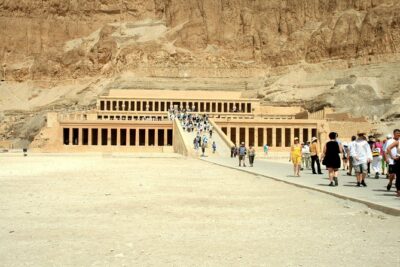
Small group Hurghada to Luxor, Valley of the Kings by Van
Read our review →Luxor Day Tour: Valley of Kings & Queens & Hatchepsut Temples
Read our review →Valley of the Kings and Hatshepsut Temple Day Tour
Read our review →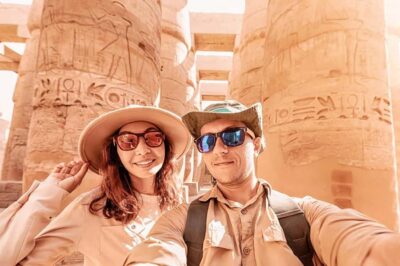
Luxor Tour with Valley of Kings, Karnak & Tut Tomb
Read our review →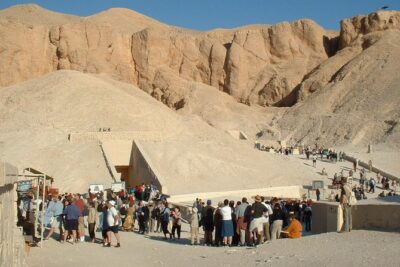
Valley of Kings, Hatchepsut Temple ,Karnak & Luxor-DayTour
Read our review →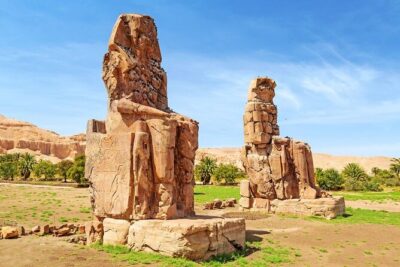
Full Day Tour of Luxor West Bank Temples and Tombs (Private)
Read our review →
Small Group Excursion to Luxor Valley of the Kings from Hurghada
Read our review →Browse the lists this tour appears in