
Reviewed · HORSES
First impression of Luxor-Explore secrets of Luxor by horse carriage
Ancient temples, modern horse power, and one big caveat. This four-hour Luxor tour offers a lively first look at the East Bank, pairing carriage travel with guided visits to Karnak Temple, Luxor Temple, the Avenue of Sphinxes, and Abu El-Hagag Mosque. I like the Egyptologist guide and the chance to see several major sights in one outing. I also like the useful riverfront setting and the included transport, which saves you from haggling with carriage drivers.
The main consideration is that the horse carriage arrangement may not match the title or your expectations. One guest reported walking to the first sight rather than meeting the guide by carriage, while another described a serious horse welfare incident on a hot day. Those concerns deserve careful thought before booking, especially if animal welfare is important to you.
In This Review
- Key points to know before booking
- What this Luxor outing is trying to do
- Meeting at Luxor Museum and setting off
- Karnak Temple and the scale of ancient worship
- Luxor Temple and the First Occasion
- The Avenue of Sphinxes, restored route between temples
- Abu El-Hagag Mosque inside an ancient temple
- What the horse carriage adds, and what it may not
- The guide and the size of the group
- Is $30 good value?
- Who should book this East Bank tour?
- FAQ
- How long does the Luxor horse carriage tour last?
- Where does the tour begin?
- How do I identify the tour leader?
- Where does the tour end?
- Are Karnak Temple and Luxor Temple admission tickets included?
- Is an Egyptologist guide included?
- Is horse carriage transportation included?
- How large can the group be?
- Can I cancel for a full refund?
- Should you book it?
Key points to know before booking
- Four hours on Luxor’s East Bank: The route links Karnak Temple, Luxor Temple, the Avenue of Sphinxes, and Abu El-Hagag Mosque.
- A guide named Ababoub received warm praise: One couple singled him out as an excellent host who made the historic sites enjoyable.
- Temple admission is extra: You pay separately for Karnak and Luxor temples, listed at 200 Egyptian pounds, about $12 total.
- The carriage service needs clarification: The experience is promoted around horse-carriage travel, but one booking did not begin that way.
- Animal welfare is a real concern: A report described an emaciated horse collapsing in the heat. Ask questions before committing.
- The group may be large: The maximum listed group size is 50 people, so the feel may vary from intimate to crowded.
What this Luxor outing is trying to do
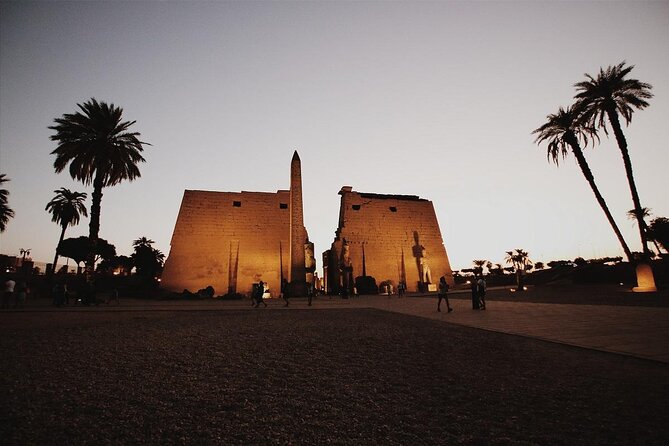
Luxor is built around ancient Thebes, and its East Bank sights fit together well in a half-day visit. Karnak was the great religious complex. Luxor Temple served royal and religious purposes farther south. The Avenue of Sphinxes once connected the two areas, and the Abu El-Hagag Mosque shows how later faiths reused older sacred buildings.
That makes the route sensible for a first look at Luxor. You get several major landmarks without arranging separate taxis or negotiating with carriage drivers. The horse carriage is meant to add local color and offer open-air views along the Nile.
The tour lasts about four hours and begins at the Luxor Museum. Look for the guide holding a red flag in front of the museum on Kornish Al Nile. The activity returns to this same meeting point, which is handy if you are staying near central Luxor or want to continue along the river afterward.
The strongest part of the plan is its mix of movement and walking. You do not spend the whole outing sitting in a vehicle, but you also do not have to walk between every sight. The weaker part is the uncertainty around how much of the route is actually by carriage. Confirm that before paying.
A few more Luxor outings to price up
- Luxor: Scenic Camel or Horse Ride
★ 3.9 · 24 reviews - Hurghada: Red Sea & Desert Horse Riding Tour with Swimming
★ 4.8 · 2,198 reviews - Hurghada: Sea & Desert Horse Tour, Stargazing, Dinner & Show
★ 4.5 · 1,592 reviews
Meeting at Luxor Museum and setting off
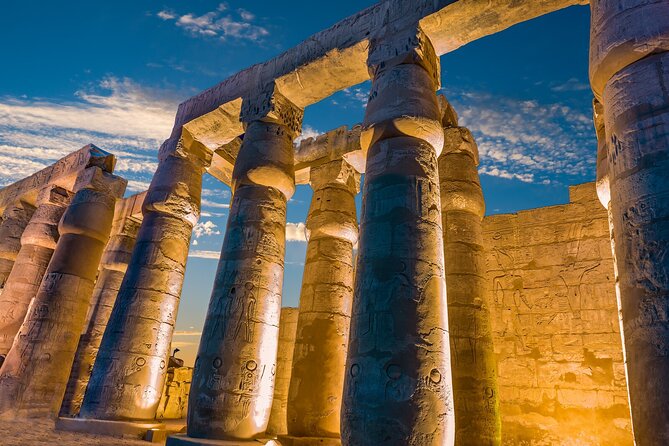
The Luxor Museum is used as the starting point, not as a scheduled sightseeing stop. You meet outside, where the guide should be holding a red flag. The listed time here is about 10 minutes, mainly for gathering the group and beginning the journey.
This is a practical meeting place because it is easy to identify. Still, you should arrive with the tour details ready on your phone and allow a little extra time to find the correct person. The experience allows mobile tickets, and confirmation is provided at booking.
The description presents the carriage as the main way to move between sights. Yet one guest found the title misleading and walked to the first point of interest instead. That may have been a one-off operational problem, but it is enough reason to ask the operator exactly where the carriage begins and how much riding is planned.
Karnak Temple and the scale of ancient worship
Karnak receives about an hour, not counting the time needed to buy or use your admission ticket. The entrance fee is not included. The listed cost for Karnak and Luxor Temple together is 200 Egyptian pounds, approximately $12, though local pricing can change.
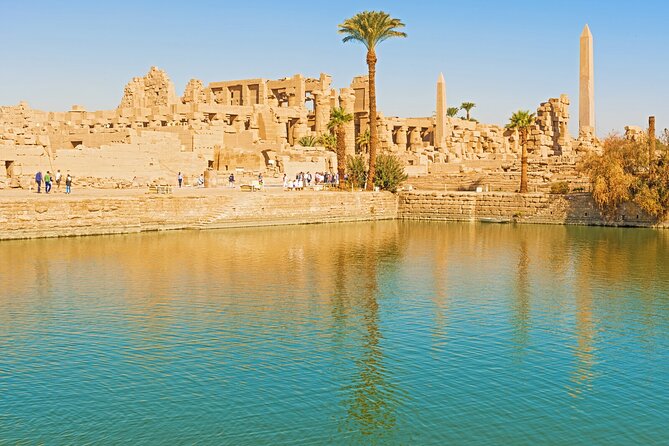
Karnak is not one single temple. It is a huge religious complex built and altered over roughly 2,000 years, beginning about 4,000 years ago and continuing until Roman rule. Each ruler who added a wall, column, statue, or sanctuary left another layer for you to read.
The main focus is the Temple of Amun-Ra. Ancient Egyptians regarded Amun-Ra as living there on earth with Mut and Khonsu, his wife and son. The famous Hypostyle Hall, built during the reign of Seti I, is the visual star. Its forest of massive columns makes the place feel less like a ruin and more like a surviving piece of a very large machine for worship.
An hour can give you a useful introduction, but it is not enough for every corner. If Karnak is a major reason for your visit, you may want a separate visit with more time. On this tour, listen for the guide’s explanation of how the complex changed as political power moved away from Thebes. That context helps explain why some parts are grand while others feel broken or reused.
The guide is especially valuable here. Stones and columns can blur together when you are seeing ancient Egypt for the first time. A good explanation of Amun-Ra, the royal builders, and the role of the Hypostyle Hall turns a walk through ruins into a readable story.
Luxor Temple and the First Occasion
The next major stop is Luxor Temple, also planned for about an hour. Again, admission is at your own expense. This temple was built over many reigns, including those of Amenhotep III, Ramses II, and Tutankhamun.
Luxor Temple was linked to the idea of the First Occasion, a sacred moment when Amun was renewed during the pharaoh’s annual coronation ceremony. You are not simply looking at another collection of columns. The site was tied to kingship, renewal, and the public display of royal power.
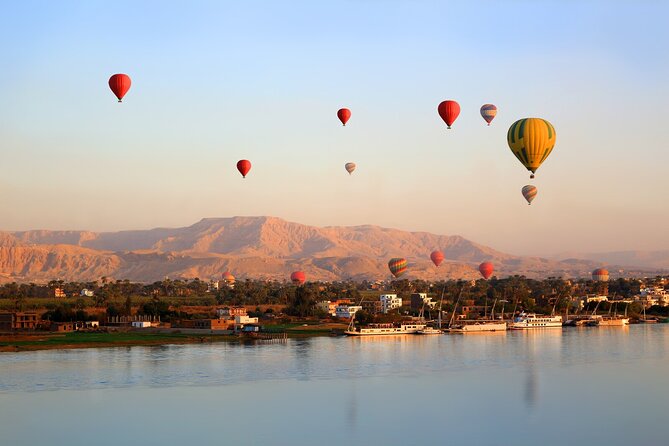
The Great Colonnade Hall is a major feature. It is nearly 61 meters long and contains 28 columns, each about 21 feet high. Much of its decoration was carried out under Tutankhamun around 1330 B.C. Parts of the temple were later pulled down and reused as building material, which helps explain its incomplete appearance.
Your guide can point out how different rulers left their marks on the same sacred ground. That layered construction is one of Luxor Temple’s strengths. The limitation is time. An hour passes quickly, especially if the group is large or ticket lines slow the visit.
If you want photographs, this is one of the better points in the route. The columns, open spaces, and carved surfaces offer plenty to frame. You should also expect walking on uneven ancient paving, so comfortable shoes are sensible.
Same base, a completely different sort of day:
- Hurghada: Luxor Valley of the Kings & Tutankhamun Tomb Trip
★ 4.7 · 13,208 reviews - Luxor Day Trip from Hurghada Small Group & Tutankhamun Tomb
★ 4.8 · 5,366 reviews - Hot Air Balloon Ride in Luxor Egypt with Transfers Included
★ 5.0 · 4,319 reviews - Luxor: Shared Full-Day Tour to Luxor West and East Banks
★ 4.5 · 1,812 reviews
The Avenue of Sphinxes, restored route between temples

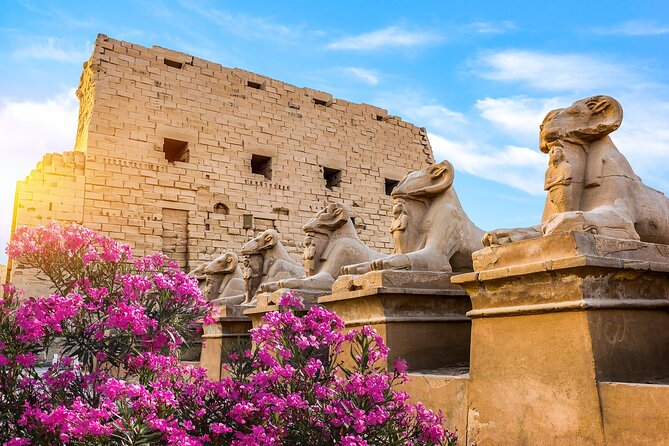
The Avenue of Sphinxes is scheduled for about 30 minutes and has no separate admission charge listed. It once connected Luxor Temple and Karnak, creating a ceremonial route between two important religious centers.
Construction began during the New Kingdom and was completed under Nectanebo I, who ruled during the 30th Dynasty from 380 to 362 B.C. Centuries of sand covered the avenue. Archaeological work began uncovering statues in the mid-20th century, with groups of figures found between 1949 and 1964.
Egypt reopened the restored avenue in November 2021. That makes this a useful stop for understanding how modern archaeology has changed the way you see Luxor. The route is not only about what ancient builders created. It is also about how buried remains were found, cleared, studied, and presented again.
Thirty minutes is enough for an introduction and photographs. It is not a full archaeological visit. Your guide may discuss the discoveries and the connection between the two temples, which is the key point here. Look at the avenue as a link, not as an isolated monument.
Abu El-Hagag Mosque inside an ancient temple
The last stop is the Abu El-Hagag Mosque, scheduled for about 10 minutes. Its unusual setting is the reason to include it. The mosque is integrated into Luxor Temple, creating a visible meeting point between Islamic worship and much older Egyptian architecture.
The mosque remains an active place of worship and is connected with Luxor’s long religious life. The site is described as one of the oldest continuously used temple locations in the world, with the underlying temple dating to the reign of Amenhotep III in the 14th century B.C.
Ten minutes is brief, but the stop adds something that the two grand temples cannot provide on their own. You see how later communities built into, around, and alongside older sacred structures. Follow the guide’s directions about behavior and dress, since this is a mosque as well as an archaeological setting.
What the horse carriage adds, and what it may not

A carriage ride can give you a more open view of Luxor than a closed vehicle. You see streets, riverfront scenery, and daily movement at a slower pace. It also avoids the repeated bargaining that can come with hiring a carriage independently.
The problem is consistency. One guest expected to meet the guide at the carriage but instead walked to the first point of interest. The title may create a stronger promise than the actual operation delivers. Ask these questions before booking:
- Where exactly does the carriage ride begin?
- Is carriage transport used between every listed stop?
- How long is the riding portion?
- What happens if the horse cannot continue?
- How does the operator monitor the horse’s condition and rest?
The animal welfare report is serious. A guest described a horse as visibly emaciated, then said it fell in the heat and could not get up without help after the harness was removed. The operator apologized and said the incident would be investigated, but an apology does not remove the concern.
If you choose this experience, you can make your standards clear before the tour starts. You are entitled to leave or request another transport option if you believe the animal is unfit. If that possibility would trouble you throughout the outing, a walking tour or vehicle-based tour may be a better choice.
The guide and the size of the group
The experience includes an Egyptologist guide, which is important because the sites are too large and layered to understand from signs alone. The guide is expected to explain the temples, archaeological discoveries, and the latest finds in a way that connects the stones to ancient religious life.
Ababoub received particularly warm praise from a couple who enjoyed his hosting and the historical explanations. That suggests the human side of the tour can be a real strength, although guide assignments may vary.
The maximum group size is 50 people. That is a sizeable group for temple visits. You may get a lively atmosphere and a lower price, but you should not expect a private guide’s pace or constant access to the guide. Stay close during explanations, especially at Karnak, where it is easy to lose sight of a group among the columns.
The 4.8 rating from 50 reviews and 94 percent recommendation rate indicate that the tour works well for many bookings. Still, the praise is not universal. The positive comments focus on the host and the historic places. The negative comments focus on the carriage arrangement and horse welfare. Those are not minor details, so weigh them alongside the strong overall score.
Is $30 good value?
At $30 per person, the price is reasonable for a four-hour guided route with carriage transport, provided the carriage service operates as promised. You also need to add the temple admissions, listed at about $12 total for Karnak and Luxor Temple. That brings the known cost to roughly $42 per person before any other personal spending.
The value comes from convenience. You avoid organizing separate rides, finding the main entrances, and building a route between four East Bank sights. You also get an Egyptologist guide rather than simply being dropped at the temples.
The value is weaker if you mainly want a long carriage ride. The schedule gives about two hours at the main temples, 30 minutes at the avenue, and brief time at the mosque. This is a sightseeing sampler, not a relaxed full-day exploration.
Group discounts are available, which may help families or larger parties. The free cancellation policy also reduces booking risk if you cancel at least 24 hours before the start time. Cancellations or changes inside that window are not refunded or accepted.
Who should book this East Bank tour?
I would consider it for someone visiting Luxor for the first time who wants a guided introduction in one morning or afternoon. It suits you if you value a clear route, major monuments, and historical explanations more than a slow, private visit.
It may also suit families or groups who like having transport arranged and prefer not to negotiate locally. The mobile ticket, central meeting point, and return to the same place keep the logistics simple.
I would hesitate if you want guaranteed carriage travel, a small group, or a long visit at each temple. I would also hesitate if horse welfare is a firm priority unless the operator gives you a clear answer about current animal-care practices.
FAQ
How long does the Luxor horse carriage tour last?
The experience lasts approximately four hours.
Where does the tour begin?
It begins in front of the Luxor Museum on Kornish Al Nile in Luxor City.
How do I identify the tour leader?
The tour leader is expected to hold a red flag at the meeting point.
Where does the tour end?
The activity ends back at the Luxor Museum meeting point.
Are Karnak Temple and Luxor Temple admission tickets included?
No. Entrance tickets are not included. The listed cost for both temples is 200 Egyptian pounds, approximately $12 in total.
Is an Egyptologist guide included?
Yes. An Egyptologist tour guide is included in the experience.
Is horse carriage transportation included?
Yes, transportation by horse carriage is included in the tour details. However, one guest reported walking to the first point of interest, so you should confirm the exact carriage arrangements before booking.
How large can the group be?
The maximum group size is 50 people.
Can I cancel for a full refund?
Yes, if you cancel at least 24 hours before the experience start time. Cancellations or changes made less than 24 hours before the start time are not refunded or accepted.
Should you book it?
Book this tour if you want a low-cost introduction to Luxor’s East Bank, appreciate a guide such as Ababoub who can explain the temples, and are comfortable confirming the carriage details first. Karnak, Luxor Temple, the Avenue of Sphinxes, and Abu El-Hagag Mosque make a strong route, and the price is fair once you add the modest entrance fees.
I would not book without asking about the horse’s condition and the exact riding plan. The reported welfare incident is troubling, and the carriage description has not been perfectly reliable. If the operator answers clearly and you feel comfortable with the arrangements, this can be a useful first taste of Luxor. If not, choose a walking or vehicle-based alternative and visit these remarkable sites without that worry.
Newly listed around Luxor
- Luxor Nile River Private Felucca Ride at Sunset★ 4.5 · 20 reviews
- Marvelous Luxor East and West Bank Private Tour with Lunch From Airport /Hotels★ 4.5 · 17 reviews
- Private tour : Sunset Felucca Ride in Luxor★ 5.0 · 16 reviews
- 3-Day Luxor Aswan and Abu Simbel Historical Sites Private Tour★ 5.0 · 34 reviews
- Nile cruise between Luxor and Aswan: Sail the best temples in Egypt★ 5.0 · 72 reviews
- Experience the Magic of a Luxor Sunrise Hot Air Balloon Ride★ 5.0 · 17 reviews
- 5 Days 4 Nights from Luxor to Aswan on Gentle Breeze Dahabyia★ 4.5 · 24 reviews
- Felucca in Luxor Amazing Sunset sailing {Private} 2 Hours★ 5.0 · 20 reviews
Horses, compared.

Red Sea & Desert Horse Riding Tour with Swimming
Read our review →
Sea & Desert Horse Tour, Stargazing, Dinner & Show
Read our review →

Sea & Desert Horse Riding tour/w Swimming&Transfer
Read our review →

Sharm El Shiekh: Beach and City Desert Horse Riding Tour
Read our review →

Horse Riding Tour 2 Hours on Sea And Desert & Transfer -Hurghada
Read our review →Browse the lists this tour appears in