
Reviewed · NILE CRUISES
Nile cruise between Luxor and Aswan: Sail the best temples in Egypt
Egypt’s temples arrive one river bend at a time. This five-day cruise links Luxor, Edfu, Kom Ombo, and Aswan with four nights aboard the boat, giving you both major monuments and quiet hours on the Nile. I especially like the excellent temple coverage and the chance to rest by the pool between visits. The main consideration is the pace: early starts, long sightseeing days, and optional outings can add both fatigue and cost.
I also like the personal touch praised in connection with guide Mohamed Gaber, known as Moha, whose clear explanations, humor, and care helped make the ancient sites easier to understand. At $625 per person, the package offers solid value if you want accommodation, meals, entry tickets, and transfers bundled together, but you should confirm the boat details and the price of optional excursions before paying.
In This Review
- Key points at a glance
- Why a Luxor to Aswan cruise works so well
- Day 1: Getting aboard in Luxor
- Day 2: The Valley of the Kings and Luxor’s great temples
- Day 3: Horus at Edfu and the two gods of Kom Ombo
- Day 4: Abu Simbel, Philae, and a Nubian view of the river
- What the $625 price actually covers
- The guide can shape the whole experience
- Who should book this Nile cruise
- Practical details before you reserve
- Should you book it?
- FAQ
- How long is the Nile cruise from Luxor to Aswan?
- Where does the cruise begin?
- Where does the cruise end?
- What is included in the price?
- Are drinks included?
- Are tips included?
- Is Abu Simbel part of the standard tour?
- Is the Nubian village visit included?
Key points at a glance
- Four nights on the Nile: Sleep aboard the cruise boat while moving between Luxor and Aswan instead of changing hotels every night.
- The essential Luxor temples: Visit the Valley of the Kings, Hatshepsut’s temple, Karnak, Luxor Temple, and the Colossi of Memnon.
- A calm afternoon on the river: The sailing time between Luxor and Edfu gives you a break from temples and road transfers.
- Two beautifully preserved temples: Edfu honors Horus, while Kom Ombo was built for Sobek and Haroeris.
- Optional Abu Simbel and Nubian village visit: These are valuable additions, but you should ask exactly what each costs before committing.
- Small enough to feel organized: The maximum group size is 30 people, with pickup in Luxor and drop-off in Aswan.
Why a Luxor to Aswan cruise works so well
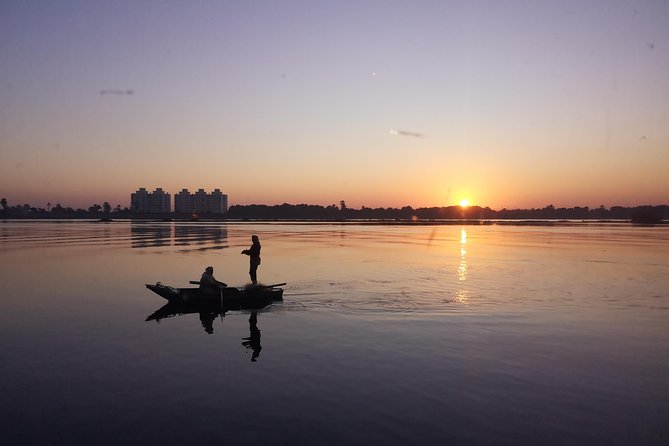
The Nile is not just scenery between archaeological sites. It is the reason these cities and temples exist where they do. A cruise lets you see that connection at an easy pace, at least during the sailing hours, while your room and meals remain on board.
This route also puts the ancient monuments in a sensible order. You begin with the great concentration of sites around Luxor, then move south toward Edfu, Kom Ombo, and Aswan. Instead of spending five days on buses, you get a mixture of guided visits, meals, pool time, and river views.
That balance matters in Egypt. Temples are thrilling, but a full day of sun, stone, crowds, and explanations can wear you out. The quiet periods on the boat give you time to sit down, watch the riverbank, or use the pool.
The trade-off is that this is not a slow, stay-put holiday. You will be up early for some outings, and Day 2 contains a particularly full run of major sights. If you want long mornings and independent wandering, this cruise may feel tightly scheduled.
More Nile Cruises in Luxor
- From Luxor: 3-Night Nile Cruise to Aswan and Hot Air Balloon
★ 3.7 · 297 reviews - Amazing Sunset sailing by Felucca in Luxor -2 Hours (Private)
★ 5.0 · 255 reviews - 5 Days Private Guided Nile River Cruise Tour from Luxor to Aswan
★ 5.0 · 229 reviews
Day 1: Getting aboard in Luxor
Pickup is offered from Luxor Airport, the train station, or a hotel. The stated meeting point is Luxor Temple, and the advertised start time is 6:00 a.m., although the pickup arrangement allows you to indicate where you need collecting.
Once you reach the boat, you can settle into your room and begin using the cruise facilities. Meals are served according to the boat’s schedule. The first day is otherwise free, so you can rest by the pool or explore Luxor on your own.
I consider this a useful first day rather than wasted time. Luxor can be intense, especially if you have just arrived by air or train. Having space to unpack and get your bearings before the major sightseeing begins is welcome.
Still, check the exact boarding time in advance. The information gives a 6:00 a.m. start, but also describes Day 1 as free, so the practical timing may depend on your pickup arrangement and the boat’s schedule.
Day 2: The Valley of the Kings and Luxor’s great temples
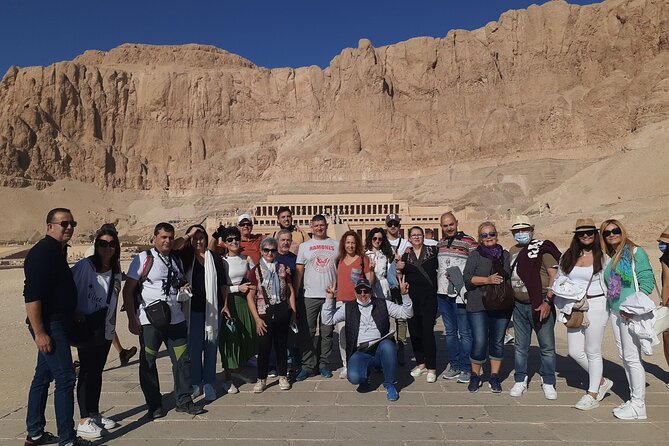
Day 2 is the historical heart of the cruise. It begins at the Valley of the Kings, where the tombs of New Kingdom pharaohs were cut into the hills. Your admission includes entry to three tombs of your choice.
That choice is important. Tombs differ in decoration, length, and condition, so listen carefully to your guide before selecting. The valley itself is stark and powerful, but the painted chambers are the real reward. The visit is scheduled for about two hours, which gives you time to see three tombs without treating each one as a rushed photo stop.
The Valley of the Kings can be hot and exposed. Wear practical shoes and bring water, remembering that drinks are not included in the cruise price. You will want to keep some energy for the next stops.
Next comes the Temple of Hatshepsut at Deir el Bahari. Its broad terraces rise against the cliffs, and its design feels different from the underground tombs. Hatshepsut remains one of ancient Egypt’s most important female rulers, so this is more than a quick monument stop. It gives you a chance to consider how royal power was presented through architecture.
The visit lasts about an hour. That is enough for a guided introduction and a look around, though anyone fascinated by reliefs and inscriptions may want more time.
The Colossi of Memnon receive a brief 15-minute stop. These two huge statues represent Amenhotep III. This is a quick roadside-style visit, but the scale of the figures makes it worthwhile. Do not expect a full museum-style exploration here.
After the west bank, the cruise turns to Karnak Temple. Two hours is a sensible amount of time for this enormous complex, which grew over more than 2,000 years under different pharaohs. The Avenue of the Sphinxes, the ram-headed figures, and the Great Hypostyle Hall give you several distinct visual highlights.
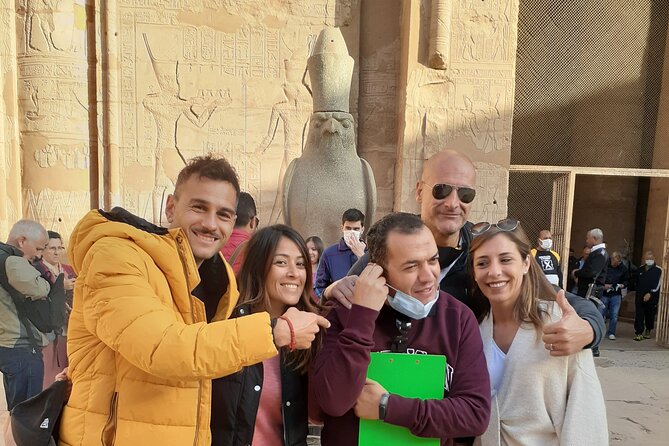
Karnak rewards a guide who can explain how the complex developed. This is where Mohamed Gaber, or Moha, appears to have made a strong impression through lively explanations and occasional theatrical demonstrations. That style can help when you are looking at a huge field of columns and trying to understand what each part meant.
The final major stop is Luxor Temple, dedicated to Amun-Ra. It is more compact than Karnak, but its setting within modern Luxor gives it a different feel. You see how an ancient religious center sits beside a living city, rather than isolated far from daily life.
The day ends with about three hours of afternoon sailing toward Edfu. This is your first real pause. Sit near the pool, watch the Nile pass, and resist the urge to plan every minute. The river time is part of the attraction, not merely transport.
Day 3: Horus at Edfu and the two gods of Kom Ombo
Edfu Temple is one of the best-preserved temples in Egypt. It is dedicated to Horus, the falcon god, and the surviving walls and reliefs make the site especially rewarding for anyone who wants to see how an Egyptian temple looked before centuries of damage.
The scheduled visit lasts two hours. That allows room for the guide to explain the religious scenes and for you to appreciate the carved surfaces. Edfu is one of the places where a good explanation makes a large difference. Without context, you may see rows of figures. With context, the walls begin to read like a visual record of royal ritual and divine stories.
Kom Ombo is smaller and unusual because it was built for two gods: Sobek and Haroeris. Sobek is linked with the crocodile, while Haroeris is a form of Horus. The shared layout gives the temple its special character, with sacred space divided between the two religious traditions.
The visit is planned for one hour. That is enough for the main areas, but the stop is more concentrated than Karnak or the Valley of the Kings. Pay attention to the details rather than expecting another vast complex.
Together, Edfu and Kom Ombo create a well-shaped day. Edfu offers preservation and scale, while Kom Ombo offers an unusual religious arrangement. Between the two, the cruise keeps moving south without turning every hour into a road journey.
More Nile cruises and felucca sailings:
- Luxor: Private East and West Banks Tour and Felucca Cruise
★ 4.7 · 209 reviews - From Luxor: Dendera Temple All-Inclusive Tour & Felucca Ride
★ 4.2 · 207 reviews - Luxor: Nile River Private Sunset Felucca Ride
★ 4.9 · 188 reviews - Historia Hotel Nile Cruise, Mon. from Luxor 4 nts inc. Excursions
★ 5.0 · 185 reviews
Day 4: Abu Simbel, Philae, and a Nubian view of the river
Abu Simbel is listed as optional, but I would treat it as the most important extra to investigate. Ramses II had the temples cut into the rock as monuments to himself and his wife, Nefertari. The scale and ambition make Abu Simbel a major addition to an Egypt trip.
The planned visit is about two hours. However, the supplied details do not clearly state the extra price or the full transport arrangement for this optional outing. Ask before departure so you know exactly what is included and what you will pay locally.
Later, you visit Philae Temple, dedicated to Isis. The temple sits on an island, so you reach it by boat. That arrival gives the visit a distinct character, and the island setting helps you see the Nile as a living part of the monument rather than a distant backdrop.
The Philae visit lasts about an hour and admission is included. As with the other temples, you will get more from it if you follow the explanation closely. Isis was one of Egypt’s most important goddesses, and the site offers a useful change from the royal focus of the earlier stops.
A felucca ride follows, lasting about an hour. These traditional sailing boats offer a lower, quieter view of the river. It is a simple activity, but it changes the rhythm of the day and lets you observe Egyptian life from the water.
The Nubian village visit is also optional and lasts about three hours. It includes contact with Nubian village life and a stop at a place on the Nile where you can bathe if you choose. Admission is not included, so again, ask for the additional charge and precise arrangements.
I like that the final full day offers more than monuments. Abu Simbel supplies grandeur, Philae supplies an island temple, the felucca supplies a gentler ride, and the Nubian visit offers a cultural encounter. You may not want every extra, especially after several busy days, so choose according to your energy and interests.
What the $625 price actually covers
At $625 per person, the price is strongest for someone who wants a packaged experience. You receive four nights of cruise accommodation, visits listed in the main program, entrance tickets to the included sites, lunch for five days, dinner for four nights, pickup in Luxor, and transfer arrangements in Aswan.
That removes several common planning chores. You do not have to arrange separate tickets for Karnak, Luxor Temple, Edfu, Kom Ombo, or Philae. You also avoid booking four hotel nights and organizing the main transfer from Luxor to Aswan.
Breakfast is clearly part of the daily routine because Day 5 begins after breakfast, but the inclusions specifically list lunch and dinner. Confirm the full meal plan if breakfast matters to your budget.
Drinks are excluded, as are tips. Those costs are easy to overlook on a cruise, so keep extra Egyptian pounds available. Optional Abu Simbel and the Nubian village visit may also require additional payment, with the exact amount not provided here.
The group can reach a maximum of 30 people. That is not a private tour, but it remains a manageable size for a guided temple visit. If you want a completely personal schedule, this is not the right format. If you want organized transport and a social group without arranging every detail yourself, it makes more sense.
The guide can shape the whole experience
The strongest praise is directed toward Mohamed Gaber, usually called Moha. The descriptions of his work emphasize clear explanations, care with practical needs, and a playful approach that sometimes turns temple interpretation into a small performance.
That combination matters in Egypt. A guide does more than identify a pharaoh or god. The best guide helps you see why a temple was built, how the symbols work, and how ancient beliefs shaped daily life. Moha is also described as helping with questions about internet access and currency, which can make the trip feel easier for first-time visitors.
No guide can erase the heat or the early starts, but a good one can keep a long sightseeing day from becoming a procession of names and dates. If having a Spanish-speaking guide is important to you, confirm the language and guide assignment at booking. The available information praises Moha by name, but it does not promise that he will lead every departure.
Who should book this Nile cruise
I would recommend this trip to you if you want the major monuments explained and prefer one organized package. It suits first-time visitors to Egypt, couples, families, and small groups that value a clear route from Luxor to Aswan.
It is also a good fit if you want a mix of sightseeing and rest. The river hours, pool access, and onboard meals create breathing room that a land-only schedule may not provide.
You may want another arrangement if you dislike fixed meal times, group touring, or early departures. Independent visitors who want to spend half a day at one tomb or return to a temple at their own pace will find the schedule restrictive.
The cruise is also less ideal if you need a fully transparent budget before departure. The base price is clear, but the cost of optional Abu Simbel and the Nubian village visit is not supplied. Get those figures in writing.
Practical details before you reserve
Pickup is available in Luxor from an airport, train station, or hotel. The trip ends in Aswan, where the operator can take you to your hotel, airport, or train station at the time you need.
A mobile ticket is offered, and confirmation is sent at booking. Most people can participate, according to the supplied information, but the exact mobility arrangements at temples, boats, and island sites are not detailed. Ask directly if you have specific access needs.
The cancellation rule is simple but firm. You receive a full refund if you cancel at least three full days before the local start time. Cancellations or changes made later are not accepted.
Book by WhatsApp at +20 100 137 0325 or check conoceregipto.com. Confirm the boat name, cabin details, guide language, boarding time, and optional excursion prices before sending payment.
Should you book it?
I would book this cruise if your priority is seeing Egypt’s main temples without rebuilding the trip from scratch. The route is well chosen, the included tickets and transfers add real value, and the combination of guided history with quiet Nile sailing gives the five days a pleasant shape.
I would book with two checks first: clarify the boat and cabin standard, and price Abu Simbel and the Nubian village visit separately. If you are comfortable with a busy schedule and a group of up to 30 people, this is a strong introduction to the Nile corridor, especially with a guide such as Moha leading the explanations.
FAQ
How long is the Nile cruise from Luxor to Aswan?
The cruise lasts approximately five days and includes four nights of accommodation on the boat.
Where does the cruise begin?
Pickup is offered in Luxor from the airport, train station, or a hotel. The stated meeting point is Luxor Temple, Luxor City.
Where does the cruise end?
The cruise ends in Aswan. Transfer can be arranged to the hotel, airport, or train station you specify.
What is included in the price?
The price includes four nights on the cruise, listed visits, entry tickets to the included sites, pickup in Luxor, transfer in Aswan, five lunches, and four dinners.
Are drinks included?
No. Drinks are not included in the tour price.
Are tips included?
No. Tips are not included.
Is Abu Simbel part of the standard tour?
Abu Simbel is described as an optional excursion. The available details do not state its additional price, so confirm the cost before booking it.
Is the Nubian village visit included?
The Nubian village visit is optional, and admission is listed as not included. Ask for the additional cost and arrangements before choosing it.
Newly listed around Luxor
- Luxor Nile River Private Felucca Ride at Sunset★ 4.5 · 20 reviews
- Marvelous Luxor East and West Bank Private Tour with Lunch From Airport /Hotels★ 4.5 · 17 reviews
- Private tour : Sunset Felucca Ride in Luxor★ 5.0 · 16 reviews
- 3-Day Luxor Aswan and Abu Simbel Historical Sites Private Tour★ 5.0 · 34 reviews
- First impression of Luxor-Explore secrets of Luxor by horse carriage★ 5.0 · 50 reviews
- Experience the Magic of a Luxor Sunrise Hot Air Balloon Ride★ 5.0 · 17 reviews
- Felucca in Luxor Amazing Sunset sailing {Private} 2 Hours★ 5.0 · 20 reviews
- Luxury Balloon Ride in Luxor with Hotels Pickup★ 4.5 · 142 reviews
Nile Cruises, compared.
4-Days Nile Cruise From Aswan To Luxor including Abu Simbel and Hot Air Balloon
Read our review →
4-Day 3-Night Nile Cruise from Aswan to Luxor&Abu Simbel+Balloon
Read our review →
Sakkara, Memphis & Dahshur (Pyramid & Felucca Options)
Read our review →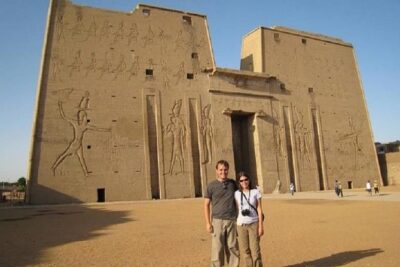
4-Day 3-Night Nile Cruise from Aswan to Luxor including Abu Simbel, Air Balloon
Read our review →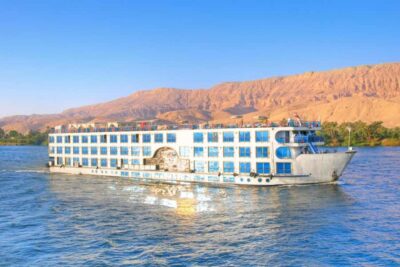
4-Day Nile Cruise from Aswan to Luxor with Guide
Read our review →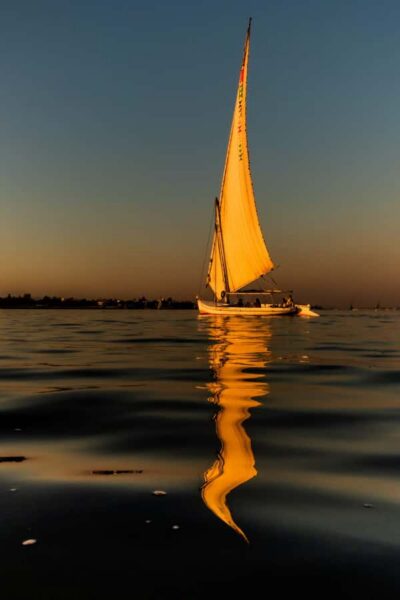
4-Days Nile Cruise From Aswan To Luxor including Abu Simbel and Hot Air Balloon
Read our review →Browse the lists this tour appears in