Reviewed · ABU SIMBEL TOURS
4-Day 3-Night Nile Cruise from Aswan to Luxor including Abu Simbel, Air Balloon
Wake before dawn, then see Egypt at its best. This four-day Nile cruise links Aswan and Luxor with three nights aboard ship, Abu Simbel, Philae, Kom Ombo, Edfu, the Valley of the Kings, and a sunrise balloon flight. I like the way it gathers Egypt’s major southern sights into one organized trip, and I like that transport, meals, guides, and port transfers are included.
The main catch is the pace. You may be ready to leave at 3:30 or 4:00 in the morning, and the early starts keep coming. You also need to budget about $125 per person for entrance fees, plus tips and drinks, so the advertised $329 price is not the final cost.
The cruise is rated 4.6 out of 5 from 612 ratings, with 91 percent recommending it. Praise centers on the guides, helpful ship crew, tasty buffet meals, smooth planning, and the hot-air balloon ride. Complaints focus on basic cabins, extra charges that are not always explained early, and a schedule that can feel more like an archaeological campaign than a holiday.
In This Review
- What makes this Nile cruise worth considering
- The real cost of the $329 cruise
- Day 1: High Dam, Philae, and your first night aboard
- Day 2: The long road to Abu Simbel
- Kom Ombo and the crocodile god
- Day 3: Edfu, the river, and Luxor Temple
- Luxor Temple after sunset
- Day 4: The sunrise balloon ride and Luxor’s West Bank
- Valley of the Kings
- Hatshepsut and the Colossi of Memnon
- Karnak, if timing allows
- Guides, groups, and the organization
- Food, cabins, and life on the ship
- Who should book this four-day Nile cruise?
- Should you book it?
- FAQ
- How long is the Nile cruise?
- Is Abu Simbel included?
- Are entrance fees included?
- Is the hot-air balloon ride included?
- Can children take the balloon flight?
- Where can I be dropped off in Luxor?
What makes this Nile cruise worth considering
- Abu Simbel is included: You make the long early-morning journey south to Ramesses II’s great rock-cut temples, then return to the ship for lunch.
- A sunrise balloon flight over Luxor: The 30 to 45-minute flight gives you a rare aerial view of the West Bank and its ancient sites.
- Three nights on a Nile ship: You unpack once, eat onboard, and watch the river scenery change between excursions.
- The major temples are covered: Philae, Kom Ombo, Edfu, Luxor Temple, Karnak, Hatshepsut, the Colossi of Memnon, and the Valley of the Kings all fit into the plan.
- Guides can make or break the trip: Guides such as Mohamed Gobran, Mahmoud, Ahmed Shawky Ali, and Ahmed are praised for clear schedules, Egyptology knowledge, and practical help.
- The schedule is demanding: Most days begin very early, though the busy plan lets you see a great deal in only four days.
The real cost of the $329 cruise
At $329 per person, this is a strong starting price for three nights on a five-star-rated Nile cruise with meals, transfers, shore excursions, a guide, and the balloon flight. You avoid arranging separate transport from Aswan to Luxor, which is a major benefit in Egypt, especially when Abu Simbel and several out-of-town temples are involved.
Still, I would calculate the full price before booking. Entrance fees are not included and are listed at around $125 per person for all sites. Tips for the guide, drivers, cruise staff, and carriage workers are also extra. Water and soft drinks cost more onboard, and one direct account reported prices of about $3 for a 1.5-liter bottle and $3 for a can of cola.
That means the practical total is well above the headline fare. It can still be good value, but only if you treat $329 as the base price rather than the complete budget.
A useful money-saving tip is to buy bottled water during stops when possible. The ship does not include drinks, and prices ashore can be much lower. You should also ask at the start of the trip for a clear list of entrance fees and expected tips. One of the sharpest complaints came from a lack of warning about an upfront cash request for tickets and gratuities.
More Hot Air Balloon Flights in Aswan
- 4-Days Nile Cruise From Aswan To Luxor including Abu Simbel and Hot Air Balloon
★ 5.0 · 3,142 reviews - 4-Day 3-Night Nile Cruise from Aswan to Luxor&Abu Simbel+Balloon
★ 5.0 · 2,023 reviews - From Aswan: 3-Day Cruise to Luxor with Hot Air Balloon
★ 4.3 · 598 reviews
Day 1: High Dam, Philae, and your first night aboard
Your pickup can be arranged from an Aswan hotel, railway station, or airport. You travel in an air-conditioned vehicle with a driver, then begin with the Aswan High Dam.
The dam is a major piece of modern Egyptian infrastructure, but it is not the emotional highlight of the day. Its value is practical: it helps explain the modern control of the Nile and why several ancient sites had to be moved or protected after the reservoir was formed.
From the dam, you take a motorboat to Philae Temple. The boat ride adds something special because Philae sits on an island rather than beside a road. As you approach, the temple comes into view across the water, which gives the arrival a pleasing sense of occasion.
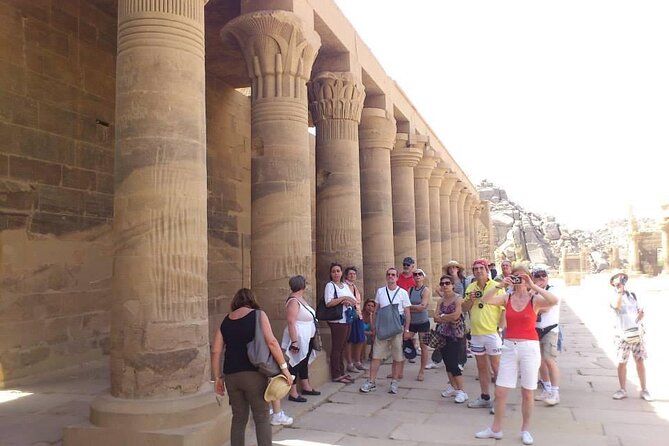
Philae is dedicated mainly to the goddess Isis and combines grand columns, courtyards, reliefs, and later Christian markings. This is one of the best stops for noticing how Egyptian religious places were reused and altered over time. Your guide should help you read the layers instead of treating the temple as a collection of impressive stones.
The first day includes lunch, afternoon tea, dinner, and an evening disco party onboard. You spend the night in Aswan, with a chance to go ashore. The exact ship may vary, but one highly praised vessel was the Queen of Sheba. Cabin standards also vary in how they are described: some people found rooms clean and well maintained, while another account rated the ship closer to three stars than five and found the bathroom cramped.
Keep expectations sensible. The common areas may be pleasant and tidy, but the cabin is mainly a base for sleeping between early excursions. Hot water was reportedly a problem on one first night, so it is worth checking your room soon after boarding rather than waiting until bedtime.
Day 2: The long road to Abu Simbel
The Abu Simbel trip begins around 4:30 in the morning, with arrival at the temples near 8:00. This is a long day, and you should not book it while expecting leisurely mornings.
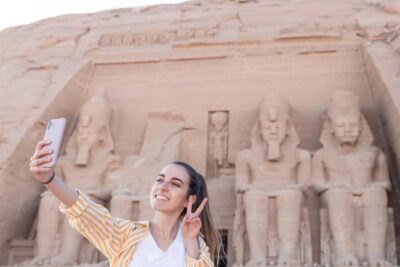
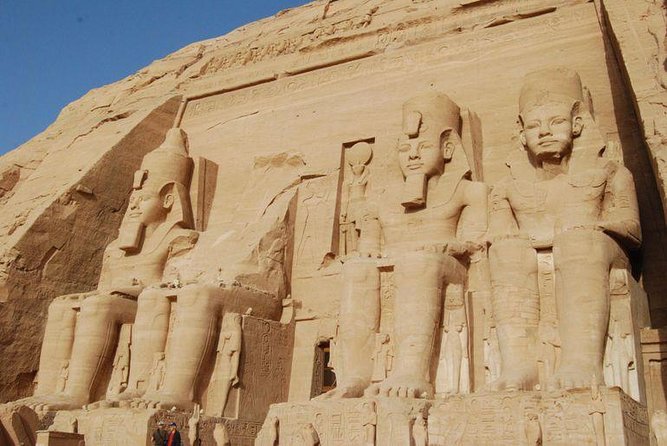
The payoff is one of Egypt’s most memorable ancient sites. Ramesses II ordered the larger temple cut into the rock, while the smaller temple honors Queen Nefertari. The enormous seated figures at the entrance are instantly recognizable, but the interior chambers and carved scenes are just as important.
Abu Simbel feels different from the Nile temples because of its remote setting and massive scale. It was built to project royal power, and the placement of the temples makes that message hard to miss. The guide accompanying the shared small group can explain the rulers, gods, and battle scenes, though the time onsite may feel short for such a major detour.
You return to the cruise around noon for lunch, then sail toward Kom Ombo. That timing is one reason the cruise works well: the long land transfer is fitted around the ship’s route rather than requiring you to change hotels or arrange a separate return journey.
Kom Ombo and the crocodile god
Kom Ombo is a short visit, usually about an hour, but it has an unusual design. The temple is split into two religious sections, one linked to Sobek, the crocodile god, and the other to Horus, the falcon god.
Look for the symmetry in the courtyards and sanctuaries. The double design gives your guide plenty to explain, including the temple’s medical instruments and the importance of crocodiles along the Nile. The site is especially atmospheric in the late afternoon, when the river is close and the ship waits nearby.
After dinner, you continue toward Edfu for the night. By this point, you may be tired from the early departure, so the most valuable part of the evening could be a quiet hour on deck rather than another organized activity.
More Nile Cruises in Aswan
- From Aswan: 4-Day Nile Cruise from Aswan to Luxor with Guide
★ 4.1 · 593 reviews - 4-Days Nile Cruise From Aswan To Luxor including Abu Simbel and Hot Air Balloon
★ 4.5 · 509 reviews - 4-Day 3-Night Nile Cruise from Aswan to Luxor – Private Tour
★ 5.0 · 369 reviews - 4 Days Nile Cruise from Aswan to Luxor including Abu Simbel and Hot Air Balloon
★ 4.5 · 356 reviews
Day 3: Edfu, the river, and Luxor Temple
After breakfast, a horse-and-carriage ride takes you to the Temple of Horus at Edfu. This transport is included, and it saves you a walk through the town in the heat.
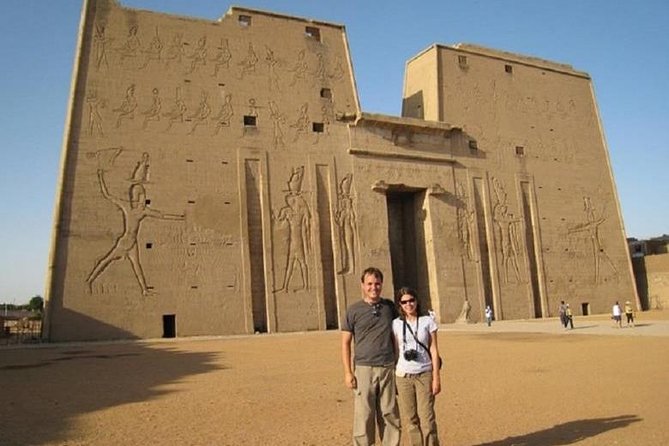
Edfu is considered one of the best-preserved Egyptian temples, and that condition makes it easier to understand how a temple worked. The towering entrance, broad courtyard, columns, and inner rooms still form a clear sequence. I find this kind of site especially rewarding because you can follow the layout without having to imagine every wall from fragments.
The visit lasts about two hours, including the carriage ride. Then you return to the ship, where the cruise itself becomes part of the experience. You sail toward Luxor, cross the Esna Lock, eat lunch, and have afternoon tea on the sundeck.
This is your chance to slow down. Watch the Nile banks, farming areas, small settlements, and changing light from the deck. The river hours are not filler. They give your eyes a break from temples and let you see the setting that made ancient Egypt possible.
Luxor Temple after sunset
Late afternoon brings Luxor Temple on the East Bank. If the ship reaches the dock by about 3:00 or 3:30, the schedule may allow both Luxor Temple and Karnak on this day. If not, Karnak is planned for the next day.
Luxor Temple is particularly enjoyable later in the day, when the columns and statues begin to glow in softer light. It was connected to Karnak by an avenue of sphinxes and played a role in royal ceremonies. The site also reflects later use, with Christian and Islamic features visible among the ancient remains.
Dinner, a belly-dancing show, and an overnight stay in Luxor follow. The entertainment is part of the standard cruise format. You may enjoy it, or you may prefer sleep after another full day. The program gives you the choice to stay onboard, but the early balloon pickup means bedtime matters.
Day 4: The sunrise balloon ride and Luxor’s West Bank
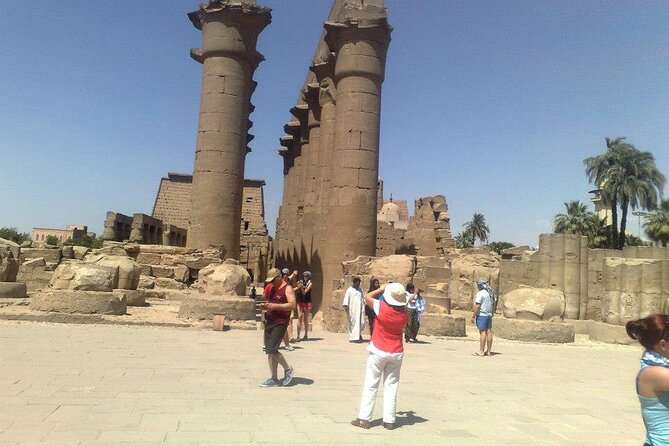
The hot-air balloon pickup begins around 5:00 in the morning. The flight lasts approximately 30 to 45 minutes and offers views over Luxor’s West Bank, the Nile, agricultural land, and famous monuments.
This is often the emotional high point of the trip. From ground level, the tombs and temples can feel scattered across a broad area. From the balloon, you see how close the sites are to the river and how sharply the cultivated strip ends at the dry hills.
You can use your cellphone during the flight, but cameras are not allowed in the basket. Children under six cannot take part. If bad weather cancels the flight, the stated refund is $25 per person, so do not treat the balloon as a guaranteed part of the morning.
After the flight, you return for breakfast and check out. The West Bank program then includes the Valley of the Kings, the Temple of Hatshepsut, and a photo stop at the Colossi of Memnon.
Valley of the Kings
The Valley of the Kings is where New Kingdom pharaohs placed their tombs in the hills. The attraction is not the outside scenery alone. The real reward lies underground, where painted corridors and burial chambers preserve scenes of gods, rituals, and the journey after death.
Entrance to the sites is extra, and special tombs can require another ticket. One useful suggestion is to consider paying for the tomb of Ramesses if it is available and important to you. The standard visit may give you a selection of open tombs, but the particular tombs can change.
The heat, uneven ground, and morning schedule make comfortable shoes and water essential. You will also have limited time, so listen carefully when your guide explains which tombs are open and how long you have.
Hatshepsut and the Colossi of Memnon
Hatshepsut’s mortuary temple at Deir el Bahari sits against the cliffs in a series of terraces. It offers a different kind of royal statement from Abu Simbel. Instead of a dark rock-cut facade, you get broad platforms and a strong connection between architecture and the mountain behind it.
The guide can explain Hatshepsut’s unusual path to power and her relationship with her nephew. The stop lasts about an hour, followed by a photo stop at the Colossi of Memnon. Lunch at a local restaurant is optional, so confirm the price and timing before agreeing to it.
Karnak, if timing allows
The final major stop is Karnak Temple on the East Bank. Covering about 63 acres and built over roughly 2,000 years, it is too large for a quick glance. The Great Hypostyle Hall, with its forest of huge columns, is the visual centerpiece.
Karnak may be visited on the third afternoon if the ship arrives early, or on the final day after the West Bank sites. That flexibility helps the operator fit the program around sailing times, but it also means the exact order is not fixed. You should ask your guide each evening for the next day’s plan.
Drop-off is available at a Luxor hotel, airport, or railway station in the afternoon, generally around 3:00 to 4:00. East Bank hotel transfers are included. West Bank hotel drop-off costs an additional $10 per person, as does pickup from an Aswan hotel on the West Bank.
Guides, groups, and the organization
The tour can carry up to 30 people, though the Abu Simbel portion uses a shared small group. A good guide is central to the value because the sites are large, complex, and often visited under time pressure.
Mohamed Gobran receives especially strong praise for explaining ancient Egypt clearly, keeping people informed through WhatsApp, and handling logistics. Mahmoud is also praised for sending a detailed schedule each night, adjusting plans when needed, and helping with the constant sales pressure that can make Egypt tiring.
Ahmed Shawky Ali is described as a former academic in the field, with strong command of the subject and careful attention to the group. Other positive reports name Ahmed and Mohamed as friendly, responsible guides. The experience can vary by assignment, so I would judge the operator by its organization as much as by any one guide’s personality.
The best guides also explain when and how much to tip. That matters because tipping is expected, but it should not be sprung on you without a clear explanation. Ask for the full plan at the start.
Food, cabins, and life on the ship
Meals begin with lunch on day one and end with breakfast on day four. The package includes three breakfasts, three lunches, and three dinners, generally served buffet-style. Food is often described as plentiful and tasty, though one account rated it around six out of ten.
The cruise also includes afternoon tea and evening entertainment, including a disco party and belly-dancing show. Drinks are not part of the meal package, so bring cash for water, soda, and other purchases.
Cabins are clean and serviced daily according to the information provided, but they are basic. A small bathroom and occasional maintenance issues are possible. I would choose this trip for the route and convenience, not for luxury-room polish.
Who should book this four-day Nile cruise?
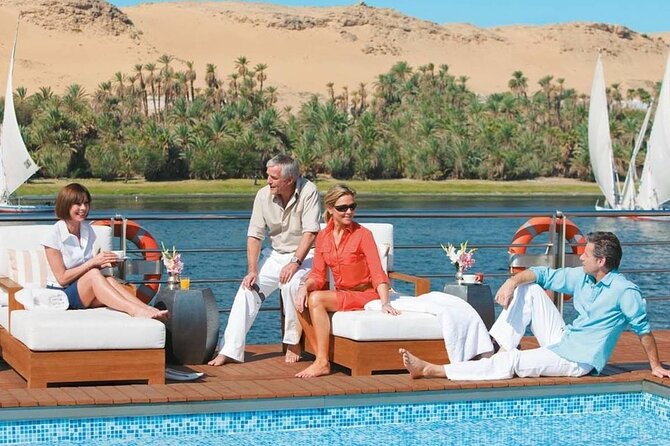
I would choose it if you have limited time and want the main Aswan to Luxor sights handled in one package. It suits first-time visitors who prefer a guide, organized transfers, included meals, and one place to sleep each night.
It also suits anyone who considers Abu Simbel and the Luxor balloon ride essential. Arranging those pieces alone would require more transport planning and early-morning coordination.
I would hesitate if you want slow mornings, long visits at each temple, or a truly high-end cruise. The schedule is packed, and you may be out touring from before sunrise until evening. Families can join, but children must be accompanied by an adult, child pricing applies only when sharing with two paying adults, and children under six cannot join the balloon ride.
Free cancellation is available up to 24 hours before the start time. Inside that window, refunds are not offered, and the minimum group requirement can affect departure.
Should you book it?
Book this Nile cruise if your priority is seeing a lot in four days without managing every transfer yourself. The combination of Abu Simbel, Philae, Kom Ombo, Edfu, Luxor, Karnak, the Valley of the Kings, and a balloon flight gives you an unusually full introduction to southern Egypt.
Go in prepared for early alarms, extra entrance fees, paid drinks, tipping, and basic cabins. Confirm the guide’s name, the cash needed for tickets, and the next day’s departure time before the first night ends.
For me, the strongest reasons to book are the route, the river sailing time, and the chance to see Luxor from above. The strongest reasons to hesitate are the packed schedule and uneven accommodation standards. If you can accept those tradeoffs, this is a practical, good-value way to experience the Nile.
FAQ
How long is the Nile cruise?
The experience lasts approximately four days and includes three nights aboard a Nile cruise ship traveling from Aswan to Luxor.
Is Abu Simbel included?
Yes. The second day includes a shared small-group trip to the Abu Simbel Temple Complex with an English-speaking guide. The departure is around 4:30 in the morning.
Are entrance fees included?
No. Entrance fees are listed as approximately $125 per person for all the sites. Tips, drinks, and water are also not included.
Is the hot-air balloon ride included?
Yes. The package includes a 30 to 45-minute hot-air balloon flight over Luxor’s West Bank. If bad weather cancels the flight, the stated refund is $25 per person.
Can children take the balloon flight?
Children under six are not allowed on the balloon trip. Children must be accompanied by an adult, and child pricing applies only when sharing with two paying adults.
Where can I be dropped off in Luxor?
You can be dropped at a Luxor hotel, the airport, or the railway station in the afternoon. East Bank hotel transfers are included, while West Bank hotel drop-off costs an additional $10 per person.
More Evening Experiences in Aswan
- 4-Day 3-Night Nile Cruise from Aswan to Luxor With Balloon and Abu Simbel
★ 5.0 · 327 reviews - 2 Night Nile Cruise from Aswan to Luxor
★ 5.0 · 311 reviews - 1 Night Nile Cruise from Aswan to Luxor
★ 5.0 · 229 reviews - From Aswan: 4-Days 3-Night Nile Cruise with Hot Air Balloon
★ 4.4 · 53 reviews
More Abu Simbel Trips from Aswan
- From Aswan: Abu Simbel Temple Day Trip with Hotel Pickup
★ 4.4 · 2,807 reviews - Private Day Tour to Abu Simbel Temples from Aswan
★ 4.5 · 507 reviews - From Aswan: Abu Simbel Day Tour with Private Guide and Car
★ 4.3 · 342 reviews - Aswan: Abu Simbel Group Tour with Guide and Entrance Fees
★ 4.3 · 337 reviews
Newly listed around Aswan
- Sailing Nile Cruise from Aswan to Luxor for 2 Nights★ 4.5 · 139 reviews
- Philae Temple and Aswan High-Dam Half-day tour★ 5.0 · 49 reviews
- Private Tour in Aswan : Felucca and Nubian village★ 5.0 · 29 reviews
- Abu Simbel Private Full-Day Tour from Aswan★ 5.0 · 114 reviews
- (3-Nights Cruise From Aswan To Luxor & Balloon, Abu Simbel)★ 4.5 · 23 reviews
- Day Tour to Abu Simbel from Aswan by Bus★ 4.5 · 25 reviews
- 4-Days Aswan sails Nile Cruise Luxor &Abu Simbel.Hot air Balloon★ 4.5 · 77 reviews
- 3-Nights Cruise From Aswan To Luxor, Hot Air Balloon,Abu Simbel★ 4.5 · 46 reviews
Abu Simbel Tours, compared.
4-Days Nile Cruise From Aswan To Luxor including Abu Simbel and Hot Air Balloon
Read our review →

4-Day 3-Night Nile Cruise from Aswan to Luxor&Abu Simbel+Balloon
Read our review →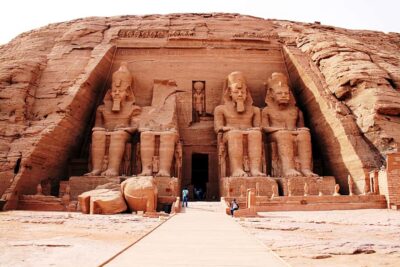
Abu Simbel Temple Private Guided Day Trip with Lunch
Read our review →4-Days Nile Cruise From Aswan To Luxor including Abu Simbel and Hot Air Balloon
Read our review →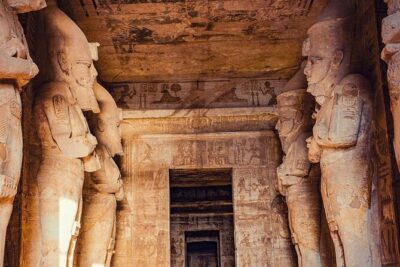
Private Day Tour to Abu Simbel Temples from Aswan
Read our review →4 Days Nile Cruise from Aswan to Luxor including Abu Simbel and Hot Air Balloon
Read our review →