
Reviewed · ABU SIMBEL TOURS
(3-Nights Cruise From Aswan To Luxor & Balloon, Abu Simbel)
Egypt’s greatest sights follow the river. This four-day trip links Aswan and Luxor by Nile cruise, with Abu Simbel, ancient temples, and a sunrise balloon flight folded into one tightly packed journey. You travel with a private Egyptologist guide, sleep aboard the boat, and finish in Luxor with the east and west banks covered.
I especially like the hotel and port transfers, which remove much of the usual transport fuss, and the chance to visit Abu Simbel while keeping your hotel room moving with you. The main caution is cost clarity: entrance fees are not included, despite the sightseeing schedule, and the days begin very early.
In This Review
- Key points to know before booking
- Why this Aswan to Luxor cruise works
- Day one: Philae, the High Dam, and your first Nile night
- Day two: Abu Simbel and the twin temple at Kom Ombo
- Day three: Edfu and the river between the temples
- Day four: balloon sunrise and Luxor’s full ancient circuit
- What the $349 price really covers
- Who will get the most from this cruise
- Should you book this Nile journey?
- FAQ
- How long does the Aswan to Luxor cruise last?
- Are meals included?
- Are entrance fees included in the price?
- Is the hot-air balloon flight included?
- What happens if bad weather cancels Abu Simbel or the balloon ride?
- Where can you be dropped off in Luxor?
Key points to know before booking
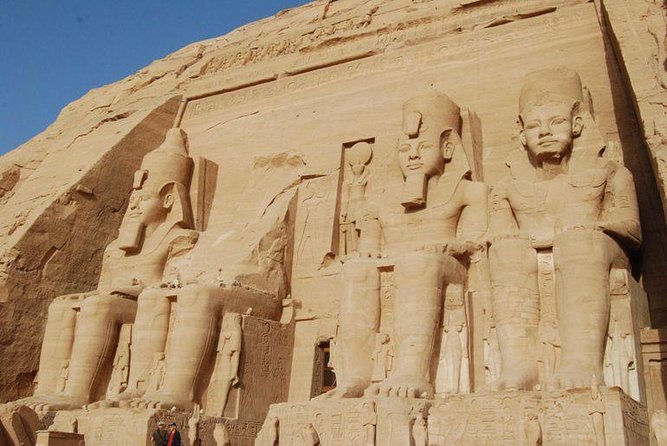
- Abu Simbel requires a very long day: Allow roughly seven hours for the temple visit and its transport from Aswan.
- The hot-air balloon leaves around 4:30 am: Children under six cannot join, and cameras are not permitted in the basket.
- Your cruise includes three nights and all meals: Lunch begins on day one, with breakfast on the final morning.
- Entrance fees are extra: You pay most site fees by card, while the High Dam and Philae motorboat require cash.
- The final day is packed: Balloon flight, Valley of the Kings, Hatshepsut, Karnak, and Luxor Temple all come before a 4 to 5 pm finish.
- The guide can make a major difference: The Aswan guides received strong praise for their explanations, while Mohamed Rushwan in Luxor was noted for keeping arrangements on track.
Why this Aswan to Luxor cruise works
For $349 per person, this trip gives you three nights aboard a Nile cruise, meals, guided sightseeing, local transfers, an air-conditioned vehicle, a horse-and-carriage ride, and a hot-air balloon flight. That is a lot of Egypt in four days.
The value is strongest if you want the main Aswan to Luxor sights without arranging separate hotels, drivers, and day tours. You unpack once, eat aboard the boat, and let the tour operator handle the connection between each stop.
The tradeoff is pace. This is not a slow, contemplative cruise. You will have early starts, long road transfers, and a final day that feels more like a greatest-hits tour than a relaxed farewell to Luxor.
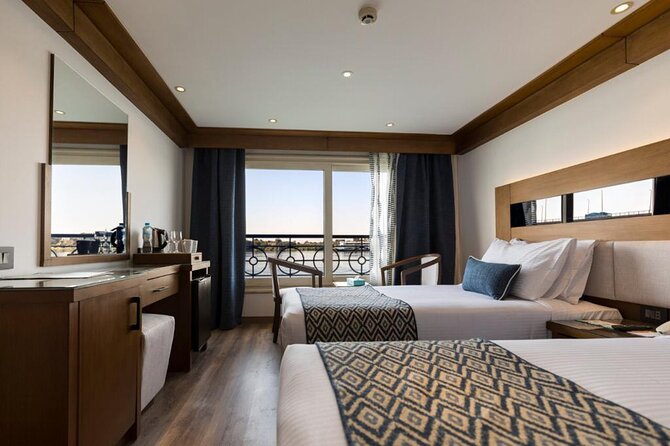
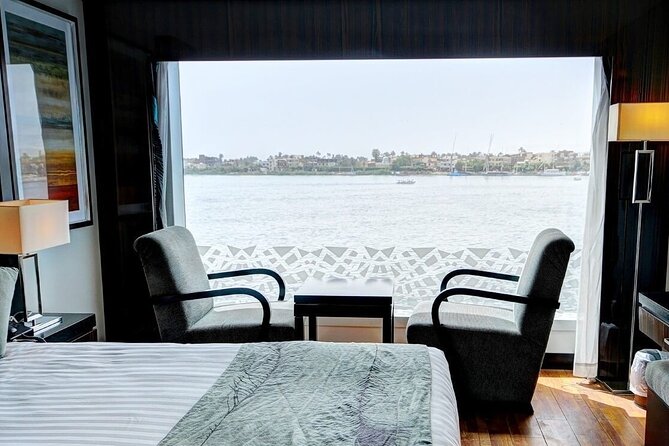
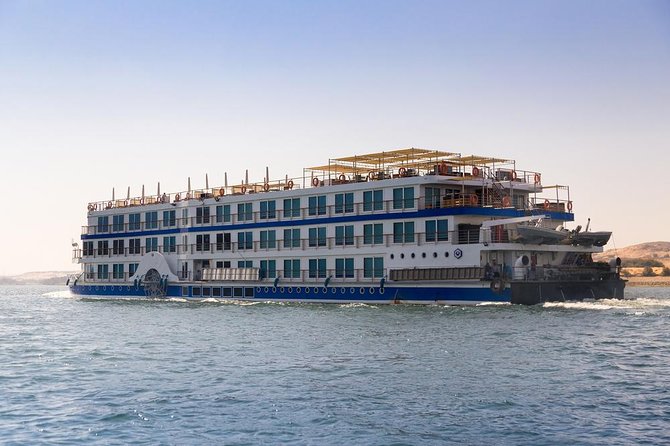
The cruise itself is listed as private for your group, but the boat is your accommodation rather than a private vessel. You receive a cabin with its facilities, while sightseeing takes place with your own Egyptologist guide and group.
More Hot Air Balloon Flights in Aswan
- 4-Days Nile Cruise From Aswan To Luxor including Abu Simbel and Hot Air Balloon
★ 5.0 · 3,142 reviews - 4-Day 3-Night Nile Cruise from Aswan to Luxor&Abu Simbel+Balloon
★ 5.0 · 2,023 reviews - 4-Day 3-Night Nile Cruise from Aswan to Luxor including Abu Simbel, Air Balloon
★ 4.5 · 612 reviews
Day one: Philae, the High Dam, and your first Nile night
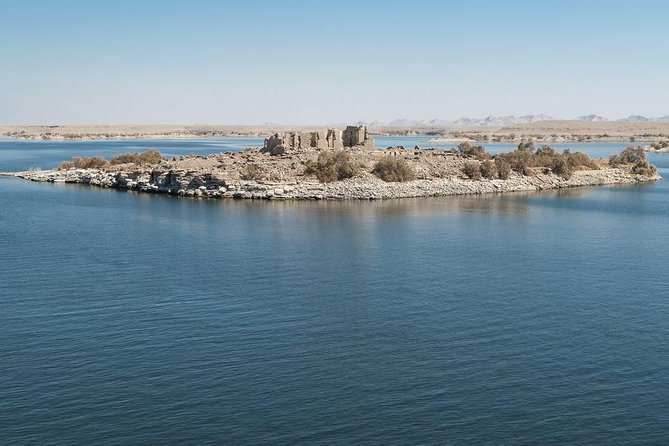
Your arrival in Aswan starts with a pickup and a trip down to the Nile. A motorboat carries you to Philae Temple, set on Agilkia Island after the original temple site was affected by the creation of Lake Nasser.
Philae is one of the most attractive temple settings in southern Egypt. The approach by boat gives the visit a clear sense of place, and the water around the island helps you understand why relocation was necessary. The listed visit is short, about six minutes in the schedule, so confirm the actual time with your guide. That duration may be a scheduling error, since the temple normally needs more than a quick glance.
The motorboat is not covered by card payment. Bring cash for this part, along with the High Dam visit. The tour includes the sites in the program, but the entrance fees themselves are excluded, so ask for the day’s exact fee total before setting out.
Next comes the Aswan High Dam, a major modern project built during Gamal Abdel Nasser’s era with Soviet assistance. The dam controls the Nile’s annual floods and generates electricity, while the reservoir behind it changed the geography and archaeology of southern Egypt.
You get about 90 minutes here. The stop is less decorative than Philae, but it adds useful context. Without the dam, there would be no modern Lake Nasser and no need to relocate several Nubian monuments. It is a practical stop, not a showpiece, so visitors mainly interested in temples may find it less memorable.
In the evening, you have a chance to visit Aswan’s local market before checking into the cruise. This is one of the better details in the schedule. The market gives you a little time among everyday shops and local commerce rather than spending every hour at formal monuments.
If your arrival in Aswan is early, sightseeing can begin before the cruise check-in time of noon. That helps you use the day well, but it also means your first morning may start immediately after an arrival journey. Keep your day bag ready and do not assume you can access your cabin at once.
Day two: Abu Simbel and the twin temple at Kom Ombo
Day two is dominated by Abu Simbel, one of Egypt’s most powerful archaeological sights. The complex was built during the reign of Ramses II in the 13th century BC and was intended to display royal power near Egypt’s southern frontier.
The four colossal seated figures at the Great Temple make an immediate impression, but the interior reliefs matter just as much. The complex includes a second temple dedicated to Queen Nefertari, and both buildings were saved through an international relocation project when the Aswan High Dam threatened to place them underwater.
The planned Abu Simbel visit takes about seven hours. That is a large part of a four-day tour, yet it is time well spent if Abu Simbel is high on your list. The distance from Aswan means this is the day when convenience matters most. Having transport arranged lets you focus on the site instead of negotiating a separate transfer.
Still, be ready for fatigue. Abu Simbel is a major road excursion, and you will then visit Kom Ombo. The tour schedule does not offer much room for a long rest. Wear comfortable clothing, carry water, and keep only what you need with you.
The temples at Abu Simbel have an extra point worth knowing: the monument you see today is not at its original location. That fact gives the visit a modern engineering story alongside the ancient one. Ask your Egyptologist guide to explain how the complex was moved, since the relocation is one of the most important parts of its modern history.
Later, the cruise reaches Kom Ombo, about two hours from the schedule. This temple is unusual because it serves two gods, the crocodile god Sobek and the falcon-headed Horus. Its design is effectively split into two religious sections, with parallel sanctuaries and entrances.
That double plan makes Kom Ombo easier to understand than many sprawling Egyptian complexes. You can see how local worship shaped the building, even as later Ptolemaic and Roman rulers added decoration. The temple is also known for reliefs connected with medicine and ancient instruments, though the guide will determine how much time you spend with those details.
The evening return to the boat is welcome after Abu Simbel. Your meals are included, with lunch and dinner on this day. Food and cabin standards can vary by boat, so ask for the exact cruise name and cabin category before booking if those details matter to you.
Day three: Edfu and the river between the temples
Around 5 am, you prepare for Edfu Temple, dedicated to Horus. The early start is not a minor detail. You should book this trip only if you can handle several mornings that begin before sunrise.
A horse and carriage are included for the Edfu visit. This is a practical way to reach the temple from the river area and adds a traditional form of local transport to the morning. The arrangement can also reduce walking time, which helps when the day already includes extensive sightseeing.
Edfu is among Egypt’s best-preserved temples. Its monumental gateway, courtyard, columns, and reliefs let you see a complete temple plan more clearly than at many sites where later building or damage obscures the layout.
The temple was built in the Ptolemaic period on the site of an older religious center. Horus was worshipped here as a falcon deity, and the reliefs present the familiar mythic struggle between Horus and his enemies. Your guide’s explanations are especially useful at Edfu because the walls are covered with scenes that can otherwise become a blur of names and symbols.
After Edfu, the day is mostly about the cruise and the Nile itself. The program does not list another major sightseeing stop, so this is your best chance to enjoy the boat at a less frantic pace. Use the time to watch the riverbank pass, rest, and prepare for the final day.
The private guide format is a real advantage here. A good Egyptologist can adjust the explanation to your interests, spend more time on architecture, or keep the talk moving if you are tired. The Aswan guides were praised for explaining Philae and Kom Ombo clearly, which is exactly the kind of help that turns a series of ruins into a connected story.
More Abu Simbel trips from Aswan:
- From Aswan: Abu Simbel Temple Day Trip with Hotel Pickup
★ 4.4 · 2,807 reviews - 4-Days Nile Cruise From Aswan To Luxor including Abu Simbel and Hot Air Balloon
★ 4.5 · 509 reviews - Private Day Tour to Abu Simbel Temples from Aswan
★ 4.5 · 507 reviews - 4 Days Nile Cruise from Aswan to Luxor including Abu Simbel and Hot Air Balloon
★ 4.5 · 356 reviews
Day four: balloon sunrise and Luxor’s full ancient circuit
The final day begins around 4:30 am with a hot-air balloon flight over Luxor. The flight itself lasts about an hour, and the tour includes it.
This is the most memorable extra in the program, but it requires strict planning. You will be awake well before dawn, and the balloon can be canceled for bad weather. If that happens, the stated refund is $25 per adult and $12.50 per child.
You may use a cellphone for photographs, but cameras are not allowed in the balloon basket. Children under six cannot take part. If the flight matters greatly to you, treat it as a bonus rather than the sole reason to book, since weather remains outside the operator’s control.
After landing, you visit the Valley of the Kings on Luxor’s west bank. The valley served as a royal burial ground for roughly 500 years, from the 16th through the 11th centuries BC. The entrance fee does not cover every tomb, and the number of open tombs can vary, so ask your guide which tickets are included in your site payment.
The valley rewards attention to detail. Look for painted burial chambers, religious texts, and scenes meant to guide the dead through the afterlife. The heat and uneven ground can make the visit tiring, especially after the balloon flight, so sensible shoes are important.
Next is the Temple of Hatshepsut at Deir el Bahari, built into the cliffs on the west bank. Its three broad terraces create a different visual experience from the enclosed temples at Philae, Kom Ombo, and Edfu.
Hatshepsut’s story also gives your guide a chance to discuss royal power and the role of a woman who ruled as pharaoh. The surviving reliefs and statues have been damaged in places, but the temple’s layout remains striking. The scheduled visit lasts about 90 minutes, enough for a focused tour without lingering in every corner.
A short stop at the Colossi of Memnon follows. These two statues of Amenhotep III are about 19 meters high and are the last major remains of a much larger memorial temple.
The stop lasts around 30 minutes and is included. It is brief, but useful as a photo stop and as a reminder of how much of ancient Thebes has disappeared. The Greek story about the eastern statue producing a sound at dawn adds a curious layer to the site, though your guide can separate legend from archaeology.
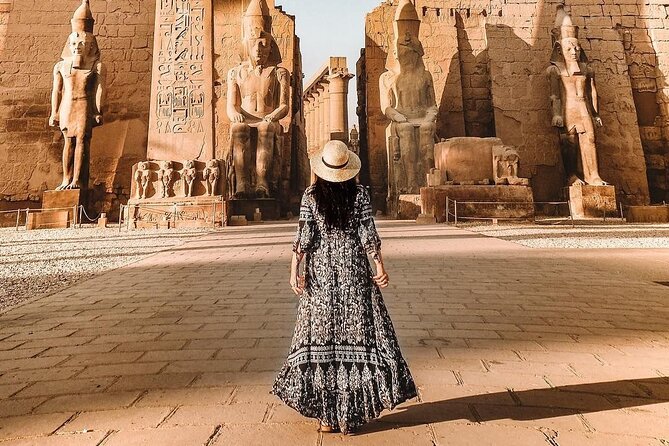
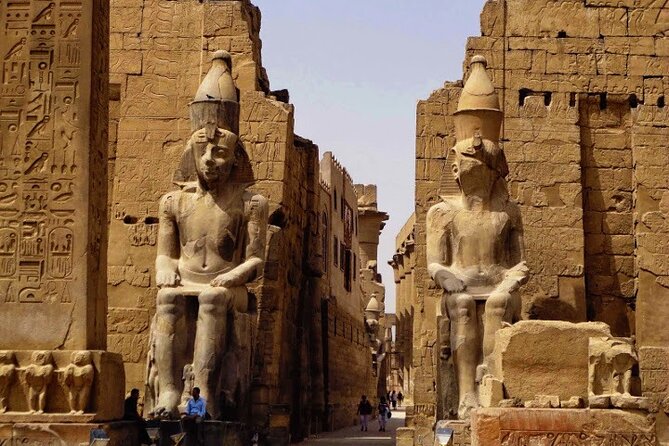
The final two monuments are on Luxor’s east bank. Karnak Temple is a huge complex that grew over many centuries, from the Middle Kingdom through the Roman period. The Great Hypostyle Hall, with its forest of massive columns, is the obvious star, but the complex also includes sacred spaces linked to Amun, Mut, and Khonsu.
You have about 90 minutes at Karnak. That is enough for the principal route, but not enough to examine every section. If you want detailed architectural study, consider returning independently another day.
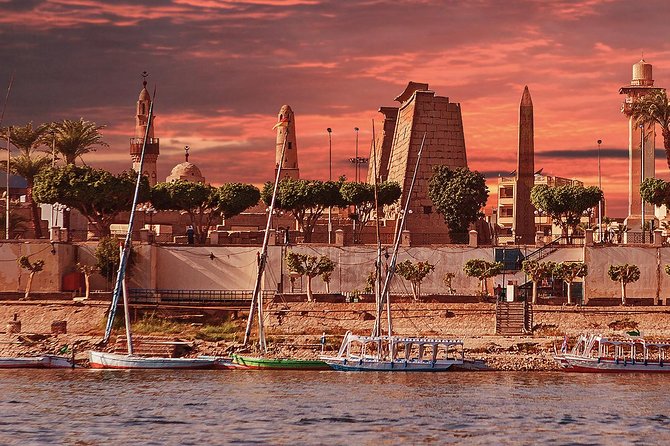
The tour ends at Luxor Temple, built mainly during the 18th and 19th Dynasties and expanded by rulers including Amenhotep III and Ramses II. Its placement in the modern city gives it a different atmosphere from the west bank sites, and the avenue and monumental entrance help explain its role in ancient Thebes.
With only 45 minutes scheduled, this is a quick visit. You will see the main court and major features, but you should not expect a leisurely wander. After Luxor Temple, the tour finishes around 4 to 5 pm, with drop-off available at Luxor Airport, the train station, or hotels on the east bank. Plan an evening departure rather than a tight afternoon connection.
What the $349 price really covers
The headline price is attractive for four days of transport, guiding, accommodation, meals, and major excursions. You receive three breakfasts, three lunches, and three dinners, plus a cabin, transfers, an air-conditioned vehicle, the horse and carriage, and the balloon ride.
The important catch is entrance fees are extra. The operator states that most entrance payments are made by card, while the High Dam and Philae motorboat require cash. Budget for these costs separately and ask for a written breakdown before the first sightseeing day.
The price is quoted per person and does not apply unchanged during Christmas, New Year, or Easter holidays. Children aged 5 to 11 who travel with one adult are charged as adults. Children sharing with parents can stay in the family room arrangement, with a maximum of two children in one room.
A solo visitor should also read the room rules carefully. If you want your own room, you must book as a single person. Three people traveling together receive a triple room, while a group member wanting a private room needs a separate single booking.
There was also a serious accommodation concern in one booking account, involving a last-minute date problem and a room that did not match the expected arrangement. I would protect yourself by confirming the cruise date, cabin type, occupancy, and pickup details in writing well before departure. This is especially important since the experience is commonly booked about 45 days ahead.
Who will get the most from this cruise
I would choose this trip if you want a high-value first look at Upper Egypt and prefer one operator to manage the moving parts. It suits couples, families with older children, and solo visitors who want a guide nearby without joining a large sightseeing group.
It also works well if Abu Simbel and the balloon flight are priorities. Both are harder to arrange on your own, and the tour links them with the classic temples in a compact schedule.
I would hesitate if you want slow mornings, long time at each monument, or complete control over your meals and cabin. The 4:30 am balloon departure and 5 am Edfu start are demanding, and the final day is particularly full.
The experience is rated 4.6 out of 5, with 91 percent recommending it. That points to a generally strong package, while the mixed booking and cabin account is a reminder to verify the practical details instead of relying only on the attractive price.
Should you book this Nile journey?
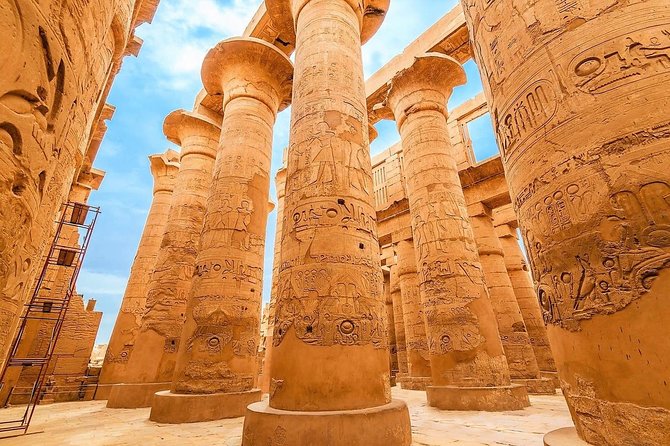
Book it if you want Philae, Abu Simbel, Kom Ombo, Edfu, the Valley of the Kings, and Luxor’s major temples in one organized trip. The private Egyptologist guide, included meals, boat accommodation, and transfers give you good value at $349, provided you budget for admission fees.
Before paying, confirm the cruise vessel, cabin setup, exact pickup time, entrance costs, and final drop-off. If those points are clear, this is a strong choice for a compact Egypt itinerary. If you need a relaxed cruise or more time at each temple, choose a longer Nile program instead.
FAQ
How long does the Aswan to Luxor cruise last?
The experience lasts about four days and includes three nights aboard the Nile cruise.
Are meals included?
Yes. Meals begin with lunch on the first day and finish with breakfast on the final day. Three breakfasts, three lunches, and three dinners are included.
Are entrance fees included in the price?
No. Entrance fees are not included. Most site fees can be paid by card, but the High Dam and the motorboat to Philae require cash.
Is the hot-air balloon flight included?
Yes. The hot-air balloon flight is included and lasts about one hour. It begins around 4:30 am, and children under six cannot participate.
What happens if bad weather cancels Abu Simbel or the balloon ride?
If Abu Simbel is canceled because of bad weather, the stated refund is $25 per adult and $12.50 per child. The same refund amounts apply if bad weather cancels the balloon ride.
Where can you be dropped off in Luxor?
The final drop-off can be at Luxor Airport, the Luxor train station, or hotels on Luxor’s east bank. The tour usually ends around 4 to 5 pm, so an evening departure is recommended.
Newly listed around Aswan
- Sailing Nile Cruise from Aswan to Luxor for 2 Nights★ 4.5 · 139 reviews
- Philae Temple and Aswan High-Dam Half-day tour★ 5.0 · 49 reviews
- Private Tour in Aswan : Felucca and Nubian village★ 5.0 · 29 reviews
- Abu Simbel Private Full-Day Tour from Aswan★ 5.0 · 114 reviews
- Day Tour to Abu Simbel from Aswan by Bus★ 4.5 · 25 reviews
- 4-Days Aswan sails Nile Cruise Luxor &Abu Simbel.Hot air Balloon★ 4.5 · 77 reviews
- 3-Nights Cruise From Aswan To Luxor, Hot Air Balloon,Abu Simbel★ 4.5 · 46 reviews
- Nubian Village by Motorboat In Aswan★ 5.0 · 97 reviews
Abu Simbel Tours, compared.
4-Days Nile Cruise From Aswan To Luxor including Abu Simbel and Hot Air Balloon
Read our review →

4-Day 3-Night Nile Cruise from Aswan to Luxor&Abu Simbel+Balloon
Read our review →
4-Day 3-Night Nile Cruise from Aswan to Luxor including Abu Simbel, Air Balloon
Read our review →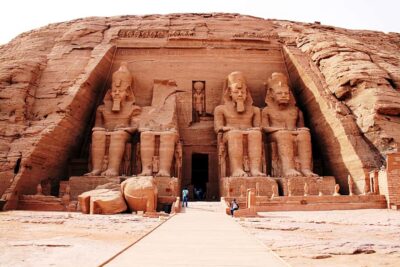
Abu Simbel Temple Private Guided Day Trip with Lunch
Read our review →4-Days Nile Cruise From Aswan To Luxor including Abu Simbel and Hot Air Balloon
Read our review →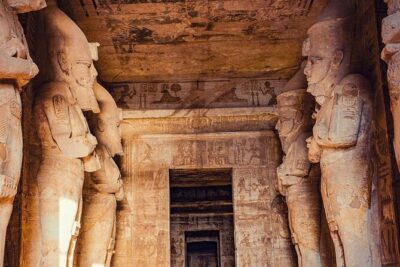
Private Day Tour to Abu Simbel Temples from Aswan
Read our review →4 Days Nile Cruise from Aswan to Luxor including Abu Simbel and Hot Air Balloon
Read our review →Browse the lists this tour appears in