
Reviewed · ABU SIMBEL TOURS
3-Day Luxor Aswan and Abu Simbel Historical Sites Private Tour
Three days, Egypt’s biggest ancient sights. This private trip packs Luxor, Aswan, and Abu Simbel into a tight route, with hotel transfers, a first-class train ticket, an air-conditioned vehicle, and an Egyptologist guide handling the moving parts. I like the private format, which lets your group set the pace, and I like that the long journey from Luxor to Aswan is arranged by train rather than left to you. The main drawback is clear: this is a demanding schedule, and entrance fees, meals, drinks, and accommodation are not included.
I also like the practical help at places where independent sightseeing can become a chore. You do not need to bargain with taxi drivers or work out train tickets, and the boat ride to Philae is included. Guides named Khaled or Khalid receive especially warm praise for being informative, funny, helpful, and flexible, while Mohamed is often credited with careful planning and communication.
In This Review
- Key points at a glance
- What the $251.29 price really covers
- Day one: the Valley of the Kings and Luxor’s great temples
- Hatshepsut’s temple and the Colossi of Memnon
- Karnak Temple and Luxor Temple
- First-class rail travel from Luxor to Aswan
- Day two: Philae, the Unfinished Obelisk, and the High Dam
- The Unfinished Obelisk
- The High Dam and Lake Nasser
- Day three: the long road to Abu Simbel
- A guide can shape the whole experience
- What to know before you go
- Who should book this three-day route?
- Should you book the Luxor, Aswan, and Abu Simbel tour?
- FAQ
- How long is the tour?
- Where does the tour take place?
- Is this a private tour?
- Is hotel pickup included?
- Is transportation included?
- Is the train ticket first class?
- Is the Philae boat ride included?
- Are entrance fees included?
- Are meals and drinks included?
- Is accommodation included?
- Can I cancel for a full refund?
Key points at a glance
- Three major destinations in three days: See the West Bank and East Bank of Luxor, Aswan’s main sights, and Abu Simbel in one compact plan.
- A private Egyptologist guide: Your own group receives explanations and some freedom to adjust the pace.
- First-class Luxor to Aswan train travel: The main intercity transfer is arranged in advance.
- Philae includes a boat ride: Reach the island temple by motorboat rather than sorting out the crossing yourself.
- Abu Simbel takes a full day: Plan for roughly eight hours for the road trip and temple visit from Aswan.
- Good value for a tightly planned visit: At $251.29 per person, the price covers transport, guide services, fuel, parking, taxes, and selected travel arrangements, but not site tickets or meals.
What the $251.29 price really covers
The listed price is $251.29 per person, with group discounts available. That figure is not an all-in holiday price. You still pay entrance fees at the archaeological sites, food and drinks, personal expenses, gratuities, and accommodation if you request lodging.
Still, the package covers several costs that can add friction in Egypt. You get hotel pickup and drop-off, an air-conditioned vehicle, a driver, fuel, parking, service charges, taxes, first-class train seating from Luxor to Aswan, and the boat ride to Philae. An Egyptologist guide is also included.
I see this as a convenience-focused price rather than a bargain-basement sightseeing deal. The value improves when you are sharing the private vehicle with companions, especially because the route involves several transfers and a long drive to Abu Simbel. You are paying to have the transport chain organized, not simply to be shown a monument.
Before booking, ask for a clear estimate of entrance fees and accommodation if you need either. Since the price excludes every site admission, your actual spending will be higher than the headline figure.
More Abu Simbel trips from Aswan:
- Luxor: Abu Simbel Temple Private Guided Day Trip with Lunch
★ 4.6 · 546 reviews - 4 Nights Luxor to Aswan Nile cruise with Abu Simbel&Air Balloon
★ 5.0 · 155 reviews - 4 Days Aswan and Luxor Nile cruise&Abu Simbel by plane from Cairo
★ 5.0 · 155 reviews
Day one: the Valley of the Kings and Luxor’s great temples
The first day concentrates on Luxor’s major sights. It begins on the West Bank at the Valley of the Kings, the burial ground of the rulers of ancient Thebes. You spend about an hour and a half in the area, including a brief stop at the visitor center.
Your guide can explain the tombs before you enter, but guides are not permitted inside. That matters because the guidance happens outside the decorated chambers, not beside the wall paintings. You should also know that the tomb of King Tutankhamun costs extra if you decide to enter it.
The Valley of the Kings can feel confusing without context, with several tomb entrances and changing access arrangements. A guide is useful here for helping you decide how to use your time and what details to notice. The supplied information does not specify which tombs are open on your date, so do not expect a fixed list of interiors.
Hatshepsut’s temple and the Colossi of Memnon
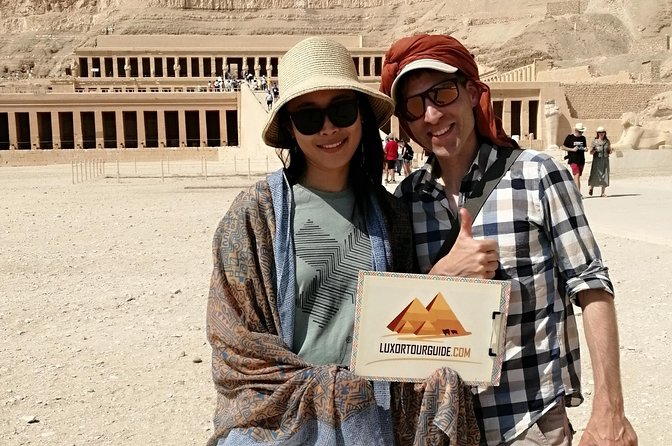
Next comes the Temple of Hatshepsut, one of Luxor’s most striking monuments. Its broad terraces and courtyards rise against the cliffs, and your guide explains how Hatshepsut presented herself as a male ruler to secure her place on the throne.
You get about an hour here, with time to walk through the courtyards and look closely at the hieroglyphic decoration. The visit is more than a quick photo stop, but the site is large enough that you will want comfortable shoes and water. Entrance is not included.
The Colossi of Memnon follows, with about 20 minutes beside the two enormous seated statues of Amenhotep III. These figures once marked the entrance to a much larger funerary temple. Today, the statues are the surviving headline act, so the stop is short and works well as a pause between larger sites.
Karnak Temple and Luxor Temple
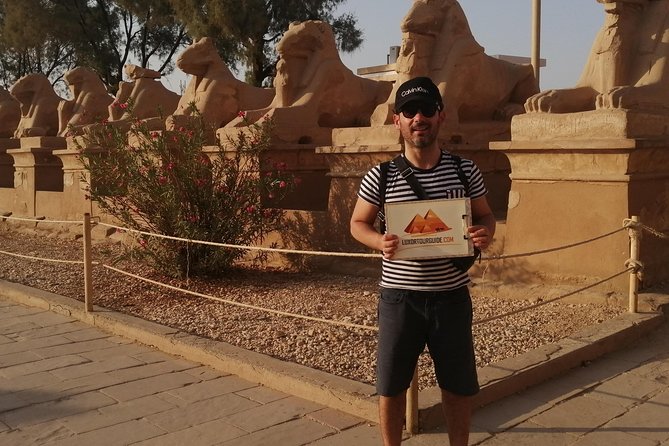
Karnak is the day’s heavyweight. The complex grew over more than 3,000 years as successive pharaohs added courts, gateways, columns, and sanctuaries. You enter along the Avenue of Sphinxes, then move through the Great Court toward the Great Hypostyle Hall.
The hall’s 134 columns create the kind of scale that photographs struggle to capture. Your guide can explain how the complex developed and point out the different marks left by the rulers who expanded it. The sacred lake provides another useful stop, giving you a sense of how ritual activity shaped the site.
You receive guided time and additional time to explore independently. That balance is one of the strongest parts of the private setup. If you want to linger over inscriptions or take photographs, you have more freedom than you would on a rigid large-group outing.
The day ends at Luxor Temple, once connected to Karnak by a two-kilometer Avenue of Sphinxes. Ramses II is strongly represented here, and the columns and inner walls carry layers of decoration from different periods.
Your guide can help explain how Alexander the Great inserted himself into the temple’s story. You can also see one of the original pair of obelisks. Its companion now stands in Paris at the Place de la Concorde, a reminder that Luxor’s monuments have long had lives far beyond Egypt.
The schedule is packed, but the order makes sense: the West Bank first, then the East Bank. I would expect the first day to feel physically full, especially with heat, walking, and several large open-air sites. The private vehicle and free time help, but this is not a slow archaeological study tour.
A few more Luxor outings to price up
- Sunrise Hot Air Balloon Over the Historical sites in Luxor
★ 5.0 · 697 reviews - From Cairo: Private Full-Day Tour of Historical Alexandria
★ 4.1 · 1,155 reviews - Old Cairo Guided Walk Tour: History, Culture & Street Bites
★ 4.6 · 633 reviews - From Cairo: Historical Alexandria Shared Day Tour with Lunch
★ 4.4 · 260 reviews
First-class rail travel from Luxor to Aswan
The trip includes first-class train seating between Luxor and Aswan. This is one of the most useful inclusions because you do not have to work out the ticket purchase yourself or arrange a separate road transfer for that leg.
The train also changes the rhythm of the trip. After the long first day, you can sit back and let the route carry you south. The tour information does not state the departure time, train duration, or exact hotel arrangements, so confirm those details before you travel.
The private format applies to the touring party, but the train portion is naturally shared with other rail passengers. That is not a flaw. It simply means that private guiding and private road transport do not make the entire three-day experience exclusive.
Day two: Philae, the Unfinished Obelisk, and the High Dam
Day two turns to Aswan’s monuments and modern engineering. The centerpiece is Philae Temple, reached by a short motorboat ride. That crossing is included, which removes one more piece of local logistics from your hands.
Philae was moved about 500 meters from its original site after construction of the High Dam caused the Nile waters to rise. The temple is dedicated to Isis and includes shrines connected with the story of Isis and Osiris. Its island setting gives the visit a different mood from Luxor’s huge temple compounds.
You spend about two hours at Philae. Your guide leads the main walk, then gives you time to look around on your own. I like that arrangement here. The temple has enough carved detail to reward a slower look, and you can use the free time for photographs without being pulled immediately to the next stop.
The boat ride is a small but important part of the experience. It makes the approach feel distinct, and it is already built into the transport plan. The entrance fee to the temple is not included.
The Unfinished Obelisk
At the granite quarries, you see the Unfinished Obelisk still attached to the bedrock. A crack ended the project, leaving a useful record of how monumental stonework was attempted.
The stated visit lasts about an hour. Your Egyptologist can explain how the obelisk was carved and why the defect made it unusable. This stop is less grand than Philae or Karnak, but it gives you practical insight into the labor behind Egypt’s temples and statues.
The High Dam and Lake Nasser
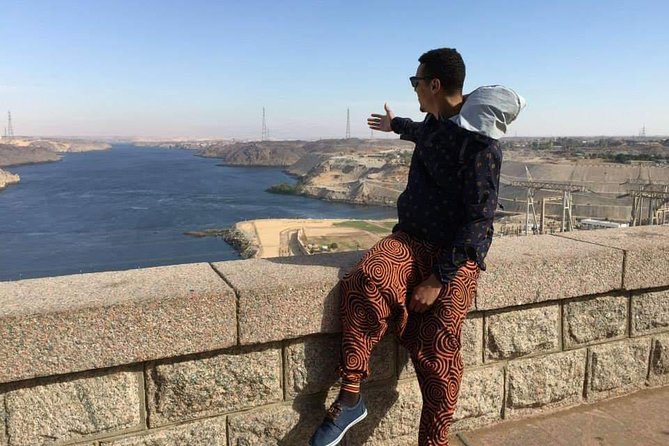
The final stop is the Aswan High Dam, built from 1960 to 1970. You see Lake Nasser, described in the tour information as the second-largest artificial lake in the world, and cross the friendship emblem.
This is a modern counterpoint to the ancient sites. It shows how twentieth-century Egyptian engineering changed the Nile and the surrounding region. The stop lasts about an hour, and admission is not included.
Day two is shorter in site count than day one, but it still involves walking, transfers, and heat. The advantage is variety: island temple, quarry, and modern dam. You are not looking at another set of similar ruins all day.
Day three: the long road to Abu Simbel
Abu Simbel is the trip’s biggest logistical test and one of its main rewards. The excursion from Aswan takes about eight hours by vehicle, including the road journey and the temple visit. Transport is by air-conditioned vehicle, with a qualified Egyptologist accompanying your private group.
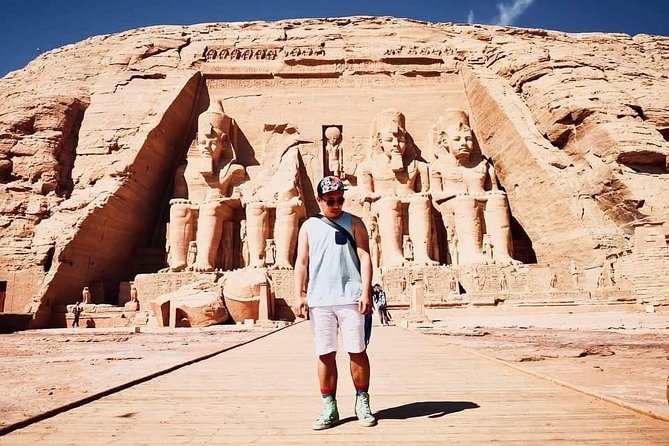
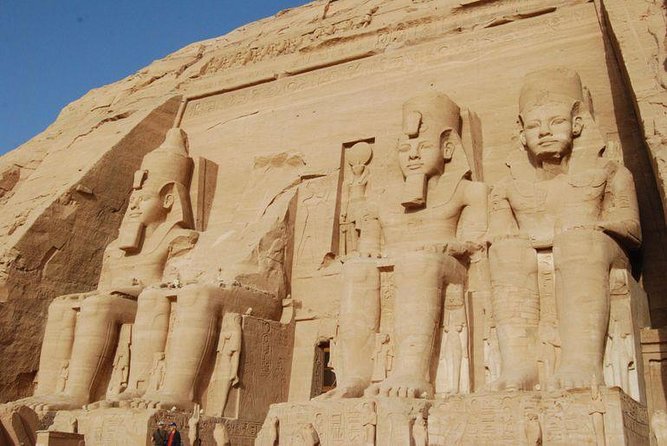
The Great Temple of Ramses II is fronted by four colossal seated figures carved from the rock. The smaller Temple of Hathor completes the complex. Even without adding other sites, Abu Simbel requires a full day because of its distance from Aswan.
Your guide explains the temples’ history during the approach, including the UNESCO-led relocation of the cliff face to higher ground. The entire complex had to be moved when rising waters threatened the original site. You also hear how the temples were found by accident in 1813.
As at the Valley of the Kings, there is an important guiding limitation. Guides are not allowed inside either temple. Instead, your guide uses photos and illustrations to explain the interiors before or after you enter.
That arrangement is worth understanding in advance. If you expect a guide to walk through every chamber with you, you may be disappointed. If you are happy to receive the explanation outside and then inspect the interior independently, the visit works well.
The road time is the clear drawback. Eight hours in a vehicle is a lot, particularly after two full days of sightseeing. I would choose this tour only if Abu Simbel is high on your list and you accept that the three-day plan favors coverage over rest.
A guide can shape the whole experience
The strongest praise attached to this experience centers on the guides and coordinators. Khaled, also spelled Khalid in some supplied material, is repeatedly described as helpful, charismatic, funny, and strong at explaining Egyptian history. That combination matters. A guide who can explain clearly and keep the mood relaxed is especially useful during long site days.
Mohamed, the coordinator, receives praise for communication and for suggesting practical arrangements based on the group’s needs. Mahmoud is singled out as an excellent driver who handled the roads with care. One particularly useful detail is the mention of a newer, clean, modern, comfortable vehicle.
Guide assignments can change, so I would not book on the assumption that a particular person is guaranteed unless the company confirms it. Still, the pattern of praise points to a service with a strong emphasis on personal attention rather than a conveyor-belt sightseeing style.
The private format also lets you ask for more time at a favorite site, within the limits of the schedule. Several comments praise guides for adapting the pace and focusing on what the group wanted to see. That is a real advantage when one person wants more tombs and another has reached their daily limit for hieroglyphics.
What to know before you go
This tour requires a moderate level of physical fitness. Expect walking through large temple compounds, time in open areas, steps or uneven ground at some sites, and a long vehicle journey to Abu Simbel. The information does not provide detailed accessibility arrangements, so ask the provider directly if that affects your decision.
Bring money for entrance fees, meals, drinks, personal expenses, and tips. Site admissions are excluded throughout the itinerary, including the Valley of the Kings, Hatshepsut’s temple, Karnak, Luxor Temple, Philae, the Unfinished Obelisk, the High Dam, and Abu Simbel. King Tutankhamun’s tomb costs extra as well.
Accommodation is available by request, not included as a standard part of the price. Confirm where you will sleep between touring days and how the hotel transfers will work with your train and Abu Simbel schedule.
The tour confirms at booking, and free cancellation is available up to 24 hours before the start time. Cancellations or changes made inside that window are not accepted for a refund.
Who should book this three-day route?
I would recommend it to you if your time in southern Egypt is short and you want the major names without arranging each transfer yourself. It suits first-time visitors who value an Egyptologist’s explanations, prefer a private group, and are comfortable with early starts, long days, and a full road trip to Abu Simbel.
It is less suitable if you want relaxed mornings, extended time inside individual tombs, or a slow Nile experience. It also may not suit anyone who wants every cost included upfront, since entrance fees, meals, drinks, gratuities, and accommodation sit outside the advertised price.
Should you book the Luxor, Aswan, and Abu Simbel tour?
Book it if your priority is maximum historical coverage in minimum time. The route is well chosen, the first-class train and Philae boat ride remove useful hassles, and the private Egyptologist format gives you more personal attention than a large coach tour.
Think twice if you dislike long transfers or want a carefully itemized all-inclusive price. For the right schedule, though, $251.29 per person is a reasonable starting point for a private, transport-heavy trip covering three of Egypt’s essential destinations. Confirm the guide, accommodation, train timing, and expected entrance fees before paying, then prepare for a busy but rewarding three days.
FAQ
How long is the tour?
The experience lasts approximately three days.
Where does the tour take place?
The tour is based in Luxor and visits Luxor, Aswan, and Abu Simbel in Egypt.
Is this a private tour?
Yes. Only your group participates in the private tour or activity.
Is hotel pickup included?
Yes. Hotel pickup and drop-off are included.
Is transportation included?
Yes. Transport by air-conditioned vehicle is included, along with the first-class train ticket from Luxor to Aswan and the boat journey to Philae Temple.
Is the train ticket first class?
Yes. First-class seating on the train from Luxor to Aswan is included.
Is the Philae boat ride included?
Yes. The boat journey to Philae Temple is included.
Are entrance fees included?
No. Entrance fees to the listed sites are not included. The additional fee for King Tutankhamun’s tomb is also paid separately if you choose to visit it.
Are meals and drinks included?
No. Food and drinks are not included unless specifically stated.
Is accommodation included?
Accommodation is available by request, but it is not included as a standard feature.
Can I cancel for a full refund?
Yes, if you cancel at least 24 hours before the experience start time. Cancellations or changes made less than 24 hours in advance are not accepted for a refund.
More 3-Day Experiences in Luxor
- From Luxor: 3-Day Nile Cruise to Aswan with Private Guide
★ 4.2 · 147 reviews - Aswan: 3-Day Nile River Cruise to Luxor with Guided Tours
★ 4.4 · 62 reviews - Cheap trip – Nile Cruise 2 nights – 3 days from luxor to aswan
★ 4.5 · 43 reviews - From Luxor: 3-Day Nile Cruise to Aswan with Balloon Ride
★ 3.6 · 43 reviews
Newly listed around Luxor
- Luxor Nile River Private Felucca Ride at Sunset★ 4.5 · 20 reviews
- Marvelous Luxor East and West Bank Private Tour with Lunch From Airport /Hotels★ 4.5 · 17 reviews
- Private tour : Sunset Felucca Ride in Luxor★ 5.0 · 16 reviews
- First impression of Luxor-Explore secrets of Luxor by horse carriage★ 5.0 · 50 reviews
- Nile cruise between Luxor and Aswan: Sail the best temples in Egypt★ 5.0 · 72 reviews
- Experience the Magic of a Luxor Sunrise Hot Air Balloon Ride★ 5.0 · 17 reviews
- 5 Days 4 Nights from Luxor to Aswan on Gentle Breeze Dahabyia★ 4.5 · 24 reviews
- Felucca in Luxor Amazing Sunset sailing {Private} 2 Hours★ 5.0 · 20 reviews
Abu Simbel Tours, compared.
4-Days Nile Cruise From Aswan To Luxor including Abu Simbel and Hot Air Balloon
Read our review →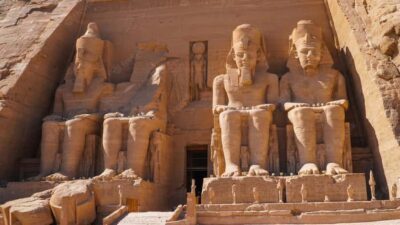

4-Day 3-Night Nile Cruise from Aswan to Luxor&Abu Simbel+Balloon
Read our review →
4-Day 3-Night Nile Cruise from Aswan to Luxor including Abu Simbel, Air Balloon
Read our review →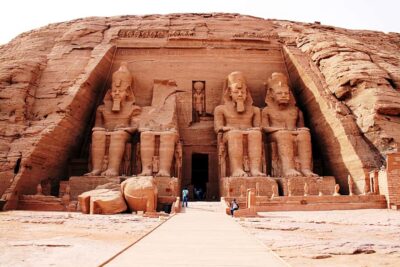
Abu Simbel Temple Private Guided Day Trip with Lunch
Read our review →4-Days Nile Cruise From Aswan To Luxor including Abu Simbel and Hot Air Balloon
Read our review →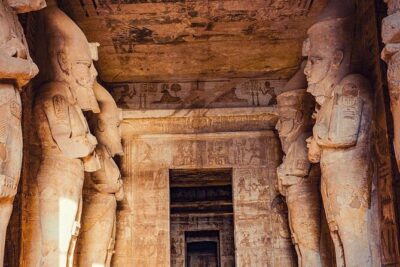
Private Day Tour to Abu Simbel Temples from Aswan
Read our review →4 Days Nile Cruise from Aswan to Luxor including Abu Simbel and Hot Air Balloon
Read our review →Browse the lists this tour appears in