
Reviewed · FULL-DAY
Full Day Tour to East and West Banks of Luxor
Luxor packs an ancient world into one long day. This private tour gives you a practical way to cover both sides of the Nile, from the tombs in the Valley of the Kings to the giant temple complexes of Karnak and Luxor. I especially like the private air-conditioned vehicle and the direct pickup from a hotel or cruise ship, two small comforts that matter in Luxor’s heat. I also like the choice of adding a licensed guide, entrance fees, and lunch instead of paying for services you may not need. The main drawback is the pace: five major sites in about eight hours can feel rushed, especially in very hot weather.
The basic $15 price is unusually low for a private vehicle, bottled water, and hotel pickup and drop-off. But you need to check which package you choose, since the base option does not include entrance fees or a guide. The best experiences seem to come with guides such as Mahmoud, Mohamed Hashem, Tuqa Yasser, Salwa, and Mustafa, though guide assignments can vary.
In This Review
- What makes this Luxor day worthwhile
- Starting early for Luxor’s biggest sights
- Valley of the Kings: two hours among royal tombs
- Temple of Hatshepsut and the Colossi of Memnon
- Crossing the Nile to Luxor Temple
- Karnak Temple: the grand finale
- Lunch, shopping stops, and keeping control of the day
- What the private format really gives you
- Guide quality and the importance of the upgrade
- Who should book this one-day route?
- Final verdict: excellent coverage, demanding pace
- FAQ
- How long does the Luxor tour last?
- Is hotel pickup included?
- Is the tour private?
- Is transportation included?
- Is bottled water provided?
- Are entrance fees included?
- Is a licensed guide included?
- Is lunch included?
- Which sites does the tour visit?
- Can I cancel for a full refund?
What makes this Luxor day worthwhile
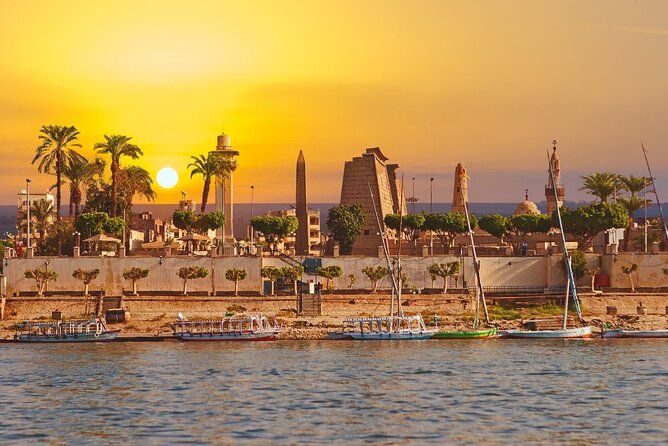
- Five major ancient sites in one day: You visit the Valley of the Kings, Hatshepsut’s temple, the Colossi of Memnon, Luxor Temple, and Karnak Temple.
- A genuinely private outing: Only your group takes part, with transfers in a private air-conditioned vehicle.
- Flexible package choices: You can book transport only or add a licensed guide, entrance fees, and lunch.
- A useful route across both banks: The schedule begins on Luxor’s West Bank, then crosses the Nile to the East Bank.
- Strong guide feedback: Guides including Mahmoud, Mohamed Hashem, Tuqa Yasser, Salwa, and Mustafa receive especially warm praise for their history explanations and helpful attitude.
- A few things to watch: Entry lines, intense heat, late pickups, and unwanted shopping stops can affect the day.
Starting early for Luxor’s biggest sights
Your day begins with pickup at your Luxor hotel or cruise ship. The exact pickup time matters. One person found a late start made the day harder and suggested leaving no later than 6:30 a.m. That is sensible advice, especially if you want time inside the tombs and temples rather than seeing them through a hurried walk.
The vehicle is private and air-conditioned, with bottled water included. That gives you more control than a large group bus. You can ask to pause for water, a restroom, or snacks, and one guide and driver combination received praise for making those stops easy. Still, the tour is tightly packed, so agree on the day’s plan before setting off.
The $15 starting price looks excellent, but it is not the full sightseeing cost. Entrance fees depend on the package you select, and the basic option does not include a guide or lunch. You can add a licensed guide alone, a guide with prepaid admissions, or a guide, admissions, and lunch.
That choice changes the experience quite a bit. If you already know Egyptian history and want a driver, the basic package may suit you. If this is your first visit, I would strongly consider the guide option. The monuments are impressive on their own, but a good guide explains why each place was built, how the rulers used it, and what you are looking at beyond the largest statue or wall.
A few more Luxor outings to price up
- Luxor: Shared Full-Day Tour to Luxor West and East Banks
★ 4.5 · 1,812 reviews - Luxor : Full Day Tour to Luxor West and East Banks & Lunch
★ 5.0 · 870 reviews - Full Day Tour of Luxor West Bank Temples and Tombs (Private)
★ 5.0 · 722 reviews
Valley of the Kings: two hours among royal tombs
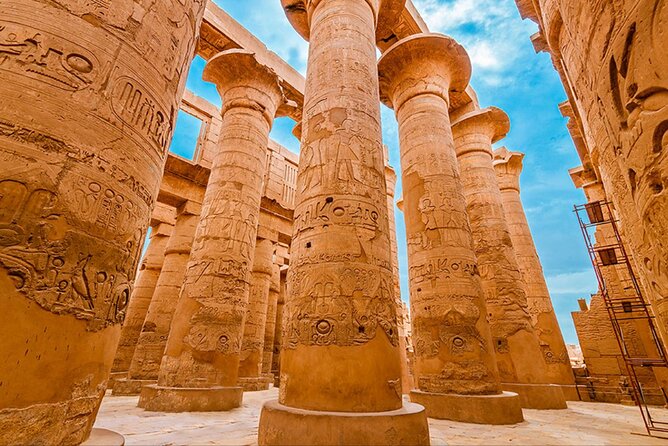
The first major stop is the Valley of the Kings on Luxor’s West Bank. This dry valley was used for royal burials, and the tour allows about two hours here. That is one of the most valuable blocks of time in the schedule because the tombs require attention, not just a quick photograph.
The named tombs connected with the valley include those of Thutmose I, Thutmose III, Tutankhamun, Ramesses VI, Merenptah, and Amenhotep II. The exact tombs you enter depend on admission rules and the ticket you purchase. Entrance is not included in the base price, and the tomb of Tutankhamun is an optional extra.
That optional ticket is worth considering if you have a strong interest in the famous young pharaoh. It is not the only important tomb in the valley, however. You can see remarkable decoration elsewhere, and a guide can help you decide how to use your time.
If you buy tickets at the entrance rather than selecting a package with prepaid admission, allow for lines. The Valley of the Kings was specifically singled out as a place where waiting can take time. Prepaid tickets may make the morning smoother, but you should confirm exactly which admissions are covered before booking.
Expect heat, walking, and uneven ground. The day includes plenty of standing outside, and one person found temperatures of 41 C made the schedule much more tiring. Carry water, use the included bottle as a starting point, and wear shoes that can handle archaeological paths.
Temple of Hatshepsut and the Colossi of Memnon
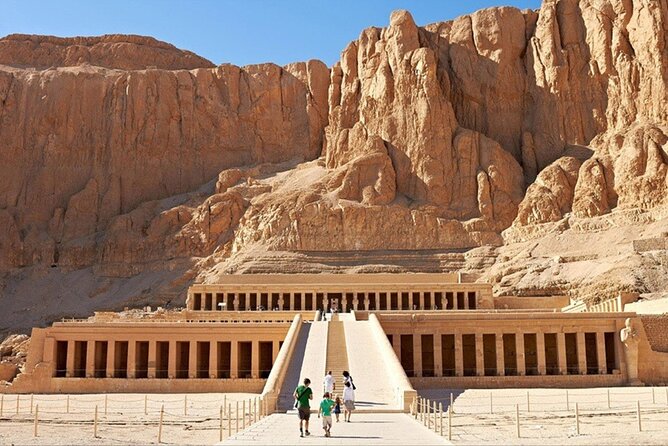
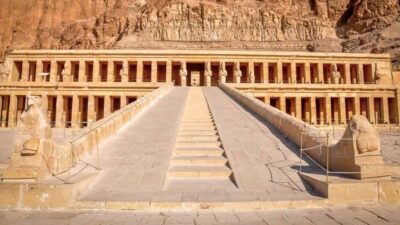
The next stop is the Temple of Hatshepsut at Deir el-Bahari, scheduled for about one hour. Built for Queen Hatshepsut, who ruled Egypt for roughly two decades during the 18th Dynasty, the temple has a powerful setting against the cliffs.
Hatshepsut is especially interesting because she was the only woman identified in this tour as having ruled ancient Egypt as a pharaoh. Her position was unusual, and the temple gives you a chance to think about how royal authority was presented through architecture and sculpture.
One hour is enough for a focused visit, but not for a slow, detailed examination of every wall. If your guide is good at explaining the site, you will get more from the visit than you would by simply walking up the terraces and taking pictures. Guides such as Tuqa Yasser and Mohamed Hashem were praised for explaining both the archaeology and the wider story of Egypt.
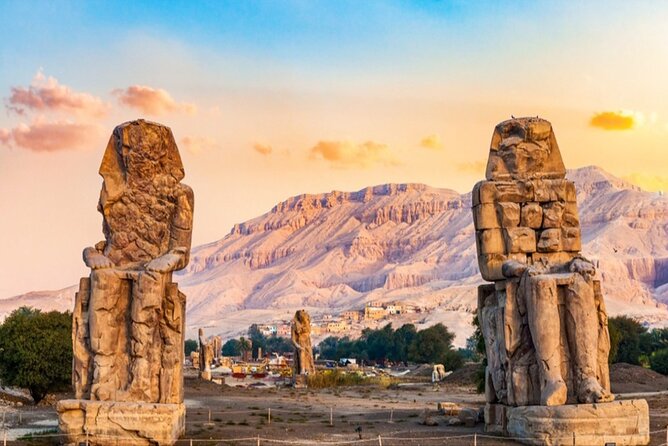
The Colossi of Memnon follow, with about an hour listed for the stop. These two towering statues represent Pharaoh Amenhotep III and are remains of his mortuary temple. The statues are an easy place to visit, but they are not a small attraction. Their scale gives you a quick sense of the ambition behind royal building projects.
The schedule may give you more time here than you need, depending on how much explanation you receive. That can be useful if you want photographs and a closer look, but it also shows why the full route can feel compressed later in the day. Ask your guide how much time is planned at each site so you know where you can linger.
Crossing the Nile to Luxor Temple
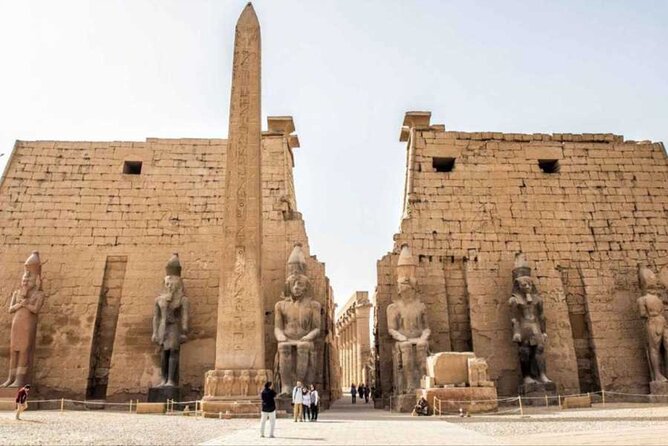
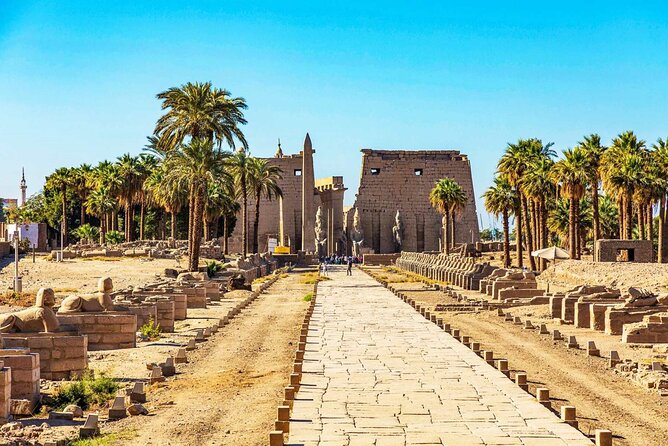
After the West Bank, the route crosses the Nile to the East Bank for Luxor Temple and Karnak Temple. Luxor Temple is allotted about two hours, giving you a longer visit than the Colossi.
The temple was begun by Amenhotep III during the New Kingdom and completed by Ramesses II. That layering of rulers is part of what makes the site interesting. You are not looking at a single building from one moment, but a major religious place shaped over time.
Luxor Temple is also useful for understanding the relationship between royal power and worship. A licensed guide can point out how different pharaohs added to the complex and explain the role of the temple within ancient Theban religious life.
I would not rush this stop. The large columns, statues, and open spaces are easier to appreciate if you pause rather than race from one photo point to the next. At the same time, keep an eye on the clock. The final stop, Karnak, deserves serious time of its own.
Same base, a completely different sort of day:
- Hurghada: Luxor Valley of the Kings & Tutankhamun Tomb Trip
★ 4.7 · 13,208 reviews - Luxor Day Trip from Hurghada Small Group & Tutankhamun Tomb
★ 4.8 · 5,366 reviews - Hot Air Balloon Ride in Luxor Egypt with Transfers Included
★ 5.0 · 4,319 reviews - Luxor: Hot Air Balloon Ride over Luxor Relics
★ 4.8 · 1,681 reviews
Karnak Temple: the grand finale
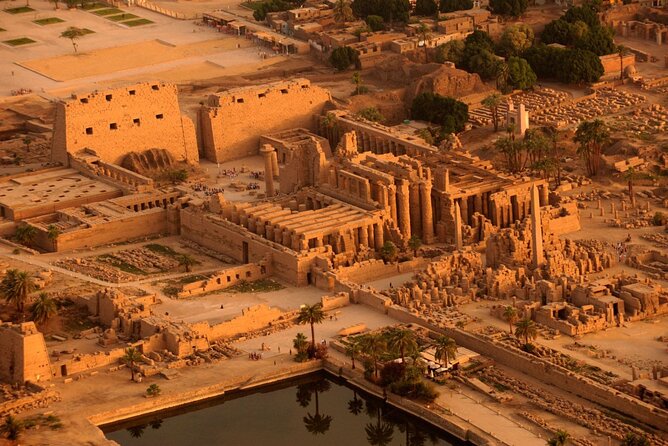
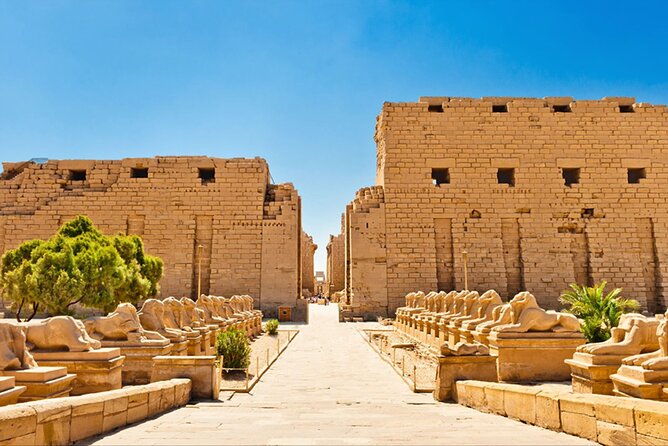
Karnak Temple receives about two hours, and that is appropriate. It is described as a major example of ancient worship dedicated to Amun, his wife Mut, and their son Khonsu.
Karnak is not just one compact temple. It is a huge religious complex, and the scale can be hard to grasp without guidance. A good explanation gives order to the columns, courtyards, sanctuaries, and later additions. This is where a licensed guide can make the difference between seeing old stone and understanding a working religious center.
Several guides, including Mahmoud, Mustafa, and Mohamed Hashem, were praised for clear explanations and strong knowledge of Egyptian archaeology. Mahmoud in particular was described as offering information about Luxor, the monuments, and Egypt beyond the basic facts. Your guide may be different, but the range of positive guide experiences suggests that the upgrade can be worthwhile.
Two hours is enough for a meaningful visit, but the day’s heat and earlier walking may catch up with you. If you are tired, focus on the sections your guide considers most important rather than trying to inspect everything. You will get more from a calm hour and a half than from a frantic march through the full complex.
Lunch, shopping stops, and keeping control of the day
Lunch is not included in the basic option. You can select a package with lunch, but it is worth confirming the arrangement before departure. One person who did not choose the lunch option was still taken to a buffet restaurant and paid separately, without being asked first. That is a useful warning: tell the guide clearly if you want lunch, want to skip it, or need to know the cost before sitting down.
Food at the restaurant was described as good, but the issue was choice and communication rather than quality. A private tour should give you some say in how the day is spent, so do not be shy about asking what is included.
Shopping stops are another point to discuss early. The route may include an alabaster factory or other local shops. These visits can be interesting if you want to learn about local crafts, but some people felt pressure to buy items at prices higher than those in local markets. One purchase was compared with a much lower local price.
If you do not want to shop, say so plainly. The guides generally listen when asked, but it is better to set that expectation at the start. If you are interested in buying alabaster, perfumes, or art, ask about the price and compare before committing. Treat the stop as optional, not as part of the ancient-site experience.
What the private format really gives you
The private format is the strongest practical feature. You are not sharing the vehicle with a large group, and the driver can pick you up and return you to your chosen hotel or ship. That is especially useful if your accommodation is on a cruise vessel or if you need to end at a different agreed location.
The vehicle is air-conditioned and described as a newer model. In Luxor, that matters. A cool ride between sites gives you a chance to recover before the next temple, even though the schedule remains demanding.
The private setup also helps if someone in your group becomes unwell. One guide named Sam was praised for arranging a hotel and transportation when a participant developed migraine and vomiting symptoms and could not finish the route. That kind of practical care is more valuable than a polished speech about ancient dates.
The tour is listed as suitable for most people and near public transportation, but that does not mean it is effortless. You will walk around major archaeological sites, spend time in direct heat, and enter a full day of sightseeing. Anyone with limited stamina should discuss a shorter plan with the operator before departure.
Guide quality and the importance of the upgrade
The guides are the main variable in this experience. The strongest praise goes to guides who combine clear English, archaeological knowledge, local familiarity, and a willingness to adjust the day.
Salwa was praised for her understanding of ancient Egypt. Tuqa Yasser received warm feedback for explaining four historical sites and making the guided format feel worthwhile. Mahmoud was described as very competent and flexible, while Mohamed Hashem received praise for explaining archaeology, Luxor, and Egypt in detail.
Mustafa was singled out for sharing information that the participant had not encountered in books. Sam was praised not only for his knowledge but also for kindness during a medical problem. These details matter because Luxor’s monuments can blur together after several hours. A guide who connects the sites and responds to your needs can keep the day engaging.
The base price does not include a guide, so I would not assume that the cheapest package delivers the same experience. For a first visit, the guide and prepaid-entry option is likely the best balance. You spend more, but you reduce ticket queues and gain context at every major stop.
Who should book this one-day route?
I would recommend this tour if you have only one day in Luxor and want to see the headline sites on both banks. It is also a good fit if you are arriving by cruise ship, want direct transfers, or prefer not to arrange several separate taxis.
It suits people who value convenience and a private vehicle more than a relaxed pace. Families, couples, and small groups can benefit from controlling the vehicle and making simple comfort stops.
I would be more cautious if you have two or more days in Luxor. The West Bank and East Bank deserve slower visits, and splitting the route would reduce the heat and time pressure. The tour is also less suitable if you dislike shopping stops, want a slow lunch, or prefer to study each monument in detail.
The strongest version of the tour is not necessarily the cheapest one. Add a licensed guide if you want the monuments explained, consider prepaid admission if you want to avoid queues, and clarify lunch and shopping before leaving.
Final verdict: excellent coverage, demanding pace
This is a strong one-day introduction to Luxor, with an impressive amount of sightseeing for the starting price. The private vehicle, hotel or ship pickup, bottled water, and flexible upgrades give you useful control, while the route covers the city’s essential ancient sites.
The cost is attractive only if you understand what it includes. Admissions, guide services, and lunch may add considerably to the final price. The day can also become uncomfortable in hot weather, and the full itinerary leaves little room for wandering.
I would book it for a first Luxor visit when time is short, especially with the licensed guide and prepaid-entry option. I would choose two separate days instead if you have the time. Either way, confirm your pickup time, ask about every planned stop, and be direct about lunch and shopping. Those few questions can turn a hurried sightseeing day into a far smoother one.
FAQ
How long does the Luxor tour last?
The tour lasts approximately eight hours.
Is hotel pickup included?
Yes. Hotel pickup and drop-off in Luxor are included, and pickup is also offered from cruise ships.
Is the tour private?
Yes. Only your group participates in the activity.
Is transportation included?
Yes. The tour includes transfers in a private, air-conditioned vehicle.
Is bottled water provided?
Yes. Bottled water is included.
Are entrance fees included?
Not in the basic package. Entrance fees depend on the tour option selected.
Is a licensed guide included?
A guide is not included in the basic option, but you can select an upgrade that adds a licensed guide.
Is lunch included?
Lunch is not included in the basic package. An upgrade can add lunch, and you should confirm the lunch arrangement and price before the day begins.
Which sites does the tour visit?
The route includes the Valley of the Kings, Temple of Hatshepsut at Deir el-Bahari, Colossi of Memnon, Luxor Temple, and Karnak Temple.
Can I cancel for a full refund?
Yes, if you cancel at least 24 hours before the experience start time. Cancellations or changes made less than 24 hours before the start time are not accepted for a refund.
Newly listed around Luxor
- Luxor Nile River Private Felucca Ride at Sunset★ 4.5 · 20 reviews
- Marvelous Luxor East and West Bank Private Tour with Lunch From Airport /Hotels★ 4.5 · 17 reviews
- Private tour : Sunset Felucca Ride in Luxor★ 5.0 · 16 reviews
- 3-Day Luxor Aswan and Abu Simbel Historical Sites Private Tour★ 5.0 · 34 reviews
- First impression of Luxor-Explore secrets of Luxor by horse carriage★ 5.0 · 50 reviews
- Nile cruise between Luxor and Aswan: Sail the best temples in Egypt★ 5.0 · 72 reviews
- Experience the Magic of a Luxor Sunrise Hot Air Balloon Ride★ 5.0 · 17 reviews
- 5 Days 4 Nights from Luxor to Aswan on Gentle Breeze Dahabyia★ 4.5 · 24 reviews
Full-Day, compared.

Shared Full-Day Tour to Luxor West and East Banks
Read our review →
Private Full-Day Tour of Historical Alexandria
Read our review →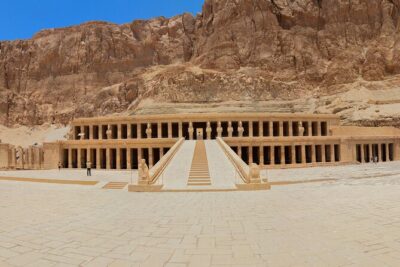
Full Day Tour to Luxor West and East Banks & Lunch
Read our review →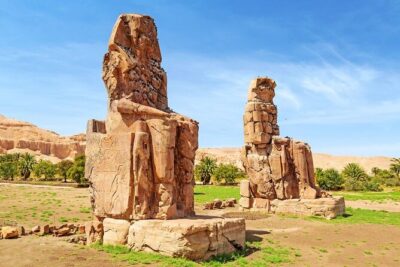
Full Day Tour of Luxor West Bank Temples and Tombs (Private)
Read our review →
Browse the lists this tour appears in