
Reviewed · VALLEY OF THE KINGS TOURS
Nefertari and King Tut’s Tombs, Hatshepsut and More in Luxor
Ancient tombs, honest planning matter. This Luxor West Bank tour packs King Tut’s tomb, four royal tombs, Hatshepsut’s temple, the Colossi of Memnon, and Howard Carter’s house into six or seven hours. I like the private air-conditioned transport and the chance to see Tutankhamun’s mummy in its original tomb. I also like that the day covers several major sites instead of stopping at only the famous ones. The main concern is serious: Queen Nefertari’s tomb has been closed since March 2024, yet it remains central to the tour’s title and description.
At $50 per person, the experience can be good value if your price includes the vehicle, hotel transfers, and a guide. But entrance fees are extra, and the guide is listed as optional, so you need to confirm exactly what you are paying for before departure. If Nefertari is your main reason for booking, do not pay until the operator confirms that access has returned.
In This Review
- Key points to know before booking
- What this Luxor West Bank day is really offering
- Queen Nefertari’s tomb, the attraction that needs confirmation
- King Tut’s tomb and the young pharaoh’s mummy
- Four royal tombs in the Valley of the Kings
- Hatshepsut’s temple below the cliffs
- Colossi of Memnon, a quick stop with a big view
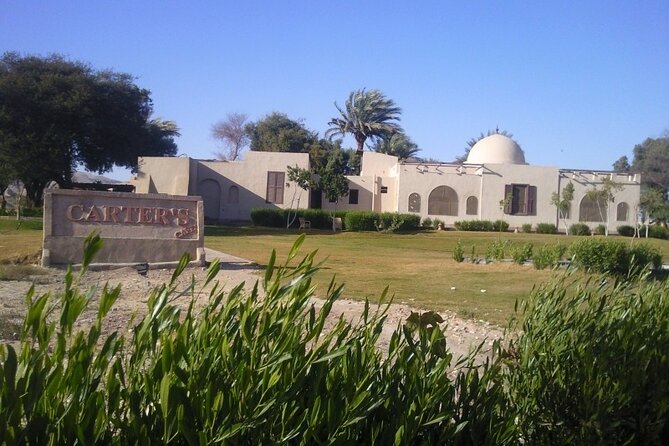
- Howard Carter House and the story behind Tutankhamun’s discovery
- Guide, transport, and the difference between a private tour and a guided tour
- Is $50 good value for this Luxor tour?
- Timing, comfort, and what to prepare
- Who should book this West Bank experience?
- Should you book it?
- FAQ
- How long does the Luxor West Bank tour last?
- Is hotel pickup and drop-off included?
- Is transportation provided?
- Is the tour private?
- Are entrance fees included in the $50 price?
- Can I visit Queen Nefertari’s tomb?
- Can I enter King Tutankhamun’s tomb?
- Is King Tutankhamun’s golden mask in the tomb?
- What is the cancellation policy?
Key points to know before booking
- King Tut’s mummy remains in the tomb: You can see the young pharaoh’s royal mummy in the Valley of the Kings, while the famous gold mask is in Cairo.
- Four Valley of the Kings tombs are planned: The day includes Tutankhamun plus tombs connected with Ramses, Horemheb, and Merenptah.
- Nefertari access is currently the big warning: The tomb has been closed since March 2024, and a replacement stop may be offered instead.
- A private vehicle keeps the day comfortable: Hotel pickup, drop-off, air-conditioning, and bottled water are included.
- The day is full but not rushed on paper: The planned visits add up to several hours, before driving, ticket buying, and stops at the sites.
- The guide may change the whole experience: A guide can explain the wall scenes and history, but the guide cost is listed as optional.
What this Luxor West Bank day is really offering
Luxor’s West Bank is a place where the ground seems quiet, dry, and almost empty, yet it holds royal tombs, temples, colossal statues, and the house of the archaeologist who found Tutankhamun’s burial chamber. This private tour links the main sights in one day, using an air-conditioned vehicle and hotel transfers.
The schedule is ambitious. You are not simply visiting the Valley of the Kings and returning to your hotel. You are also going to the Valley of the Queens, Deir el Bahari, the Colossi of Memnon, and Howard Carter House.
I see the tour as a useful framework for a first visit to Luxor’s West Bank. Its value depends on three things: the current status of Nefertari’s tomb, the entrance fees you select, and whether you have a proper guide with you. Get those details clear before you start.
More West Bank and Valley of the Kings days:
- Hurghada: Luxor Valley of the Kings & Tutankhamun Tomb Trip
★ 4.7 · 13,208 reviews - Luxor Day Tour: Valley of Kings & Queens & Hatchepsut Temples
★ 5.0 · 1,496 reviews - Luxor: Valley of the Kings and Hatshepsut Temple Day Tour
★ 4.4 · 1,404 reviews
Queen Nefertari’s tomb, the attraction that needs confirmation
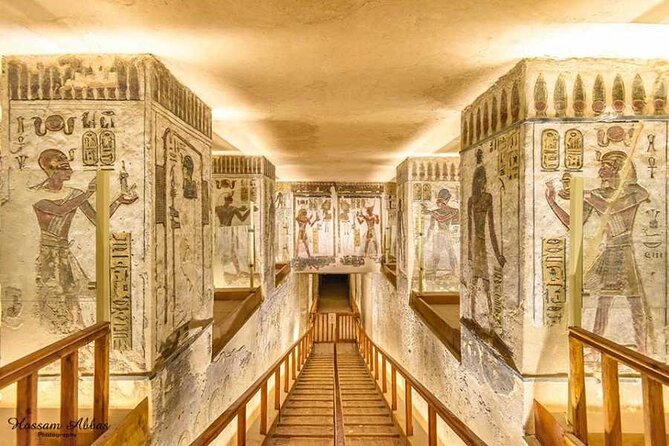
The Tomb of Queen Nefertari was intended to be the opening stop. Nefertari was the wife of Ramses the Great, and her tomb is famous for its finely painted scenes and unusually polished finish. It is often considered one of the most beautiful burial chambers in Egypt.
The planned visit allows about 20 minutes, which is short for a site of this importance. Still, limited time can work if access is open and the tomb is your main priority. You would see the decorated chambers, painted figures, religious scenes, and the careful treatment given to a queen who held an important place beside Ramses.
Here is the practical problem: the tomb has been closed since March 2024 according to the supplied information and direct tour feedback. Some bookings have instead been taken to an alabaster factory, which is not an equal replacement for Nefertari’s tomb.
I would treat this stop as unavailable unless the operator confirms it in writing shortly before your visit. Ask specifically: Is the tomb open on my date? Is the entrance fee included? If it is closed, what exact stop replaces it? A small certificate or souvenir cannot make up for a missed archaeological site, so the facts matter more than the promotional wording.
King Tut’s tomb and the young pharaoh’s mummy
The visit to Tutankhamun’s tomb is one of the strongest reasons to consider this experience. The burial chamber itself is small compared with the fame of the king, but its importance is enormous. Howard Carter found the tomb nearly intact in 1922, bringing worldwide attention to ancient Egypt.
You will not see the famous golden mask here. It is displayed at the Egyptian Museum in Cairo. You can, however, see the royal mummy of Tutankhamun in the tomb, which gives the visit a direct and personal quality.
The planned stop lasts about 20 minutes. That is enough to enter, look carefully, and hear an explanation, but you should not expect a long period of quiet study. The tomb is an optional paid entrance, so confirm that your chosen package includes it. The tour description says you have the opportunity to enter, but the general price notes say entrance fees are not included.
This is also the point where a guide helps most. The tomb is not large, and the wall decoration can be easy to overlook. Someone who explains what you are seeing can turn a quick visit into a meaningful one. One solo visitor especially appreciated feeling safe and well cared for, with the guide beginning explanations in the vehicle instead of waiting until everyone was standing in the heat.
Four royal tombs in the Valley of the Kings
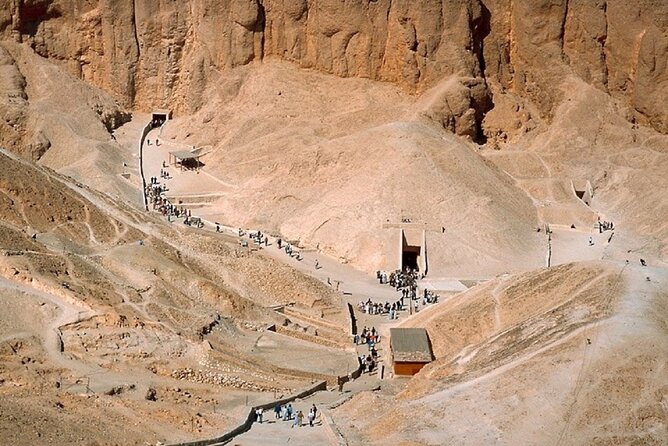
The Valley of the Kings receives about two hours in the planned schedule. That is enough time for a useful selection of tombs, but not enough to see everything. The tour includes King Tut’s tomb and three additional royal tombs, connected with Ramses, Horemheb, and Merenptah.
The exact open tombs can change, and the schedule uses several names in its descriptions. It refers to a Tomb of Ramses III, a Tomb of Ramses VI, and a section describing Ramses IV. That inconsistency is worth checking before you go. Ask the guide or operator which tomb numbers are open on the day.
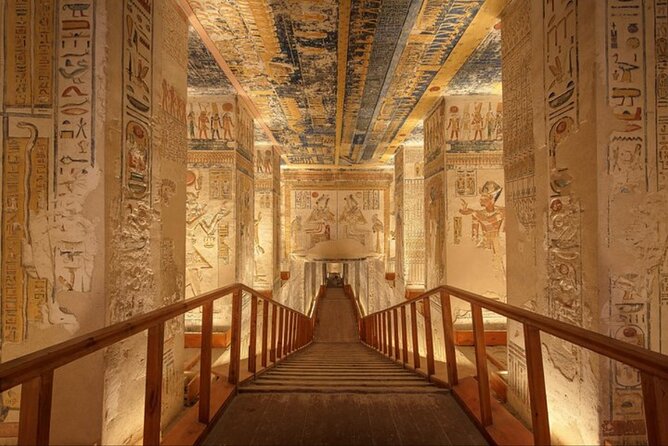
The Valley of the Kings is not one single monument. Each tomb has its own plan, colors, religious texts, and state of preservation. One may have long corridors and dense hieroglyphics. Another may offer large scenes from the afterlife books or royal ceremonies.
The walls were designed to guide the dead king through the afterlife. Names such as the Litany of Ra, the Book of the Dead, the Book of Caverns, the Book of the Heavens, the Book of Amduat, and the Book of the Night refer to religious works shown in pictures and writing.
A few details named in the schedule are especially worth watching for. The Tomb of Merenptah includes carved scenes linked to ritual texts, foreign tribute, royal equipment, and boats. The tomb associated with Ramses III is described as having sunken reliefs and scenes of royal life.
The tomb described as Ramses VI is particularly noted for blue and white decoration, a rose-colored granite sarcophagus, and the goddess Nut on the ceiling. The description also calls it Ramses IV, so do not be surprised if the guide uses a different royal name or tomb number. The important point is to follow the actual open tombs and listen for the explanation of each one.
You should also expect stairs, sloping corridors, and warm conditions in some tombs. The private car gives you a cool break between sites, which is a real advantage on a long West Bank day.
A few more Luxor outings to price up
- Luxor Day Trip from Hurghada Small Group & Tutankhamun Tomb
★ 4.8 · 5,366 reviews - Hot Air Balloon Ride in Luxor Egypt with Transfers Included
★ 5.0 · 4,319 reviews - Luxor: Shared Full-Day Tour to Luxor West and East Banks
★ 4.5 · 1,812 reviews - Luxor: Hot Air Balloon Ride over Luxor Relics
★ 4.8 · 1,681 reviews
Hatshepsut’s temple below the cliffs
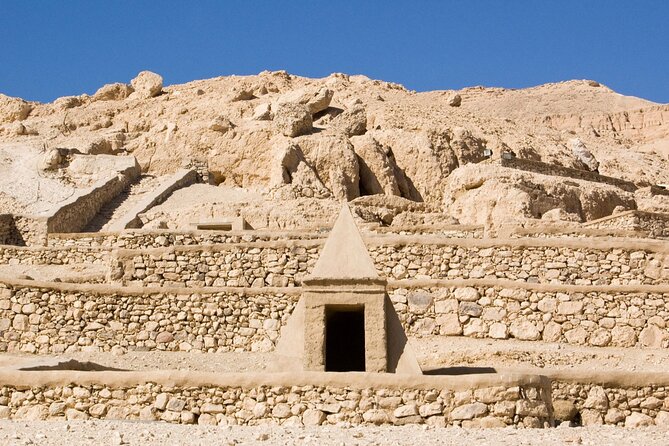
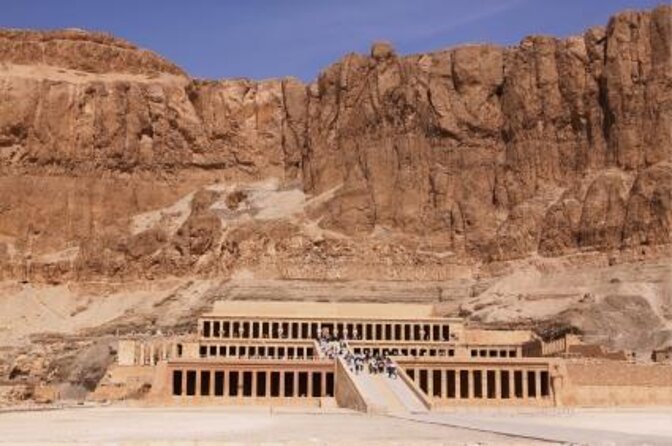
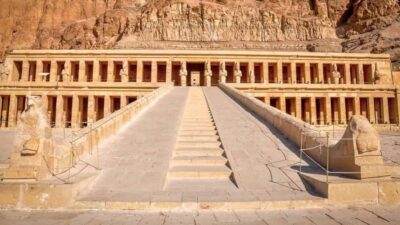
The Temple of Hatshepsut at Deir el Bahari receives about two hours, making it one of the longest stops. I consider that sensible. This is not a quick photo stop. The temple has broad terraces, strong horizontal lines, and a dramatic position against the limestone cliffs.
Hatshepsut was the only woman to rule Egypt as pharaoh, according to the tour information. Her temple was built as a mortuary monument and records her royal status through architecture, reliefs, and religious scenes.
The setting gives this visit a different feel from the tombs. Underground burial places are enclosed and shadowed. Hatshepsut’s temple opens toward the cliffs and sky, so you can better understand how ancient builders used the natural setting as part of the monument.
Two hours gives you time to examine the structure and hear the story behind it. It also creates the possibility of heat and sun exposure, particularly if you arrive without a hat or water. One bottled water is included, but I would still plan carefully for the conditions. Your vehicle’s air-conditioning is helpful here.
Colossi of Memnon, a quick stop with a big view
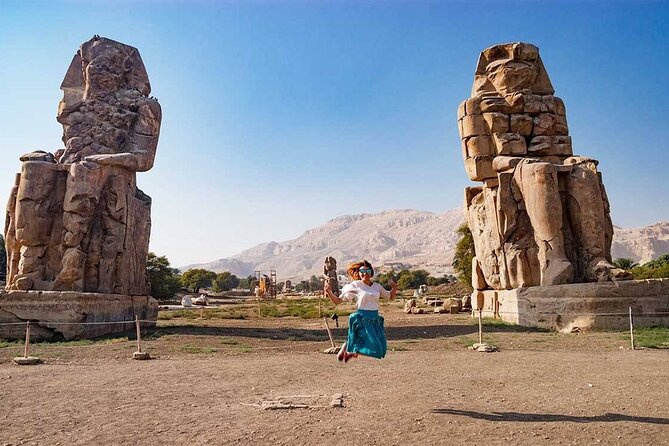
The Colossi of Memnon are the easiest stop of the day. About 30 minutes is planned, and there is no admission fee.
These two huge statues represent Amenhotep III. They are the remaining front guardians of what was once a much larger mortuary temple. The temple itself has disappeared, leaving the statues to carry the site’s visual impact.
I like this as a short pause between the larger monuments. You can look closely at the scale, take photographs, and hear how little remains of the building they once protected. Do not expect an extended archaeological visit. The value is in the contrast between the immense statues and the missing temple around them.
Howard Carter House and the story behind Tutankhamun’s discovery
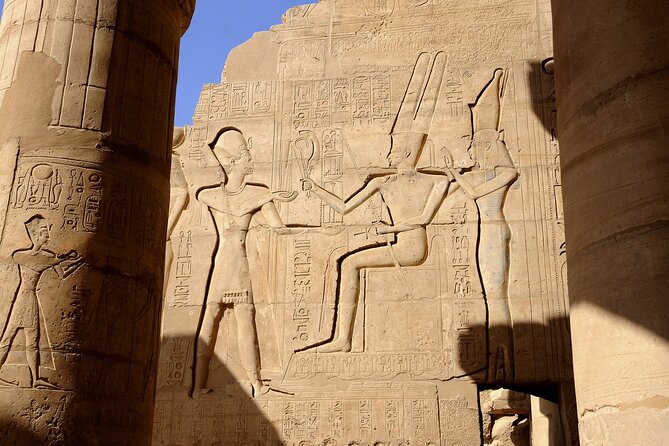
The Howard Carter House adds a human chapter to the ancient sites. Carter was the British archaeologist who discovered Tutankhamun’s tomb in 1922, and this modest house on Luxor’s West Bank was connected with his work.
Inside, you can see personal artifacts, tools, and material linked to the process of archaeological excavation. The visit helps connect the modern discovery with the ancient burial chamber you see earlier in the day.
About 30 minutes is planned. That should be enough for a compact visit, though the stop may appeal more to people interested in archaeology than to those who want only temples and tombs. Admission is not included, so ask about the cost before entering.
I find the sequence sensible: seeing Tutankhamun’s tomb, then visiting the home of the man who found it, gives the day a clear thread. It also reminds you that archaeology is not just about spectacular objects. It involves years of searching, tools, records, and patient work.
Guide, transport, and the difference between a private tour and a guided tour
The tour is private, so only your group participates. That can make a big difference in Luxor. You are not waiting for a large coach to load, and you may have more flexibility with time, questions, and photo stops.
Hotel pickup and drop-off are included, along with transport in an air-conditioned vehicle and bottled water. The private car is one of the best practical features, especially when the schedule includes several sites spread across the West Bank.
The guide is listed as optional. This is where you should read the price carefully. A guide who explains the tomb paintings, royal succession, and building plans can add real value. Without one, you may receive transport and site access but have to figure out much of the meaning yourself.
The experience level can vary. One highly positive account describes a helpful guide who explained the sites from the car, contacted the guest through WhatsApp the night before, and made a solo woman feel safe and comfortable. Another account describes a poor experience in which the visitors were dropped at the Valley of the Kings without useful instructions or explanations.
That gap is too large to ignore. Confirm the guide’s name, language, and whether guiding is included or extra. If the answer is vague, assume you are mainly buying transportation.
Is $50 good value for this Luxor tour?
At $50 per person, the price is attractive for a private six-to-seven-hour outing with hotel transfers and an air-conditioned vehicle. It becomes especially useful if you are traveling with another person or a small group, since group discounts may be available.
The price is not the complete cost. Entrance fees are not included, and the guide is optional. The most important paid entries are likely to include the Valley of the Kings, Tutankhamun’s tomb, Nefertari’s tomb if open, Hatshepsut’s temple, and Howard Carter House. The exact totals are not provided, so ask for a full cost before booking.
I would compare the $50 base price with the final amount, not the headline figure. A low price can still be fair if you want a driver and are comfortable arranging admissions yourself. It is less attractive if you expect a fully guided tour with all tickets covered.
The free Colossi of Memnon and the included water are small benefits. The real value comes from covering many West Bank sites in one day without arranging separate taxis.
Timing, comfort, and what to prepare
The planned visits total roughly six hours, with an advertised duration of six to seven hours. Driving, ticket purchases, security checks, and any replacement stop for Nefertari will affect the final pace.
I would wear practical shoes and bring sun protection. The tour data confirms air-conditioning and bottled water, but it does not promise shade at every stop or explain the walking distances. The day includes tomb corridors, temple terraces, and open areas, so expect a mix of indoor and outdoor conditions.
Most people can participate, and the tour is near public transportation, though hotel pickup is provided. The booking confirmation is issued at the time of booking. Free cancellation is available until 24 hours before the start time, while cancellations inside that window are not refunded. Poor weather or failure to meet the minimum number of participants can lead to a different date or a full refund.
Who should book this West Bank experience?
I would consider this tour if you want a private car, hotel pickup, and a broad introduction to Luxor’s main West Bank sights. It suits a first visit, a solo guest who values organized transport, and anyone who wants to combine the Valley of the Kings with Hatshepsut and Howard Carter House.
It is also a good match for someone who wants to see more than one or two tombs. The four-tomb plan gives you a better sense of how royal burial places differed in design and decoration.
I would be cautious if your main purpose is Nefertari’s tomb. Until reopening is confirmed, the tour title does not match what you may actually receive. I would also hesitate if you expect entrance tickets and a guide to be included in the $50 price.
Should you book it?
Book this tour if the operator confirms the current stops, explains the entrance costs, and provides the guide details you want. The combination of Tutankhamun, several royal tombs, Hatshepsut’s temple, the Colossi of Memnon, and Howard Carter House can make a strong day on Luxor’s West Bank.
Do not book it on the assumption that Queen Nefertari’s tomb is open. Ask for written confirmation first. If it remains closed, decide if you are happy with an alternative stop such as an alabaster factory.
My final view is positive but conditional. The transport, private format, and wide range of sites offer solid value at the base price. The Nefertari closure and unclear extras require careful checking. Get those answers, and this can be a practical way to see Luxor’s most important royal monuments in one organized day.
FAQ
How long does the Luxor West Bank tour last?
The experience lasts approximately six to seven hours.
Is hotel pickup and drop-off included?
Yes. Hotel pickup and drop-off are included in the tour.
Is transportation provided?
Yes. Transport is provided in an air-conditioned vehicle.
Is the tour private?
Yes. Only your group participates in this private activity.
Are entrance fees included in the $50 price?
No. Entrance fees are not included. The guide is also listed as optional.
Can I visit Queen Nefertari’s tomb?
The supplied information states that the tomb has been closed since March 2024. Confirm its status before booking, since a replacement stop may be offered.
Can I enter King Tutankhamun’s tomb?
The tour provides the opportunity to enter Tutankhamun’s tomb, but the entrance fee is not included in the listed price.
Is King Tutankhamun’s golden mask in the tomb?
No. The golden mask is displayed at the Egyptian Museum in Cairo. The royal mummy remains in Tutankhamun’s tomb.
What is the cancellation policy?
You can cancel at least 24 hours before the start time for a full refund. Cancellations or changes made less than 24 hours before the experience are not accepted or refunded.
Newly listed around Luxor
- Luxor Nile River Private Felucca Ride at Sunset★ 4.5 · 20 reviews
- Marvelous Luxor East and West Bank Private Tour with Lunch From Airport /Hotels★ 4.5 · 17 reviews
- Private tour : Sunset Felucca Ride in Luxor★ 5.0 · 16 reviews
- 3-Day Luxor Aswan and Abu Simbel Historical Sites Private Tour★ 5.0 · 34 reviews
- First impression of Luxor-Explore secrets of Luxor by horse carriage★ 5.0 · 50 reviews
- Nile cruise between Luxor and Aswan: Sail the best temples in Egypt★ 5.0 · 72 reviews
- Experience the Magic of a Luxor Sunrise Hot Air Balloon Ride★ 5.0 · 17 reviews
- 5 Days 4 Nights from Luxor to Aswan on Gentle Breeze Dahabyia★ 4.5 · 24 reviews
Valley of the Kings Tours, compared.
Luxor Valley of the Kings & Tutankhamun Tomb Trip
Read our review →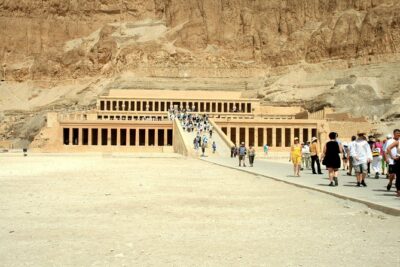
Small group Hurghada to Luxor, Valley of the Kings by Van
Read our review →Luxor Day Tour: Valley of Kings & Queens & Hatchepsut Temples
Read our review →Valley of the Kings and Hatshepsut Temple Day Tour
Read our review →
Luxor Tour with Valley of Kings, Karnak & Tut Tomb
Read our review →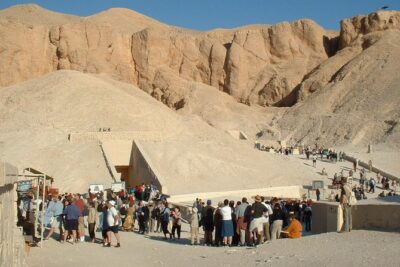
Valley of Kings, Hatchepsut Temple ,Karnak & Luxor-DayTour
Read our review →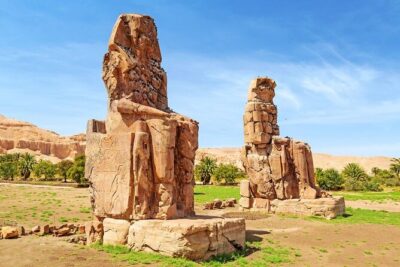
Full Day Tour of Luxor West Bank Temples and Tombs (Private)
Read our review →
Small Group Excursion to Luxor Valley of the Kings from Hurghada
Read our review →Browse the lists this tour appears in