
Reviewed · GUIDED
Luxor: Habu, Deir El Medina, Shared tour, Guide, and Lunch
Small tombs, huge stories. This five-hour Luxor tour takes you beyond the famous royal tombs to Deir El Medina, the workers’ village whose tomb paintings show daily life as well as the afterlife. It then moves to Medinet Habu, one of the best places in Luxor to see large temple scenes and surviving color, before a stop at the Colossi of Memnon and lunch.
I like the way the tour combines two very different sites: intimate painted tombs and a broad, powerful temple complex. I also like the practical setup, with hotel pickup, drop-off, entrance fees when that option is selected, an English-speaking Egyptologist, and lunch included. The main consideration is that this is a shared tour, so the pace and guide assignment may not be entirely yours to control.
Guides including Asma Saber, Mahmoud Issa, Tim Tim, Abnoub, Gerges, and Professor Mahmoud Hasan El Esnawy have received especially warm praise for clear explanations and personal attention. If you can request a guide, Asma and Professor Mahmoud are names worth asking about, although availability is not guaranteed.
In This Review
- Key points at a glance
- Why this west-bank combination works
- Deir El Medina: ancient workers, private tombs
- Medinet Habu and the color of Ramses III
- The Colossi of Memnon, a short final stop
- Lunch after the monuments
- Hotel pickup and a shared vehicle
- The guide can make or break the visit
- What the $40 price really covers
- Who should book this Luxor tour?
- Should you book it?
- FAQ
- How long does the tour last?
- What places are included?
- Is hotel pickup included?
- Is lunch included?
- Is an English-speaking guide included?
- Are entrance fees included?
- Is this a private tour?
- Can I cancel for a full refund?
- Can I reserve now and pay later?
Key points at a glance
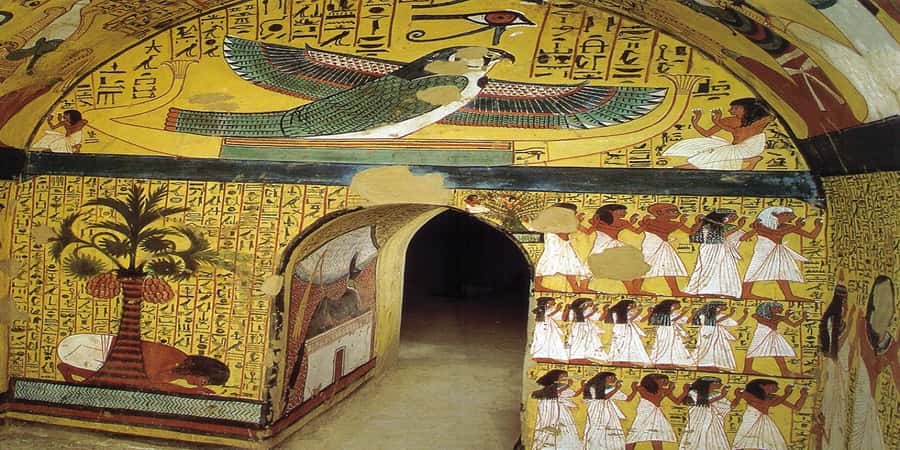
- Deir El Medina shows ordinary life: The workers’ tombs contain scenes of family life, farming, crafts, and the afterlife, giving you a different view of ancient Egypt than the grand royal monuments.
- Medinet Habu preserves strong color: The temple of Ramses III is known for detailed reliefs and some of the best surviving painted surfaces in Luxor.
- The oxen hunt is a memorable scene: On the southern tower, Ramses III is shown hunting wild oxen from his chariot, with unusual attention given to the wounded animals.
- The group format keeps the price low: At $40 per person, hotel transport, a guide, lunch, taxes, and selected entrance fees make this a useful value for a half-day outing.
- Lunch breaks up the sightseeing: After the monuments, you eat at a local restaurant before returning to your accommodation in Luxor.
- Language choice matters: English is included, while Spanish, German, and French guides are available as paid add-ons.
Why this west-bank combination works
Luxor has no shortage of ancient sites, but they do not all tell the same story. The royal tombs in the Valley of the Kings focus on pharaohs and the next world. Deir El Medina brings you closer to the people who built and decorated those monuments. Medinet Habu then returns you to royal power, with massive walls, battle scenes, religious images, and carved records of Ramses III.
That contrast gives this tour a clear purpose. You are not simply checking off three stops. You move from the homes and tombs of artisans to a king’s temple, then finish at one of Egypt’s most recognizable pairs of statues.
The five-hour length also makes sense for a morning or afternoon outing. You get a focused visit to the west bank without committing an entire day to a long list of monuments. I would especially consider it if you have already seen Karnak and the Valley of the Kings and want a less predictable side of Luxor.
The shared format keeps the cost at $40 per person. That is a fair price if you want transport and a guide without arranging separate taxis, tickets, and lunch yourself. A private tour would give you more control, but this option is aimed at people who value convenience and a lower price.
A few more Luxor outings to price up
- Luxor : Full Day Tour to Luxor West and East Banks & Lunch
★ 5.0 · 870 reviews - Luxor: Karnak Temple and Luxor Temple Tour with Lunch
★ 4.4 · 658 reviews - From Luxor: Guided Tour to East or West Banks with Lunch
★ 4.5 · 604 reviews
Deir El Medina: ancient workers, private tombs
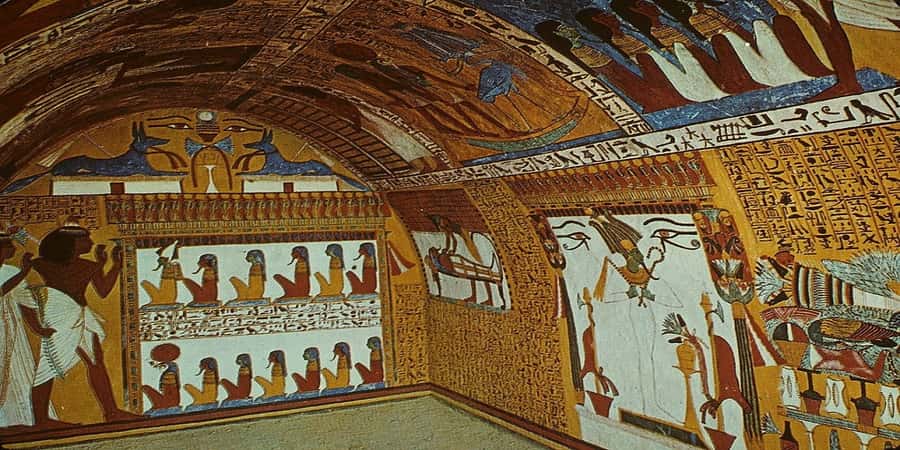
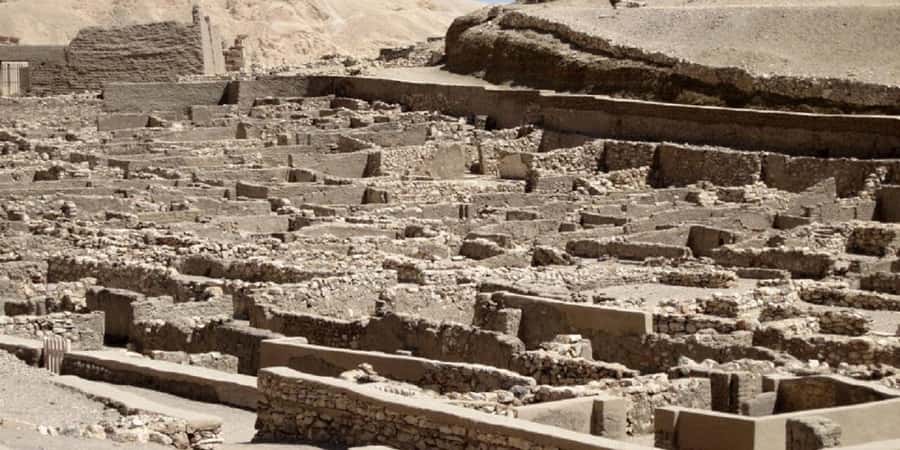
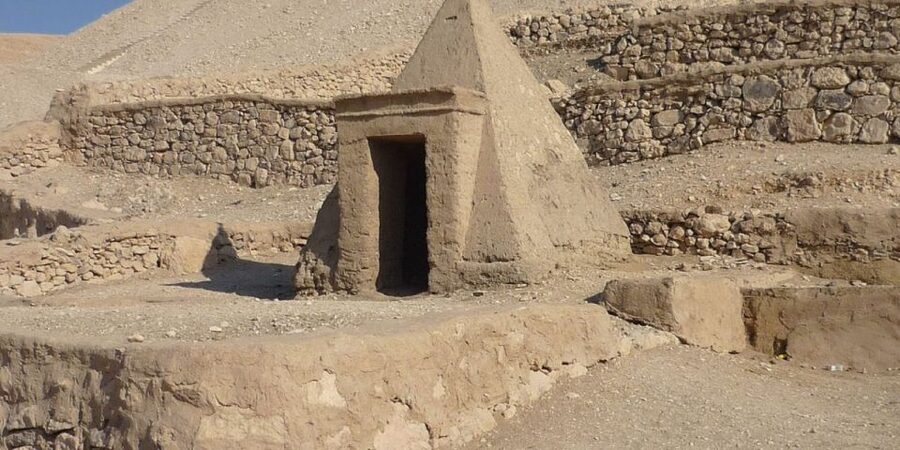
Deir El Medina is the most personal stop on the route. The site was connected with the workers who built and decorated the royal tombs, and the remains of their village sit in front of the temple area. Much of the settlement survives as low walls, with traces of old irrigation pipes also visible.
Do not expect a grand city with tall buildings. The appeal is in the small scale. As you look across the remains, you can picture a working community rather than a royal court. The site helps explain that the splendid tombs in the Valley of the Kings were made by skilled specialists whose own homes and burial places were much more modest.
The temple was dedicated to Hathor, associated with pleasure and love, and Maat, the goddess of truth and cosmic order. Your guide can help connect those ideas to the carved scenes and the layout of the temple. This is where having an Egyptologist makes a real difference. Without context, the walls can look like a collection of symbols. With a good explanation, the gods, rituals, and village life begin to fit together.
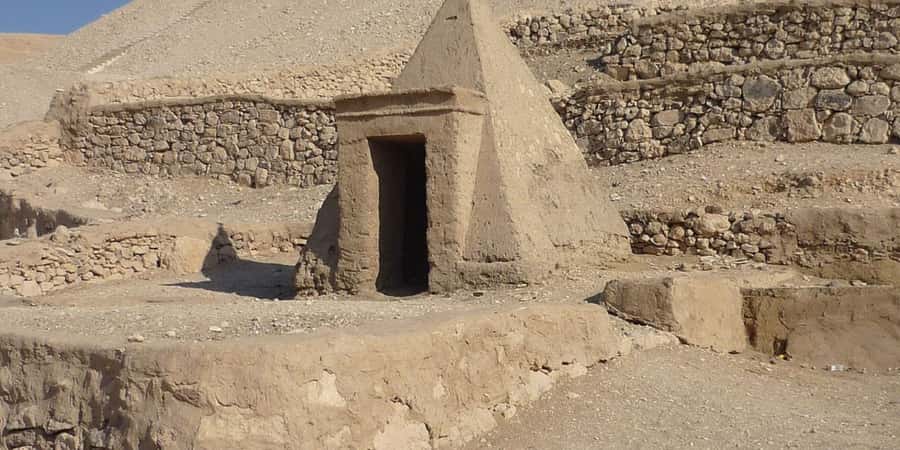
The tombs are the real prize. Unlike the royal tombs, they do not focus only on a pharaoh’s journey after death. Their decoration can include scenes from daily life, giving you glimpses of work, food, family, and ordinary activities alongside religious images.
I would plan to spend time looking closely rather than rushing through with a camera. The paintings are detailed, and the spaces are described as private and well preserved. That combination makes Deir El Medina feel quieter and more intimate than the huge temple sites.
It is also the stop most likely to reward a good guide. Several guides praised on this tour, including Asma, Hassan, Mahmoud Issa, and Tim Tim, were specifically appreciated for making the history clear and bringing the scenes to life. Ask questions here. The site is compact, but it has plenty to explain.
A practical note: the attraction is called Deir El Medina in most references, while the tour description also uses Deir El Dedina. They refer to the same west-bank site.
Medinet Habu and the color of Ramses III
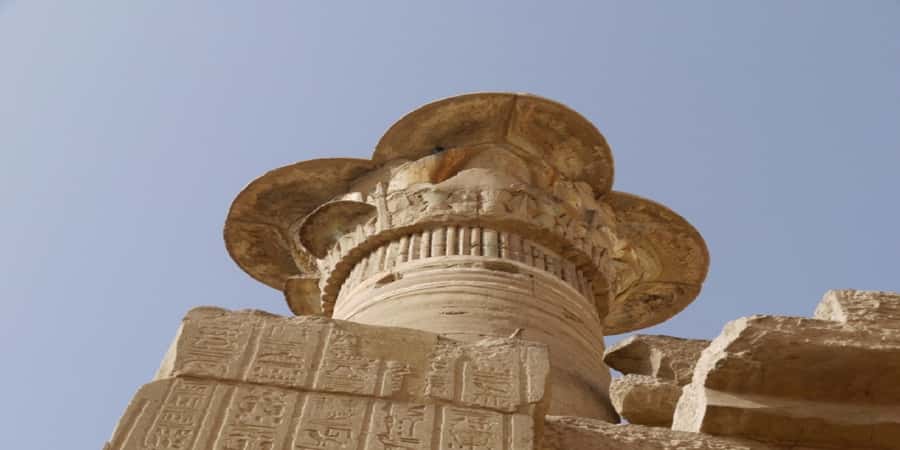
After Deir El Medina, the tour continues to Medinet Habu, the mortuary temple of Ramses III. This is a much larger and more imposing place, with broad walls and substantial carved decoration.
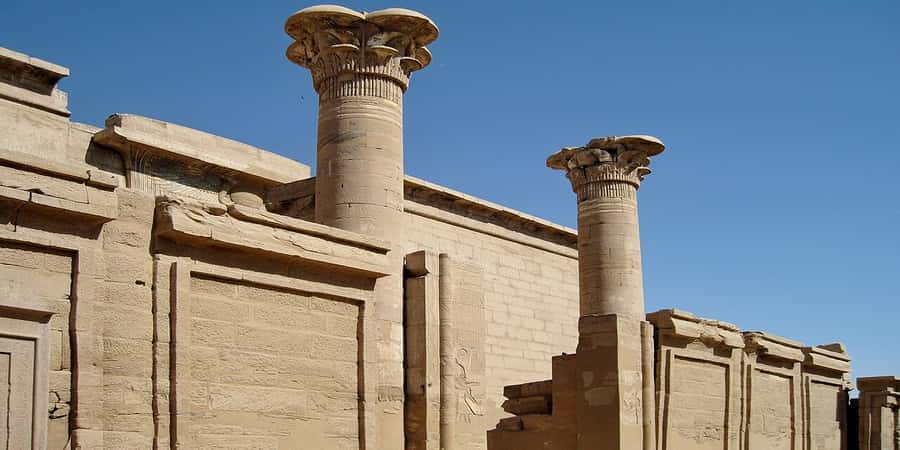
The temple is especially appealing if you want to see color. Ancient Egyptian monuments were painted, but much of that paint has faded or disappeared. At Medinet Habu, sections remain colorful enough to show how different the temple must once have looked. The surviving tones give the reliefs more life and make the details easier to read.
One of the most striking scenes is the oxen hunt on the back of the southern tower. Ramses III appears in his chariot, hunting wild oxen. The sculptor did not treat the animals as simple decoration. The wounded oxen show pain and movement, which gives the scene a surprising emotional quality.
This is a useful reminder that Egyptian reliefs were not all stiff rows of gods and kings. Some scenes are carefully observed and full of action. Your guide can point out how the king is presented, how the animals are arranged, and how the relief communicates royal strength.
Medinet Habu is also a good place for photographs. The large walls, carved figures, and remaining color create strong backgrounds for group pictures. The tour description specifically emphasizes taking photos with friends and family, and the site offers plenty of visual variety for that.
Still, there is a trade-off. Large temple walls can become confusing when you are looking at them alone. There are gods, rulers, symbols, and historical scenes everywhere. A guide such as Professor Mahmoud Hasan El Esnawy, whom several people praised for informative explanations, can help you focus on the scenes that matter instead of trying to decode every surface.
Give yourself time to look up. Some of the most interesting details are high on the towers and outer walls, not just at eye level. A guide can also explain the hieroglyphs and religious figures without turning the visit into a long lecture.
The Colossi of Memnon, a short final stop
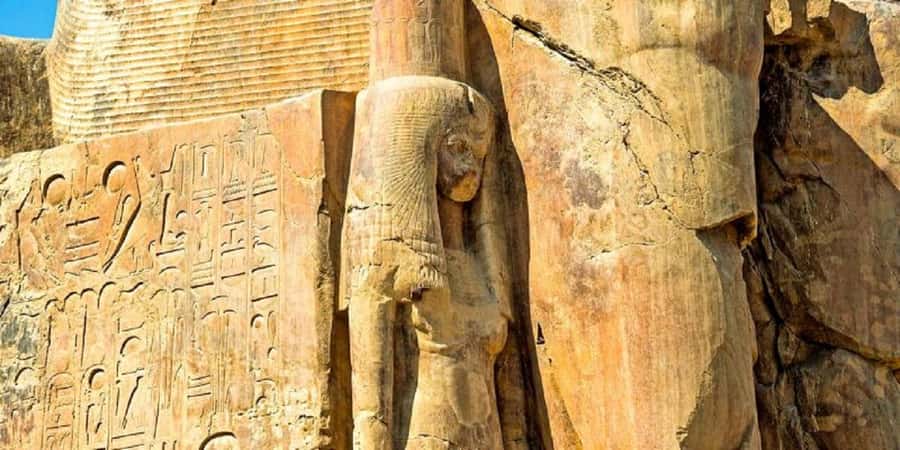
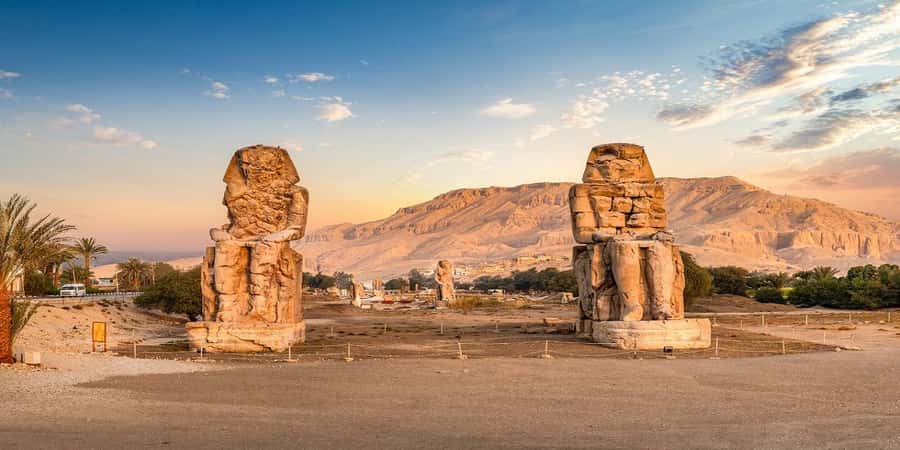
The Colossi of Memnon are the final sightseeing stop. These enormous seated statues are among the most familiar sights on Luxor’s west bank, and they offer a quick look at the scale of ancient Egyptian royal art.
The colossi are linked with ancient beliefs and are described as an acoustic wonder of the ancient world. You will not need a long visit to appreciate them. Their size is the point: even damaged statues can make the surrounding modern world feel very small.
This stop is also useful as a photo break. The statues are easy to recognize and work well for group pictures. If you have already seen several tombs and temples, the open setting provides a change of mood before lunch.
The stop is brief compared with Deir El Medina and Medinet Habu, so I would not book this tour only for the Colossi of Memnon. Their value here is that they round out the west-bank route without adding much time.
Same base, a completely different sort of day:
- Hurghada: Luxor Valley of the Kings & Tutankhamun Tomb Trip
★ 4.7 · 13,208 reviews - Luxor Day Trip from Hurghada Small Group & Tutankhamun Tomb
★ 4.8 · 5,366 reviews - Hot Air Balloon Ride in Luxor Egypt with Transfers Included
★ 5.0 · 4,319 reviews - Luxor: Shared Full-Day Tour to Luxor West and East Banks
★ 4.5 · 1,812 reviews
Lunch after the monuments
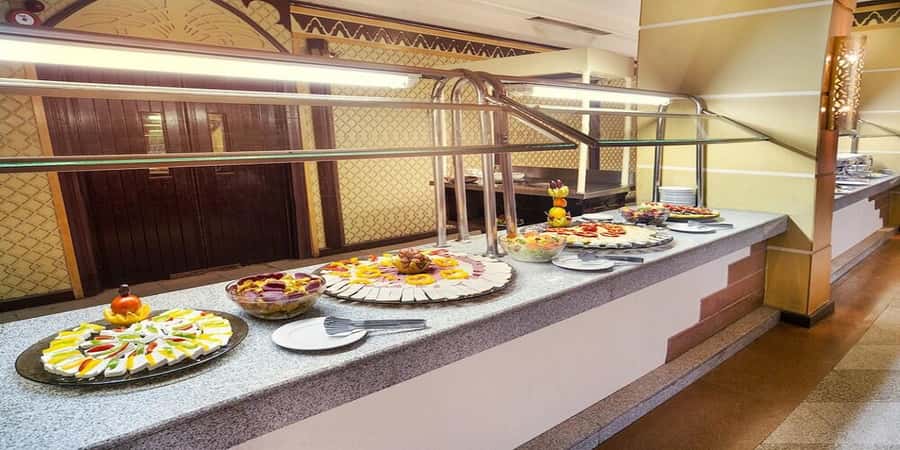
Lunch follows the sightseeing at a local restaurant. The meal is included, and the food was described as good and sufficient, rather than as a major culinary event. That is the right way to think about it: a useful meal during a half-day excursion, not a separate restaurant experience.
I like having lunch built into the schedule. After several hours of walking and standing in the Egyptian sun, you will be ready for a pause. It also removes the need to search for a restaurant while keeping an eye on the clock and the rest of the group.
The precise menu is not provided, so you should not book this expecting a particular dish. If you have dietary needs, ask the operator before departure. The available information confirms lunch, but it does not specify choices or special arrangements.
Hotel pickup and a shared vehicle
The day begins with pickup from your accommodation in Luxor. You then join a small shared group and travel between the sites with a driver. At the end, the driver returns you to your accommodation.
That arrangement is one of the tour’s strongest practical features. Luxor’s west-bank sites are spread out, and organizing several stops independently can mean negotiating transport more than enjoying the monuments. Here, the route is planned and the return ride is included.
The group is described as small, but no exact maximum size is given. That means you should expect a social shared outing rather than the quiet control of a private car. Pickup times can also vary, since the tour needs to collect other people in Luxor.
A five-hour duration is long enough for the three listed attractions and lunch, but it is not an unhurried archaeological study. You may need to stay reasonably close to the guide and group. If you like moving efficiently and covering several important sites, that is a plus. If you want to linger at one tomb for a long time, a private arrangement may suit you better.
The operator stays in contact about pickup details, which is helpful in a city where hotel entrances and meeting points can sometimes be confusing. Confirm your pickup information before the day begins.
The guide can make or break the visit
The strongest part of this experience is likely to be the guide. The tour includes a live English-speaking guide, and other language options are available in Arabic, French, German, and Spanish. Spanish, German, and French guiding is listed as an add-on rather than part of the basic $40 price.
Several named guides have been praised for clear explanations and friendly service. Asma was singled out for explaining the sites clearly and being happy to answer questions. Mahmoud Issa was praised for his grasp of the gods and hieroglyphs. Abnoub made the stories feel lively and took special care of a solo participant. Gerges was appreciated for taking time with questions.
These details matter because the monuments are not self-explanatory. The value of the guide is not only historical information. It is knowing where to look, understanding why a scene was carved, and seeing the difference between a royal temple and a workers’ burial place.
If you are traveling alone, this tour can also provide an easy social structure without requiring you to book a private experience. If you are with family or friends, the guide can help turn the photo stops into a more meaningful visit.
What the $40 price really covers
At $40 per person, the price is attractive for a five-hour shared tour. You are paying for hotel pickup and drop-off, a guide, lunch, taxes, service charges, and entrance fees if the selected booking option includes them.
Check the entrance-fee option carefully when booking. The supplied details say all entrance fees are included if that option is selected, so do not assume every price choice has identical inclusions.
The value is strongest for first-time visitors who want a straightforward west-bank introduction. You avoid arranging transport, finding a guide at each site, and locating lunch. The lower price does mean less flexibility than a private tour, and the group’s pace will influence your time at each stop.
Free cancellation up to 24 hours before departure and reserve-now, pay-later terms also make the booking relatively flexible. Starting times depend on availability, so check the schedule that appears for your date.
Who should book this Luxor tour?
I would recommend it to you if you want:
- A half-day west-bank tour rather than a full day of monuments
- A guide who can explain Egyptian gods, tomb scenes, and hieroglyphs
- A lower-cost shared experience
- Hotel transportation and lunch handled for you
- A chance to see Deir El Medina, which is often less predictable than the biggest royal sites
- Photo-friendly stops at Medinet Habu and the Colossi of Memnon
I would be more cautious if you need a private pace, want to spend a long time at each monument, or dislike changing plans around other people. The tour is also less suitable if you want a food-focused outing, since the lunch details are limited.
For most visitors, the mix is well judged. Deir El Medina supplies the close-up human stories, Medinet Habu provides scale and color, and the Colossi finish the route with an iconic sight.
Should you book it?
Book this tour if you want a practical, affordable way to see three west-bank highlights in five hours. Deir El Medina is the key reason to choose it, while Medinet Habu is the visual showpiece. The guide is an important part of the value, so request a preferred guide such as Asma or Professor Mahmoud if the operator allows it, but expect availability to vary.
Skip it only if you need a fully private itinerary or want to explore at a very slow pace. For everyone else, the transport, lunch, guide, and site combination make $40 a sensible buy.
FAQ
How long does the tour last?
The tour lasts five hours, including the sightseeing stops, lunch, and transportation between your accommodation and the west-bank sites.
What places are included?
The route includes Deir El Medina, Medinet Habu, and the Colossi of Memnon, followed by lunch at a local restaurant.
Is hotel pickup included?
Yes. Pickup and drop-off at your accommodation in Luxor are included.
Is lunch included?
Yes. Lunch at a local restaurant is included in the tour.
Is an English-speaking guide included?
Yes. The basic tour includes an English-speaking guide. Arabic, French, German, and Spanish languages are also available, with Spanish, German, and French listed as add-ons.
Are entrance fees included?
All entrance fees are included if you select the option that includes them. Check the specific price option at booking.
Is this a private tour?
No. You join a small shared group with other customers.
Can I cancel for a full refund?
Yes. You can cancel up to 24 hours in advance for a full refund.
Can I reserve now and pay later?
Yes. The tour offers reserve now and pay later, so you can keep your plans flexible and pay nothing at the time of booking.
Newly listed around Luxor
- Luxor Nile River Private Felucca Ride at Sunset★ 4.5 · 20 reviews
- Marvelous Luxor East and West Bank Private Tour with Lunch From Airport /Hotels★ 4.5 · 17 reviews
- Private tour : Sunset Felucca Ride in Luxor★ 5.0 · 16 reviews
- 3-Day Luxor Aswan and Abu Simbel Historical Sites Private Tour★ 5.0 · 34 reviews
- First impression of Luxor-Explore secrets of Luxor by horse carriage★ 5.0 · 50 reviews
- Nile cruise between Luxor and Aswan: Sail the best temples in Egypt★ 5.0 · 72 reviews
- Experience the Magic of a Luxor Sunrise Hot Air Balloon Ride★ 5.0 · 17 reviews
- 5 Days 4 Nights from Luxor to Aswan on Gentle Breeze Dahabyia★ 4.5 · 24 reviews
Guided, compared.
Private guided tour to Giza Pyramids, and Great Sphinx
Read our review →
Female-Guided Pyramids, Sphinx & Museum City Tour
Read our review →
Half Day Tour Giza Pyramids &Great Sphinx with Private Tour Guide
Read our review →
Morning or Sunset Sights Guided Tour with Shopping
Read our review →
Egyptian Museum, Citadel, and Old Cairo Guided Tour
Read our review →
Private or Shared City Tour with Guide & Shopping
Read our review →
Giza Sunrise Pyramid Guided Tour With Camel Ride & Breakfast
Read our review →
Old Cairo Guided Walk Tour: History, Culture & Street Bites
Read our review →Browse the lists this tour appears in