
Reviewed · GUIDED
From Hurghada: Luxor Private Guided Day Tour with Lunch
Ancient Egypt is worth the long road.
This private day tour takes you from Hurghada to Luxor for a full day among some of Egypt’s greatest monuments. I like the private format, since you can ask questions and adjust the pace with your guide. I also like that the route covers both sides of the Nile: Karnak and Luxor Temples on the east bank, then the Valley of the Kings, Hatshepsut’s temple, and the Colossi of Memnon on the west bank.
The main drawback is the distance. Luxor is about 240 kilometers from Hurghada, so much of your day is spent on the road. The sites can also be very hot, and the stalls near the monuments may test your patience. Still, the chance to see so much in one day makes this a strong choice for first-time visitors to Egypt.
In This Review
- Key points to know before booking
- The long road from Hurghada to Luxor
- Luxor Temple and the east bank
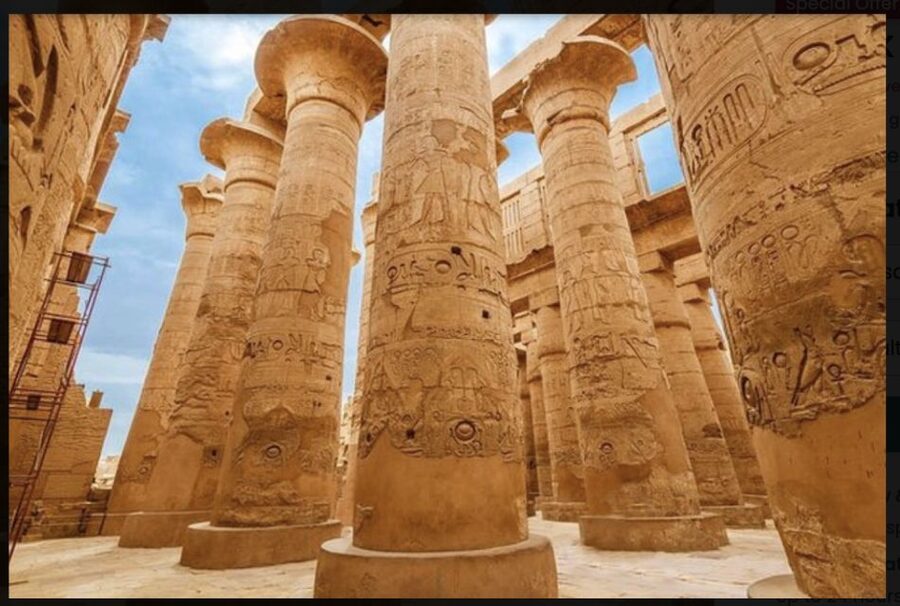
- Karnak Temple: Egypt on a grand scale
- Lunch between the major monuments
- Crossing to the Valley of the Kings
- Hatshepsut’s temple beneath the cliffs
- The Colossi of Memnon
- What the private guide adds
- Is $223 per person a fair price?
- The hard parts of the day
- Who should book this Luxor day trip?
- Should you book it?
- FAQ
- How far is Luxor from Hurghada on this tour?
- What sites are included?
- Is lunch included?
- Is transportation private?
- Which languages are available for the guide?
- What should I bring?
Key points to know before booking
- Private transport from your hotel or airport: You travel in an air-conditioned vehicle rather than joining a large shared group.
- A full east and west bank route: The day includes Luxor Temple, Karnak, the Valley of the Kings, Hatshepsut’s temple, and the Colossi of Memnon.
- An Egyptologist guide is included: Guides speak English, Spanish, German, Italian, or Arabic.
- Lunch and bottled water are provided: This matters on a hot sightseeing day when there are few chances to pause.
- The drive can take about three hours each way: A newer road helped one group reach Luxor from Makadi Bay in about three hours.
- The price is $223 per person: That includes private transport, entry tickets, guide service, lunch, water, and facility fees.
The long road from Hurghada to Luxor
Your day begins with pickup at your hotel or airport at the time you request. From there, you head inland toward Luxor in an air-conditioned vehicle. The journey is roughly 240 kilometers, so this is not a quick side trip. It is a serious day out, with an early start and a late return likely built around the road time.
That distance is the key question for you. If you want a relaxed holiday with plenty of pool time, this tour may feel demanding. If you want to see the major monuments of ancient Thebes without changing hotels, the drive is a fair trade.
One useful detail comes from a trip made from Makadi Bay after a new highway opened. The group reached Luxor in about three hours. Your exact travel time will depend on your pickup point and road conditions, but the improved route can make the journey less tiring than older estimates suggest.
The private vehicle helps. You are not waiting for a large group at every stop, and you have a guide with you from the start. Drivers and guides were praised for being helpful, keeping water available, and finding shade during the hottest parts of the day. That sort of care matters when the schedule is packed.
A few more Luxor outings to price up
- Luxor : Full Day Tour to Luxor West and East Banks & Lunch
★ 5.0 · 870 reviews - Luxor: Karnak Temple and Luxor Temple Tour with Lunch
★ 4.4 · 658 reviews - From Luxor: Guided Tour to East or West Banks with Lunch
★ 4.5 · 604 reviews
Luxor Temple and the east bank
The first major stop is Luxor Temple, a large temple complex on the east bank of the Nile. It was built around 1400 BCE and was known in ancient Egyptian as Ipet Resyt, meaning the southern sanctuary.
Luxor Temple feels different from a single isolated ruin. It is a long ceremonial complex with huge stone structures, columns, and open spaces that help you picture how processions once moved through the site. Your guide can explain the religious purpose of the temple and the rulers who added to it over time.
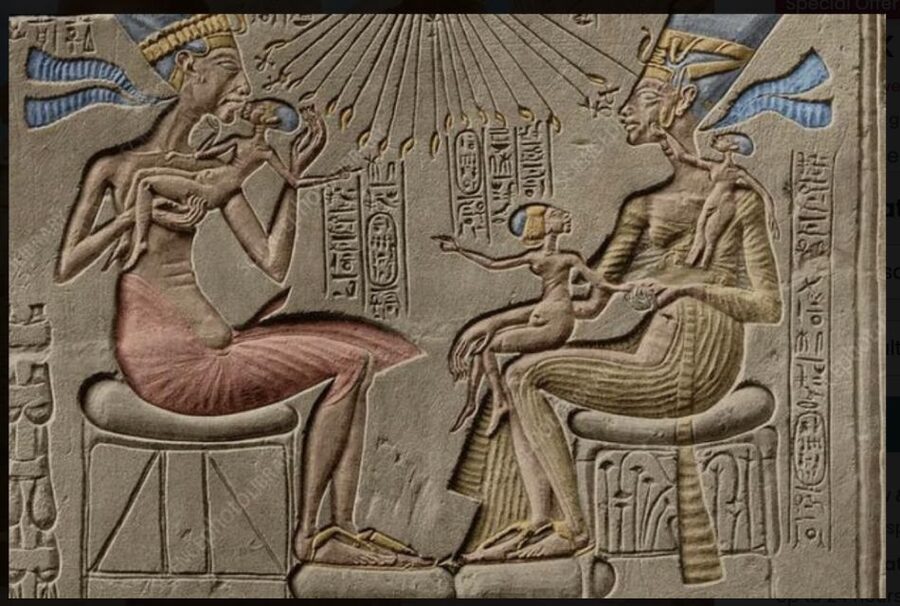
I like having a guide here because the scale alone can be hard to read. A wall covered in figures may look decorative at first, but the carvings, positions, and symbols carry meaning. With an Egyptologist beside you, you can ask why a pharaoh appears in a particular pose or how the temple fitted into ancient religious life.
The site also gives you a helpful introduction to Luxor before the larger Karnak complex. You start with a focused monument, then move into a much wider collection of temples and courtyards.
You should wear comfortable shoes. There is no sensible reason to spend this visit worrying about stiff footwear, especially after the drive from Hurghada. Comfortable clothes and bottled water are equally practical.
Karnak Temple: Egypt on a grand scale
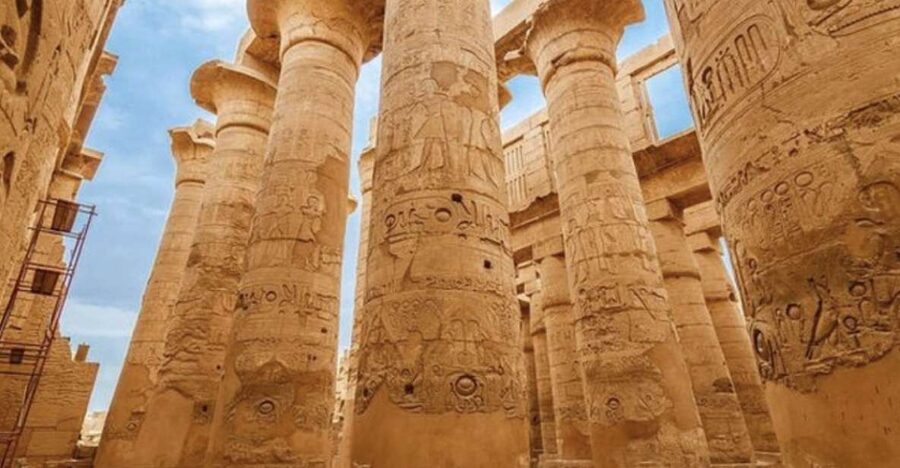
Karnak is not one temple in the simple sense. It is a huge complex of temples, chapels, pylons, and other structures built and altered over many centuries. Construction began during the Middle Kingdom, around 2000 to 1700 BC, and continued into the Ptolemaic period from 305 to 30 BC.
That long building period is what makes Karnak so interesting. You are not looking at one ruler’s project. You are seeing a site shaped by generations of pharaohs, each adding structures, inscriptions, and religious spaces.
The scale can be difficult to grasp without a guide. A good explanation helps separate the major areas and gives order to what might otherwise feel like a sea of stone. Guides such as Hani, Hosam, and Adel received especially warm praise for their clear explanations, friendly manner, and ability to answer questions.
Expect plenty of walking here. The complex is broad, and the Egyptian sun can be fierce. Take the water offered by the tour and use any shade available. One group specifically appreciated the way Hosam and driver Mohammad Hisham kept food, water, and shade in mind during an especially hot day.
Karnak is also a place where the private arrangement pays off. You can spend more time on the columns if they interest you, or move along when the heat becomes too much. The ability to personalize the day was one of the strongest reasons people enjoyed the tour.
Lunch between the major monuments
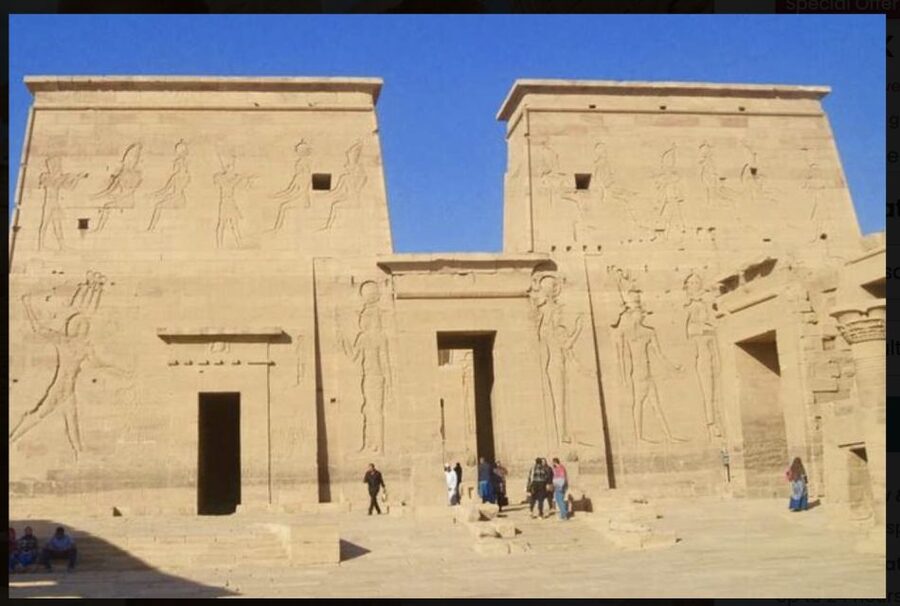
Lunch at an Egyptian restaurant is included. The meal breaks up the sightseeing and gives you a chance to sit down before continuing to the west bank.
The exact restaurant and menu are not specified, so you should treat lunch as a practical part of the package rather than the main reason to book. It is useful because buying food during a packed day can take time, and the included meal keeps the schedule moving.
Bottled water is also included. That sounds minor, but on a hot day it is important. Bring your own extra water if you prefer to drink often, but having bottles supplied means you are not starting the tour with one more task.
Same base, a completely different sort of day:
- Hurghada: Luxor Valley of the Kings & Tutankhamun Tomb Trip
★ 4.7 · 13,208 reviews - Luxor Day Trip from Hurghada Small Group & Tutankhamun Tomb
★ 4.8 · 5,366 reviews - Hot Air Balloon Ride in Luxor Egypt with Transfers Included
★ 5.0 · 4,319 reviews - Luxor: Shared Full-Day Tour to Luxor West and East Banks
★ 4.5 · 1,812 reviews
Crossing to the Valley of the Kings
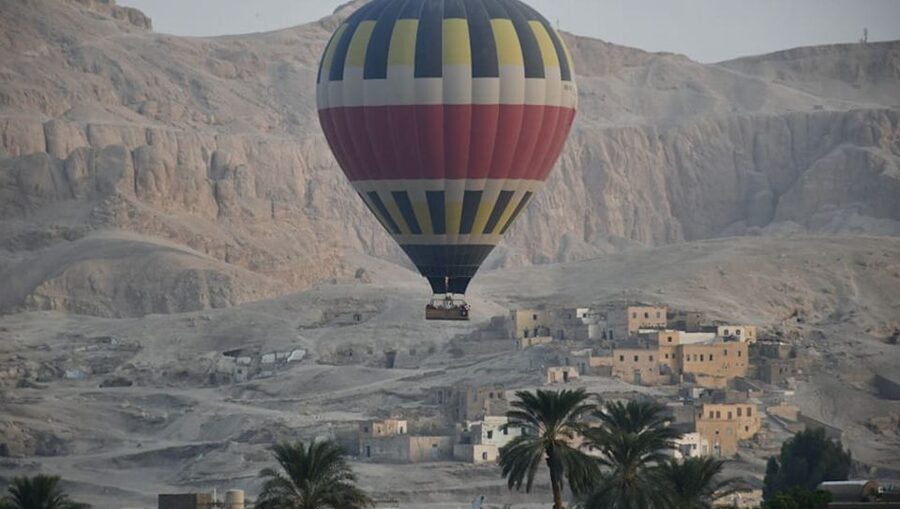
After lunch, the route moves to the west bank and the Valley of the Kings. The valley was used for nearly 500 years, from the 16th to the 11th century BC, for rock-cut tombs belonging to pharaohs and powerful nobles of the New Kingdom.
This stop changes the mood. At Karnak and Luxor, you see grand public temples built for ceremonies. In the Valley of the Kings, you enter the world of burial chambers cut into the desert hills.
The tombs are the real reason to visit. Their importance is not just the royal names attached to them, but the painted scenes and symbols intended to guide the dead into the next life. Your guide can help you understand what you are seeing instead of leaving you to inspect the walls without context.
The tour includes entry tickets to all the mentioned sites, including the Valley of the Kings. The supplied information does not specify which individual tombs are open on the day or whether extra tickets are needed for special tombs. If one particular tomb is important to you, ask your guide about the current options.
Heat is a factor here. The valley is exposed, and the route follows a busy sightseeing schedule. Comfortable shoes are essential, and loose, comfortable clothing will make the day easier.
Hatshepsut’s temple beneath the cliffs
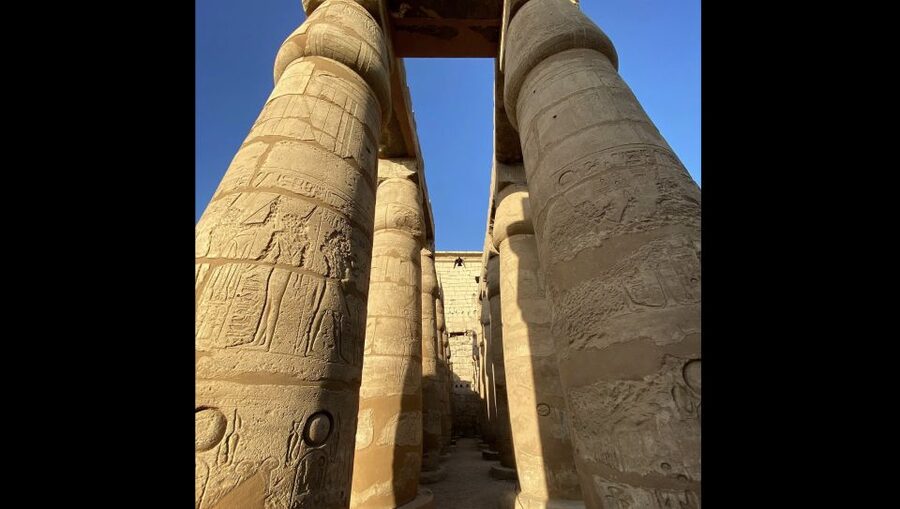
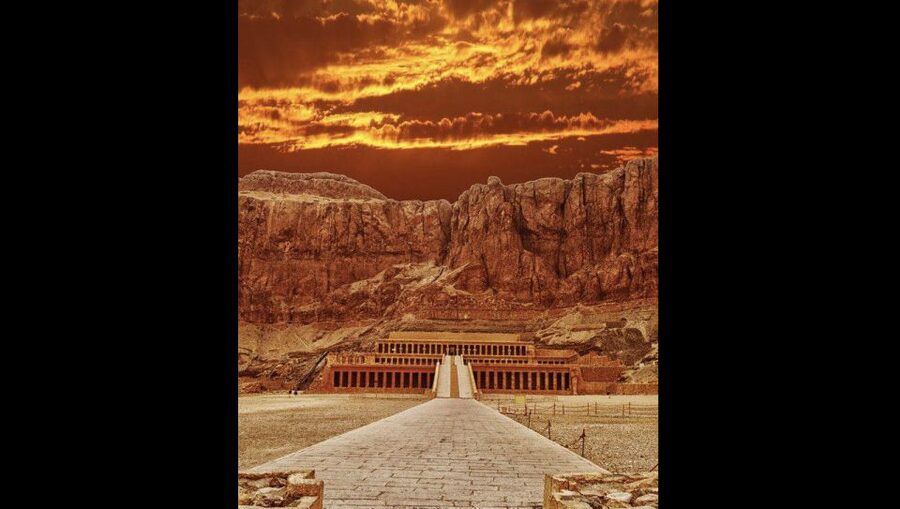
The Mortuary Temple of Hatshepsut is also called Djeser-Djeseru. It was built for the Eighteenth Dynasty pharaoh Hatshepsut, who died in 1458 BC, and sits beneath the cliffs at Deir el-Bahari on Luxor’s west bank.
The temple is memorable for its strong horizontal terraces and its setting against the cliffs. It does not feel like Karnak, with its huge spread of courts and buildings. Here, the structure and the rock face work together to create a more carefully framed view.
Hatshepsut herself makes this stop especially important. She ruled as pharaoh in a period when royal power was closely tied to male kingship, so the temple gives your guide a chance to explain how she presented her authority through architecture and religious imagery.
This is another place where explanations add real value. Without context, you see terraces, columns, and carved surfaces. With a guide, you can better understand the political message behind the building and why it was placed in this part of the west bank.
The combination of the valley and Hatshepsut’s temple also gives your day a good rhythm. You move from hidden tombs to an open monument, then finish with one of Luxor’s most recognizable sights.
The Colossi of Memnon
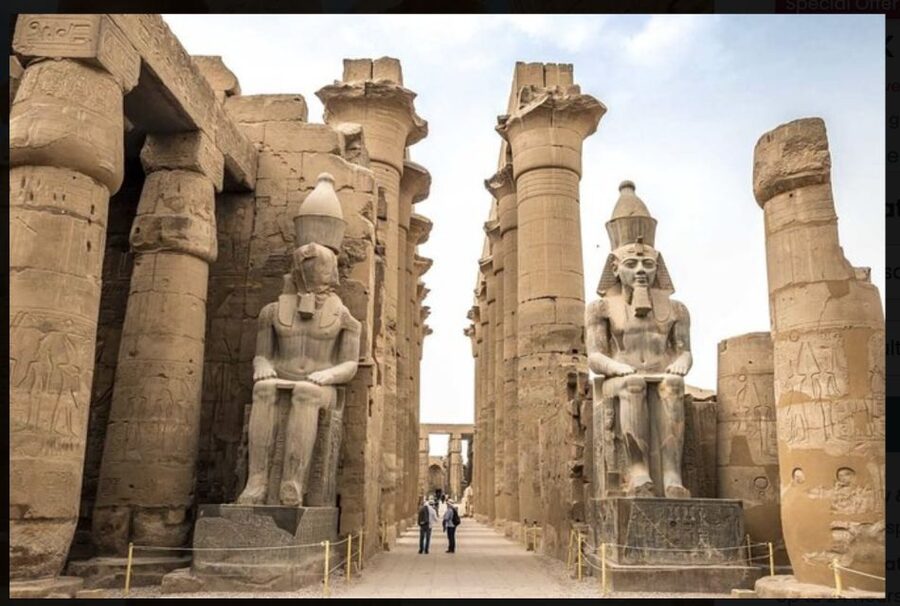
The final sightseeing stop is the Colossi of Memnon, two massive stone statues of Amenhotep III. They have stood in the Theban Necropolis west of the Nile since about 1350 BCE.
These statues are easy to visit compared with the larger temple complexes. You do not need a long block of time to understand their scale, but they make a strong final stop because they offer a clear visual reminder of the power of the pharaohs.
The Colossi were once part of a much larger mortuary temple. Your guide can explain that the statues are only what remains most visibly today. Their weathered surfaces and enormous size make them a useful closing image before the drive back to Hurghada.
Because this stop comes near the end of the route, you may be tired. That is not a flaw in the Colossi, but it is part of the day’s demanding schedule. The short visit works well as a final stop before returning to the vehicle.
What the private guide adds
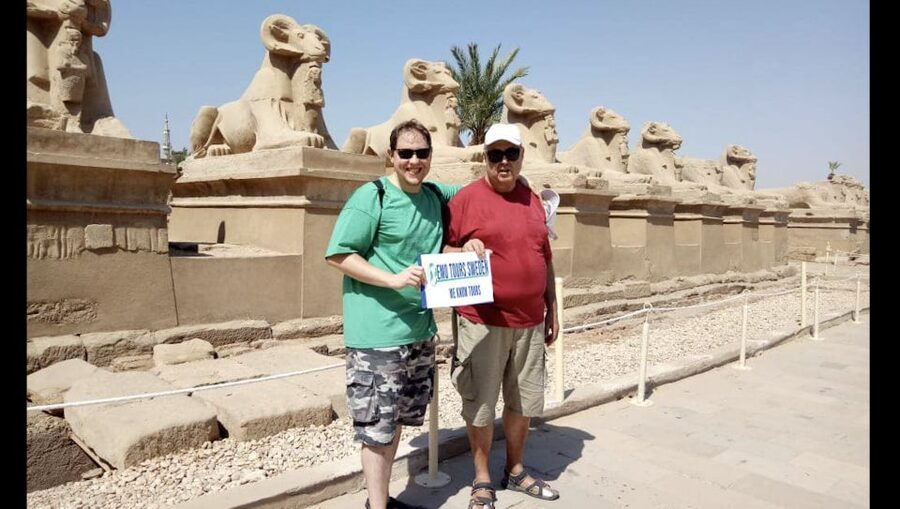
The guide is central to this experience. The monuments are impressive, but they are also vast, old, and easy to misunderstand. A private Egyptologist can connect the names, dates, symbols, and buildings into a story you can follow.
Hani was praised for being friendly and full of information. Hosam and Mohammad Hisham were singled out for their company, explanations, and care during the heat. Adel was also appreciated for his explanations of Egyptian history and the extra insights he brought to the visit.
You should also tell the guide what interests you. One of the best features of a private tour is the chance to personalize it. You might want more time at the tombs, clearer explanations of royal succession, or a faster route through areas that interest you less.
The language choice is another practical advantage. The service is offered in English, Spanish, German, Italian, and Arabic. Make sure you select the language that will let you ask detailed questions comfortably.
Is $223 per person a fair price?
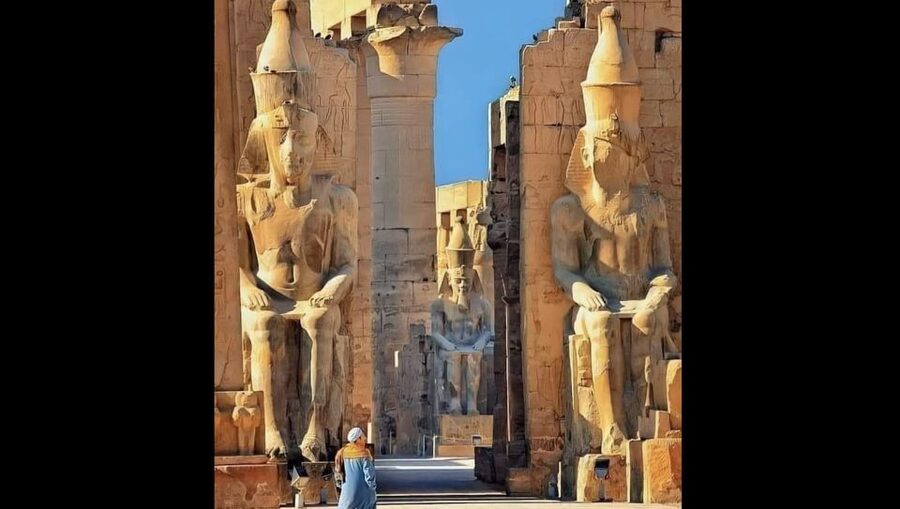
At $223 per person, this is not a budget day trip. The value depends on what you would otherwise need to arrange yourself.
The price includes private transportation, an air-conditioned vehicle, entry tickets to the listed sites, an Egyptologist guide, lunch, bottled water, and landing and facility fees. You are paying for convenience as well as sightseeing. There is no need to arrange separate transport from Hurghada, find a guide in Luxor, purchase each site ticket, or organize lunch during a tightly timed day.
For a solo visitor or a couple, the price may feel high. For a small private group, it can make more sense because the cost is charged per person but the transport and guide are shared within your own party. The main value is also time. You can see the east and west banks in one day without moving your accommodation to Luxor.
The private setup is more valuable here than it would be on a short city walk. You are covering a long road distance and several major sites. A poor group arrangement could mean waiting, rushing, or losing time at stops that matter to you. Private transport reduces that risk.
The hard parts of the day
You should book this with realistic expectations. This is a long, hot sightseeing day, not a gentle outing.
The main strain is the road time. You may spend about three hours traveling each way from Makadi Bay, and Hurghada pickup points can vary. The day will feel much better if you accept the distance before booking rather than expecting a quick excursion.
The second issue is the sales pressure around popular monuments. Stalls near the sites can be messy and distracting. Keep your plans simple, listen to your guide, and do not feel obliged to stop at every shop or respond to every offer.
The third issue is the heat. Bring comfortable shoes and clothes, drink water often, and use shade whenever possible. The guides have shown care in managing water, food, and shade, but you still need to look after yourself.
You will also see poorer parts of Egypt during the drive. That can be uncomfortable, but it is part of seeing the country beyond resort areas. The road gives you a wider view of modern Egyptian life, not just polished archaeological sites.
Who should book this Luxor day trip?
I would recommend this tour to you if Luxor is a priority and you are staying in Hurghada, Makadi Bay, or nearby. It is especially useful for first-time visitors who want the major monuments explained in one organized day.
It also suits families and small groups that value a private vehicle, a flexible pace, and a guide who can answer questions. History fans will appreciate the range, from New Kingdom tombs to temples built and altered across many centuries.
I would think twice if you dislike long drives, struggle with heat, or want slow visits with plenty of free time. In that case, staying overnight in Luxor would likely be easier, but this tour is designed for convenience from the Red Sea coast.
Should you book it?
Book this private Luxor tour if you want to see the essential monuments without arranging transport, tickets, lunch, and a guide yourself. The strongest reasons are the well-rounded route, the private format, and the guides’ praised care with explanations, water, shade, and personal requests.
Skip it if the 240-kilometer road journey feels too tiring or if you want a relaxed schedule. For everyone else, $223 is a reasonable price for a packed day that connects Luxor Temple, Karnak, the Valley of the Kings, Hatshepsut’s temple, and the Colossi of Memnon in one trip from Hurghada.
Cancellation is available up to 24 hours before departure for a full refund, and you can reserve now and pay later if you need to keep your plans flexible.
FAQ
How far is Luxor from Hurghada on this tour?
The route is about 240 kilometers from Hurghada to Luxor. A group traveling from Makadi Bay reached Luxor in about three hours after a new highway opened, though travel time can vary.
What sites are included?
The tour includes Luxor Temple, Karnak Temple Complex, the Valley of the Kings, the Mortuary Temple of Hatshepsut, and the Colossi of Memnon.
Is lunch included?
Yes. Lunch at an Egyptian restaurant is included, along with bottled water.
Is transportation private?
Yes. Private transportation in an air-conditioned vehicle is included, with pickup from your hotel or airport and return to your Hurghada hotel or airport.
Which languages are available for the guide?
Guides are available in English, Spanish, German, Italian, and Arabic.
What should I bring?
Bring comfortable shoes and comfortable clothes. These are important because the tour includes extensive sightseeing in hot conditions.
Newly listed around Luxor
- Luxor Nile River Private Felucca Ride at Sunset★ 4.5 · 20 reviews
- Marvelous Luxor East and West Bank Private Tour with Lunch From Airport /Hotels★ 4.5 · 17 reviews
- Private tour : Sunset Felucca Ride in Luxor★ 5.0 · 16 reviews
- 3-Day Luxor Aswan and Abu Simbel Historical Sites Private Tour★ 5.0 · 34 reviews
- First impression of Luxor-Explore secrets of Luxor by horse carriage★ 5.0 · 50 reviews
- Nile cruise between Luxor and Aswan: Sail the best temples in Egypt★ 5.0 · 72 reviews
- Experience the Magic of a Luxor Sunrise Hot Air Balloon Ride★ 5.0 · 17 reviews
- 5 Days 4 Nights from Luxor to Aswan on Gentle Breeze Dahabyia★ 4.5 · 24 reviews
Guided, compared.
Private guided tour to Giza Pyramids, and Great Sphinx
Read our review →
Female-Guided Pyramids, Sphinx & Museum City Tour
Read our review →
Half Day Tour Giza Pyramids &Great Sphinx with Private Tour Guide
Read our review →
Morning or Sunset Sights Guided Tour with Shopping
Read our review →
Egyptian Museum, Citadel, and Old Cairo Guided Tour
Read our review →
Private or Shared City Tour with Guide & Shopping
Read our review →
Giza Sunrise Pyramid Guided Tour With Camel Ride & Breakfast
Read our review →
Old Cairo Guided Walk Tour: History, Culture & Street Bites
Read our review →Browse the lists this tour appears in