
Reviewed · NILE CRUISES
Book Standard Nile Cruise 5 days 4 nights from Luxor to Aswan
Egypt’s greatest monuments line the river. This four-night cruise links Luxor and Aswan without the nuisance of packing and unpacking, and it includes guided visits to Karnak, the Valley of the Kings, Edfu, Kom Ombo, Philae, and Abu Simbel. I like the steady rhythm of seeing one major site, returning to the ship for a meal, then watching the Nile slip past from the deck.
I also like that the package includes a private Egyptologist guide, air-conditioned transfers, accommodation, and most meals. The main caution is that the Royal Esadora receives mixed reports on food, noise, maintenance, and communication, so I would confirm the exact vessel, cabin location, and pickup time before paying.
At $780 per person, this is not a bare-bones sightseeing trip. You are paying for four nights onboard, organized transport, guided sightseeing, and the convenience of moving south while your hotel moves with you. That can be good value, especially for a first visit to Egypt, but the experience will suit you best if you value ease and structure more than absolute control over your schedule.
In This Review
- Key points before you book
- Why a Luxor to Aswan cruise works so well
- Day 1: Karnak, Luxor Temple, and boarding
- Day 2: The Valley of the Kings and Queen Hatshepsut
- Day 3: Edfu and the two gods of Kom Ombo
- Day 4: Aswan High Dam, Philae, and a felucca sail
- Day 5: Abu Simbel and the final morning
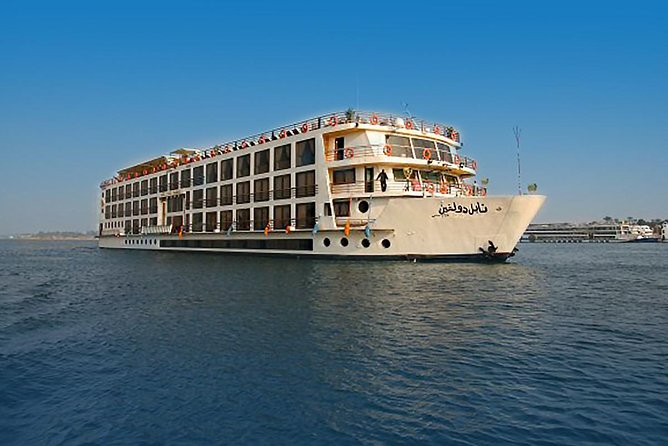
- Life onboard the Royal Esadora
- What the $780 price really buys
- Who should book this Nile cruise?
- Should you book the Royal Esadora Nile cruise?
- FAQ
- How long is the Nile cruise?
- Where does the experience begin?
- What time does the tour start?
- Is accommodation included?
- Are meals included?
- Is a guide included?
- Is Abu Simbel included?
- What is not included in the price?
Key points before you book
- Four nights on the Royal Esadora: You sleep onboard from Luxor through Aswan instead of changing hotels each night.
- A full sweep of Upper Egypt: The route covers Luxor’s east and west banks, Edfu, Kom Ombo, Aswan, and Abu Simbel.
- Private Egyptologist guide: Your group receives guided sightseeing rather than simply being dropped at the monuments.
- Meals are built in: The package lists five lunches, four breakfasts, and four dinners, plus bottled water.
- A felucca ride adds variety: The Aswan day includes a traditional Nile sail around Kitchener’s Island and the Agha Khan Mausoleum.
- Confirm the practical details: The information gives both 9:00 am and 10:00 am as possible start times, and cabin noise has been an issue in some past stays.
Why a Luxor to Aswan cruise works so well
The Nile is the natural road through southern Egypt. A cruise lets you visit ancient sites along the river without spending each evening searching for a new hotel, arranging another taxi, or hauling luggage through another lobby.
That simplicity matters here. Luxor and Aswan are separated by a long stretch of river and road, and the important temples sit in different towns along the way. Instead of treating each stop as a separate day trip, you follow one southbound route.
I especially like the balance between organized touring and time onboard. The sightseeing days are busy, but the ship gives you breaks for lunch, tea, dinner, and quiet time on deck. You see monuments in the morning, then return to a familiar cabin.
This is a private tour, so only your own group participates. That gives you more control than a large shared coach, although the supplied information does not say how many people are in each private group. Ask about that before booking if group size matters to you.
More Nile Cruises in Luxor
- From Luxor: 3-Night Nile Cruise to Aswan and Hot Air Balloon
★ 3.7 · 297 reviews - Amazing Sunset sailing by Felucca in Luxor -2 Hours (Private)
★ 5.0 · 255 reviews - 5 Days Private Guided Nile River Cruise Tour from Luxor to Aswan
★ 5.0 · 229 reviews
Day 1: Karnak, Luxor Temple, and boarding
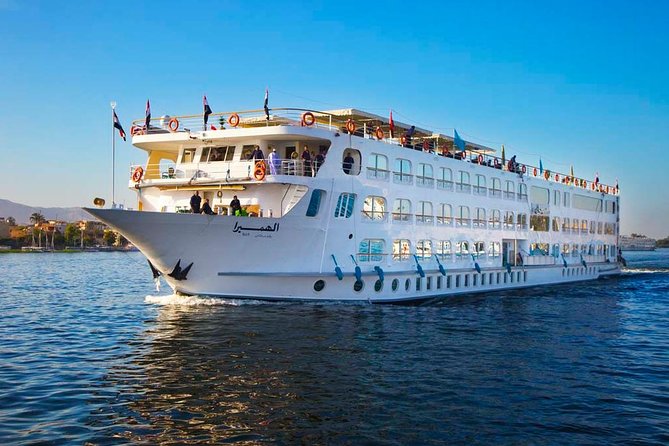
Pickup is arranged from a Luxor hotel or Luxor Airport, followed by transfer to the cruise ship. The details show a meeting time of 9:00 am, while the first-day description says to meet at 10:00 am, so confirm the exact time with the operator. You board before lunch and eat onboard.
The first sightseeing block includes Luxor Temple and Karnak Temple. Luxor Temple is compact enough to appreciate without becoming overwhelmed, and its courtyard and large statues of Ramses II give you an immediate sense of royal scale. The temple sits close to modern Luxor, which makes it a useful first stop before the larger Karnak complex.
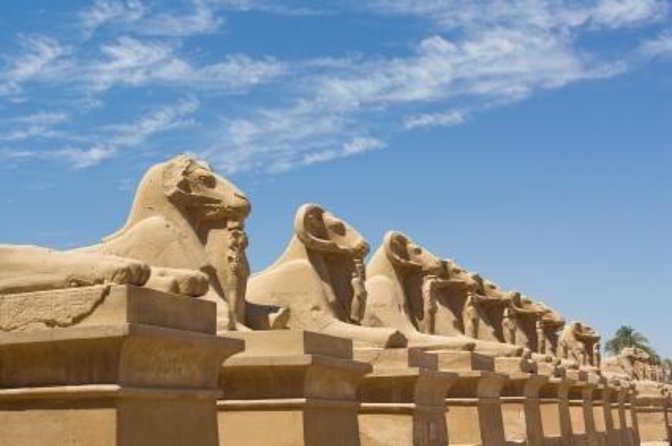
Karnak is not one building. It is a huge collection of temples and additions made over many centuries. The route described includes the Avenue of Sphinxes, the unfinished first pylon, the Great Hypostyle Hall, the obelisks associated with Hatshepsut and Thutmose III, the Temple of Amun, and the granite scarab.
The Hypostyle Hall is the visual heavyweight. Its 134 massive columns create a forest of stone, and this is where a good guide earns the fee. Without context, it can look like a grand collection of columns. With explanations, you begin to understand how different rulers added to the same sacred center.
The first afternoon is a strong introduction, but it is also a lot to absorb after arrival. If your flight or hotel transfer gets you in late, expect a fairly demanding start. The upside is that you see two of Luxor’s most important monuments immediately.
Day 2: The Valley of the Kings and Queen Hatshepsut
After breakfast, you cross to Luxor’s west bank for the Valley of the Kings, the Colossi of Memnon, and the Temple of Hatshepsut at Deir el Bahari. This is the day most visitors anticipate, and it deserves the time.
The Valley of the Kings is about entering selected tombs rather than seeing one grand outdoor monument. Tomb access can vary, and the package says you visit tombs from various dynasties, but it does not specify which ones. Your guide should explain what is open on the day and whether any tombs require extra payment.
The tombs are the reason to look closely. Their painted walls preserve scenes, symbols, and religious texts in a place built for the dead, not public worship. The enclosed spaces can feel very different from the broad temple courtyards, so pace yourself and listen carefully to the guide’s explanation of the decoration.
The Colossi of Memnon make a quick but worthwhile stop. These two seated statues of Amenophis III face toward the Nile and work well as a short photo and orientation break. They are easy to see from outside, so this part of the morning is less time-consuming than the Valley of the Kings.
The Temple of Hatshepsut is the architectural highlight of the west bank for many people. Its terraces rise against the cliffs at Deir el Bahari, giving the site a strong sense of place. Hatshepsut’s reign and the unusual design make this more than another set of columns and walls.
After lunch, the ship sails toward Esna. Afternoon tea and a disco party are listed, with the ship spending the night in Edfu. The change from ancient temples to onboard entertainment may appeal to you, but you can also skip it and enjoy the river or your cabin. A cruise itinerary often includes social events that are optional in practice, even when they appear on the schedule.
Day 3: Edfu and the two gods of Kom Ombo
Edfu’s Temple of Horus is the main morning visit. The temple is dedicated to Horus and is one of the best-preserved large temple complexes on the route. Its condition makes the carved walls and monumental entrance easier to read than those at some more weathered sites.
The visit is listed as about two hours. That is enough for a guided overview, but not enough for a slow examination of every carved surface. Stay close to your guide at the start, then use any free minutes to look at the details that interest you most.
After sailing to Kom Ombo and having lunch onboard, you visit the temple shared by Sobek and Haroeris. The double dedication gives the site its unusual layout, with each side linked to a different god. Sobek, the crocodile god, is the figure most people remember, but the temple also connects to Horus the Elder, identified here as Haroeris.
Kom Ombo is especially enjoyable because the setting matters. The temple sits beside the Nile, and the visit gives you a direct sense of how closely river travel and ancient religious life were tied together. It is not as vast as Karnak, but its two-god design makes the guide’s explanation important.
Dinner is onboard, followed by a galabeya party. You can take part if you enjoy a light cultural evening, or simply treat it as entertainment included in the cruise program. The ship stays overnight in Kom Ombo, which means there is no need to rush back to a distant hotel.
More Nile cruises and felucca sailings:
- Luxor: Private East and West Banks Tour and Felucca Cruise
★ 4.7 · 209 reviews - From Luxor: Dendera Temple All-Inclusive Tour & Felucca Ride
★ 4.2 · 207 reviews - Luxor: Nile River Private Sunset Felucca Ride
★ 4.9 · 188 reviews - Historia Hotel Nile Cruise, Mon. from Luxor 4 nts inc. Excursions
★ 5.0 · 185 reviews
Day 4: Aswan High Dam, Philae, and a felucca sail
The ship reaches Aswan after breakfast. The day includes the High Dam, the granite quarries, and Philae Temple, followed by a felucca ride around Kitchener’s Island and the Agha Khan Mausoleum.
The High Dam is a modern engineering site rather than an ancient monument, but it explains the modern Nile. Its construction changed flooding, farming, electricity production, and the survival of several ancient sites. The relocation of Philae is one of the clearest examples of the cost and benefit of large-scale control over the river.
The granite quarries offer a different kind of historical evidence. The unfinished obelisk shows how ancient stone workers shaped enormous blocks, and the abandoned work provides a practical lesson in quarrying that no museum display can quite match.
Philae Temple is reached as part of the Aswan visit, and its island setting gives it a special character. The temple complex was moved to protect it from rising water after the dam projects, so the site you see is both ancient and modern in an important way. The package lists about two hours for this stop.
Lunch is served onboard, then you head out on a felucca around Kitchener’s Island and the Agha Khan Mausoleum. This is one of the gentler parts of the trip. After several early starts and large monuments, a traditional sail gives you time to watch the river rather than study another wall.
A felucca is open and simple compared with the cruise ship. The supplied information does not give the exact sailing duration or weather arrangements, so ask what happens if conditions change. The ride is included in the Aswan program and adds a useful local touch to a schedule otherwise centered on ancient sites.
Day 5: Abu Simbel and the final morning
The final excursion takes you from Aswan to Abu Simbel, then back to Aswan. The temples were built by Ramses II and cut into a sandstone cliff. Their enormous facades are dedicated to major deities, while the nearby smaller temple honors Nefertari and the goddess Hathor.
The information lists about two hours at Abu Simbel and no admission charge for this stop. It does not specify the transport method, departure time, or return time, so you should ask those questions before arrival. This is particularly important because Abu Simbel is not a casual add-on. It is a major excursion that can shape your entire final day.
The temples are worth serious consideration for one reason: they are not simply another stop along the river. Their scale, royal purpose, and rescue from flooding give the visit a different weight from the smaller temples at Edfu and Kom Ombo.
The package says the activity ends back at the meeting point, but the practical details also describe a Luxor to Aswan cruise. Confirm exactly where your luggage goes and where the tour ends after Abu Simbel. Do not assume the return point is your hotel, airport, or the original Luxor meeting location.
Life onboard the Royal Esadora
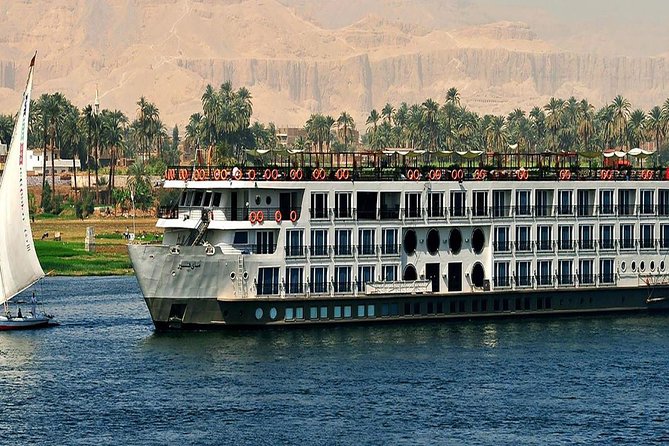
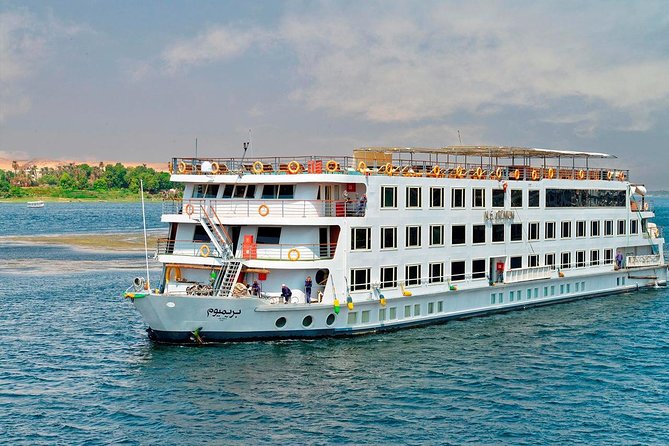
The ship provides four nights of accommodation, with breakfast, lunch, and dinner included according to the package. Bottled water is also included, while tips are not.
Past experiences on the Royal Esadora have been mixed. Positive impressions center on clean cabins, helpful staff, spacious rooms, large opening windows, and attentive service. Several guides connected with cruises on this vessel have been praised by name, including Ayman, Marco, and Addi. Your guide may be someone else, but the package does promise an Egyptologist guide for your private group.
The food appears to be the less consistent part of the stay. Some passengers found it good and varied, while others described it as merely acceptable or repetitive. Salads were specifically treated with caution in one account, so I would be sensible about what you eat and drink onboard.
Cabin location deserves attention. Reports describe excessive engine and generator noise, especially toward the stern, while other stays found the cabins clean, comfortable, and larger than expected. Ask for a cabin away from the rear machinery if quiet sleep is important to you.
Do not expect hotel-style extras in every cabin. Tea and coffee facilities were not always provided, and internet access has been described as expensive when the ship is moored. The supplied information does not promise Wi-Fi, in-room drinks, or a specific beverage package. If drinks-inclusive options are offered, check the price carefully before accepting one.
The pool has also received mixed comments, including concerns about cloudy water and a damaged ladder. That does not mean your sailing will have the same issue, but it is a sensible reminder to inspect shared facilities before using them and report any safety problem immediately.
What the $780 price really buys
At $780 per person, the cost works out to $156 per day before considering the value of the included transport and excursions. You receive four nights onboard, five lunches, four breakfasts, four dinners, airport or hotel pickup in Luxor, private air-conditioned transfers, bottled water, a private tour, and an Egyptologist guide.
The strongest value is time. You do not have to arrange separate transport from Luxor to Edfu, Kom Ombo, and Aswan, and you do not spend each evening changing hotels. For a first visit, that organization can prevent a great deal of friction.
The weaker point is control. Your sightseeing follows the ship’s schedule, and the information does not spell out optional fees, drinks, exact cabin categories, or every admission arrangement. Tipping is excluded, and the cancellation terms become stricter inside six days of departure. Cancellation six or more full days ahead allows a full refund, two to six days allows 50 percent, and less than two days means no refund.
Before booking, I would ask for five answers in writing:
- Is the Royal Esadora guaranteed, or can the ship be changed?
- What deck and cabin position will you receive?
- Is the guide exclusive to your group?
- What transport is used for Abu Simbel?
- Is the start time 9:00 am or 10:00 am?
Those questions matter more than a glossy description. A good guide and a quiet cabin can make this trip feel excellent. An unclear transfer, stern cabin, or unexpected boat substitution can change the value quickly.
Who should book this Nile cruise?
I would recommend it to a first-time Egypt visitor who wants the major Nile sights in one organized package. It also suits anyone who dislikes changing hotels, prefers private guiding, and wants meals and transfers arranged in advance.
It is less suitable if you need a silent cabin, strict dietary control, reliable internet, or a highly flexible schedule. Independent visitors who want long hours at individual temples may find the two-hour stops too brisk.
The cruise also works best for people comfortable with early sightseeing and full days. Luxor’s temples, the west bank, Edfu, Kom Ombo, Aswan, and Abu Simbel add up to a busy program. The reward is that you see a great deal of southern Egypt in five days.
Should you book the Royal Esadora Nile cruise?
Book this cruise if convenience is your priority and you are willing to confirm the details before departure. The route is excellent, the major sites are well chosen, and the combination of a private Egyptologist guide, onboard accommodation, meals, and transfers gives the $780 price a reasonable foundation.
I would not book it blindly. Confirm the vessel, cabin location, guide, Abu Simbel transport, pickup time, and what is included at each site. If those answers are clear, this is a practical way to follow the Nile from Luxor to Aswan without spending your holiday arranging the next move.
FAQ
How long is the Nile cruise?
The cruise lasts five days and four nights, traveling from Luxor to Aswan onboard the Royal Esadora.
Where does the experience begin?
The listed starting point is in Luxor, Egypt. Pickup is offered from a Luxor hotel or Luxor Airport.
What time does the tour start?
The meeting information gives a 9:00 am start time, while the first-day description says to meet at 10:00 am. Confirm the exact pickup time before the cruise.
Is accommodation included?
Yes. Four nights of accommodation onboard the Royal Esadora are included.
Are meals included?
Yes. The package includes five lunches, four breakfasts, and four dinners.
Is a guide included?
Yes. A private Egyptologist guide is included, and the activity is described as a private tour for your group.
Is Abu Simbel included?
Yes. The fifth day includes a visit to the temples of Abu Simbel and a return to Aswan. The listed admission cost for this stop is free, but the transport details should be confirmed.
What is not included in the price?
Tipping is not included. The supplied details also do not promise internet, in-room tea and coffee, or a drinks-inclusive package.
More 5-Day Experiences in Luxor
- From Luxor: 5-Day Nile Cruise to Aswan with Balloon Ride
★ 4.2 · 168 reviews - From Luxor: 5 Days 4 Nights Nile Cruise to Aswan
★ 4.5 · 108 reviews - Nile cruise 5 days Private full board accommodation transferred guided tours
★ 4.0 · 104 reviews - 5-Day Nile Cruise to Aswan from Luxor with Hot Air Balloon Ride
★ 4.5 · 87 reviews
Newly listed around Luxor
- Luxor Nile River Private Felucca Ride at Sunset★ 4.5 · 20 reviews
- Marvelous Luxor East and West Bank Private Tour with Lunch From Airport /Hotels★ 4.5 · 17 reviews
- Private tour : Sunset Felucca Ride in Luxor★ 5.0 · 16 reviews
- 3-Day Luxor Aswan and Abu Simbel Historical Sites Private Tour★ 5.0 · 34 reviews
- First impression of Luxor-Explore secrets of Luxor by horse carriage★ 5.0 · 50 reviews
- Nile cruise between Luxor and Aswan: Sail the best temples in Egypt★ 5.0 · 72 reviews
- Experience the Magic of a Luxor Sunrise Hot Air Balloon Ride★ 5.0 · 17 reviews
- 5 Days 4 Nights from Luxor to Aswan on Gentle Breeze Dahabyia★ 4.5 · 24 reviews
Nile Cruises, compared.
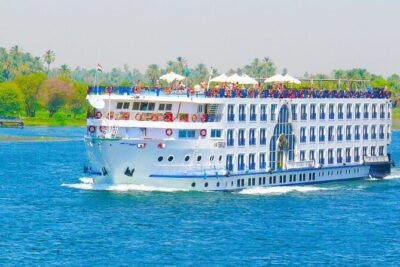
4-Days Nile Cruise From Aswan To Luxor including Abu Simbel and Hot Air Balloon
Read our review →
4-Day 3-Night Nile Cruise from Aswan to Luxor&Abu Simbel+Balloon
Read our review →
Sakkara, Memphis & Dahshur (Pyramid & Felucca Options)
Read our review →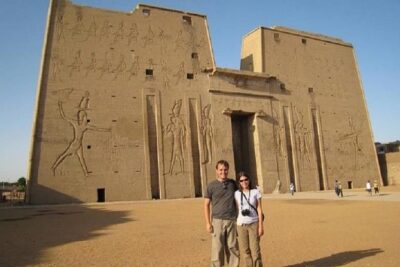
4-Day 3-Night Nile Cruise from Aswan to Luxor including Abu Simbel, Air Balloon
Read our review →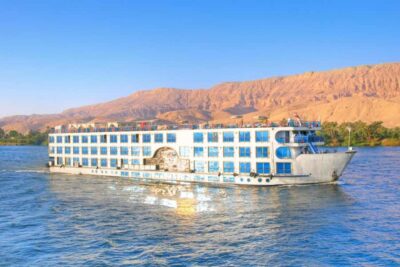
4-Day Nile Cruise from Aswan to Luxor with Guide
Read our review →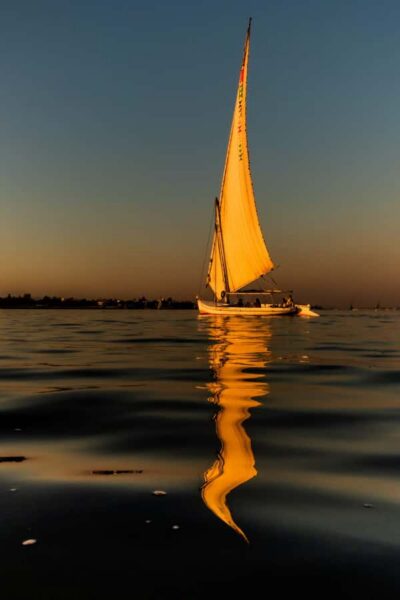
4-Days Nile Cruise From Aswan To Luxor including Abu Simbel and Hot Air Balloon
Read our review →Browse the lists this tour appears in