
Reviewed · NILE CRUISES
5 Days Dahabiya Nile River Cruise from Luxor to Aswan
The Nile is best seen at a slower pace. This five-day, four-night Dahabiya cruise combines Egypt’s major ancient sites with the quiet pleasure of moving by river, from Luxor to Aswan. You travel with a private Egyptologist guide, air-conditioned transport, full-board meals, and a small private group rather than a large cruise crowd.
I like the way the trip brings together the Valley of the Kings, Karnak, Edfu, Kom Ombo, and Philae without making you arrange each transfer yourself. I also like the intimate Dahabiya setting, which past passengers praise for attentive service, tasty food, and a peaceful feel. The main drawback is the pace: the schedule packs in many major monuments, so some days begin early and leave little room for wandering on your own.
The price is $1,999 per person, including four nights aboard a five-star Dahabiya, meals, entrance fees, guide service, and transfers. That is a serious outlay, but it can be good value if you want a private, tightly organized Upper Egypt trip with the large planning work already handled.
In This Review
- Key points before you book
- Why this Dahabiya cruise is different
- Day one: the Valley of the Kings and Luxor’s great temples
- Valley of the Kings
- Temple of Hatshepsut
- Colossi of Memnon
- Karnak Temple
- Day two: Edfu and the quarry at Gebel el Silsila
- Temple of Horus at Edfu
- Gebel el Silsila
- Day three: the unusual double temple at Kom Ombo
- Day four: Aswan’s dam, obelisk, and island temple
- Aswan High Dam
- Unfinished Obelisk
- Temple of Philae
- Life aboard the Dahabiya
- The guide can shape the whole trip
- What the $1,999 price includes
- Who should book this cruise?
- Practical details before departure
- Should you book the Luxor to Aswan Dahabiya cruise?
- FAQ
- How long is the Dahabiya Nile cruise from Luxor to Aswan?
- What time does the experience start?
- Is this a private tour?
- What meals are included?
- Are entrance fees included?
- Which major sites are visited?
- Can I have a private room?
- What happens if I need to cancel?
Key points before you book
- A quieter way to see the Nile: The Dahabiya offers a smaller-scale cruise experience than the large river ships commonly seen between Luxor and Aswan.
- Major monuments are built in: The route covers Karnak, the Valley of the Kings, Hatshepsut’s temple, Edfu, Kom Ombo, the High Dam, the Unfinished Obelisk, and Philae.
- Private group format: Only your own group participates, which can make the sightseeing pace more flexible.
- Guide quality matters here: Past praise centers on guides named Mohamed, including Mohamed Eldahesh, and Ahmed, with Spanish-language guiding available in at least some departures.
- Four nights are full board: Breakfast, lunch, and dinner are included each day aboard the boat.
- Plan for a full touring schedule: The cruise is relaxing while underway, but the temple visits are substantial and often last one to two hours.
Why this Dahabiya cruise is different
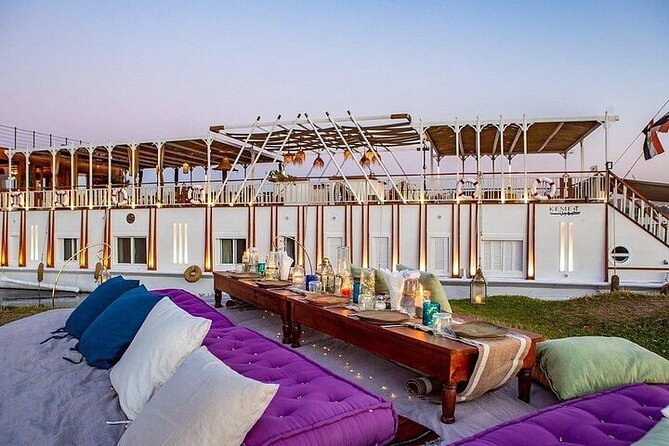
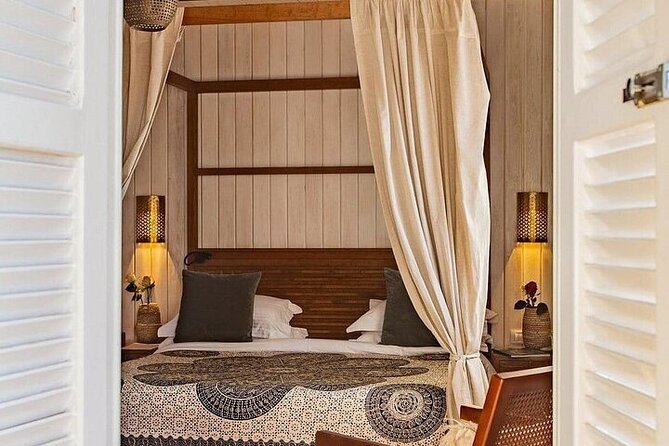
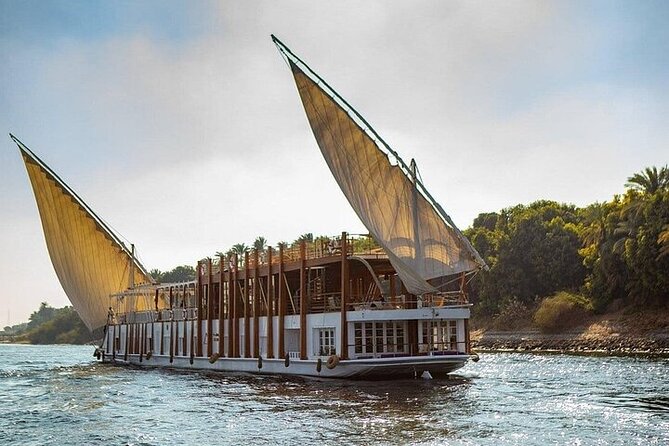
A Dahabiya is a traditional-style Nile sailing boat, generally smaller and more personal than the large cruise ships that run this route. The supplied details identify the boat as a five-star Dahabiya and refer specifically to the Turquoise Dahabya in the praise for the experience.
That difference matters. You are not simply booking transport between two cities. You are choosing a slower river journey with fewer people around you. The boat becomes your base for four nights, while a private air-conditioned vehicle handles the road transfers to and from the monuments.
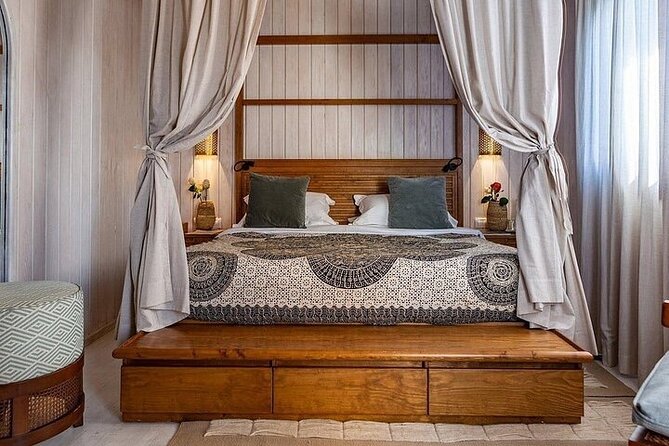
The format also suits people who prefer a private trip. Only your group takes part, so you do not have to keep pace with a large tour party. If your group has three people, the accommodation arrangement is a triple room. If you want your own room, you need to book as a single person, including when you are part of a larger group.
The strongest praise is directed at the crew and food. The service is described as attentive, and several comments call the meals excellent or delicious. That is useful because dining is a major part of a river cruise. You will spend much of your time aboard, and good meals and friendly service can make the difference between a pleasant sailing and a merely practical one.
More Nile Cruises in Luxor
- From Luxor: 3-Night Nile Cruise to Aswan and Hot Air Balloon
★ 3.7 · 297 reviews - Amazing Sunset sailing by Felucca in Luxor -2 Hours (Private)
★ 5.0 · 255 reviews - 5 Days Private Guided Nile River Cruise Tour from Luxor to Aswan
★ 5.0 · 229 reviews
Day one: the Valley of the Kings and Luxor’s great temples
The opening day is packed with some of Luxor’s most important sights. The stated start time is noon, so you should not assume this is a dawn departure. Even so, four major stops make for a demanding first day.
Valley of the Kings
You get about two hours in the Valley of the Kings, with admission included. This desert valley served as a burial ground for pharaohs and powerful nobles of Egypt’s New Kingdom, roughly from the 16th to the 11th century BC.
The value of having an Egyptologist guide is especially clear here. The tombs can look similar at first, but their wall scenes, religious symbols, and burial layouts differ. A good guide helps you see why the valley matters instead of reducing the visit to a quick walk through painted corridors.
You should also expect some physical effort. The itinerary does not specify which individual tombs are included, and conditions inside can be warm, narrow, and uneven. Bring water, wear sensible shoes, and listen carefully to the guide’s instructions about what is open on the day.
Temple of Hatshepsut
The next stop lasts about 90 minutes. Hatshepsut’s mortuary temple sits against the cliffs at Deir el Bahari and is one of the most striking buildings on Luxor’s west bank.
Its broad terraces and strong lines feel very different from the enclosed tombs. Your guide can place Hatshepsut’s rule within the 18th Dynasty and explain the temple’s role as both a memorial and a statement of royal power. The visit is long enough for a proper explanation and photographs, but not so long that the day loses momentum.
More Nile cruises and felucca sailings:
- Luxor: Private East and West Banks Tour and Felucca Cruise
★ 4.7 · 209 reviews - From Luxor: Dendera Temple All-Inclusive Tour & Felucca Ride
★ 4.2 · 207 reviews - Luxor: Nile River Private Sunset Felucca Ride
★ 4.9 · 188 reviews - Historia Hotel Nile Cruise, Mon. from Luxor 4 nts inc. Excursions
★ 5.0 · 185 reviews
Colossi of Memnon
The 20-minute stop at the Colossi of Memnon is brief and free. These two huge stone statues once guarded the entrance to the mortuary temple of Amenhotep III.
Think of this as a roadside pause rather than a full site visit. It gives you time to see the scale of the statues and take photographs, but the short duration means you should not expect an extended explanation or a long exploration of the ruined temple complex.
Karnak Temple
Karnak receives about two hours, with admission included. This vast complex is one of the defining sights of Luxor, with pylons, courtyards, columns, chapels, and remains from many periods of Egyptian history.
Two hours is a useful amount of time, though Karnak can easily absorb much longer. Stay close to your guide during the main explanation, then use any free time to look up at the massive columns and study the carved surfaces. The complex is large enough to feel tiring after the west bank visits, so comfortable footwear is not a minor detail.
The first day works best if you enjoy guided sightseeing and want the headline monuments covered efficiently. If you prefer long, unhurried visits, the schedule may feel tight.
Day two: Edfu and the quarry at Gebel el Silsila
Day two shifts from Luxor’s great concentration of monuments to two different kinds of ancient places: a preserved temple and an important stone quarry.
Temple of Horus at Edfu
The Temple of Edfu receives two hours and includes admission. Dedicated to Horus, it was built during the Ptolemaic period and later received Roman additions.
Edfu is valuable because its structure and carved decoration give you a clear sense of how a major temple was organized. The scale is impressive, but the guide’s explanation is what turns the visit into more than a walk among huge walls. Look for the repeated images of gods, kings, ritual scenes, and the distinctive temple entrance.
The timing is generous enough for a proper tour. Still, two hours can pass quickly when your guide is explaining the religious function of each area. Keep a little energy in reserve, since the trip continues toward another substantial historic site.
Gebel el Silsila
Gebel el Silsila is scheduled for about two hours, with admission included. This was a quarry area between Edfu and Kom Ombo, where stone was extracted for major building projects from the New Kingdom period. The supplied information connects its stone with famous construction at Karnak, Luxor Temple, Medinet Habu, and Kom Ombo.
This stop adds useful context to the temples. Instead of seeing monuments as isolated wonders, you get a look at one of the places that supplied the material for them. It is also a less familiar part of the route than Karnak or Philae, which gives the day a more varied feel.
Because the stop is outdoors and the program does not provide detailed site conditions, prepare for sun and uneven ground. A hat, water, and sturdy shoes will serve you well.
Day three: the unusual double temple at Kom Ombo
The third day focuses on Kom Ombo, a temple with an unusual design. It was built during the Ptolemaic dynasty between 180 and 47 BC, with later Roman additions.
You have about two hours here, with admission included. The temple is dedicated to two divine figures, and its paired layout is the feature to watch for. The divided design helps explain why Kom Ombo feels different from the other temples on this route.
The location also makes the visit easy to remember. The temple sits beside the Nile, so you get the satisfying combination of ancient stone and river views. After two full days of monuments, this more focused schedule can feel welcome.
Kom Ombo is not as vast as Karnak, and that is part of its appeal. You can spend time with the carvings and structure without trying to cover an enormous complex. Ask your guide to point out the details that reveal the temple’s medical, religious, and ceremonial themes, rather than rushing through the main court.
Day four: Aswan’s dam, obelisk, and island temple
The final sightseeing day covers three Aswan landmarks. It is another full day, but the stops are varied enough to keep it interesting.
Aswan High Dam
The High Dam visit lasts about 30 minutes and includes admission. Built between 1960 and 1970, the dam reshaped the Nile and created Lake Nasser. Its modern engineering story is an important counterpoint to the ancient sites.
Half an hour is enough for an overview and views, not a detailed technical tour. Treat it as a concise stop that helps you understand modern Aswan before moving on to the ancient stonework nearby.
Unfinished Obelisk
The Unfinished Obelisk receives one hour. It is the largest known ancient obelisk, still attached to the bedrock in Aswan’s old quarries.
This is one of the clearest places to see how ancient stoneworkers shaped monumental objects. The cracks that halted the work are part of the story. You can look closely at the quarry surface and imagine the scale of the finished monument that was never completed.
The site is not just a giant piece of stone. It helps connect the quarry at Aswan with the temples seen earlier in the journey. Your guide can explain the practical work behind Egypt’s monumental architecture, from cutting and shaping stone to moving it along the Nile.
Temple of Philae
Philae receives two hours, with admission included. The temple complex was originally located on an island near the First Cataract, but it was moved because of the rising waters created by the dams.
That relocation is an important part of the site’s modern story. You see an ancient temple, but you also see the result of a major preservation effort. The island setting gives Philae a different mood from the inland temples, and two hours allows time for both the main structures and the surrounding views.
This is a strong final monument for the cruise. It brings together ancient worship, later additions, modern preservation, and the Nile itself. The visit does require a boat transfer according to the nature of the island site, but the provided program does not specify its duration or operating details.
Life aboard the Dahabiya
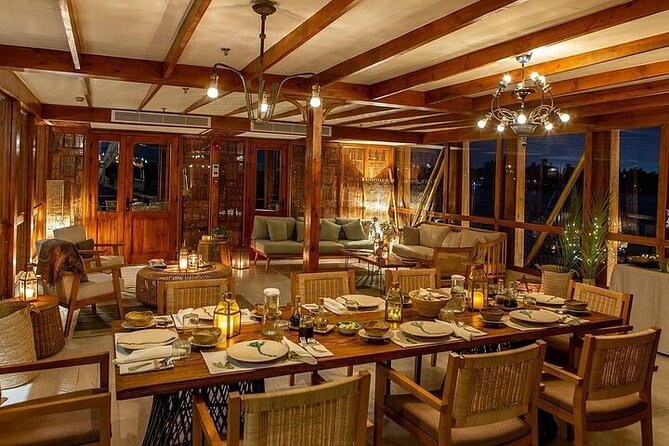
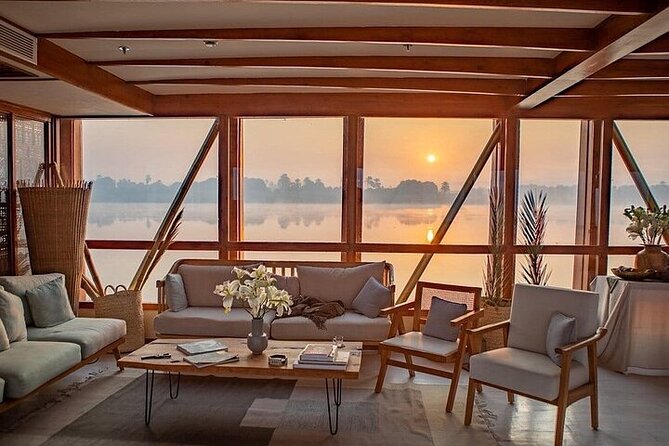
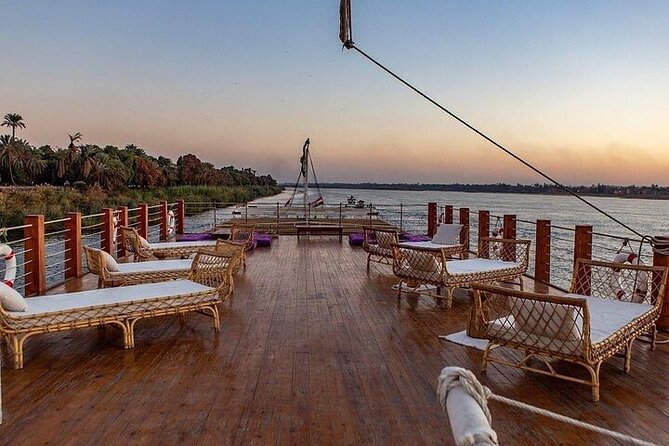
The cruise includes four nights aboard a five-star Dahabiya on a full-board basis. Breakfast, lunch, and dinner are included, along with assistance from the company’s personnel throughout the journey.
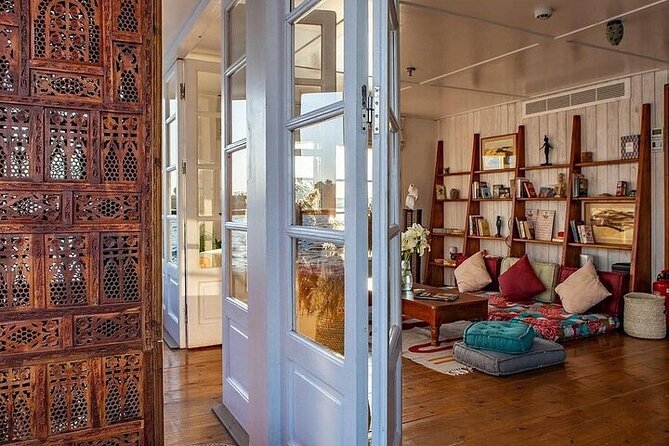
The boat is the heart of the experience. A large ship may offer more public facilities, but a Dahabiya is chosen for its smaller scale and quieter feel. The available praise repeatedly returns to the clean boat, attentive crew, and food. One family specifically liked that there were not many people aboard, while another described the trip as a good way to sail down the Nile.
You should still keep expectations sensible. The information does not list cabin dimensions, onboard entertainment, Wi-Fi, pool facilities, or the exact number of cabins. If those details matter to you, ask before paying.
The food receives some of the warmest comments. Meals are included, which makes the price easier to assess, and you avoid the daily hassle of finding restaurants between site visits. Personal drinks, snacks, and other extras are not listed as included, so budget separately for them.
The guide can shape the whole trip
The Egyptologist guide is not a decorative extra on this itinerary. You are visiting tombs, temples, quarries, dams, and an island complex in just four sightseeing days. Without context, the route could become a long parade of columns and carved figures.
Several comments praise Mohamed, including Mohamed Eldahesh, for clear explanations, patience, and personal attention. Ahmed is also described as creating an efficient sightseeing plan with time left for rest. Spanish-language guiding is available in at least one recorded experience, so ask about language when booking if that is important to you.
A private group makes a real difference here. You can ask questions without holding up a large party, and the guide can pay attention to the group’s needs. The trip is still organized around fixed site durations, so private does not mean completely open-ended. It means a more personal version of a structured program.
What the $1,999 price includes
At $1,999 per person, this is not a budget Nile trip. The value comes from the number of costly and useful elements bundled together:
- Four nights aboard a five-star Dahabiya
- Full-board meals, including four breakfasts, four lunches, and four dinners
- Entrance fees to the listed sights
- Egyptologist guide service
- Modern air-conditioned vehicle transfers
- Assistance from the operator’s staff
- Taxes and fees
You are paying for convenience as well as accommodation. The route includes long distances between major sites, and the private vehicle removes much of the work involved in arranging local transport.
The price makes the most sense for couples, families, or small groups who want privacy and a polished plan. It may be harder to justify if you mainly want the cheapest way to move between Luxor and Aswan, or if you would rather spend most of your time independently.
Group discounts are offered, but the amount is not stated. Peak periods also cost more, with an additional charge applying from December 20 through January 7. Christmas, New Year, and Easter departures should be priced carefully before you commit.
Who should book this cruise?
I would recommend it to you if you want Egypt’s major Upper Egypt sights in one organized journey and prefer a small private setting. It suits first-time visitors who want an Egyptologist to explain what they are seeing, as well as families and groups who value private transport.
It also suits anyone who likes the idea of a river journey rather than a string of hotel changes. The boat gives the trip a clear rhythm: sightseeing by day, then returning to the Nile and full-board service.
You may want a different arrangement if you dislike structured schedules, need extensive free time, or want precise control over every meal and stop. The program is busy, and most famous sites receive one to two hours rather than an entire day.
The high proportion of positive feedback is encouraging. Praise is especially strong for the food, crew, cleanliness, guide service, and overall organization. Still, a five-day cruise cannot cover every corner of Luxor and Aswan. Think of it as a well-planned introduction to the essential sights, not a slow archaeological study tour.
Practical details before departure
Pickup is offered, and the stated start time is noon. All transfers connected with the program use modern air-conditioned vehicles. The final morning includes breakfast, disembarkation, and transfer to any location in Aswan for your onward departure.
Confirmation is provided at booking. Service animals are allowed, the experience is near public transportation, and the information states that most people can participate. The program requires good weather and a minimum number of participants. If poor weather cancels the trip, you can receive another date or a full refund. If the minimum number is not reached, you receive the same choice of another date or experience, or a full refund.
You can cancel for a full refund up to 24 hours before the local start time. Inside that 24-hour window, the payment is not refunded and changes are not accepted. Tipping, personal expenses, and anything not listed in the program are extra.
One separate note concerns a hot-air-balloon activity. If that activity is cancelled because of bad weather, the stated refund is $25 per person. The listed five-day cruise itinerary does not otherwise include a balloon ride, so ask the operator how this applies to your booking.
Should you book the Luxor to Aswan Dahabiya cruise?
Book it if you want a private, comfortable way to see the main monuments of Upper Egypt, and if you value having transport, meals, admissions, and guide service handled in one package. The Dahabiya setting, attentive crew, strong food reports, and personal guiding give this trip more character than a basic transfer-and-sightseeing plan.
Skip it if $1,999 feels too high for four nights, or if you want a loose schedule with long independent visits. Before booking, confirm the boat name, cabin arrangement, guide language, peak-season surcharge, and exactly what is included in the hot-air-balloon note.
For the right kind of visitor, this is a polished Nile journey with a genuine sense of place. You get the big monuments, but you also get the river between them, which is where the trip earns much of its appeal.
FAQ
How long is the Dahabiya Nile cruise from Luxor to Aswan?
The cruise lasts approximately five days and includes four nights aboard the Dahabiya.
What time does the experience start?
The stated start time is 12:00 pm.
Is this a private tour?
Yes. Only your own group participates in the tour or activity.
What meals are included?
Breakfast, lunch, and dinner are included during the four-night cruise. The program lists four breakfasts, four lunches, and four dinners.
Are entrance fees included?
Yes. Entrance fees to all sights listed between Luxor and Aswan are included.
Which major sites are visited?
The program includes the Valley of the Kings, Temple of Hatshepsut, Colossi of Memnon, Karnak Temple, Edfu Temple, Gebel el Silsila, Kom Ombo Temple, the Aswan High Dam, the Unfinished Obelisk, and Philae Temple.
Can I have a private room?
Yes, but you need to book for a single person if you want your own room. A group of three receives one triple room unless one person makes a separate single booking.
What happens if I need to cancel?
You can cancel at least 24 hours before the local start time for a full refund. Cancellations or changes made less than 24 hours before the start time are not accepted, and the amount paid is not refunded.
More 5-Day Experiences in Luxor
- From Luxor: 5-Day Nile Cruise to Aswan with Balloon Ride
★ 4.2 · 168 reviews - From Luxor: 5 Days 4 Nights Nile Cruise to Aswan
★ 4.5 · 108 reviews - Nile cruise 5 days Private full board accommodation transferred guided tours
★ 4.0 · 104 reviews - 5-Day Nile Cruise to Aswan from Luxor with Hot Air Balloon Ride
★ 4.5 · 87 reviews
Newly listed around Luxor
- Luxor Nile River Private Felucca Ride at Sunset★ 4.5 · 20 reviews
- Marvelous Luxor East and West Bank Private Tour with Lunch From Airport /Hotels★ 4.5 · 17 reviews
- Private tour : Sunset Felucca Ride in Luxor★ 5.0 · 16 reviews
- 3-Day Luxor Aswan and Abu Simbel Historical Sites Private Tour★ 5.0 · 34 reviews
- First impression of Luxor-Explore secrets of Luxor by horse carriage★ 5.0 · 50 reviews
- Nile cruise between Luxor and Aswan: Sail the best temples in Egypt★ 5.0 · 72 reviews
- Experience the Magic of a Luxor Sunrise Hot Air Balloon Ride★ 5.0 · 17 reviews
- 5 Days 4 Nights from Luxor to Aswan on Gentle Breeze Dahabyia★ 4.5 · 24 reviews
Nile Cruises, compared.
4-Days Nile Cruise From Aswan To Luxor including Abu Simbel and Hot Air Balloon
Read our review →
4-Day 3-Night Nile Cruise from Aswan to Luxor&Abu Simbel+Balloon
Read our review →
Sakkara, Memphis & Dahshur (Pyramid & Felucca Options)
Read our review →
4-Day 3-Night Nile Cruise from Aswan to Luxor including Abu Simbel, Air Balloon
Read our review →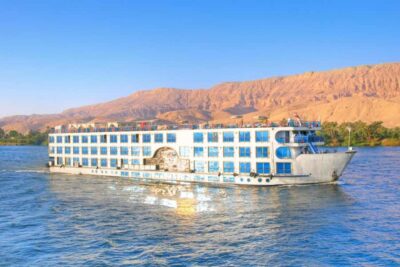
4-Day Nile Cruise from Aswan to Luxor with Guide
Read our review →
4-Days Nile Cruise From Aswan To Luxor including Abu Simbel and Hot Air Balloon
Read our review →Browse the lists this tour appears in