
Reviewed · 1-DAY TOURS
From Luxor: Day Trip to Dendera & Abydos Temples with Guide
Two great temples, one long day. This private trip from Luxor takes you beyond the usual Nile Valley stops to the Temple of Hathor at Dendera and Seti I’s remarkable temple at Abydos. I like the rare chance to see both sites in one outing, and I like having an Egyptologist guide explain the carvings instead of leaving you to guess at them. The main concern is the road time and uneven organization, especially around meals and driving.
Dendera is the clear visual treat, with color still clinging to its reliefs and a famous zodiac ceiling overhead. Abydos offers something different: older religious traditions, early kings, and the powerful cult of Osiris. I would book this for the archaeology, not for the food. At $125 per person, the value depends heavily on smooth transport, included entrance fees, and the quality of your guide.
In This Review
- Key points before you book
- Why Dendera is worth the long drive from Luxor
- What makes Abydos different from Dendera
- The 11-hour schedule and the reality of the road
- Guides who can make the temples come alive
- Lunch, dinner, and the value of what is included
- Is $125 per person fair?
- What the full day feels like
- Who should book this trip?
- Practical details to know
- Should you book the Dendera and Abydos day trip?
- FAQ
- How long does the Dendera and Abydos trip last?
- Which hotels are included for pickup and drop-off?
- Are entrance fees included?
- What meals are included?
- Which languages are available for the guide?
- Can I cancel the trip for a refund?
Key points before you book
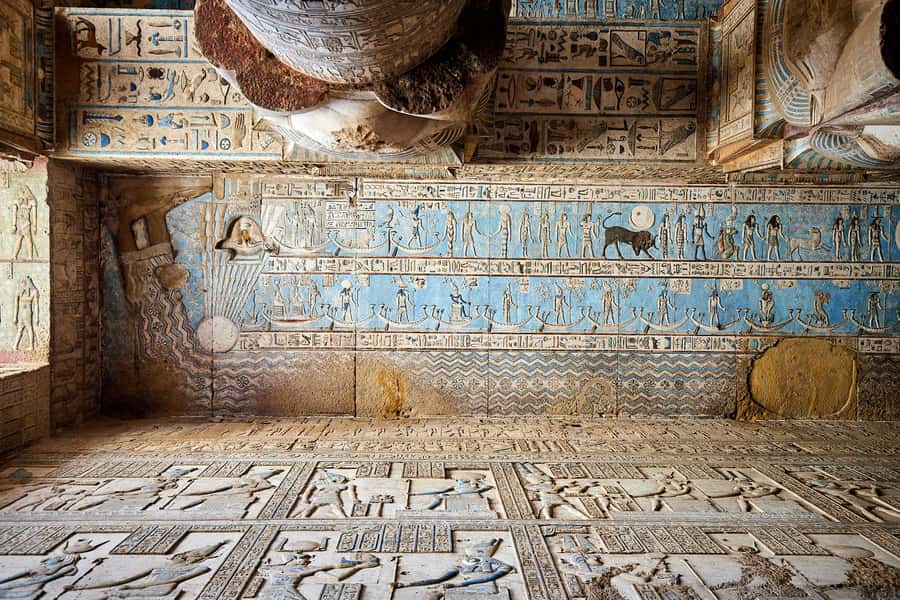
- Dendera’s surviving color is the star attraction: The Temple of Hathor has painted reliefs, a zodiac ceiling, underground crypts, and unusually clear carvings.
- Abydos reaches much further back: Its sacred sites connect to Osiris and to Egypt’s first dynasties, with royal names and early artifacts found nearby.
- The day lasts about 11 hours: Expect a full day on the road, with pickup in Luxor, two temple visits, lunch, dinner, and hotel return.
- Guide quality matters a great deal: Guides named Mustafa, Mohammed, and Moo Moo received praise for their explanations, though one account found the pace rushed and English less polished.
- Meals need checking: Lunch and dinner are advertised as included, but arrangements have not always been consistent.
- East Bank pickup is included: West Bank pickup costs an additional $5 per person.
Why Dendera is worth the long drive from Luxor
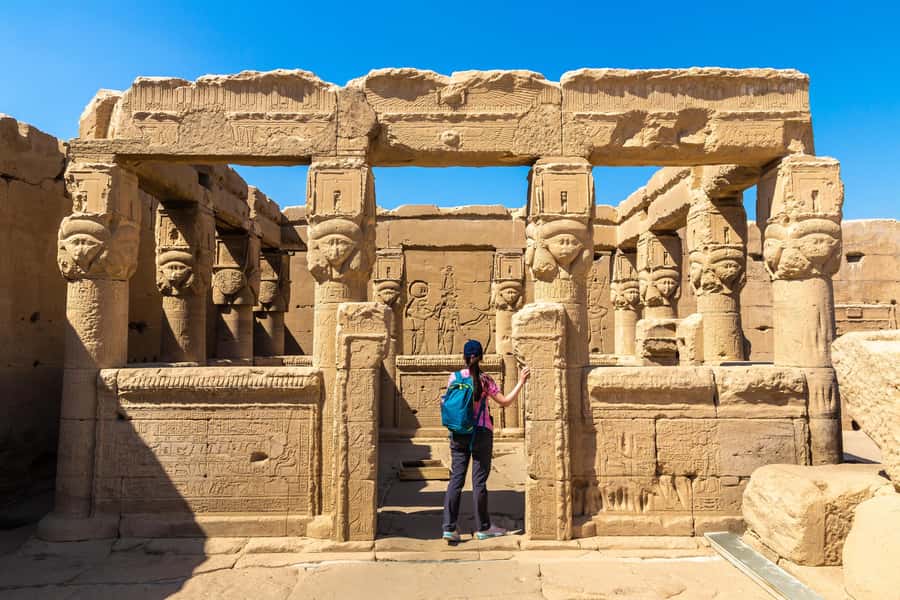
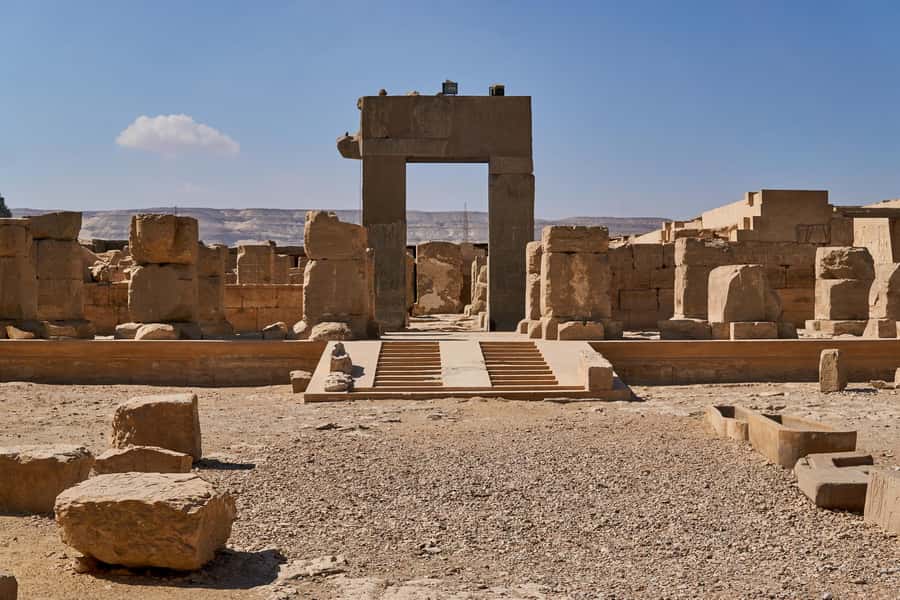
Dendera sits near Qena, north of Luxor, at the site known in ancient times as Tentyris. The temple was a major center for Hathor, a goddess linked with love, music, motherhood, and joy. For many people, this is the most rewarding stop of the day because the building is unusually well preserved.
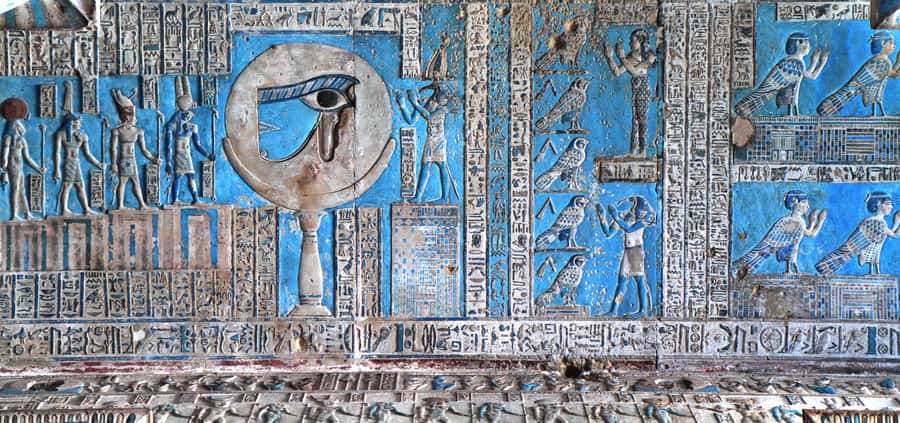
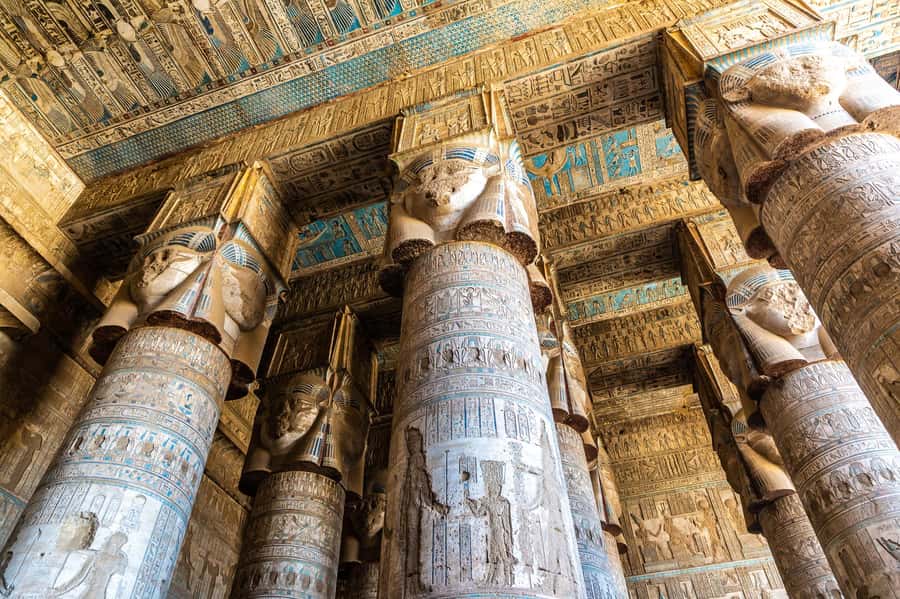
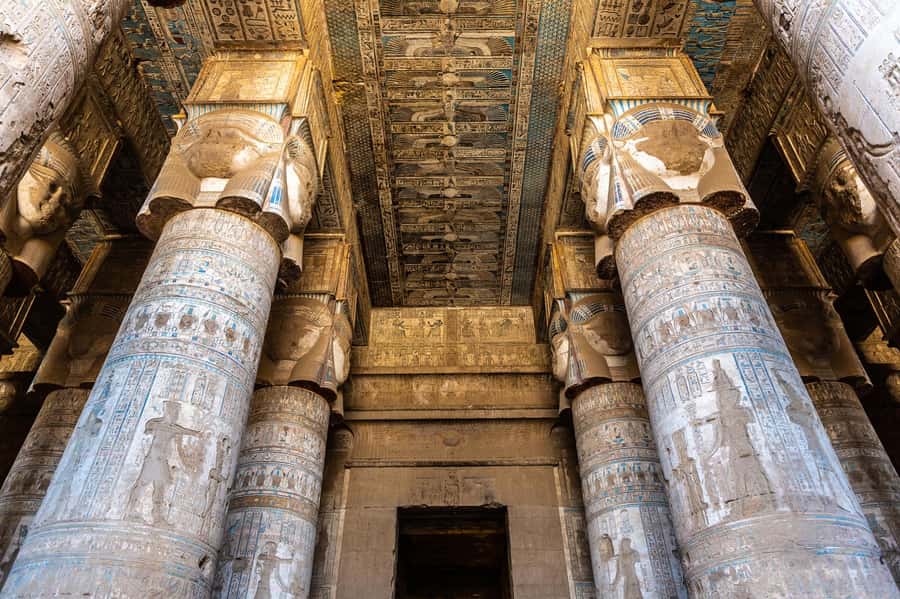
I would pay close attention to the ceiling and upper walls. The famous zodiac image is one of the temple’s best-known features, but the real pleasure is seeing how much detail remains in the surrounding reliefs. Faces, clothing, symbols, and ceremonial scenes are easier to read here than at many older Egyptian sites.
Some color has survived for more than 2,000 years. That does not mean every surface looks freshly painted, but the remaining reds, blues, greens, and yellows give the carvings more life than you may expect. Your guide can help you understand the figures and explain how Hathor’s role shaped the temple.
The underground crypts add another layer. These spaces are more enclosed and can feel less immediately impressive than the main hall, yet they show how the temple worked as a religious center. I would listen carefully here, since the meaning of hidden rooms and sacred images is not always obvious from the stonework alone.
Dendera also rewards a slow look upward. Huge columns and ceiling scenes can be easy to rush past when you are busy taking photographs. A good guide should explain the images first, then give you time to walk around alone. That balance worked well for some people on this trip, while one visitor found the temple visit too hurried.
A few more Luxor outings to price up
- Luxor Day Trip from Hurghada Small Group & Tutankhamun Tomb
★ 4.8 · 5,366 reviews - Luxor: Abu Simbel Temple Private Guided Day Trip with Lunch
★ 4.6 · 546 reviews - Hurghada: Valley of Kings Hatshepsut & Karnak Luxor Day Trip
★ 4.5 · 375 reviews
What makes Abydos different from Dendera
Abydos is not simply a second temple after lunch. It reaches into a much earlier period of Egyptian history and connects strongly with Osiris, the god of the underworld. Ancient Egyptians regarded the area as one of their most sacred places, and that religious importance shaped the monuments built there.
The main stop is the Temple of Seti I. Its reliefs are among the finest in Egypt, with careful carving and strong detail. I would not compare it with Dendera as a prettier or uglier site. Dendera gives you color and a grand, preserved interior. Abydos gives you a more serious sense of kingship, burial, and religious belief.
Your guide should point out the temple’s royal scenes and explain its connection to Osiris. Seti I’s temple is also valued for the quality of its reliefs, so take time to notice the workmanship rather than simply checking off another monument.
Abydos is also linked with royal tombs from Egypt’s earliest dynasties. Excavations have produced pottery, ivory tags, and the names of kings from pre-dynastic and early dynastic times. Some of these archaeological discoveries are not presented to you as objects during this day trip, but knowing about them changes how you see the site. You are not looking only at a later temple. You are visiting a place tied to the formation of the Egyptian state.
The contrast between the two stops is one of the trip’s best features. Dendera is visually generous and comparatively easy to appreciate at once. Abydos asks for more historical attention. I would choose this outing over another familiar Luxor excursion if you want to understand how Egyptian religion and kingship developed over many centuries.
The 11-hour schedule and the reality of the road
The day begins with morning pickup at your hotel. The listed service includes pickup and drop-off on Luxor’s East Bank, with West Bank service available for an extra $5 per person. You travel in a private, air-conditioned car with a driver and guide.
The private setup is useful. You avoid the feel of a large bus group, and your guide can speak directly with you about the temples. It also gives you a quiet place to rest during the long return journey. The drive is not a short transfer, so comfortable transport matters.
The route passes through Upper Egypt’s rural scenery. You can watch villages and farmland go by, and the long drive gives you a look at parts of the region you would miss from the standard Luxor circuit. Still, the journey takes a sizable portion of the day. The advertised duration is 11 hours, and delays can make it feel longer.
This is where the operator needs to be watched closely. One account described losing about two hours on the way because of poor driving organization. Another raised concern about speeds of 140 to 150 kilometers per hour. I would confirm the planned route and ask the driver to keep the journey safe rather than fast. No temple visit is worth an uncomfortable ride.
The drive can also affect meals and sightseeing time. If the morning transfer runs late, lunch may be shortened or missed, and the guide may feel pressure to move quickly through Abydos. A long day needs a little breathing room. When you book, ask for the expected pickup time and how the company handles a delay.
Guides who can make the temples come alive
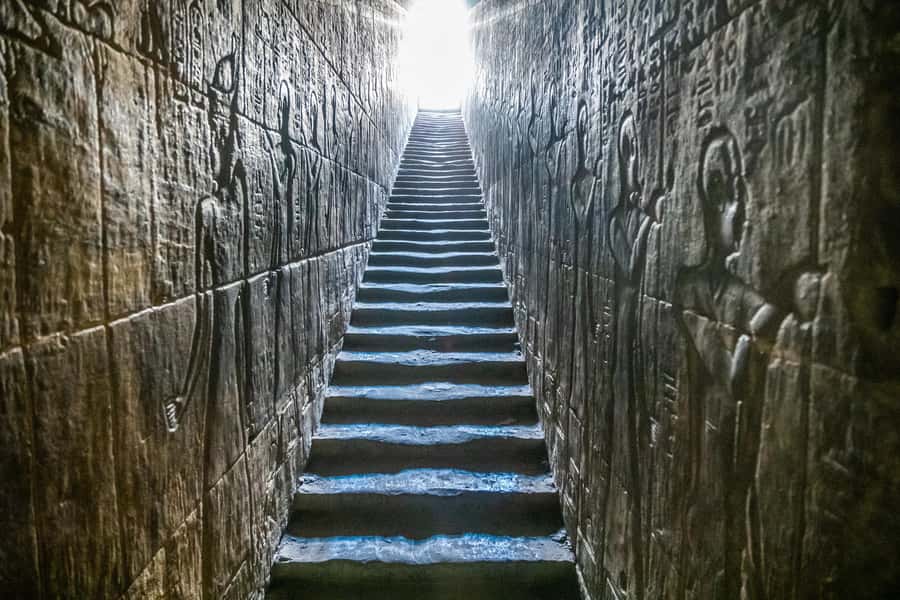
A private guide is the main reason to choose this trip instead of arranging transport alone. The best reports praise guides for clear explanations, good timing, and enough free time for photographs.
Mohammed, sometimes identified by the nickname Don Corleone, received especially warm praise for explaining the sites and keeping the day on schedule. Moo Moo was also singled out for precise explanations and strong subject knowledge. Mustafa was described as well informed and willing to let people explore on their own after the formal talk.
The picture is not uniformly strong. One visitor found the English difficult to follow, and another felt Mustafa hurried the visit and seemed eager to finish. Those two points can exist together: a guide may know the material well but still speak too quickly or manage the clock poorly.
Language selection deserves attention at booking. Arabic and English are listed, with French, German, and Spanish available as guide options. If you need a non-English guide, select the correct language option rather than assuming the main language choice has completed the booking. A mix-up here caused confusion for one French-speaking customer.
I would also tell your guide what you want. If you care about photography, ask for a few quiet minutes after the explanation. If you want more context about early dynastic Egypt, say so before reaching Abydos. A private tour gives you a better chance to shape the commentary than a fixed group outing.
Same base, a completely different sort of day:
- Hurghada: Luxor Valley of the Kings & Tutankhamun Tomb Trip
★ 4.7 · 13,208 reviews - Hot Air Balloon Ride in Luxor Egypt with Transfers Included
★ 5.0 · 4,319 reviews - Luxor: Shared Full-Day Tour to Luxor West and East Banks
★ 4.5 · 1,812 reviews - Luxor: Hot Air Balloon Ride over Luxor Relics
★ 4.8 · 1,681 reviews
Lunch, dinner, and the value of what is included
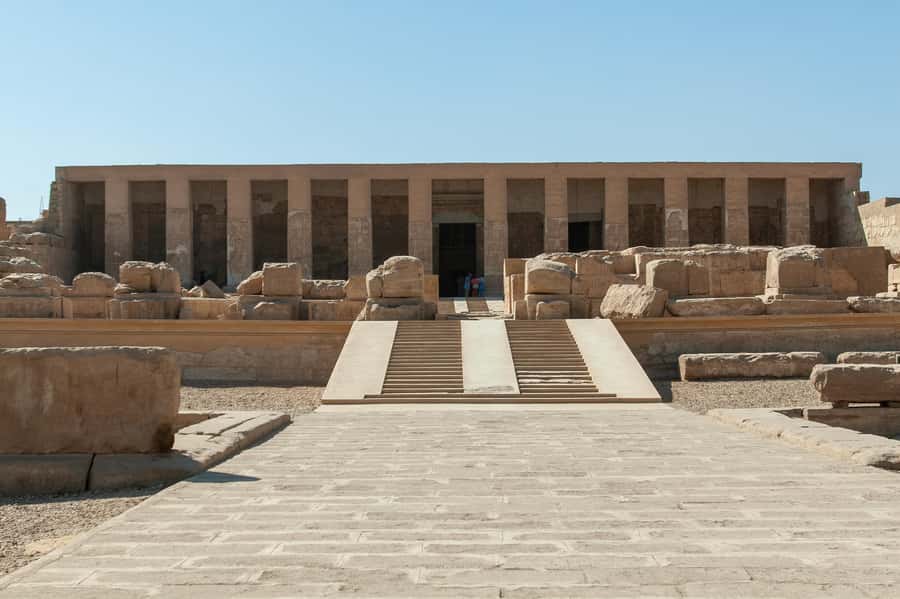
Lunch is described as a freshly prepared meal at a local Egyptian restaurant between the two temples. Dinner is served at a local restaurant after returning to Luxor. Bottled water is included.
On paper, this makes the long day easier. You do not need to plan a separate lunch stop, and dinner after an 11-hour outing is welcome. The meals also form part of the stated value of the $125 price.
In practice, I would treat the food arrangements as the weakest part of the package. Lunch has reportedly been missed when the schedule ran late or when a restaurant was closed on Friday. One person was told that facilities around Abydos were closed because of the day off. If lunch is important to you, carry a snack and confirm the arrangement before leaving Luxor.
Dinner has also received mixed reactions. One meal was described as superficial, while a separate complaint involved two sodas priced at 8 euros, far above the usual local price mentioned by the customer. I would ask to see the menu before ordering extra drinks and carry Egyptian pounds for small purchases.
This does not mean the included meals have no value. It means you should not choose the tour because it promises memorable dining. Choose it for Dendera and Abydos. Think of lunch and dinner as practical stops that may save you planning time, but keep your expectations modest.
Is $125 per person fair?
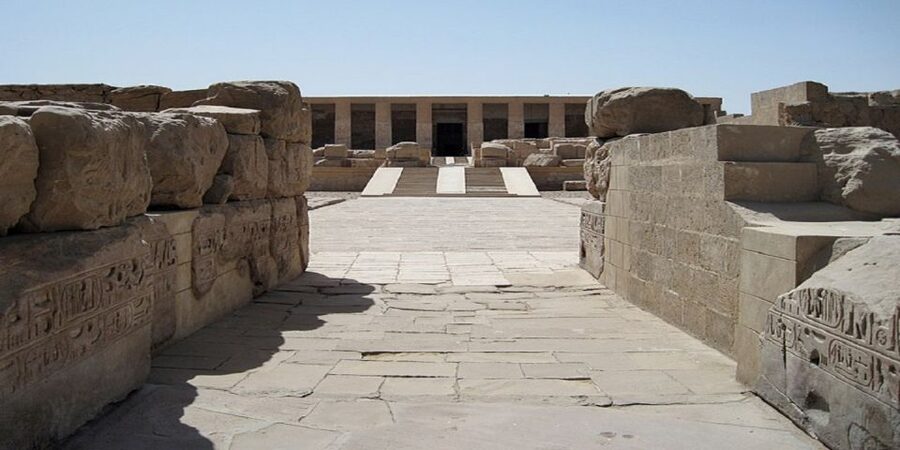
The price is reasonable only if you use the inclusions. At $125 per person, you are paying for a private vehicle, hotel transport, an English-speaking Egyptologist guide, lunch, dinner, bottled water, and potentially all entrance fees.
The phrase if the option is selected matters. Check carefully that entrance fees are included in the version you choose. If they are not, the advertised price becomes less attractive once you add two major archaeological sites.
For a solo visitor, the cost can feel high, especially if the guide is rushed or a meal is missing. One person specifically felt the experience did not justify the price. For two or more people sharing a private car, the value is easier to defend because you receive direct guiding and avoid the structure of a larger group.
I would also compare the cost against what it would take to arrange Dendera and Abydos independently. The tour handles the long journey, driver, guide, entrance arrangements if selected, and hotel return. That convenience is worth paying for when the schedule works well.
The value drops quickly if you lose two hours in transit, miss lunch, or pay inflated prices for drinks. Before booking, confirm three things in writing: entrance fees, meal arrangements, and pickup location. Those details have more impact on value than the headline price.
What the full day feels like
The morning begins with the practical business of getting on the road. You meet the driver and guide at your hotel, settle into the air-conditioned car, and leave Luxor for Qena and then Abydos.
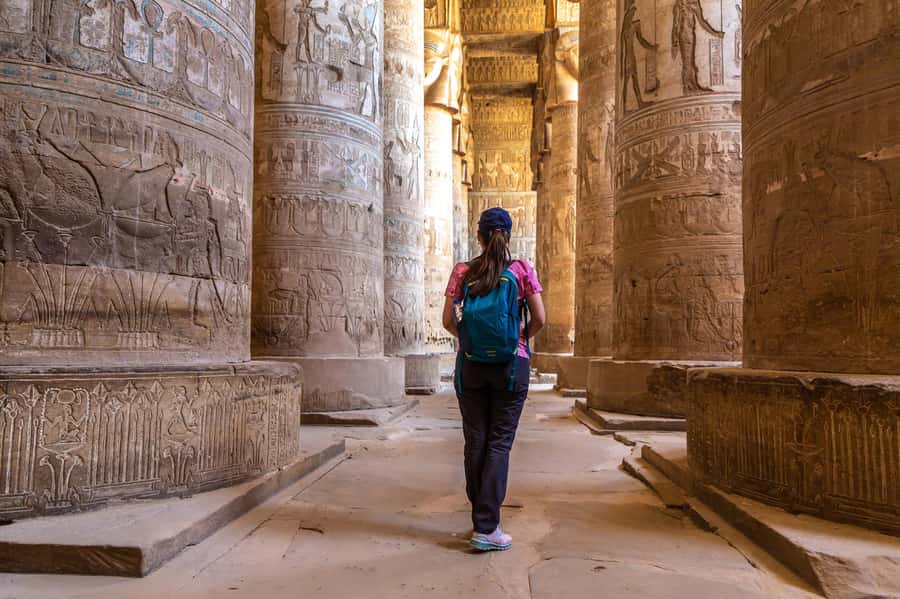
At Dendera, the pace should allow time for the main hall, zodiac ceiling, crypts, and painted reliefs. This is the point in the day when you are likely to feel most rewarded by the distance from Luxor. The temple is visually strong and offers plenty to examine.
Lunch follows before the road continues north toward Abydos. If the schedule is running properly, this pause gives you a chance to eat and reset. If the morning has gone badly, it may become a rushed or improvised stop.
Abydos then shifts the mood. Seti I’s temple is less about bright surviving color and more about sacred tradition, royal power, and early Egyptian identity. Your guide’s explanation is especially useful here because the site’s importance is not as instantly clear as Dendera’s decorated halls.
The return to Luxor is a chance to rest. After another long drive, dinner provides a final stop before hotel drop-off. You should expect to return tired. That is not a flaw in itself, but it means I would avoid scheduling an early morning activity the next day.
Who should book this trip?
I would recommend it to you if you have already seen the main Luxor monuments and want something less routine. It suits people who care about temple art, ancient religion, and the earliest stages of Egyptian kingship.
It is also a good fit if you prefer a private car and direct access to a guide. The strongest guides can make the difference between a pile of old stones and a clear story about Hathor, Osiris, Seti I, and Egypt’s first rulers.
I would be more cautious if you dislike long drives, need tightly managed meals, or are uncomfortable with fast driving. This is not a relaxed half-day outing. It is a full Upper Egypt road trip with two major archaeological stops.
Families with older children may find the variety useful, though the 11-hour schedule could test younger children. Solo visitors should weigh the $125 price more carefully. Couples and small private groups are likely to get better value from the arrangement.
Practical details to know
The tour offers free cancellation up to 24 hours before departure and allows you to reserve now and pay later. Starting times depend on availability, so check the schedule before committing to another Luxor activity on the same day.
Hotel pickup and drop-off are included on the East Bank. If you stay on the West Bank, add $5 per person. The service is described as including skip-the-ticket-line access, but confirm that entrance fees themselves are included in your selected option.
Bring water even though bottled water is supplied. I would also carry a small snack, especially if your visit falls on Friday or if the road schedule changes. Comfortable clothing and shoes make sense for a long day at temple sites, though the supplied information does not specify any formal dress requirement.
Should you book the Dendera and Abydos day trip?
I would book this tour for the temples, with a few conditions. Confirm that entrance fees are included, ask how lunch and dinner will be handled, and make it clear that safe driving matters more than shaving minutes off the route.
The archaeological payoff is strong. Dendera’s painted reliefs and zodiac ceiling are memorable, while Abydos gives you a valuable link to Osiris, Seti I, and Egypt’s first dynasties. The best guides, including Mohammed, Moo Moo, and Mustafa, can add real meaning to both places.
The experience is not perfectly polished. Transport delays, rushed guiding, missing meals, and questionable drink prices can damage an otherwise excellent day. At $125, I would choose it if the operator confirms the details and you are comfortable spending most of the day on the road. If your priority is smooth logistics and relaxed dining, look for a more tightly managed alternative.
FAQ
How long does the Dendera and Abydos trip last?
The stated duration is 11 hours, including hotel pickup, travel, both temple visits, meals, and the return to Luxor.
Which hotels are included for pickup and drop-off?
Pickup and drop-off are included for hotels on Luxor’s East Bank. West Bank service is available for an additional $5 per person.
Are entrance fees included?
Entrance fees are included only if you select the option that includes them. Check the exact option before booking.
What meals are included?
Lunch and dinner are listed as included, along with bottled water. Additional food and drinks are not included.
Which languages are available for the guide?
Guides are available in Arabic, English, French, German, and Spanish. French, German, and Spanish may require an added option when booking.
Can I cancel the trip for a refund?
You can cancel up to 24 hours before the activity for a full refund. Reserve now and pay later is also available.
Newly listed around Luxor
- Luxor Nile River Private Felucca Ride at Sunset★ 4.5 · 20 reviews
- Marvelous Luxor East and West Bank Private Tour with Lunch From Airport /Hotels★ 4.5 · 17 reviews
- Private tour : Sunset Felucca Ride in Luxor★ 5.0 · 16 reviews
- 3-Day Luxor Aswan and Abu Simbel Historical Sites Private Tour★ 5.0 · 34 reviews
- First impression of Luxor-Explore secrets of Luxor by horse carriage★ 5.0 · 50 reviews
- Nile cruise between Luxor and Aswan: Sail the best temples in Egypt★ 5.0 · 72 reviews
- Experience the Magic of a Luxor Sunrise Hot Air Balloon Ride★ 5.0 · 17 reviews
- Luxury Balloon Ride in Luxor with Hotels Pickup★ 4.5 · 142 reviews
1-Day Tours, compared.
Luxor Day Trip from Hurghada Small Group & Tutankhamun Tomb
Read our review →

Cairo Pyramids, Sphinx & Egyptian Museum Day Trip
Read our review →
Orange Bay Day Trip with Water Sports and Lunch
Read our review →
From Cairo Alexandria Catacombs, Citadel Day Trip with Lunch
Read our review →
1-day trip to Cairo with flight from Hurghada / Makadi Bay / Soma Bay / El Gouna
Read our review →
Browse the lists this tour appears in