
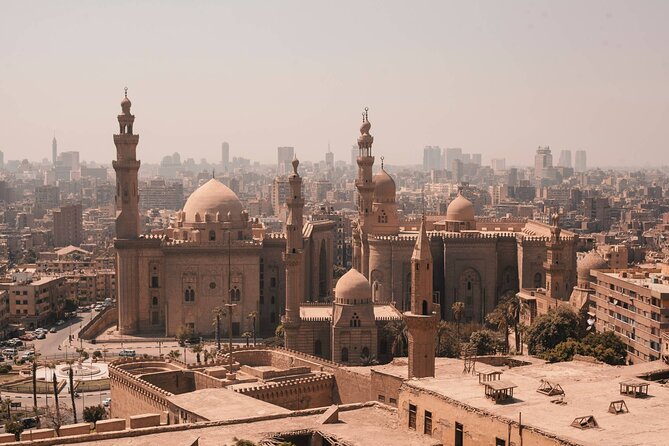
Reviewed · HISTORICAL TOURS
Discover The Historical Mosques In Cairo
Cairo’s Islamic story is written in stone. This six-hour private tour takes you from the first mosque built in Egypt to grand Mamluk and Ottoman monuments, with hotel pickup, private air-conditioned transport, entry fees, bottled water, and a guide included. I like the easy door-to-door setup, and I like the chance to see Cairo through its religious architecture rather than only through pyramids and pharaohs. The main drawback is time: six major stops can feel brisk, especially if you want quiet time inside each mosque.
The tour is priced at $45 per person, which is a fair deal for a private vehicle, guide, admissions, and transfers from Cairo or Giza. Your guide may be Salua, Youssef, or Mahmoud Afifi, depending on availability. Previous guests gave all three names warm praise, especially for clear explanations and attentive service. Since the route covers several parts of the city, traffic can also affect how long you have at each monument.
In This Review
- Key things to know before you book
- Why Cairo’s mosques make a fine change from the pyramids
- A private Cairo start with hotel pickup
- Al-Azhar Mosque, Cairo’s first major Islamic landmark
- Sultan Hassan Mosque and Madrassa, a Mamluk statement in stone
- The Cairo Citadel and its commanding hilltop position
- The Mosque of Muhammad Ali and its alabaster walls
- The Mosque of Amr Ibn Al-As in Old Cairo
- Al-Rifai Mosque, built opposite Sultan Hassan
- What the $45 price really covers
- Guide quality and the private format
- Practical advice for a respectful, comfortable visit
- Who should book this mosque tour?
- FAQ
- How long does the mosque tour last?
- Is hotel pickup included?
- Is the tour private?
- What type of vehicle is used?
- Are entry fees included?
- Is a tour guide included?
- Is lunch included?
- Is bottled water provided?
- Can most people participate?
- What is the cancellation policy?
Key things to know before you book
- You visit several major mosques in one private outing: Al-Azhar, Sultan Hassan, Amr Ibn Al-As, Muhammad Ali, and Al-Rifai are the central highlights, with the Cairo Citadel adding military and royal history.
- The tour begins and ends at your hotel: Pickup and drop-off are included from hotels in Cairo or Giza.
- Your guide shapes the experience: Salua, Youssef, and Mahmoud Afifi have each been praised for their historical explanations and friendly service.
- The route covers different eras of Cairo: You move from the Fatimid period to the Mamluk age, the medieval Citadel, and the Ottoman-style Mosque of Muhammad Ali.
- The price includes the practical extras: Private transport, entry tickets, a tour guide, and bottled water are covered. Lunch and tips are not.
- Plan for modest mosque attire: These are active religious places, so respectful clothing and calm behavior are important.
Why Cairo’s mosques make a fine change from the pyramids
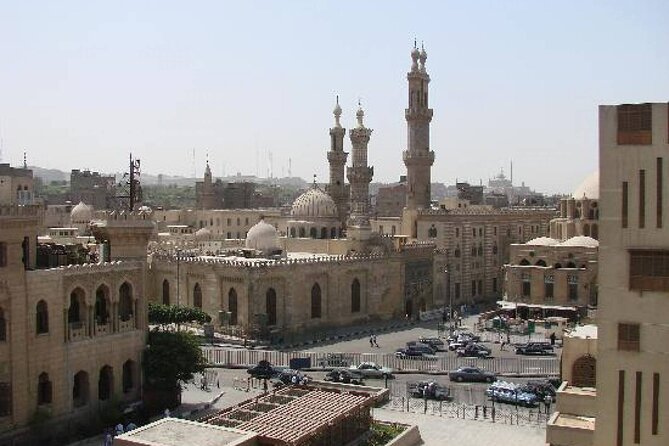
Cairo is often treated as a gateway to ancient Egypt. That is only half the story. The city’s Islamic monuments tell a later tale of rulers, scholars, military power, faith, and changing ideas about architecture.
I like this tour because it gives you a useful counterpoint to the pyramids. Instead of looking thousands of years into the past, you follow the growth of Cairo from its first Islamic foundations through the Fatimid and Mamluk periods and into the Ottoman era.
The variety is the real strength. Al-Azhar began under the Fatimid dynasty in 970. Sultan Hassan’s mosque and madrassa reflects the ambition of the Bahri Mamluk period. The Citadel shows how military power shaped the city. The Mosque of Muhammad Ali brings a later Ottoman-inspired style to the same hilltop setting.
Because the tour is private, you can ask questions as you go. That matters here. A mosque can look impressive on its own, but a guide helps you understand why its layout, scale, age, or location matters.
A few more Cairo outings to price up
- From Cairo: Private Full-Day Tour of Historical Alexandria
★ 4.1 · 1,155 reviews - Old Cairo Guided Walk Tour: History, Culture & Street Bites
★ 4.6 · 633 reviews - From Cairo: Historical Alexandria Shared Day Tour with Lunch
★ 4.4 · 260 reviews
A private Cairo start with hotel pickup
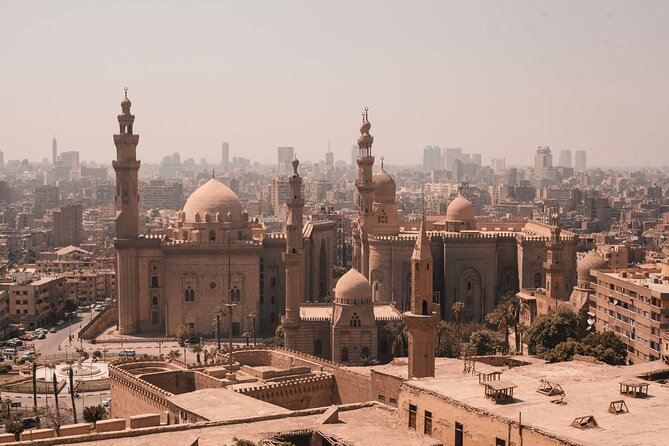
The day begins with pickup at your hotel in Cairo or Giza. A private air-conditioned vehicle is provided for your group, and the same arrangement takes you back to your hotel at the end.
That sounds simple, but it is one of the tour’s most useful features. Cairo is spread out, and these sites are not all beside one another. You avoid working out separate taxis, negotiating every ride, or trying to connect the mosques by public transport.
The tour is listed as roughly six hours. The sightseeing times add up to about four hours, so the remaining time is likely used for driving, pickup, drop-off, and traffic. That is normal for Cairo, but you should not expect six full hours inside monuments.
Bottled water is included. Lunch is not, although an optional meal at a local restaurant serving koshari can be arranged. Koshari is a filling Egyptian dish made with rice, lentils, pasta, tomato sauce, and often fried onions, making it a sensible budget lunch if you want one during a long day.
Al-Azhar Mosque, Cairo’s first major Islamic landmark
Al-Azhar is the first scheduled mosque visit and one of the most important stops on the route. The Fatimid ruler Al-Mu’izz li-Din Allah commissioned it in 970 for the new capital of Cairo. Its name is usually linked to az-Zahra, meaning the shining one, a title associated with Fatimah.
You have about an hour here, which gives this stop more room than most of the others. That is helpful because Al-Azhar is not simply an old building to photograph. It is an important center of Islamic learning and an active religious place.
Your guide can help you read the building as a product of its era. The mosque’s age connects you with the founding period of Islamic Cairo, while its continued use connects the monument with present-day religious life.
The main point to remember is that this is a functioning mosque, not a museum set aside only for sightseeing. Keep your voice low, follow your guide’s directions, and dress respectfully. The atmosphere may change around prayer times, and the visit can feel more restrained than a standard historic-site stop.
Sultan Hassan Mosque and Madrassa, a Mamluk statement in stone
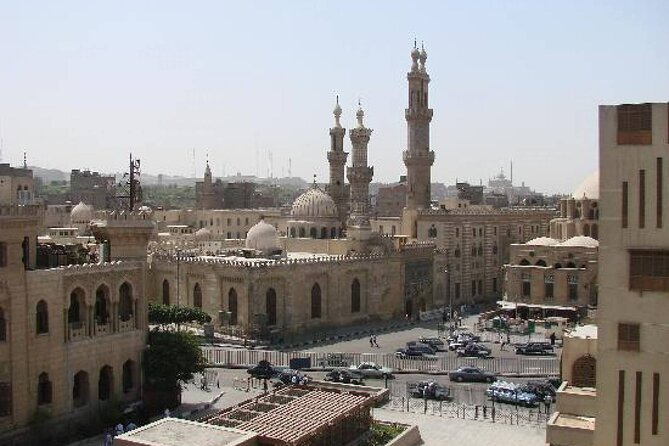
The Mosque-Madrassa of Sultan Hassan is scheduled for about 30 minutes, but it is one of the most powerful architectural stops of the day. Built between 1356 and 1363 under Sultan an-Nasir Hasan, it combined a mosque with a madrassa, or religious school.
Its great scale was deliberate. The building was meant to express authority, learning, and religious purpose all at once. Even with a short visit, you can appreciate why it is considered one of Cairo’s finest medieval monuments.
I would pay close attention to the proportions and the sense of mass here. Sultan Hassan is less about small decoration and more about the impression created by its enormous architectural presence.
Thirty minutes may be enough for an introduction, but it is not a long time for study or photography. If this building is your main reason for booking, ask your guide at the start how much time can be given to it. The private format gives you a better chance of discussing priorities than a large group excursion would.
Same base, a completely different sort of day:
- Cairo: Pyramids & Great Sphinx Private Tour with Camel Ride
★ 4.9 · 6,335 reviews - Tour to Giza Pyramids and The Egyptian Museum
★ 5.0 · 6,016 reviews - VIP All inclusive Best of the best Giza Pyramids,Sakkara,Memphis
★ 5.0 · 3,164 reviews - From Cairo: Pyramids of Giza, Sphinx, Saqqara & Memphis Tour
★ 4.7 · 3,110 reviews
The Cairo Citadel and its commanding hilltop position
The Cairo Citadel, also called the Citadel of Saladin, adds a different layer to the tour. Saladin began the medieval fortification, and later Egyptian rulers expanded it. For nearly 700 years, from the 13th through the 19th century, it served as a center of government and a residence for Egypt’s rulers.
You have about an hour at the Citadel. That is useful because the site is more than one mosque. It is a preserved fortified complex with mosques and museums, set on a promontory of the Mokattam hills above central Cairo.
From here, you get a broad view over the city. The height explains the Citadel’s military purpose and helps you understand why rulers chose this location. It also gives the tour a welcome change of pace after the enclosed spaces of the mosques.
The Citadel can be the busiest portion of the visit in terms of walking and visual information. Your guide will help connect the fortification, the rulers who used it, and the mosques within the complex. If you prefer architecture to military history, say so. The private setting makes that conversation easy.
The Mosque of Muhammad Ali and its alabaster walls
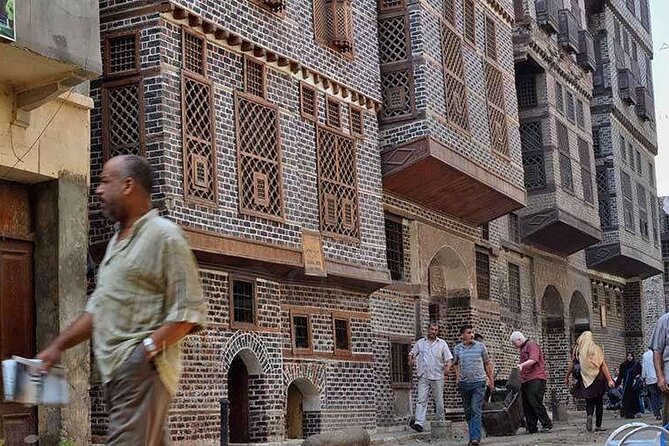
Inside the Citadel, the Mosque of Muhammad Ali receives about 30 minutes. It is often called the Alabaster Mosque because alabaster covers its outer walls.
This is one of Cairo’s most recognizable mosques, with a grand appearance that differs from the older Fatimid and Mamluk buildings. Its placement within the Citadel also gives it a strong visual link to Egypt’s later rulers and the city below.
I like this stop as a contrast. Al-Azhar feels tied to Cairo’s earliest Islamic period, while Sultan Hassan reflects Mamluk power. Muhammad Ali’s mosque gives you a later style and a more overtly monumental royal statement.
The short visit means you should focus on the main impression rather than trying to inspect every surface. If your guide is Mahmoud Afifi, Youssef, or Salua, you can ask for a clear explanation of how this mosque differs from the earlier buildings. The guides praised for this tour are especially useful when several monuments begin to blend together.
The Mosque of Amr Ibn Al-As in Old Cairo
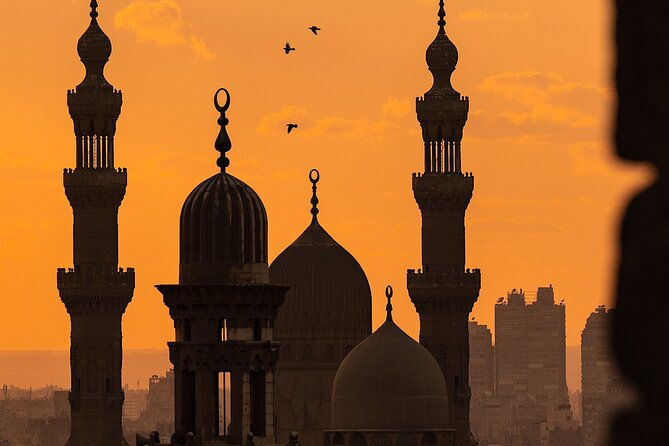
The Mosque of Amr Ibn Al-As reaches back to 641 or 642, when it was built as the center of Fustat, the newly founded capital of Egypt. It was the first mosque built in Egypt and the first in Africa.
The original structure has not survived because of repeated rebuilding over the centuries. That fact is worth keeping in mind. You are visiting a prominent rebuilt mosque on the site of the first Islamic mosque in Egypt, rather than looking at an unchanged seventh-century building.
You have about 30 minutes here. That is enough to learn why the location matters and to see the mosque as part of Old Cairo’s religious setting. It is still an active mosque with a devout congregation, and it is open to visitors when prayers are not taking place.
This stop may feel more grounded and less monumental than Sultan Hassan or Muhammad Ali. That is part of its value. The building connects the tour to Cairo’s earliest Islamic beginnings, while its present-day use reminds you that these places are not merely historic shells.
Be prepared for the possibility that access or timing may be affected by prayer. The tour provider includes admission, but religious observance still takes priority.
Al-Rifai Mosque, built opposite Sultan Hassan
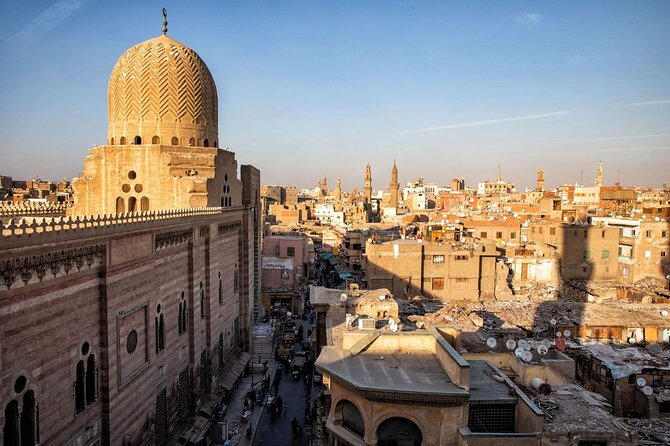
The final mosque visit is Al-Rifai, located opposite Sultan Hassan. The two buildings make an interesting pair, even though they belong to different periods.
Al-Rifai was designed in the 19th century as a companion to the older Mamluk monument. Egypt’s rulers wanted to link themselves with the prestige of earlier Islamic history while also updating Cairo’s appearance. Seeing the two buildings together makes that political idea easier to grasp.
The visit lasts about 30 minutes. I would use the time to compare the buildings across the street rather than treating Al-Rifai as one more isolated stop. Its location gives you a direct lesson in how later rulers borrowed older styles to build their own public image.
By this point, you may feel that the tour is moving quickly. That is the tradeoff for seeing so many important sites in one outing. If you want long periods for photography, prayer, or quiet reflection, a private tour is useful, but you should still discuss the pace with your guide.
What the $45 price really covers
At $45 per person, the value is strongest if you want an efficient, guided overview without arranging the moving parts yourself. The price includes a private tour, private air-conditioned transportation, hotel pickup and drop-off, bottled water, entry fees, and a guide.
Many Cairo visits become expensive or tiring because of separate rides, site admissions, and time spent finding each place. Here, those costs and decisions are bundled together. The private vehicle is especially useful because the route crosses several areas of Cairo.
The price does not include lunch or tipping. An optional koshari meal is available at an additional cost. Tipping is also separate, so budget for it if you feel your guide and driver provided good service.
The value is less clear if you only want to see one or two mosques in detail. In that case, the six-stop route may feel too broad. This experience makes the most sense for you if you want a guided introduction to Cairo’s Islamic monuments and prefer a private vehicle to independent planning.
Guide quality and the private format
The guide can make or break a history-focused tour. Names praised for this experience include Salua, Youssef, and Mahmoud Afifi. Salua was paired with an excellent driver during one family outing, while Youssef was praised for explaining different religious traditions clearly. Mahmoud Afifi received especially warm praise for a calm and meaningful morning among Cairo’s mosques.
Your assigned guide may be different, so treat those names as examples rather than a guarantee. The important point is that the tour depends on having someone who can explain the difference between Fatimid, Mamluk, medieval military, and later Ottoman-inspired architecture.
The private format is a real advantage. Only your group participates, so you can ask questions, slow down briefly, or clarify a detail without holding up a busload of people. It also gives families and mixed-interest groups more control over the pace.
Practical advice for a respectful, comfortable visit
Wear clothing suitable for religious sites. The supplied information does not specify a dress code, but respectful mosque attire is a sensible choice. You should also be prepared to remove shoes or follow local instructions if requested.
Keep the day flexible around prayer times. Amr Ibn Al-As is an active mosque, and other religious sites may also have periods when sightseeing is limited.
Bring a phone or camera, but do not let photography replace looking. The best details here are not always the grandest ones. Notice how a mosque serves as a place of worship, education, royal display, or community life.
The tour is suitable for most people, and public transportation is nearby. Still, the route includes several historic compounds and city transfers, so comfortable shoes are a good idea. The exact walking demands are not specified, and Cairo’s historic sites can require movement between courtyards, halls, and open areas.
Free cancellation is available if you cancel at least 24 hours before the local start time. Changes or cancellations made less than 24 hours ahead are not accepted for a refund.
Who should book this mosque tour?
I would recommend it to first-time visitors who have already seen, or plan to see, the pyramids and want a fuller picture of Cairo. It also suits families, couples, and small groups who value private transport and a guide rather than an independent route through several districts.
It is a good choice if you want breadth. In one half-day, you see Cairo’s first mosque, a major Mamluk madrassa, a medieval fortress, a famous alabaster mosque, a rebuilt early Islamic landmark, and a 19th-century companion to Sultan Hassan.
I would hesitate only if you dislike a tight schedule or want to sit quietly in each mosque for a long time. The six-hour estimate includes transfers, and traffic can reduce sightseeing time. For most visitors, though, the $45 price and private setup make this a practical way to understand Cairo beyond the ancient monuments.
FAQ
How long does the mosque tour last?
The tour lasts approximately six hours, including hotel pickup, transfers between sites, sightseeing, and return transportation.
Is hotel pickup included?
Yes. Pickup and drop-off are included for hotels in Cairo or Giza.
Is the tour private?
Yes. Only your group participates in the private tour.
What type of vehicle is used?
Transfers are provided in a private, air-conditioned, latest-model vehicle.
Are entry fees included?
Yes. Entry fees for the listed mosque and Citadel visits are included.
Is a tour guide included?
Yes. A tour guide is included. Guide assignments may vary, with Salua, Youssef, and Mahmoud Afifi among the guides associated with the experience.
Is lunch included?
No. Lunch is not included. An optional meal at a local restaurant serving koshari may be arranged.
Is bottled water provided?
Yes. Bottled water is included during the tour.
Can most people participate?
Yes. The tour information says most people can participate. Specific accessibility details are not provided.
What is the cancellation policy?
You can cancel at least 24 hours before the start time for a full refund. Cancellations or changes made less than 24 hours before the start time are not accepted for a refund.
Newly listed around Cairo
- Full Day Trip from Cairo to Luxor★ 5.0 · 16 reviews
- Private guide’s trip to Giza pyramids, Great sphinx valley temple★ 5.0 · 37 reviews
- Private half Day Tour to the Great 3 Pyramids of Egypt★ 5.0 · 15 reviews
- VIP Tour inside Giza Pyramids★ 4.5 · 103 reviews
- Full-Day Private Tour to Giza Pyramids, Sphinx, Memphis & Saqqara★ 5.0 · 106 reviews
- Unique Tour to The Grand Egyptian Museum and 12 main galleries★ 4.0 · 38 reviews
- Elite Boats Tour in Cairo & Giza with Drinks Included★ 4.5 · 15 reviews
- Sunset & Night Open Air Nile Cruise in Cairo & Giza★ 5.0 · 158 reviews
Historical Tours, compared.
Private Full-Day Tour of Historical Alexandria
Read our review →
Sunrise Hot Air Balloon Over the Historical sites in Luxor
Read our review →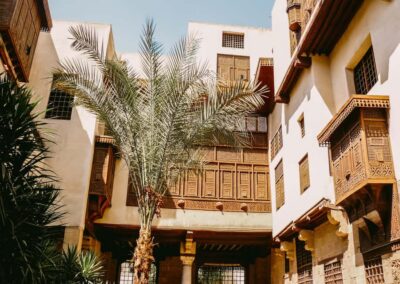
Old Cairo Guided Walk Tour: History, Culture & Street Bites
Read our review →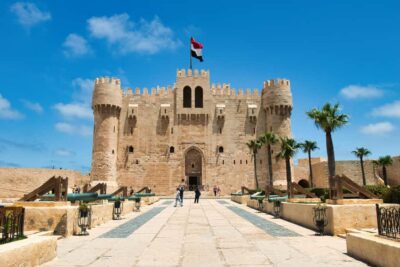
Historical Alexandria Shared Day Tour with Lunch
Read our review →
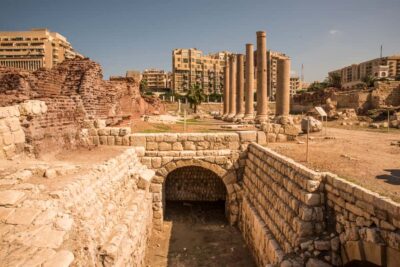
3-Day Siwa Oasis Tour, Safari, Camp & Historical Site
Read our review →
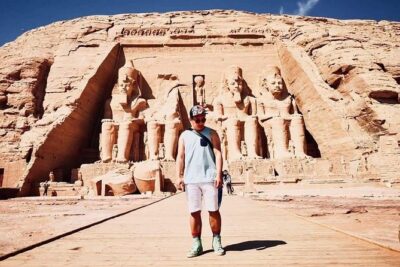
3-Day Luxor Aswan and Abu Simbel Historical Sites Private Tour
Read our review →Browse the lists this tour appears in