
Reviewed · NILE CRUISES
4 Days Nile Cruise from Aswan to Luxor
Egypt unfolds best from the river. This four-day cruise links Aswan and Luxor with a sensible run of major sites, including Philae, Kom Ombo, Edfu, Luxor Temple, the Valley of the Kings, Hatshepsut Temple, and Karnak. I especially like the way the trip combines sightseeing with three nights of accommodation, meals, transfers, and an Egyptologist guide.
I also like the manageable group size, capped at 15 people, and the useful arrival and departure service. Guides named Ronda and Muhammad received especially warm praise, with Muhammad singled out for detailed explanations at Kom Ombo, Edfu, the Valley of the Kings, and Luxor’s temples. The main drawback is price clarity: at $450.45 per person, entrance tickets and cruise drinks are still extra, so your final cost will be higher.
In This Review
- Five things to know before sailing
- Why this Nile route works for first-time visitors
- Day 1: Philae Temple and Aswan High Dam
- Day 2: Kom Ombo beside the river
- Day 3: Edfu’s nearly complete Temple of Horus
- Luxor Temple after dark or in the city’s heart
- Day 4: The Valley of the Kings on Luxor’s West Bank
- Hatshepsut Temple and the Colossi of Memnon
- Karnak closes the ancient chapter
- What the $450.45 price really covers
- Who should book this cruise?
- FAQ
- How long is the Nile cruise from Aswan to Luxor?
- What meals are included?
- Are entrance tickets included?
- What sites are visited?
- Is pickup and drop-off included?
- How large is the group?
- Should you book it?
Five things to know before sailing
- Philae begins the trip on an island, reached by a small motorboat from Aswan.
- Edfu is the architectural highlight, with a remarkably complete Greco-Roman temple dedicated to Horus.
- The cruise includes three breakfasts, three lunches, and three dinners, but not water or other drinks.
- The final day is packed, with the Valley of the Kings, Hatshepsut Temple, Colossi of Memnon, and Karnak before a late afternoon transfer.
- The group limit is 15 people, a useful balance between cost and personal attention.
- All entrance fees are separate, including tickets for the named temples and tomb sites.
Why this Nile route works for first-time visitors
A Nile cruise can be a smart way to organize Egypt because the main sights between Aswan and Luxor are spread along the river. Instead of arranging separate hotels, cars, guides, and transfers, you move through the region with one basic plan.
This route is especially useful if you have only four days. You see major ancient sites without spending each morning packing and checking out. The boat also gives you time to watch the river pass, which is part of the appeal. Egypt’s great monuments matter, but the Nile is the thread that makes the whole journey feel connected.
The trip begins with pickup from Aswan Airport, the train station, or an Aswan hotel. At the other end, you receive a transfer to a Luxor hotel, airport, or railway station. That start and finish can save you a fair amount of local negotiating, particularly if you arrive by train or are not yet comfortable arranging transport in Egypt.
The maximum group size of 15 is worth noting. This is not a private tour, but it is smaller than a large coach excursion. You should have a better chance to hear the guide and keep the group moving at the temples.
More Nile Cruises in Aswan
- 4-Days Nile Cruise From Aswan To Luxor including Abu Simbel and Hot Air Balloon
★ 5.0 · 3,142 reviews - 4-Day 3-Night Nile Cruise from Aswan to Luxor&Abu Simbel+Balloon
★ 5.0 · 2,023 reviews - 4-Day 3-Night Nile Cruise from Aswan to Luxor including Abu Simbel, Air Balloon
★ 4.5 · 612 reviews
Day 1: Philae Temple and Aswan High Dam
The first day begins with an arrival transfer to the cruise. The transfer itself is listed at about 30 minutes, though your actual timing will depend on where you arrive and the ship’s schedule.
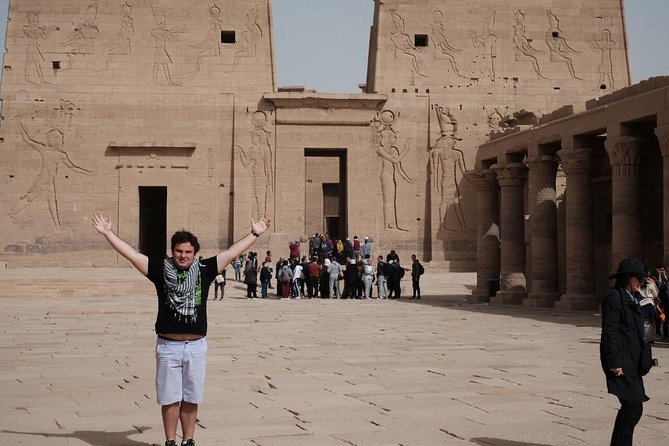
Philae is the emotional high point of the opening day. The temple complex is dedicated to Isis, one of ancient Egypt’s most important goddesses, and you reach it by small motorboat. That boat ride gives the visit a special setting and makes the temple feel separate from modern Aswan.
Allow about two hours at Philae. You will want time to look closely at the reliefs, columns, and courtyards rather than simply walk in, take a photograph, and leave. The temple’s Greco-Roman character also gives you an early reminder that Egyptian history did not end with the great pharaohs.
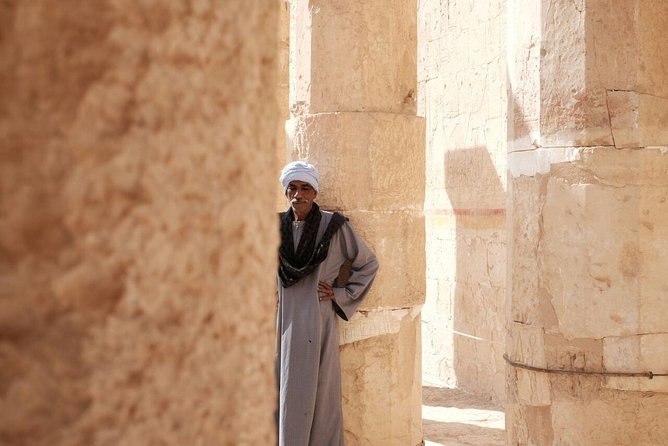
A guide can make a real difference here. Ronda was praised for explaining Philae and the High Dam, and that pairing is useful because the two stops show very different eras of Aswan. One is an ancient religious center reached by boat. The other is a modern engineering project that changed how Egypt manages the Nile.
The High Dam visit lasts about an hour. Built in the twentieth century and achieved in 1960, it was designed to protect Egypt from flooding. It is not as visually ornate as the temples, but it gives context to the river’s role in modern life. I like that the tour does not treat Aswan as only an ancient monument stop.
Entrance tickets for Philae and the High Dam are not included. Keep that in mind when planning your cash or overall budget. The tour provides the transport and guide, but the admission costs remain yours.
Day 2: Kom Ombo beside the river
Kom Ombo is one of the most enjoyable stops because of its position. The temple sits on a bluff beside the Nile, and arriving by cruise makes more sense than approaching it as an inland attraction. The river view helps explain why this location mattered.
The temple was begun under the Ptolemaic rulers and completed during Roman rule. Its unusual feature is a double dedication to Sobek, the crocodile god, and Horus. The plan mirrors itself along a central axis, with each side serving one of the two gods.
You have about 70 minutes here. That is enough for the main courtyards, columns, reliefs, and the temple’s paired layout, but it is not a leisurely archaeological study. Stay close to the guide if you want the design explained clearly, since the symmetry can be easy to miss when you are focused on individual carvings.
The crocodile connection is memorable, though you should not expect living crocodiles in the river or the sacred lake. The site’s appeal comes from the setting and the temple’s unusual shared purpose.
This is one of the places where Muhammad’s role sounds particularly valuable. His explanations covered Kom Ombo along with the later temple stops, helping connect the architecture rather than presenting each ruin as a separate photo opportunity.
Admission is extra here, too. The repeated additional ticket costs are the most important financial point on this cruise. The base price covers many services, but not the actual entry to the major monuments.
Day 3: Edfu’s nearly complete Temple of Horus
Edfu is given two hours, and that is a sensible amount of time. The Temple of Horus is often considered the most impressive temple between Aswan and Luxor because so much of its form survives.
It was built during the Greco-Roman period, yet its builders followed the traditional design language of Egypt’s pharaohs. That makes Edfu unusually helpful for understanding older temples. You can see the grand entrance, massive walls, courtyards, and formal religious layout in a way that is harder to do at sites that have suffered greater damage.
The temple is in the center of Edfu, which means the modern town is part of the setting. The contrast can be striking. Ancient stonework and later homes occupy the same general space, a reminder that these monuments were not always isolated archaeological parks.
Give yourself time to look up at the scale of the entrance and then down at the carved details. The guide’s explanations matter most here because the reliefs and layout can seem repetitive without context. Muhammad was specifically praised for providing extensive information at the Temple of Horus, and this is exactly the sort of stop where a good Egyptologist can turn impressive stone into a readable story.
After Edfu, the route continues toward Luxor. The itinerary places Luxor Temple on this day, with around two hours for the visit.
More Nile cruises and felucca sailings:
- From Aswan: 4-Day Nile Cruise from Aswan to Luxor with Guide
★ 4.1 · 593 reviews - 4-Days Nile Cruise From Aswan To Luxor including Abu Simbel and Hot Air Balloon
★ 4.5 · 509 reviews - 4-Day 3-Night Nile Cruise from Aswan to Luxor – Private Tour
★ 5.0 · 369 reviews - 4 Days Nile Cruise from Aswan to Luxor including Abu Simbel and Hot Air Balloon
★ 4.5 · 356 reviews
Luxor Temple after dark or in the city’s heart
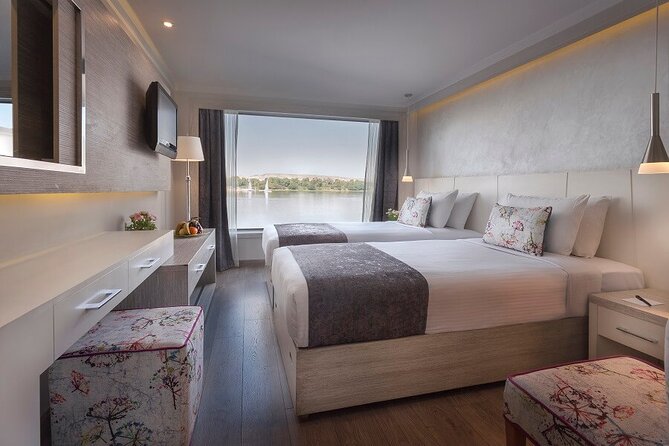
Luxor Temple is easy to appreciate because it sits in the modern city of Luxor rather than far outside it. The ancient capital of Thebes grew around these monuments, and the temple remains one of the best-preserved large sites in the area.
The temple was connected with royal power and religious ceremony. Its columns, courtyards, statues, and obelisks give you a strong sense of the scale of ancient Thebes. Two hours should allow a proper walk through the main areas with time for photographs.
This visit also gives the cruise a useful change of pace. Earlier sites feel closely tied to the river and smaller towns. Luxor Temple brings you into the urban center, where ancient and modern Egypt sit side by side.
The sequence can make for a long day, especially after a morning stop at Edfu. I would avoid treating every temple as a race. Listen to the guide at the key points, then use any free minutes to study the carvings and enjoy the setting.
Day 4: The Valley of the Kings on Luxor’s West Bank
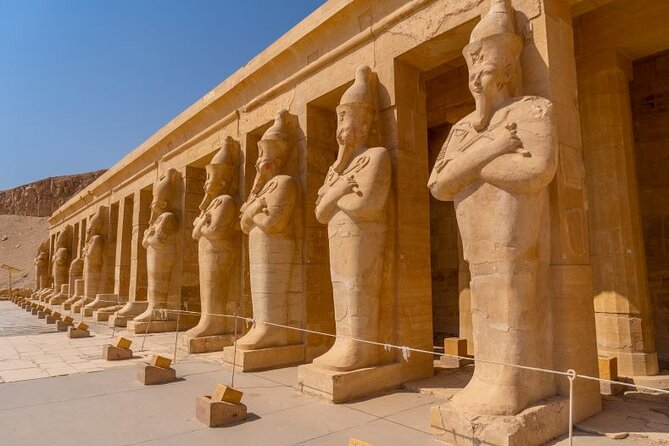
The final day begins after breakfast and checkout, with a drive to Luxor’s West Bank. The Valley of the Kings is the main event.
The pharaohs of the New Kingdom carved tombs into these mountains to conceal royal burials and protect their treasures and mummies. About two hours are scheduled here, but the exact experience depends on which tombs are open and what admission arrangements apply. Since entrance fees are not included, check the ticket details before you go.
The Valley is not a single monument. It is a dry mountain area with tomb entrances leading underground, and the best moments often come from the painted walls inside. Conditions can be warm, and the route may involve walking between entrances, so practical footwear and water are wise. Water on the cruise is not included, so plan to purchase or carry what you need where permitted.
Your Egyptologist guide is most useful here. Without an explanation, it can be hard to understand why these tombs were placed in the valley, how they served royal burials, and what the painted scenes meant. Muhammad was praised for his explanations at this part of the route.
Hatshepsut Temple and the Colossi of Memnon
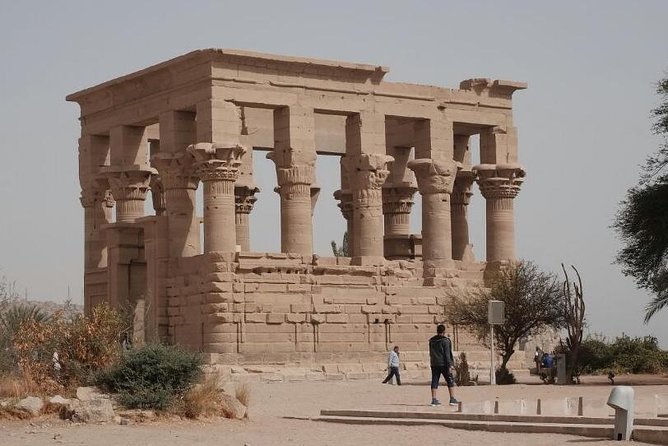
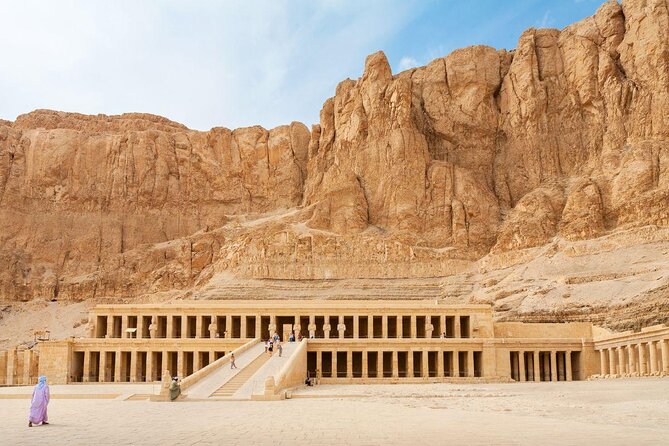
The Temple of Hatshepsut at Deir el Bahari follows the Valley of the Kings. The temple is built against the cliffs, with broad terraces and strong horizontal lines that make it look very different from the enclosed temples visited earlier.
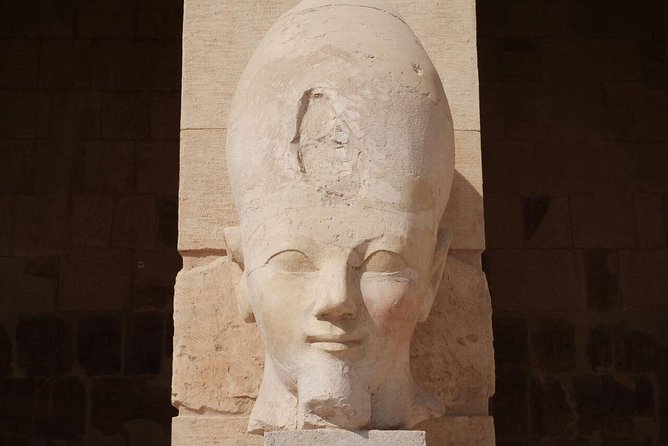
Hatshepsut’s story is one of the most interesting parts of this stop. She ruled as pharaoh and faced the complicated question of royal succession involving her nephew. The itinerary specifically highlights her story, so expect the guide to give attention to her position and legacy rather than only pointing out the architecture.
You have about an hour at the temple. That is enough to see the principal terraces and absorb the setting, though you may want longer if you enjoy taking photographs or reading every explanation.
The Colossi of Memnon receive about 40 minutes and are listed as a free stop. These huge statues make a quick but worthwhile roadside visit. The itinerary also describes the Colossi as a photo stop, so think of this as a short pause rather than a full museum-style visit.
Lunch at a local restaurant is optional. That gives you flexibility, but it also means lunch arrangements are not as fully covered as the included cruise meals. If you prefer a set schedule, ask the guide how the stop will work that day.
Karnak closes the ancient chapter
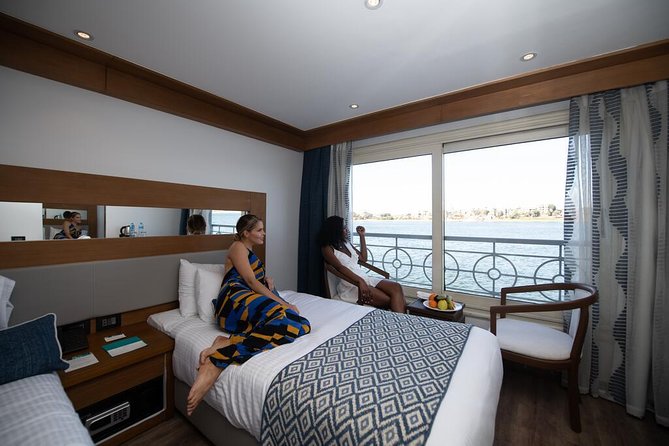
The final major visit is Karnak Temple on Luxor’s East Bank. About two hours are scheduled here, and that time is needed. Karnak is a vast complex built and expanded over roughly 2,000 years, covering about 63 acres.
The scale can be hard to grasp from photographs. Massive columns, obelisks, courtyards, and long processional spaces give you a sense of how much effort successive rulers put into this religious center. The Great Hypostyle Hall, with its forest of columns, is likely to be one of the most memorable parts of the entire cruise.
Karnak is also a good final stop because it gathers many themes from the trip: religion, royal power, monumental building, and the long continuity of Egyptian civilization. I would save some energy for it. The fourth day has already included the Valley of the Kings, Memnon, and Hatshepsut Temple.
The day ends with a transfer to a Luxor hotel, airport, or railway station, usually around 3:00 to 4:00 p.m. That timing can work well if you have an evening departure, but confirm your transport schedule before booking flights or trains.
What the $450.45 price really covers
At $450.45 per person, the price is reasonable for a four-day package if you value convenience. You receive three nights of accommodation, all listed transfers, air-conditioned vehicle transport with qualified drivers, an Egyptologist guide, and three breakfasts, three lunches, and three dinners.
The price also includes taxes and local charges. That reduces the chance of small administrative costs appearing later, though it does not remove every extra expense.
The major omission is entrance fees. Tickets are not included for Philae, the High Dam, Kom Ombo, Edfu, Luxor Temple, the Valley of the Kings, Hatshepsut Temple, or Karnak. Cruise drinks and water are also extra. Budget for these separately instead of assuming the advertised price covers every stop.
Group discounts are offered, and the maximum group size is 15. Vegetarian meals are available if requested at booking. Confirmation is provided at the time of booking, and free cancellation is available until 24 hours before the start time. Changes or cancellations inside that window are not refundable.
Who should book this cruise?
I would recommend this trip to a first-time visitor who wants the main Nile sights arranged in one package. It suits you if you prefer a guide, included meals, organized transfers, and a small group over planning every segment yourself.
It is also a good fit if you are arriving in Aswan and leaving from Luxor. The one-way route avoids backtracking and makes the river the natural center of the trip.
You may want another option if you dislike fixed schedules or want long, quiet visits at each monument. The last day is full, and several entrance fees remain outside the headline cost. You should also confirm the cruise accommodation details and calculate the extra ticket costs before deciding.
FAQ
How long is the Nile cruise from Aswan to Luxor?
The experience lasts approximately four days and includes three nights of accommodation.
What meals are included?
Three breakfasts, three lunches, and three dinners are included. Water and other drinks on the cruise are not included.
Are entrance tickets included?
No. Entrance fees to the mentioned sightseeing sites are paid separately.
What sites are visited?
The route includes Philae Temple, Aswan High Dam, Kom Ombo Temple, the Temple of Horus at Edfu, Luxor Temple, the Valley of the Kings, the Colossi of Memnon, Hatshepsut Temple, and Karnak Temple.
Is pickup and drop-off included?
Yes. Pickup is available from Aswan Airport, the Aswan train station, or Aswan hotels. Drop-off is provided at a Luxor hotel, airport, or railway station.
How large is the group?
The maximum group size is 15 people. Group discounts are available, and vegetarian meals can be requested when booking.
Should you book it?
Book this cruise if you want a well-organized first look at the Nile’s major monuments, with transport, meals, accommodation, and an Egyptologist guide handled together. The strongest features are the river-based route, the small maximum group, and the excellent spread of sites from Philae to Karnak.
Before paying, add the separate admission fees and drink costs to the $450.45 price. If that total still fits your budget, this is a practical way to see Aswan and Luxor in four busy but rewarding days.
More 4-Day Experiences in Aswan
- 4-Day 3-Night Nile Cruise from Aswan to Luxor With Balloon and Abu Simbel
★ 5.0 · 327 reviews - From Aswan:4 Days Nile Cruise Luxor Abu Simbel & Air Balloon
★ 4.4 · 310 reviews - 4-Day Nile Cruise sails Aswan to Luxor&Abu Simbel.Hot air Balloon
★ 4.5 · 247 reviews - 4-Day Nile Cruise Aswan and Luxor Hot Air Balloon with Abu Simbel
★ 5.0 · 234 reviews
Newly listed around Aswan
- Sailing Nile Cruise from Aswan to Luxor for 2 Nights★ 4.5 · 139 reviews
- Philae Temple and Aswan High-Dam Half-day tour★ 5.0 · 49 reviews
- Private Tour in Aswan : Felucca and Nubian village★ 5.0 · 29 reviews
- Abu Simbel Private Full-Day Tour from Aswan★ 5.0 · 114 reviews
- (3-Nights Cruise From Aswan To Luxor & Balloon, Abu Simbel)★ 4.5 · 23 reviews
- Day Tour to Abu Simbel from Aswan by Bus★ 4.5 · 25 reviews
- 4-Days Aswan sails Nile Cruise Luxor &Abu Simbel.Hot air Balloon★ 4.5 · 77 reviews
- 3-Nights Cruise From Aswan To Luxor, Hot Air Balloon,Abu Simbel★ 4.5 · 46 reviews
Nile Cruises, compared.
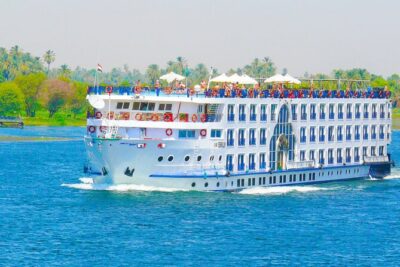
4-Days Nile Cruise From Aswan To Luxor including Abu Simbel and Hot Air Balloon
Read our review →
4-Day 3-Night Nile Cruise from Aswan to Luxor&Abu Simbel+Balloon
Read our review →
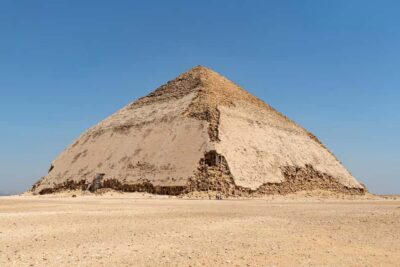
Sakkara, Memphis & Dahshur (Pyramid & Felucca Options)
Read our review →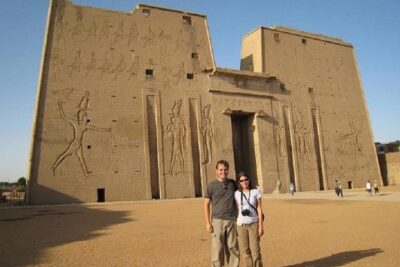
4-Day 3-Night Nile Cruise from Aswan to Luxor including Abu Simbel, Air Balloon
Read our review →
4-Day Nile Cruise from Aswan to Luxor with Guide
Read our review →
4-Days Nile Cruise From Aswan To Luxor including Abu Simbel and Hot Air Balloon
Read our review →Browse the lists this tour appears in