
Reviewed · ABU SIMBEL TOURS
Private Tour: Abu Simbel by Minibus from Aswan
Abu Simbel is worth the desert drive. This private day trip takes you from Aswan to Ramses II’s colossal temple and the smaller Temple of Hathor, with a private Egyptologist guide to explain what you are seeing. I especially like the hotel or port pickup and the freedom to explore both temples at your own pace. The main drawback is the journey: expect about three hours each way, and temple time can feel short if the convoy runs late.
The private format can work very well for couples, families, or small groups who want personal attention instead of a large coach. Guides such as Michael and Mark have received warm praise for clear English, useful explanations, and friendly service. Still, guide quality is not perfectly consistent, so this experience offers its best value when your guide is engaged and well prepared.
In This Review
- Key points to know before booking
- Why the long drive to Abu Simbel is worthwhile
- Choosing the right departure time from Aswan
- Pickup from your hotel, port, or train arrival
- The approach to the Great Temple of Ramses II
- Inside the temple: painted battles and towering figures
- The Temple of Hathor and Queen Nefertari
- The 1968 relocation project
- Convoys, delays, and the return to Aswan
- Is $231.42 per person good value?
- Who should book this Abu Simbel day trip?
- Should you book it?
- FAQ
- How long does the Abu Simbel tour take?
- Where does pickup take place?
- Which temples are included?
- Can the guide enter the temples?
- Is transportation private?
- Can I choose the departure time?
- Is the visitor center included?
- What is the cancellation policy?
Key points to know before booking
- Three hours each way: The drive crosses open desert between Aswan and Abu Simbel, so the day is mostly transport.
- Two major temples: You visit the Great Temple of Ramses II and the smaller Temple of Hathor, both beside Lake Nasser.
- Private group: Only your party takes part, with an air-conditioned minibus and pickup from an Aswan hotel or port.
- Guiding stops outside: Guides cannot enter the temples, so your briefing takes place before you go inside alone.
- Departure time matters: Early departures may help you avoid crowds, but later starts can offer more sleep if your afternoon is free.
- Price and value: At $231.42 per person, this is a premium choice, especially for one or two people, but the cost can make more sense for a larger private group.
Why the long drive to Abu Simbel is worthwhile
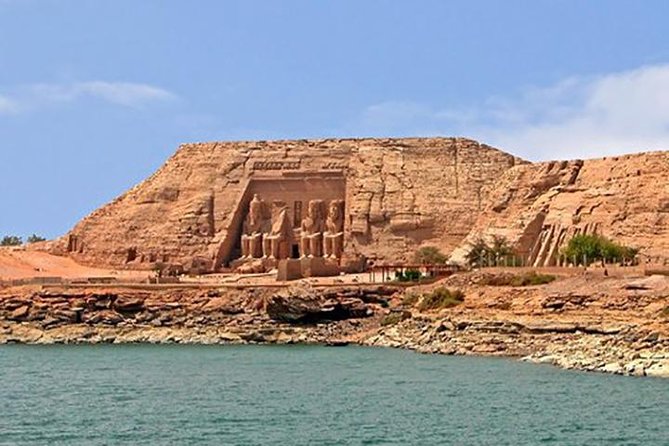
Abu Simbel is not a quick side trip. From Aswan, the road takes roughly three hours in each direction, usually in a convoy of tour vehicles arranged for the desert crossing. That means you can spend around six hours in the minibus for approximately two hours at the temple complex.
That ratio sounds discouraging on paper. In practice, Abu Simbel is one of Egypt’s great payoffs. The temples were cut into the rock in the 13th century BC under Ramses II, and their enormous front statues appear almost startlingly large when you first approach them. The setting beside Lake Nasser adds to the drama without distracting from the monuments.
I would not recommend skipping Abu Simbel simply because of the drive. I would, however, book it only if you can accept a full day with a lot of road time and a relatively short visit at the site.
The route passes through stark desert, and one useful detail from the journey is the chance to see camels along the road. Do not expect a sightseeing road trip with frequent stops. The point is to reach the temples, not to tour the desert.
More Abu Simbel trips from Aswan:
- 4-Days Nile Cruise From Aswan To Luxor including Abu Simbel and Hot Air Balloon
★ 5.0 · 3,142 reviews - From Aswan: Abu Simbel Temple Day Trip with Hotel Pickup
★ 4.4 · 2,807 reviews - 4-Day 3-Night Nile Cruise from Aswan to Luxor&Abu Simbel+Balloon
★ 5.0 · 2,023 reviews
Choosing the right departure time from Aswan
You choose your preferred departure time when booking, but the practical options can be shaped by convoy arrangements and tourist police instructions. Some departures have been set around 3:45 or 4 a.m., while other arrangements have left later in the morning. One successful late departure began at about 8:45 a.m., allowing the group to sleep longer and still reach Abu Simbel.
The early start has one clear advantage: fewer people at the temples. An early convoy can also give you a better chance of having quiet time in front of the statues before the site fills up. The cost is obvious. You may need to leave your hotel before breakfast, and the road journey can feel especially long when you are tired.
A later start may suit you if you have no fixed plans in Aswan that afternoon. It can make the day less punishing, though there is a greater risk of arriving when the site is busy. One late-night departure described in the tour information reached Abu Simbel with very few people present and returned around sunset, but this type of timing should be confirmed carefully before you pay.
My practical advice is simple: ask for the earliest confirmed convoy if avoiding crowds is your top priority. If sleep matters more and your schedule is flexible, ask the operator if a later departure is genuinely available. Do not assume the time shown during booking will be the final word. Confirm the pickup hour and expected return directly.
Pickup from your hotel, port, or train arrival
The tour includes pickup and drop-off at Aswan hotels and the port. This is useful if you are staying on a Nile cruise, since the local agency can arrange to meet you at the boat. One party was also met at Aswan train station before setting out.
That personal handling is one of the stronger parts of the service. A local representative may meet you in advance to confirm the arrangements, which can take away some of the uncertainty surrounding a very early departure. If you are arriving by boat, make sure the operator knows your docking details and the exact name of the vessel.
The vehicle is an air-conditioned private minibus or minivan. Comfort reports are mixed but generally favorable. Some groups appreciated the roomy vehicle and an onboard icebox, while another found the van too small for a long four-hour pre-dawn journey. Since the vehicle type can affect the day considerably, ask what size minibus your group will receive.
Bring water. A hotel box breakfast and coffee or tea may be available through your accommodation, but that is not listed as a guaranteed tour inclusion. A small pillow can also be useful on the long desert road, especially for an early departure.
The approach to the Great Temple of Ramses II
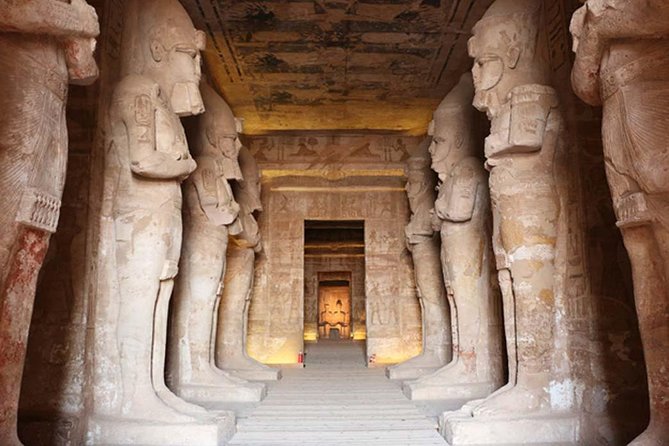
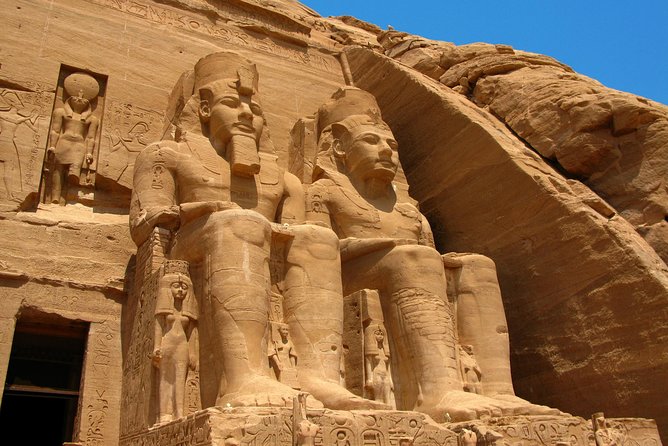
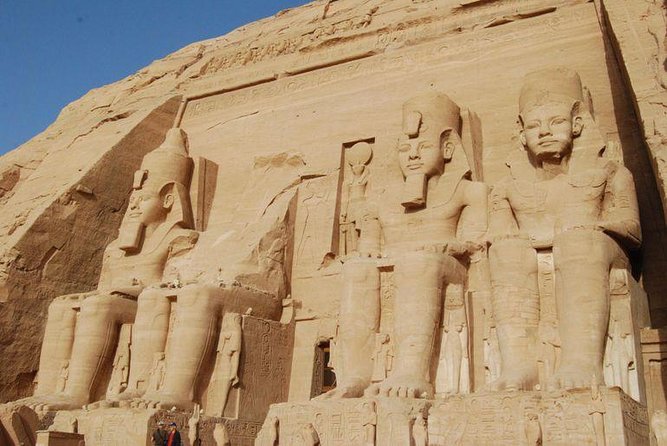
After about three hours, you arrive at the Abu Simbel complex and walk a short distance toward the entrances. Your first sight is the Great Temple of Ramses II, fronted by four huge seated figures of the pharaoh. Their scale is hard to grasp in photographs. From the approach, the figures give the monument a force that makes the long drive fade for a moment.
Your guide explains the site outside the entrance. This is the best time to ask questions, since guides are not permitted inside the temples due to the number of people moving through the interior. A good guide will use photographs and illustrations to point out the major rooms, statues, murals, and pillars before you enter.
This arrangement has a clear weakness: you do not receive a continuous explanation as you move through the chambers. The quality of the outside briefing matters a lot. Michael was praised for fluent English and strong historical explanations, while Mark was described as well educated in Egyptology, friendly, and fun. Other accounts describe guides who offered only a short explanation or struggled to answer basic questions.
I would ask your guide to cover the interior before you enter, not after you have already seen it. Request a clear plan: the main halls, the battle scenes, the colossal statues, and the artworks worth noticing. In the hot sun, a long standing briefing can be uncomfortable, so it is reasonable to ask for a shorter explanation followed by more detail in the shade or on the minibus.
A few more Aswan outings to price up
- 4-Day 3-Night Nile Cruise from Aswan to Luxor including Abu Simbel, Air Balloon
★ 4.5 · 612 reviews - From Aswan: 3-Day Cruise to Luxor with Hot Air Balloon
★ 4.3 · 598 reviews - From Aswan: 4-Day Nile Cruise from Aswan to Luxor with Guide
★ 4.1 · 593 reviews - 4-Days Nile Cruise From Aswan To Luxor including Abu Simbel and Hot Air Balloon
★ 4.5 · 509 reviews
Inside the temple: painted battles and towering figures
The Great Temple interior gives you a very different experience from the facade. Inside, the halls contain large statues of Ramses II, along with painted battle scenes and decorated surfaces that show how much detail survives in the dark chambers.
You have free time to enter and explore at your own pace. That freedom is valuable because you can pause for photographs, study the wall scenes, and revisit a room instead of being hurried through every point by a guide. The downside is that the available time may be limited by convoy schedules and the operator’s return plans.
Several accounts describe only about one hour at the temples, while another group had roughly an hour and fifteen minutes after a delayed convoy. That is enough for a focused visit, but not enough for a slow examination of every wall. If you want time to appreciate the interiors, move directly to the temples and keep optional stops for later.
The stonework and surviving color are the details I would prioritize. Look closely at the painted scenes rather than spending the entire visit taking photographs from the entrance. The monumental scale is easy to see. The smaller painted details require a slower look.
The Temple of Hathor and Queen Nefertari
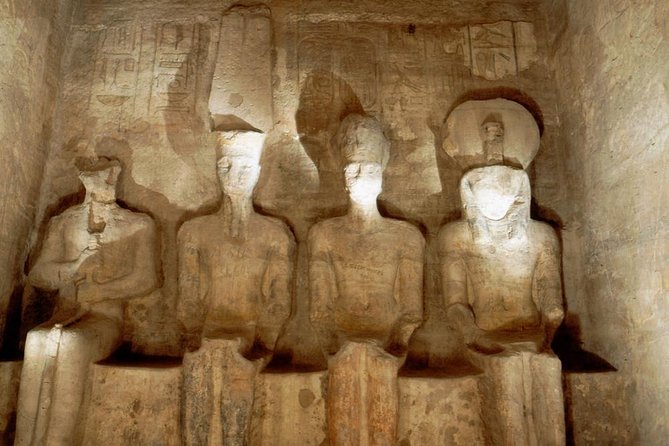
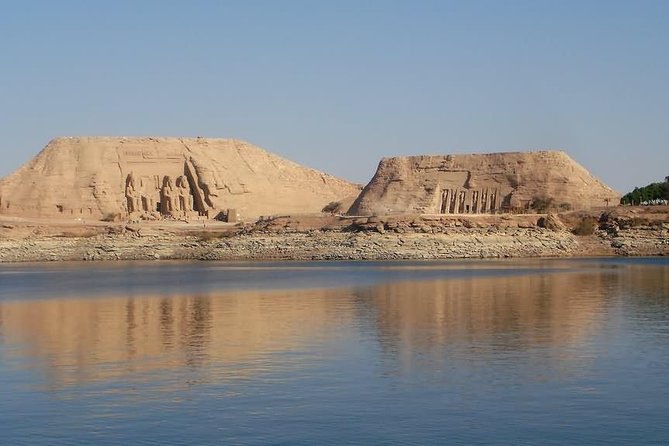
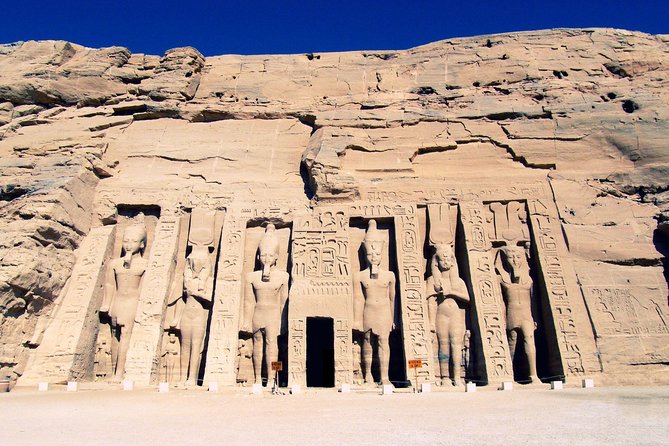
Beside the Great Temple is the smaller Temple of Hathor, associated with the goddess Hathor and Queen Nefertari, Ramses II’s favored wife. Its facade includes large figures of Ramses and Nefertari, and the interior has decorated pillars and murals showing the goddess and the queen.
Calling it smaller does not make it minor. After the severe formality of the Great Temple, this second monument gives you a closer look at the royal partnership expressed through religion and art. It is also easier to grasp in a short visit because its scale is less overwhelming.
Your guide should explain the main images before you enter. Since the guide cannot accompany you inside, remember the key points and then take your time with the pillars and wall decoration. If the site is crowded, step aside when possible rather than trying to see everything from the busiest passage.
Do not let the second temple become an afterthought. If you arrive late or the convoy has caused delays, it may be tempting to focus only on the famous facade of Ramses II. The Temple of Hathor is part of what makes Abu Simbel special, and the contrast between the two buildings is worth your time.
The 1968 relocation project
The temples you see today are not in their original position. Construction of the Aswan High Dam threatened to flood them, so an international UNESCO-led project moved the monuments to higher ground in 1968.
This was not a simple relocation of loose stones. The temple complex was dismantled and rebuilt piece by piece, with the cliff face and structures shifted to protect them from Lake Nasser. The seams are difficult to spot, which makes the engineering achievement even more impressive.
If time permits, visit the nearby visitor center after the temples. It explains the relocation and helps you understand why Abu Simbel sits where it does today. This stop is worthwhile for anyone interested in engineering, conservation, or the modern story behind an ancient monument.
Time does not always permit the visitor center. Some departures lose time because of convoy delays, and the priority is normally the temples themselves. If the center matters to you, tell your guide at the start and ask how much time is realistically available.
Convoys, delays, and the return to Aswan
The convoy system is one of the least predictable parts of the day. It is used for the desert road, but departures can be disorganized. One group lost substantial time when the convoy turned around and began again from another direction, leaving only about an hour and fifteen minutes at Abu Simbel.
That problem is not something a private operator can always control. Still, the operator should explain the timing clearly and help you make the most of the time available. Ask about the likely return convoy before you start exploring, especially if you have an evening train, cruise departure, or dinner reservation.
The return drive can be tiring, and some groups have found the road unsettling after dark. One account raised concern about a driver who was reluctant to use headlights, while another described the driving as erratic but ultimately safe. These are not reasons to abandon the trip, but they are fair reasons to ask for a careful, professional driver and to speak up if the driving makes you uncomfortable.
Optional shopping stops can also affect your time. A papyrus shop was included in some arrangements, while other groups were allowed to skip it. If you would rather have more time at the temples, say so clearly before the return journey.
Is $231.42 per person good value?
At $231.42 per person, this is not the cheapest way to reach Abu Simbel. The price covers a private Egyptologist guide, private air-conditioned transportation, and pickup and drop-off from an Aswan hotel or port. For a family or larger group, the private format can spread the cost across several people and feel more reasonable.
For one person or a pair, the value is less obvious. Abu Simbel itself is the reason to go, and you can arrange similar transport through local contacts at a lower price in some cases. The advantage here is advance booking, private transportation, and assistance with the complicated pickup and convoy arrangements.
A private tour also gives you more control than a large group excursion. You can ask questions suited to your interests, request help with photographs, and avoid being tied to strangers. That benefit depends on receiving an active guide. Since guide quality has varied, I would treat the guide as an important part of the value, not a guaranteed bonus.
The booking includes an admission ticket to the temple complex. Passport name, number, expiry date, and country are required for all participants at booking. Most people can take part, and only your own group participates.
Who should book this Abu Simbel day trip?
I would recommend this experience if you have limited time in Aswan and want the simplest planned way to see Abu Simbel. It suits couples, families, and small groups who value a private vehicle and direct pickup from a hotel, cruise port, or station.
It is also a good fit if you want context before entering the temples but do not need a guide beside you in every chamber. A strong Egyptologist can make the short visit much more meaningful by explaining the facade, the relocation, and the interior scenes in advance.
I would hesitate if you dislike long road journeys, need a leisurely temple visit, or are comparing the price with local arrangements for a larger Egyptian itinerary. I would also avoid booking without confirming the departure time, vehicle size, expected temple time, and policy on optional shopping stops.
Free cancellation is available if you cancel at least 24 hours before the start time. Changes or cancellations made less than 24 hours ahead are not accepted for a refund.
Should you book it?
Book this tour if Abu Simbel is high on your Egypt wish list and you want private transport with hotel or port pickup arranged in advance. The temples are extraordinary, and the chance to see both Ramses II’s Great Temple and the Temple of Hathor makes the six-hour road commitment worthwhile.
Before paying, confirm the pickup time and ask for the earliest practical convoy if crowds worry you. Also ask how much time you will have inside, what vehicle is planned, and whether the visitor center or any shopping stop will affect the temple visit.
At this price, the experience is best for people who value convenience and privacy more than the lowest possible cost. If you can accept the long drive and protect your temple time, Abu Simbel will likely be the day you remember most from Aswan.
FAQ
How long does the Abu Simbel tour take?
The experience lasts approximately eight hours. The road journey is about three hours each way, with roughly two hours scheduled at the Abu Simbel temple complex.
Where does pickup take place?
Pickup and drop-off are offered from Aswan hotels and the Aswan port. Arrangements have also been made for pickup at Aswan train station in some cases.
Which temples are included?
The visit includes the Great Temple of Ramses II and the smaller Temple of Hathor, associated with the goddess Hathor and Queen Nefertari.
Can the guide enter the temples?
No. Guides are not permitted inside either temple because of the high number of people visiting. The guide explains the interiors outside the entrances before you explore on your own.
Is transportation private?
Yes. The tour uses private transportation by air-conditioned minibus or minivan, and only your group takes part.
Can I choose the departure time?
You can choose a preferred departure time when booking, but convoy arrangements and tourist police instructions may affect the final schedule. Confirm the exact pickup time before departure.
Is the visitor center included?
There may be time to visit the nearby visitor center after the temples. The stop depends on the day’s timing and any convoy delays.
What is the cancellation policy?
You can cancel at least 24 hours before the experience starts for a full refund. Cancellations or changes made less than 24 hours before the start time are not accepted for a refund.
Newly listed around Aswan
- Sailing Nile Cruise from Aswan to Luxor for 2 Nights★ 4.5 · 139 reviews
- Philae Temple and Aswan High-Dam Half-day tour★ 5.0 · 49 reviews
- Private Tour in Aswan : Felucca and Nubian village★ 5.0 · 29 reviews
- Abu Simbel Private Full-Day Tour from Aswan★ 5.0 · 114 reviews
- (3-Nights Cruise From Aswan To Luxor & Balloon, Abu Simbel)★ 4.5 · 23 reviews
- Day Tour to Abu Simbel from Aswan by Bus★ 4.5 · 25 reviews
- 4-Days Aswan sails Nile Cruise Luxor &Abu Simbel.Hot air Balloon★ 4.5 · 77 reviews
- 3-Nights Cruise From Aswan To Luxor, Hot Air Balloon,Abu Simbel★ 4.5 · 46 reviews
Abu Simbel Tours, compared.

4-Days Nile Cruise From Aswan To Luxor including Abu Simbel and Hot Air Balloon
Read our review →

4-Day 3-Night Nile Cruise from Aswan to Luxor&Abu Simbel+Balloon
Read our review →
4-Day 3-Night Nile Cruise from Aswan to Luxor including Abu Simbel, Air Balloon
Read our review →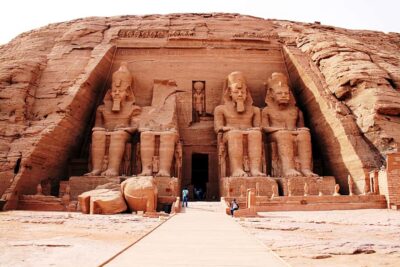
Abu Simbel Temple Private Guided Day Trip with Lunch
Read our review →4-Days Nile Cruise From Aswan To Luxor including Abu Simbel and Hot Air Balloon
Read our review →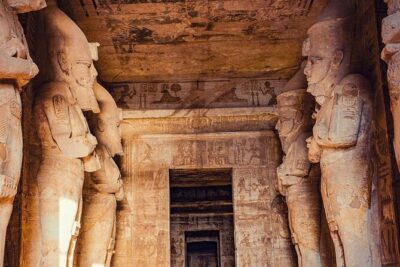
Private Day Tour to Abu Simbel Temples from Aswan
Read our review →4 Days Nile Cruise from Aswan to Luxor including Abu Simbel and Hot Air Balloon
Read our review →Browse the lists this tour appears in