
Reviewed · NILE CRUISES
Private 7-Night Cairo, Aswan, and Nile Cruise with Flights
Egypt rewards a well-managed first visit. This 8-day Cairo and Nile package links the Giza Pyramids, Egyptian Museum, Aswan, Luxor, and major river temples without making you arrange every transfer yourself. I especially like the airport greeting and the private guide-and-vehicle setup, which can make a first Egyptian trip far less confusing. The main caution is that many entrance tickets and popular excursions cost extra, while the advertised hotel and cruise standards may feel lower than their five-star labels.
The strongest part is the guiding. Guides such as Mohamed, Nour, Ahmed, Mahmood, and Refai have been praised for clear explanations, patience, photography help, and warm conversation. You should also budget carefully for tips, drinks, optional tours, and entrance fees, because the advertised $1,550 price is not the final cost for many people.
In This Review
- Key points at a glance
- What the $1,550 package really gives you
- Cairo arrival: useful help at a confusing moment
- Giza and the Egyptian Museum: a full first sightseeing day
- Aswan begins the river journey
- Abu Simbel and Kom Ombo: two very different temple days
- Edfu and the approach to Luxor
- Luxor’s West Bank packs the most history into one morning
- The final Cairo night and airport transfer
- Guides, vehicles, and the private-tour question
- Food, drinks, cash, and shopping
- Who should book this Egypt package?
- Should you book it?
- FAQ
- How long is the tour?
- What flights are included?
- Are entrance fees included?
- Is Abu Simbel included?
- Is Philae Temple included?
- What meals are included?
- Is Wi-Fi available on the cruise ship?
- Is the tour fully private?
Key points at a glance
- Three nights on the Nile: Cruise from Aswan toward Luxor with full-board meals and visits to Kom Ombo and Edfu.
- Airport help from arrival onward: Representatives meet you at Cairo Airport, assist with procedures, and arrange transfers throughout the trip.
- Private does not mean exclusive everywhere: Your guide and vehicle are private, but the cruise, hotels, temples, meals, and public sites are shared.
- Abu Simbel is optional but important: The round-trip road journey takes about seven hours and adds a major ancient site to the trip.
- Extra costs need planning: Entrance fees are listed separately, and excursions such as Philae, Luxor Temple, Karnak, and Abu Simbel cost more.
- Guide quality is the bright spot: The best guides turn a busy sightseeing schedule into a more personal and understandable experience.
What the $1,550 package really gives you
At $1,550 per person, this is a useful one-stop arrangement for someone who wants Egypt organized in advance. The price covers four Cairo hotel nights with breakfast, three nights on a superior five-star-plus Nile cruise with full board, domestic flights, air-conditioned transfers, an English-speaking guide, and listed meals.
That bundle has real value. Cairo, Aswan, and Luxor are far apart, and arranging airport pickups, flights, cruise boarding, sightseeing vehicles, and hotel changes on your own can take a lot of time. Here, somebody is supposed to meet you at each major handoff. That matters in Egypt, where airport arrivals, train stations, cruise piers, and hotel entrances can feel hectic.
But you need to read the price as a base package, not an all-inclusive holiday. Entrance fees are separate, with the supplied information estimating about $69 per person, though that figure is tied to an old pricing note and should be confirmed before departure. Optional visits also add up quickly. Past quoted examples included about $32 for Philae, $49 for Luxor and Karnak, and $129 for Abu Simbel, with entrance fees sometimes charged separately.
The package also excludes drinks, bottled water, gratuities, and the optional Alexandria excursion. Christmas and New Year dates carry a 20 percent supplement from December 20 through January 7, charged locally before check-in.
For a couple or family, the package can be good value because the guide and vehicle costs are shared. Solo visitors should be more careful. Several optional excursions are priced much higher per person when only one person is paying for the transport and guide.
More Nile Cruises in Cairo
- Egypt 8 nights:Cairo,Luxor,Aswan,Abu Simbel,Nile cruise,Balloon
★ 4.5 · 227 reviews - Sunset & Night Open Air Nile Cruise in Cairo & Giza
★ 5.0 · 158 reviews - Luxury Private Felucca on the Nile with Lunch
★ 5.0 · 74 reviews
Cairo arrival: useful help at a confusing moment
Your first day is mostly arrival and orientation. A representative meets you at Cairo International Airport and helps with the formal procedures before taking you to your hotel. A guide should explain the schedule either that day or the next.
This airport assistance is one of the most useful features. Some people have been met inside the airport by representatives who helped with the visa process, luggage, and the transfer to the hotel. If you arrive tired or late, that support can take the edge off your first few hours.
The hotels are listed as either superior or budget choices, with properties such as Cairo Pyramids Hotel, Le Passage Heliopolis, Mercure Pyramids, Grand Pyramids Hotel, Oasis Pyramids Hotel, and Cataract Pyramids Resort, or similar alternatives. The second Cairo stay is described as a five-star hotel near the airport, with a transfer of about five minutes.
Hotel quality is the biggest uncertainty. Some bookings received comfortable, well-run accommodation, while others found the Cairo hotels dated or below the expected five-star level. Egyptian star ratings do not always match American or Western European expectations, so ask for the exact hotel names before arrival if room quality matters to you.
Giza and the Egyptian Museum: a full first sightseeing day
Day two begins with the Pyramids of Giza. Your private Egyptologist guide takes you around the main pyramid area and explains the monuments while helping with photographs. The listed visit lasts about three hours, not counting traffic, meals, or stops at commercial workshops.
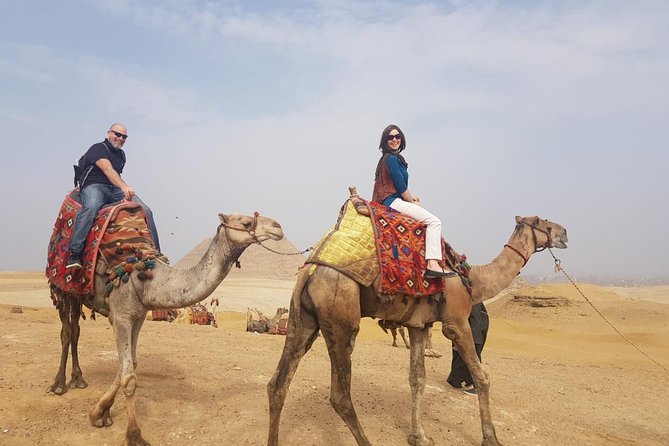
The Pyramids are the obvious headline, but the guide makes a difference here. The open site is large, hot, and full of people offering camel rides, photos, and souvenirs. Tell your guide clearly what you want to do and what you do not want to buy.
A camel ride is not included. One past arrangement brought the visitor to the camels without explaining the price until asked, with a charge of $60 for 30 minutes. That is a good reason to ask about every activity before agreeing.
After Giza, you may stop for an optional Egyptian or European-style lunch. The schedule also includes demonstrations or shopping stops connected with papyrus, perfumes, and other Egyptian crafts. These can be interesting, but they are commercial visits, not core sightseeing. Prices may be much higher than in ordinary markets, so compare before buying and do not feel obliged to purchase anything.
The Egyptian Museum in Tahrir Square follows. Its collection includes Tutankhamun’s treasures and royal mummies, and a good guide can point out details you would likely miss by walking through alone. The planned visit is about three hours.
The museum is a strong match for anyone who wants context after seeing the pyramids. Still, the day is long, and traffic between Giza and central Cairo can eat into your time. If you want a slower museum visit, say so at the start of the day.
The supplied program also notes that the Grand Egyptian Museum may be visited depending on its operating arrangements. Confirm which museum is included for your dates, since the wording is not fully consistent.
Aswan begins the river journey
On day three, you fly from Cairo to Aswan, where a representative meets you at the airport or railway station and transfers you to the ship before lunch. The exact flight time depends on economy-seat availability, so you should not expect to choose a convenient departure hour.
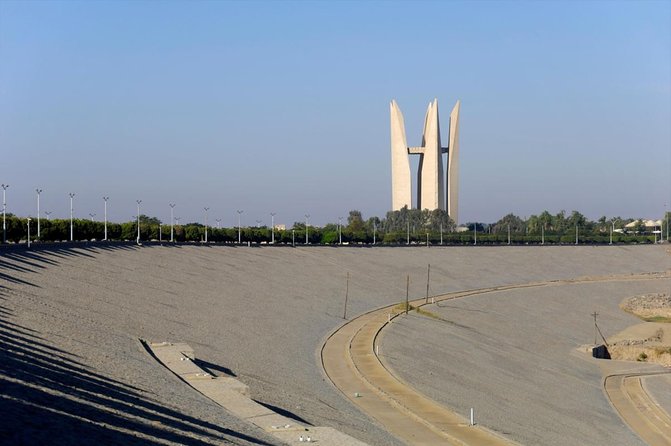
The first Aswan visits include the Unfinished Obelisk and the Aswan High Dam. The obelisk offers a look at ancient stoneworking, while the dam explains a far more modern chapter in Egypt’s relationship with the Nile. The dam was built during Gamal Abdel Nasser’s presidency with Soviet assistance.
Philae Temple is listed as an optional excursion. It is dedicated mainly to Isis and has a memorable setting on an island, but you must pay extra to see it. I would put Philae high on your optional list, particularly if you want more than the included highlights.
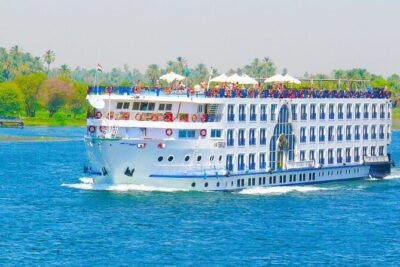
The boat is full board for three nights, though the exact sailing pattern can change. Depending on the cruise calendar and your arrival day, the operator may provide three nights or upgrade you to four nights at no extra charge, sometimes beginning from Luxor instead.
Do not expect reliable internet on board. Wi-Fi is not available on the ship, and television service may fail during sailing because of weak signal. Hotel Wi-Fi is listed as free.
More Nile cruises and felucca sailings:
- Evening Dinner Nile Cruise in Cairo with Private Transport
★ 5.0 · 53 reviews - Unique Open Air Nile Cruise in Cairo and Giza
★ 5.0 · 32 reviews - Half Day Tour to Giza Pyramids & 1-Hour Felucca Ride
★ 4.5 · 29 reviews - Private 7-Night Cairo, Luxor, and Nile Cruise, with Flights
★ 5.0 · 24 reviews
Abu Simbel and Kom Ombo: two very different temple days
Abu Simbel is optional, but it is one of the most worthwhile additions. The drive from Aswan takes about three and a half hours each way, making this a roughly seven-hour day on the road. The reward is the immense temple complex associated with Ramses II, with its enormous statues and grand interiors.
The long drive is the drawback. You lose much of the day, and the early start may be tiring after arriving in Aswan. If ancient monuments are your main reason for visiting Egypt, I would make room for Abu Simbel. If you dislike long road journeys, ask about the full schedule and price before committing.
Back on the river, the ship reaches Kom Ombo. This unusual temple is dedicated to both Sobek and Horus, and its two-part design reflects that shared purpose. The visit is shorter and easier than Abu Simbel, but it gives you a clear sense of how religious ideas shaped temple plans.
Edfu and the approach to Luxor
The ship reaches Edfu early on day five. You travel to the Temple of Horus, one of the most complete temples in Egypt. Its large pylon and long construction story make it a rewarding stop, especially with a guide who can explain the inscriptions and layout.
Transport to Edfu is part of the practical challenge. The visit may involve horse-drawn carriages, and one visitor with sight problems appreciated a guide who asked the driver to go carefully. Tell your guide about mobility, health, or comfort concerns before the ride begins.
After lunch on board, the ship continues to Luxor. You may visit Luxor Temple at night as an optional excursion or take a walking tour. Karnak Temple is also listed as optional. Both are major sights, and many people will feel that the core program is incomplete without them, so confirm the cost in advance.
This is where the add-on structure can surprise you. Optional tours are presented as recommendations, not compulsory purchases, but free time in Luxor can leave you wanting more. Ask for a written list of prices before the trip, not just an explanation after you arrive.
Luxor’s West Bank packs the most history into one morning
After breakfast on day six, you check out of the ship and visit the West Bank. The Valley of the Kings contains the tombs of nearly 70 pharaohs, with access to a limited selection included in the general visit. The tomb of Tutankhamun may require a separate ticket, so ask your guide what your entrance fee covers.
The Valley is not a museum in the usual sense. You walk through dry, rocky ground and enter painted burial chambers, often with uneven surfaces and heat. Good shoes, water, and modest clothing are sensible, although water itself is not supplied with meals.
Next comes the Temple of Hatshepsut at Deir el-Bahari. Its broad terraces sit against the cliffs, and the story of Hatshepsut, the most famous female pharaoh in ancient Egypt, gives the visit a strong human angle.
The Colossi of Memnon are a quick stop, usually about 20 minutes. These huge seated statues once guarded the entrance to a funerary temple and make an easy photo break between longer visits.
Your flight back to Cairo is listed for either 3:30 p.m. or 6:20 p.m., depending on available seats. If there is no suitable flight, you may spend another night on the ship or in a Luxor hotel and fly the next day. That possibility is important if you have an international connection soon afterward.
The final Cairo night and airport transfer
On day seven, you fly from Luxor to Cairo and transfer to your hotel. This night is mainly a buffer before your international departure, not a major sightseeing day.
The final morning includes a transfer to Cairo International Airport. The hotel may offer a free shuttle, and the supplied details describe the airport as about five minutes away from the final hotel. Confirm the departure procedure at reception, especially if your flight is late at night.
This structure is practical, but it gives Cairo only one main sightseeing day. If you want Saqqara, Memphis, Islamic Cairo, Coptic Cairo, or Alexandria, you need to add an excursion or arrange extra time. Alexandria is offered as an optional day trip at additional cost after returning to Cairo.
Guides, vehicles, and the private-tour question
The guide service is the best reason to consider this package. Strong guides have been praised for explaining ancient sites clearly, answering questions, taking good photographs, and adjusting the pace to the people they are with. Refai received particular praise for storytelling on the cruise, while Mohamed and Nour were singled out for Cairo visits and cultural explanations.
You get a private guide and vehicle for the tour arrangements, but do not mistake that for a fully private holiday. The hotels, cruise ship, meals, temples, tombs, and public places are shared. The conditions also say that groups of two to nine adults may share tours or transfers with another family.
Vehicles and airport transfers have generally been reliable, but one final-day pickup failed and had to be replaced independently. Leave a generous time margin before your flight and reconfirm the transfer the night before.
Tipping is part of daily life in Egypt, but the way it is handled can feel uncomfortable. You may be asked to tip guides, drivers, baggage handlers, boat staff, and restroom attendants. Carry small Egyptian notes and small US dollar bills if you prefer, and ask your guide at the start for a clear suggested plan rather than paying under pressure each day.
Food, drinks, cash, and shopping
Breakfast is included at the Cairo hotels, and the cruise includes breakfast, lunch, and dinner for the listed sailing days. Vegetarian meals are available, but request this when booking and remind the cruise staff.
Tea and coffee may be included with meals, but bottled water and other drinks are not. Water is also not provided through hotel or ship meals, so plan to buy it separately.
Cash is important. ATMs may not always work, and some hotels or ships may not accept cards even when you expect them to. Some card payments may also carry a three percent Visa or Mastercard charge.
Shopping stops can include papyrus, perfume, carpets, stone crafts, cotton, and jewelry. You can enjoy the demonstrations, but treat them as sales visits. Compare prices in ordinary markets, bargain politely, and keep your money and belongings close even inside a private vehicle.
Who should book this Egypt package?
This tour suits you if you want the major ancient sites handled by one company, prefer domestic flights over long train rides, and value a guide at each key stop. It is especially useful for first-time visitors, families, solo visitors who want support, and anyone who would rather not coordinate Egyptian transport independently.
It is less suitable if you want complete control over hotels, a quiet schedule, or a single all-in price. You may do better booking your own hotels and site guides if you are comfortable arranging flights, negotiating transfers, and comparing excursion costs.
The rating of 4.6 from 89 ratings and 90 percent recommendation signal a generally strong experience, but the mixed accommodation and extra-cost reports matter. The sightseeing program is the dependable part. Hotel quality, optional pricing, tipping pressure, and communication about the detailed schedule are the areas to check carefully.
Should you book it?
Book this tour if convenience, airport support, and expert guiding matter more to you than hotel polish and complete price certainty. I would ask for the exact Cairo hotels, cruise name, current entrance fees, every optional excursion price, flight schedule, and tipping guidance in writing before paying.
If those answers are clear, the package offers an efficient first look at Egypt, with the Nile cruise and Luxor temples providing the trip’s strongest moments. If you want a slower, more authentic-feeling visit with fewer sales stops, arrange extra independent time in Cairo or Aswan and treat the package as a framework rather than the whole experience.
FAQ
How long is the tour?
The tour lasts approximately eight days and includes seven nights, followed by departure on the eighth day.
What flights are included?
Economy domestic flights are included between Cairo and Aswan or Luxor, and between Luxor and Cairo. Flight times depend on availability.
Are entrance fees included?
No. Entrance fees are listed separately, with an estimated total of about $69 per person in the supplied details. Confirm current prices before departure.
Is Abu Simbel included?
No. Abu Simbel is an optional excursion from Aswan. The drive takes about three and a half hours each way.
Is Philae Temple included?
Philae is listed as an optional excursion, so you should expect an additional charge.
What meals are included?
The package includes seven breakfasts, three lunches, and three dinners, plus three nights of full-board meals on the Nile cruise as described in the package details.
Is Wi-Fi available on the cruise ship?
No. Wi-Fi is not available on the ship, and television service may not work during sailing because of weak signal. Hotel Wi-Fi is listed as free.
Is the tour fully private?
The guide and vehicle arrangements are private for the booking, but the hotels, cruise, meals, temples, tombs, and other public places are shared. Groups of two to nine adults may also share tours or transfers with another family.
More Evening Experiences in Giza
- Giza: Pyramids at Sunset Guided Camel Tour
★ 3.7 · 28 reviews - Private Day to Giza Pyramids, Egyptian Museum and camel sunset
★ 5.0 · 26 reviews - 2 Days 1 Night to White and Black Desert from Cairo or Giza
★ 5.0 · 16 reviews - Cairo: Nile Sunset Dinner Cruise, Show & Optional Transfer
★ 4.1 · 2,184 reviews
Newly listed around Giza
- Full Day Trip from Cairo to Luxor★ 5.0 · 16 reviews
- Private guide’s trip to Giza pyramids, Great sphinx valley temple★ 5.0 · 37 reviews
- Private half Day Tour to the Great 3 Pyramids of Egypt★ 5.0 · 15 reviews
- VIP Tour inside Giza Pyramids★ 4.5 · 103 reviews
- Full-Day Private Tour to Giza Pyramids, Sphinx, Memphis & Saqqara★ 5.0 · 106 reviews
- Unique Tour to The Grand Egyptian Museum and 12 main galleries★ 4.0 · 38 reviews
- Elite Boats Tour in Cairo & Giza with Drinks Included★ 4.5 · 15 reviews
- Sunset & Night Open Air Nile Cruise in Cairo & Giza★ 5.0 · 158 reviews
Nile Cruises, compared.
4-Days Nile Cruise From Aswan To Luxor including Abu Simbel and Hot Air Balloon
Read our review →
4-Day 3-Night Nile Cruise from Aswan to Luxor&Abu Simbel+Balloon
Read our review →
Sakkara, Memphis & Dahshur (Pyramid & Felucca Options)
Read our review →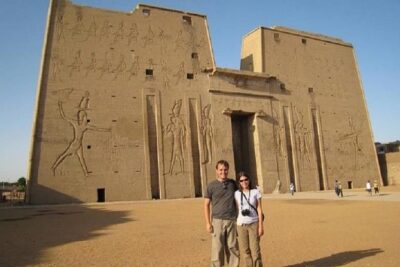
4-Day 3-Night Nile Cruise from Aswan to Luxor including Abu Simbel, Air Balloon
Read our review →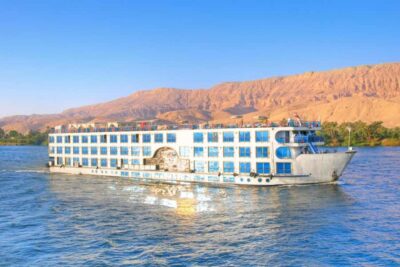
4-Day Nile Cruise from Aswan to Luxor with Guide
Read our review →
4-Days Nile Cruise From Aswan To Luxor including Abu Simbel and Hot Air Balloon
Read our review →Browse the lists this tour appears in