
Reviewed · NILE CRUISES
Nile cruise between Aswan and Luxor: Sail the best temples in Egypt
Ancient temples arrive with the current. This four-day Nile cruise links Aswan and Luxor with a useful mix of guided sightseeing and quiet time aboard ship. I like the way it combines major monuments with relaxed river travel, and I especially like that pickup and drop-off are included, making the journey easier to fit into an Egypt itinerary.
The cruise also benefits from a guide who can turn complicated Egyptian mythology into a story you can follow. Mohamed Gaber receives especially warm praise for his Spanish, lively explanations, humor, and careful attention to the group. The main consideration is pace: the schedule covers many major sites in a short time, and Abu Simbel is optional with its ticket not included.
In This Review
- Key points to know before booking
- Why this Aswan to Luxor route works so well
- Day 1: Settle into the ship in Aswan
- Day 2: Abu Simbel, Philae, and Kom Ombo
- Abu Simbel: the optional trip worth serious thought
- Philae Temple and the boat ride to Isis
- Kom Ombo and its unusual double dedication
- Day 3: Edfu, Karnak, and Luxor Temple
- Edfu Temple, one of Egypt’s best-preserved monuments
- Karnak, Egypt’s giant temple complex
- Luxor Temple after the great complex
- Day 4: Royal tombs and Luxor’s west bank
- Three tombs in the Valley of the Kings
- Hatshepsut’s mortuary temple
- Colossi of Memnon and final free time
- What the $500 price really covers
- The guide can shape the whole experience
- Who should book this Nile cruise?
- Should you book it?
- FAQ
- Where does the cruise begin?
- Where does the cruise end?
- How long does the cruise last?
- What meals are included?
- Is Abu Simbel included?
- Which attractions have included admission?
- How many tombs can you enter in the Valley of the Kings?
- How large is the group?
Key points to know before booking
- Four nights on the Nile: Your cruise runs between Aswan and Luxor, with meals and accommodation included.
- A strong temple lineup: You visit Philae, Kom Ombo, Edfu, Karnak, and Luxor Temple, plus major tombs and monuments on Luxor’s west bank.
- Abu Simbel is optional: It is widely regarded as a must-see, but you pay its admission separately.
- Mohamed Gaber is a major strength: His Spanish-language guiding, theatrical explanations, and personal care receive repeated praise.
- Transfers reduce hassle: Pickup is available from an Aswan airport, train station, or hotel, with transport onward to your Luxor hotel, airport, or station.
- The price covers the core costs: At $500 per person, the package includes four nights, listed admissions, four lunches, and four dinners, but not drinks or tips.
Why this Aswan to Luxor route works so well
A Nile cruise gives you something a standard road tour cannot: time to watch Egypt pass slowly by. Between temple visits, you can sit near the river, rest by the pool, and let the day’s monuments settle in your mind.
The route is also well chosen. Aswan provides a calm beginning, then the ship moves north toward Kom Ombo and Edfu before reaching Luxor, the great concentration point for temples and royal tombs. You see the major sites without arranging a separate taxi, train, hotel transfer, and guide for every stop.
I see this as a particularly good introduction to ancient Egypt. You will not see every important site in the country, and the trip does not include Cairo or the pyramids, but it gives you a clear sequence of Egyptian religious and royal monuments.
The maximum group size is 30 people. That is not an intimate private tour, but it is small enough to be manageable if the guide keeps the group organized. The included mobile ticket and confirmation at booking also make the practical side fairly simple.
More Nile Cruises in Aswan
- 4-Days Nile Cruise From Aswan To Luxor including Abu Simbel and Hot Air Balloon
★ 5.0 · 3,142 reviews - 4-Day 3-Night Nile Cruise from Aswan to Luxor&Abu Simbel+Balloon
★ 5.0 · 2,023 reviews - 4-Day 3-Night Nile Cruise from Aswan to Luxor including Abu Simbel, Air Balloon
★ 4.5 · 612 reviews
Day 1: Settle into the ship in Aswan
The first day begins with pickup in Aswan at the location you provide. That can be the airport, train station, or a hotel. You are taken to the boat, shown to your room, and given time to settle in.
This is a gentle start. The day is free, so you can rest by the pool or explore Aswan independently. I like this pause because the following sightseeing days are full. You can arrive from another part of Egypt, get your bearings, and enjoy the river without immediately rushing into a temple.
The schedule lists meals according to the ship’s timetable. Four lunches and four dinners are included in the package. Drinks are not included, so budget for those separately, and remember that tips are also extra.
A useful point to clarify before departure is the exact boarding time and room arrangements. The published start time is 6:00 am, although the first day itself is described as free. The experience is listed as approximately four days, while accommodation is described as four nights, so confirm the precise sailing and checkout schedule when booking.
Day 2: Abu Simbel, Philae, and Kom Ombo
Abu Simbel: the optional trip worth serious thought
Abu Simbel is not part of the included admissions, but I would give it strong consideration. The temples were cut directly into rock during the reign of Ramses II. One honors Ramses himself, while the other is dedicated to his wife, Queen Nefertari.
The excursion lasts about two hours, and the admission ticket costs extra. The tour description calls it optional, but many people consider it the most memorable addition to an Aswan stay. If you have the time and budget, this is the extra I would prioritize.
Because it is optional, confirm how the visit fits with the ship’s schedule. You do not want to assume that every passenger takes the excursion or that its timing is identical on every departure.
More Nile cruises and felucca sailings:
- From Aswan: 4-Day Nile Cruise from Aswan to Luxor with Guide
★ 4.1 · 593 reviews - 4-Days Nile Cruise From Aswan To Luxor including Abu Simbel and Hot Air Balloon
★ 4.5 · 509 reviews - 4-Day 3-Night Nile Cruise from Aswan to Luxor – Private Tour
★ 5.0 · 369 reviews - 4 Days Nile Cruise from Aswan to Luxor including Abu Simbel and Hot Air Balloon
★ 4.5 · 356 reviews
Philae Temple and the boat ride to Isis
Philae is dedicated to Isis and sits on an island, so you reach it by boat. That short water approach adds something special. The temple is not simply another monument beside a parking area. You arrive across the Nile, with the island setting helping you understand why water and islands mattered so much in Egyptian religious life.
The visit lasts about one hour, and admission is included. Your guide can help make sense of the gods, symbols, and reliefs, which matters here because Egyptian temples can feel confusing when you encounter them without context.
Mohamed Gaber is praised for explaining the complicated family links among the Egyptian gods in an entertaining way. His use of small theatrical scenes and audience participation may appeal to you if you prefer storytelling to a formal lecture.
Kom Ombo and its unusual double dedication
Kom Ombo takes about an hour and is dedicated to two gods, Sobek and Haroeris. That shared purpose gives the temple its unusual character. Instead of thinking about it as one more stop, pay attention to the way the building reflects two religious identities in one place.
The admission is included. Since the visit follows Philae on a busy day, you may appreciate having the ship as your base. There is no need to repack or change hotels between these sites.
Day 3: Edfu, Karnak, and Luxor Temple
Edfu Temple, one of Egypt’s best-preserved monuments
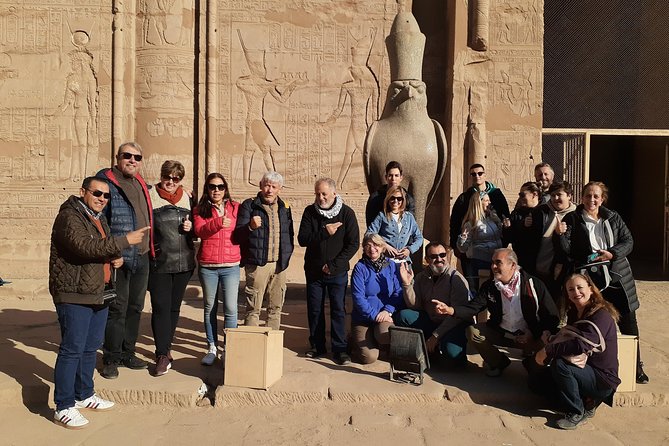
Edfu is dedicated to Horus and receives about two hours. Its strong state of preservation helps you picture how an Egyptian temple was intended to feel, rather than forcing you to reconstruct everything from broken columns and partial walls.
Admission is included. This is one of the stops where a guide earns his fee. The carvings and religious scenes carry layers of meaning, and an engaging explanation helps you see more than the large stone gateway in front of you.
The day has a full program, so wear practical clothing and shoes. The supplied information does not specify transport arrangements for each shore excursion, so ask how the short transfers from ship to site are handled and how long you will have at each stop.
Karnak, Egypt’s giant temple complex
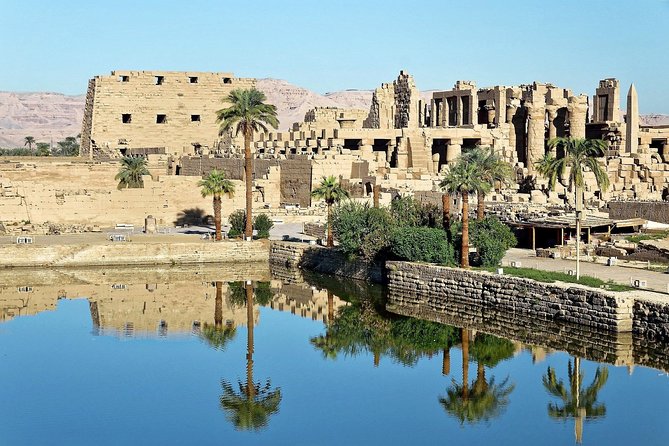
Karnak receives about two hours, which gives you a useful introduction but not unlimited time. The complex was built and expanded over more than 2,000 years by different pharaohs. It is less a single temple than a vast collection of sacred spaces built over generations.
Look for the avenue of sphinxes, the columned hall, and the avenue of rams. These are the visual highlights listed for the visit, but the larger lesson is how Egyptian rulers added their own work to an existing holy center.
I like the order of this day. Edfu lets you focus on one well-preserved temple, while Karnak shows the scale and long development of a major religious center. With Mohamed Gaber guiding in Spanish, you can also expect the explanations to connect the gods, rulers, and rituals rather than treating each monument as an isolated photo stop.
Luxor Temple after the great complex
Luxor Temple is dedicated to Amun-Ra, one of the most important gods in the Egyptian pantheon. The visit lasts about two hours and admission is included.
Karnak and Luxor Temple work well together. Karnak gives you the vast religious complex, while Luxor Temple offers a more concentrated visit in the heart of Luxor. You can compare their avenues, columns, and royal imagery while the details are still fresh.
This is also the point where the schedule may feel demanding. You have three major sites in one day, and each deserves attention. If you prefer slow museum-style visits, you may find the two-hour limits restrictive. If your priority is seeing the major monuments, the packed schedule is a fair trade.
Day 4: Royal tombs and Luxor’s west bank
Three tombs in the Valley of the Kings
The Valley of the Kings is the great necropolis associated with many pharaohs of the New Kingdom. The visit includes entry to three tombs of your choice, which gives you some control over the experience.
That choice matters. Tomb availability can vary, and you may want to ask your guide which three are open and best suited to your interests. Some people care most about colorful decoration, while others want a connection with a particular ruler.
The valley is a different experience from the temples. Temples were places of worship and public ceremony, while these tombs were built for royal burial. Inside, the walls carry painted scenes and symbols intended to guide the dead through the afterlife. The visit lasts about two hours and admission is included.
You should expect heat and exposure in this part of the day, though the tour information does not specify facilities or transport details. Bring water for your own use, since drinks are not included.
Hatshepsut’s mortuary temple
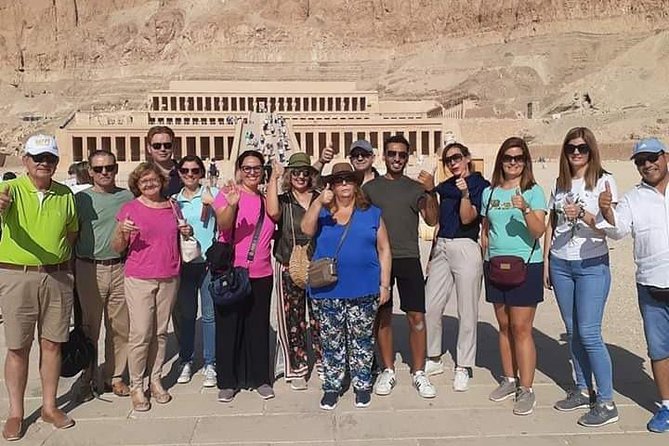
The mortuary temple of Hatshepsut receives about one hour. Hatshepsut was one of Egypt’s most important female rulers, and her monument gives the day a useful change of focus after the royal tombs.
The temple’s terraces and setting make it visually different from Karnak, Luxor Temple, and Edfu. It also gives your guide a chance to explain how a female pharaoh presented royal power in a system usually associated with male rulers.
Admission is included. One hour is enough for a focused visit, but you may want more time if photography is important to you.
Colossi of Memnon and final free time
The Colossi of Memnon are two enormous stone statues of Pharaoh Amenhotep III. The stop lasts only about 15 minutes, and admission is free. Think of it as a quick roadside monument stop rather than a full tour.
Afterward, you check out and have free time in Luxor. The operator will take you to the hotel, airport, or train station you specify when you need it. This final transfer is useful if the cruise is one part of a longer Egypt trip.
The five-hour Luxor period listed in the schedule gives you some breathing room after the west-bank visits. Still, confirm the exact checkout and transfer time if you have a train or flight to catch.
What the $500 price really covers
At $500 per person, this is not simply a boat ride. The cost includes four nights aboard the cruise, pickup in Aswan, transfer in Luxor, listed visits, entrance tickets to the included sites, four lunches, and four dinners.
That can represent good value if you would otherwise pay separately for a guide, admission tickets, hotels, taxis, and the journey between Aswan and Luxor. The biggest value comes from putting the major temples into one organized route.
There are clear exclusions. Tips and drinks are not included, and Abu Simbel admission is extra. The information provided does not list breakfast, Wi-Fi, cabin category, or ship facilities beyond a pool, so ask about those points before paying.
The price also buys convenience, not complete flexibility. A fixed group schedule is efficient, but you will not be able to linger indefinitely at Karnak or skip a stop without checking how that affects the group.
The guide can shape the whole experience
The strongest praise is directed toward Mohamed Gaber. He is described as an excellent Spanish-speaking guide who explains Egyptian culture and mythology with precision, humor, and enthusiasm.
His style appears to be active rather than dry. He uses small performances and group participation to explain the complicated relationships among the gods. That is especially helpful at Philae, Kom Ombo, Karnak, and Luxor Temple, where names and symbols can quickly blur together.
He is also praised for solving small problems quickly and paying attention to the group. That practical care can matter as much as historical information on a multi-day trip. A good guide keeps the day moving, answers questions, and helps you feel looked after without turning the visit into a lecture.
Guide availability and language should still be confirmed at booking. The praise specifically identifies Mohamed Gaber and his strong command of Spanish, so ask whether he will lead your departure personally.
Who should book this Nile cruise?
I would recommend this cruise to you if you want the major Aswan to Luxor sights arranged in one package. It suits first-time visitors, families, and anyone who prefers having a guide and transfers organized in advance.
It is also a good fit if you enjoy alternating between sightseeing and rest. The ship gives you quiet river time, while the excursions provide a steady stream of temples and tombs.
You may want a different arrangement if you prefer private touring, long unscheduled visits, or a luxury cruise with clearly listed cabin and onboard services. The group can reach up to 30 people, and the pace is busy on the main sightseeing days.
Book Abu Simbel only after confirming its timing and extra admission cost. Also check the exact number of nights, the boat’s facilities, drink prices, and whether Mohamed Gaber will be your guide.
Cancellation is flexible only up to a point. You can receive a full refund if you cancel at least three full days before the local start time. Cancellations or changes made later are not accepted for a refund.
Should you book it?
Book this Nile cruise if your priority is efficient sightseeing with a human guide who makes ancient Egypt easier to understand. The combination of Philae, Kom Ombo, Edfu, Karnak, Luxor Temple, the Valley of the Kings, and Hatshepsut’s temple gives you an excellent four-day introduction.
The $500 price is strongest for someone who values included admissions, meals, accommodation, and transfers. Add Abu Simbel if your schedule and budget allow, and confirm the boat details before booking.
I would pass only if you need a very slow, private, or highly specified cruise. For a first Nile journey between Aswan and Luxor, this is a well-planned route with a particularly strong guiding element.
FAQ
Where does the cruise begin?
The cruise begins in Aswan, in Aswan Governorate, Egypt. Pickup is offered from an Aswan airport, train station, or hotel.
Where does the cruise end?
The cruise ends in Luxor Governorate. After checkout, transfer is provided to the hotel, airport, or train station you specify.
How long does the cruise last?
The experience lasts approximately four days and includes four nights of accommodation on the cruise.
What meals are included?
Four lunches and four dinners are included. Drinks are not included.
Is Abu Simbel included?
The Abu Simbel excursion is optional, and its admission ticket is not included in the price.
Which attractions have included admission?
Included visits are Philae Temple, Kom Ombo Temple, Edfu Temple, Karnak Temple, Luxor Temple, the Valley of the Kings, and Hatshepsut’s mortuary temple. The Colossi of Memnon have no admission charge.
How many tombs can you enter in the Valley of the Kings?
You can enter three tombs of your choice.
How large is the group?
The activity can have a maximum of 30 participants.
Newly listed around Aswan
- Sailing Nile Cruise from Aswan to Luxor for 2 Nights★ 4.5 · 139 reviews
- Philae Temple and Aswan High-Dam Half-day tour★ 5.0 · 49 reviews
- Private Tour in Aswan : Felucca and Nubian village★ 5.0 · 29 reviews
- Abu Simbel Private Full-Day Tour from Aswan★ 5.0 · 114 reviews
- (3-Nights Cruise From Aswan To Luxor & Balloon, Abu Simbel)★ 4.5 · 23 reviews
- Day Tour to Abu Simbel from Aswan by Bus★ 4.5 · 25 reviews
- 4-Days Aswan sails Nile Cruise Luxor &Abu Simbel.Hot air Balloon★ 4.5 · 77 reviews
- 3-Nights Cruise From Aswan To Luxor, Hot Air Balloon,Abu Simbel★ 4.5 · 46 reviews
Nile Cruises, compared.
4-Days Nile Cruise From Aswan To Luxor including Abu Simbel and Hot Air Balloon
Read our review →
4-Day 3-Night Nile Cruise from Aswan to Luxor&Abu Simbel+Balloon
Read our review →
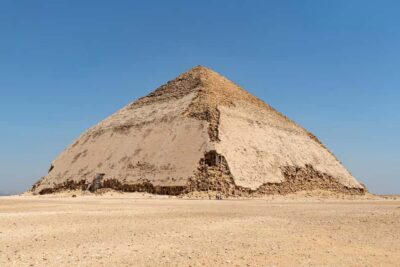
Sakkara, Memphis & Dahshur (Pyramid & Felucca Options)
Read our review →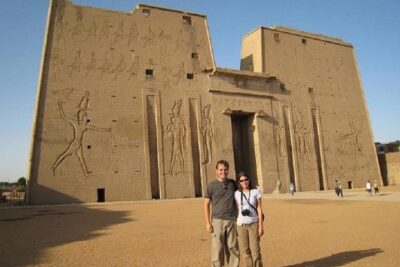
4-Day 3-Night Nile Cruise from Aswan to Luxor including Abu Simbel, Air Balloon
Read our review →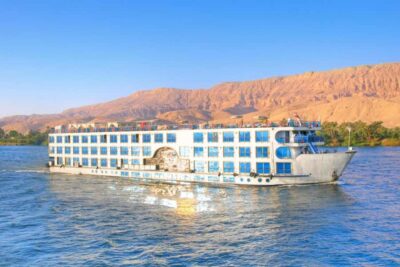
4-Day Nile Cruise from Aswan to Luxor with Guide
Read our review →
4-Days Nile Cruise From Aswan To Luxor including Abu Simbel and Hot Air Balloon
Read our review →Browse the lists this tour appears in