
Reviewed · VALLEY OF THE KINGS TOURS
Luxor East and West Bank: Valley of the kings, Habu Temple,Karnak&Luxor Temples
Ancient Egypt fills the day fast. This private Luxor tour brings the major East and West Bank sights together in about eight hours, with a private air-conditioned vehicle and an English-speaking Egyptologist guide. I like the efficient route and the chance to see both famous temples and lesser-visited Medinet Habu. I also like that the guide can adjust the pace for your group. The main drawback is cost control: entrance fees are extra, and the schedule is long enough that you should bring a snack.
The tour costs $85 per person, with hotel or Nile cruise pickup, return transport, and bottled water included. Feedback is strongly positive, with a 4.8 rating and 95 percent recommendation rate, especially for guides Laila and Mohamed Noor. Still, one warning deserves attention: one piece of feedback raised concerns about pressure to spend more during the day, so ask clearly about optional purchases and extra costs before setting out.
In This Review
- The day at a glance
- Why this Luxor route works so well
- Starting underground in the Valley of the Kings
- Hatshepsut’s temple and the power of one queen
- A quick stop at the Colossi of Memnon
- Medinet Habu, the day’s strongest surprise
- Karnak Temple, a city of columns
- Luxor Temple after the larger complex
- What the guide adds to the day
- Is $85 good value?
- Who should book this day?
- Should you book the Luxor East and West Bank tour?
- FAQ
- How long does the Luxor East and West Bank tour last?
- What sights are included in the route?
- Are entrance fees included in the $85 price?
- Is transportation included?
- Is this a private tour?
- Can I cancel for a full refund?
- What happens if bad weather cancels the tour?
The day at a glance
- Six major ancient sites in one day: You visit the Valley of the Kings, Hatshepsut’s temple, the Colossi of Memnon, Karnak, Luxor Temple, and Medinet Habu.
- Private transport matters: Your group rides in a private air-conditioned vehicle, rather than joining strangers on a large coach.
- A guide can make or break the day: Laila receives especially strong praise for clear English, organization, photography help, and patience.
- The Valley of the Kings requires extra budgeting: Its admission ticket is not included, and the same applies to the other principal monuments.
- Medinet Habu adds real variety: Ramses III’s temple is well preserved and often feels more rewarding than another quick photo stop.
- Plan for a full, active morning and afternoon: The listed visits total roughly eight hours, with considerable walking and sun exposure.
Why this Luxor route works so well
Luxor is split by the Nile, and its two banks tell different stories. The East Bank is the side of temples, religious centers, and modern city life. The West Bank is the land of tombs, funerary temples, and the Theban Necropolis.
Trying to arrange both sides alone can become a tiring puzzle of transport, ticket lines, and site order. This tour removes much of that work. You are collected at 7:00 a.m., driven between the sites, and returned to your hotel or Nile cruise at the end.
The private format is important. You are not tied to the needs of a large group, so your guide can spend more time explaining a temple your group finds interesting or allow a little rest when the heat catches up. One guide, Laila, was praised for helping a solo visitor take photographs and for staying with a guest’s mother while another family member visited tombs.
That sort of flexibility is worth more than it first appears. Luxor’s monuments are not compact museum rooms. You may walk across broad courtyards, climb toward tomb entrances, and spend much of the day outdoors. A private guide can make the experience less rushed or help keep the day moving if you have only one day in town.
More West Bank and Valley of the Kings days:
- Hurghada: Luxor Valley of the Kings & Tutankhamun Tomb Trip
★ 4.7 · 13,208 reviews - Small group Hurghada to Luxor, Valley of the Kings by Van
★ 4.5 · 2,470 reviews - Luxor Day Tour: Valley of Kings & Queens & Hatchepsut Temples
★ 5.0 · 1,496 reviews
Starting underground in the Valley of the Kings
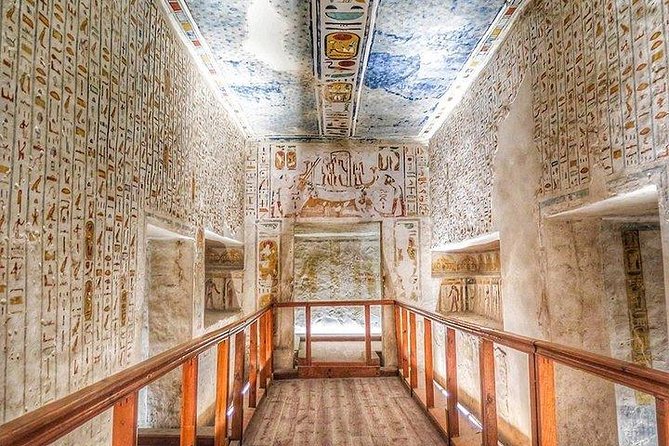
The Valley of the Kings is the day’s headline stop. On the West Bank, this desert valley contains royal burial places cut into the surrounding hills. It includes an East Valley and a West Valley, though the standard visit centers on the main royal tomb area.
You have about two hours here, which is a sensible amount of time for the site. The guide can explain how the tombs were built and help you understand the painted scenes, royal symbols, and burial purpose rather than leaving you to stare at walls without context.
The admission ticket is not included. That is normal for this sort of arrangement, but it means the advertised $85 is not your final sightseeing cost. Ask before departure which tombs are covered by the standard ticket and which require separate payment. The supplied information confirms that the group visited the tombs of Ramses III, Ramses IV, and Ramses IX on one tour, but the exact tomb choices can depend on current access and ticket rules.
The valley is also where time can disappear. You may want to linger inside one tomb, while another member of your group wants photographs outside. Your guide’s role is especially useful here because the paintings can look similar at first glance. Ask for help comparing the tombs rather than treating them as a checklist.
The practical issue is heat. The tour begins early, but the West Bank remains exposed, and the day continues well beyond this stop. Wear sensible shoes, carry water, and bring the snack that one guest specifically recommended. One bottle of water is supplied, but you should not rely on that as your only drink for eight hours.
Hatshepsut’s temple and the power of one queen
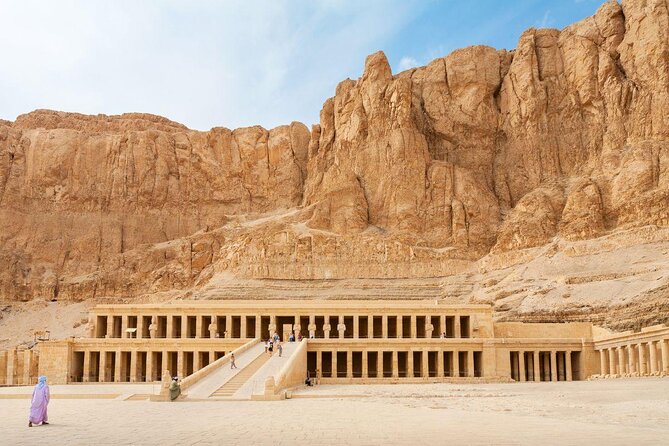
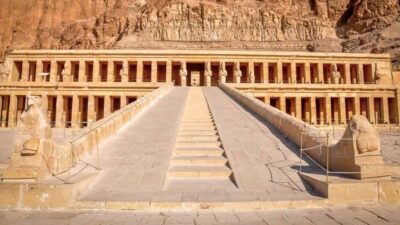
The next major stop is the Temple of Hatshepsut at Deir el-Bahari, with about 90 minutes scheduled. Its terraces rise against the cliffs, giving the site a very different feel from the underground tombs.
Hatshepsut ruled during Egypt’s Eighteenth Dynasty and is regarded by Egyptologists as one of ancient Egypt’s most successful rulers. Her reign was unusual because she was a woman who took the full role of king. That political story gives your guide plenty to explain, especially the way Hatshepsut presented herself through royal imagery.
The supplied description includes a translation of her name tied to Amun and royal women, though translations of ancient names can vary. I would treat the name as a starting point, then focus on the larger question: how did Hatshepsut use architecture and religious imagery to support her authority?
Ninety minutes should give you time to see the terraces and hear the main story without turning the visit into a lecture marathon. The admission fee is extra, and the site involves walking in an open setting. This is one place where a guide who explains the political background adds real value.
A quick stop at the Colossi of Memnon
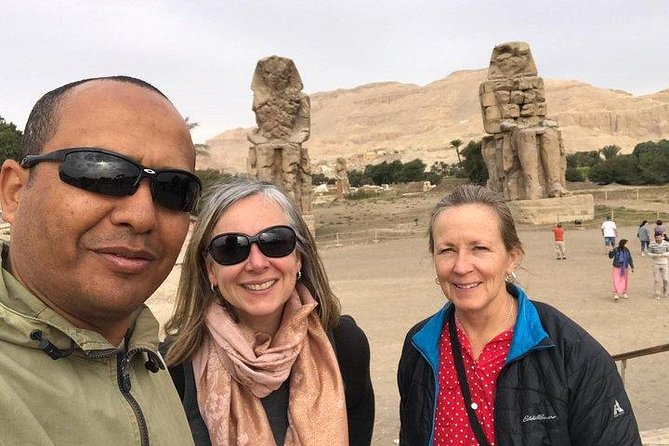
The Colossi of Memnon takes about 30 minutes and has no admission fee. These two seated statues once guarded the memorial temple of Amenhotep III, who ruled during the Eighteenth Dynasty. They are among the easiest ancient sights to visit because you can see the huge figures without spending a long time inside a complex.
The statues face east toward the Nile area, and smaller figures appear beside them. Their scale gives you an immediate sense of royal power, even though the temple they belonged to has largely disappeared.
Do not expect a full temple visit here. This is a short stop, best used for photographs and a concise explanation from your guide. Its free admission also helps offset the extra ticket costs at the other monuments.
A few more Cairo outings to price up
- Cairo: Pyramids & Great Sphinx Private Tour with Camel Ride
★ 4.9 · 6,335 reviews - Tour to Giza Pyramids and The Egyptian Museum
★ 5.0 · 6,016 reviews - VIP All inclusive Best of the best Giza Pyramids,Sakkara,Memphis
★ 5.0 · 3,164 reviews - From Cairo: Pyramids of Giza, Sphinx, Saqqara & Memphis Tour
★ 4.7 · 3,110 reviews
Medinet Habu, the day’s strongest surprise
Medinet Habu, also called the Temple of Ramses III, receives about 90 minutes. It sits toward the southern end of the Theban Necropolis and is enclosed by a large mud-brick wall that may have had a defensive purpose.
Ramses III built this memorial temple, and it is one of Egypt’s best-preserved temple sites. That preservation makes a difference. Wall carvings, gateways, and architectural details are easier to appreciate when much of the original structure remains visible.
The site also carries an unusual social story. The first recorded labor strike in history was launched by workers protesting under Ramses III. That gives you a useful change of subject after tombs and royal power. Ancient Egypt was not only about pharaohs and gods. Workers, wages, and daily life mattered too.
I particularly like this inclusion because many short Luxor tours concentrate only on the Valley of the Kings and Karnak. Medinet Habu adds another major monument and gives the West Bank portion more depth. The admission ticket is extra, so ask your guide to help you judge how much time to spend if your group is tiring.
Karnak Temple, a city of columns
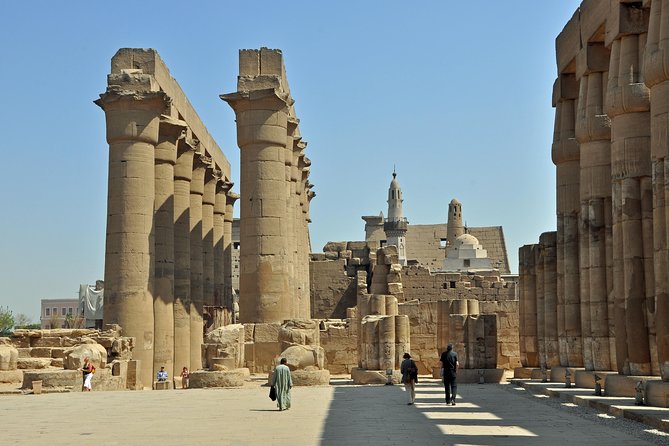
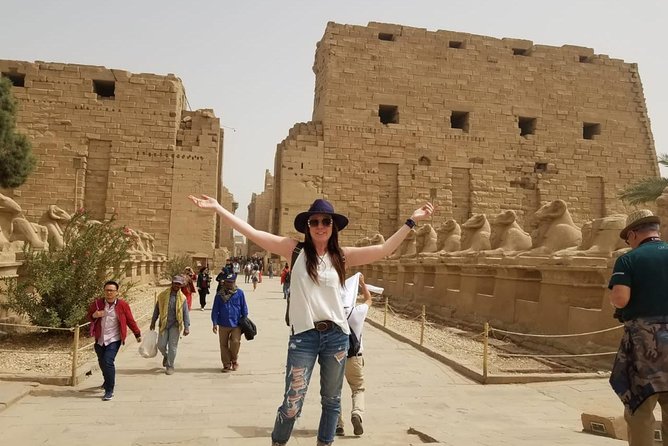
Karnak is the largest and most demanding visit on the East Bank, with about two hours scheduled. It is not simply one temple. It is a vast complex of temples, columns, courtyards, and religious buildings developed over many centuries, from the Middle Kingdom through the Roman period.
The main focus is the temple of Amun, later associated with Amun-Ra. The complex also included temples connected with Mut and Khonsu, the other members of the Theban Triad.
Two hours allows your guide to give the site shape. Without help, Karnak can feel like a huge collection of stones. With a clear route, you can understand how successive rulers added their own courtyards, gateways, and monuments to a sacred center that kept growing over time.
The Great Hypostyle Hall is one of the places where scale does the talking. Rows of massive columns make the space feel more like a forest of stone than a conventional room. Your guide can point out the difference between areas built by different rulers and explain why this complex mattered to Egyptian religion.
Karnak is also where you will want to watch your energy. After the West Bank, two hours of walking around courtyards and columns can feel heavy. The private vehicle helps because you can rest during the drive, but you should still pace yourself. The entrance ticket is not included.
Luxor Temple after the larger complex
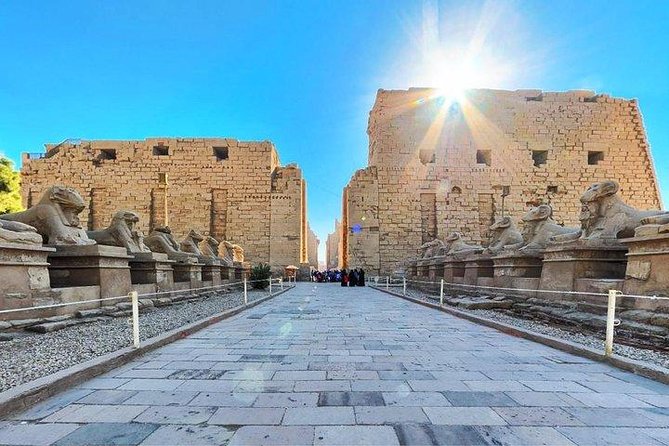
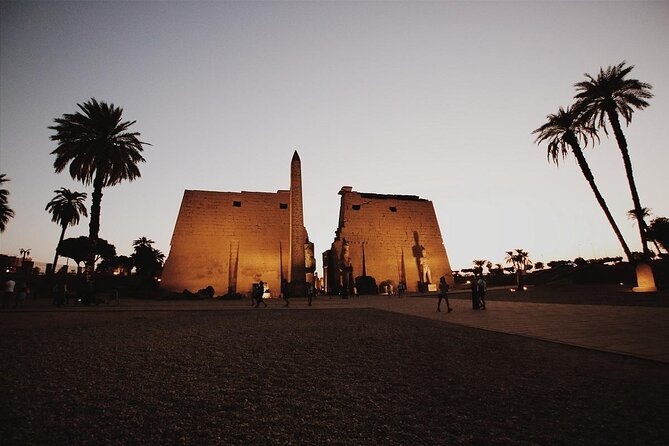
Luxor Temple is scheduled for about 90 minutes and offers a more focused visit than Karnak. It was founded around 1400 BC and developed under rulers including Amenhotep III and Ramses II.
The temple was dedicated to Amun-Ra, Mut, and Khonsu, the Theban Triad. Ramses II added an open courtyard, a monumental pylon, and obelisks, while Thutmose III also contributed to the complex.
This temple is especially valuable after Karnak because the two sites are related but not identical. Karnak functioned as a major religious center that expanded over generations. Luxor Temple had its own ceremonial role and presents a more concentrated architectural sequence.
Give your guide room to explain the changes made by different kings. That is where the visit becomes more than a walk among columns. You can see how rulers added their names and images to an older sacred setting, each trying to connect himself to the gods and to Egypt’s past.
The ticket is extra, and the tour’s schedule leaves little room for a long independent wander. If you care about photography, tell your guide early. Feedback about Laila repeatedly praised her patience and help with photographs, which could be useful at a site with so many strong angles.
What the guide adds to the day
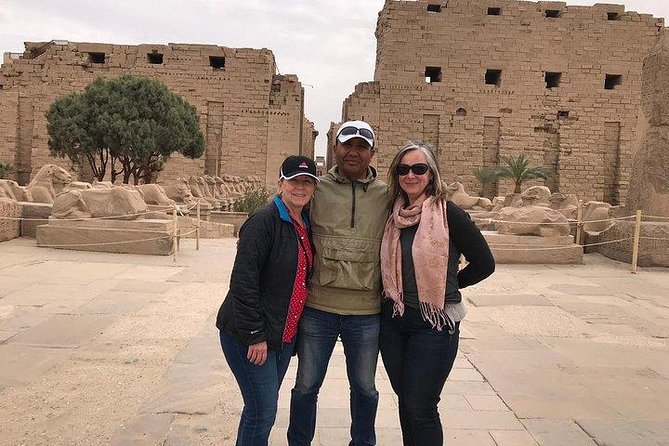
The most consistent praise goes to the guides, especially Laila and Mohamed Noor. Laila is described as clear in English, patient, well organized, and strong at explaining Egyptian culture and antiquities. Several people specifically appreciated her ability to answer questions without making the tour feel stiff.
That matters in Luxor. The monuments are spectacular, but the details can blur together after several hours. A good guide gives you a simple framework: who built the place, what it was for, how it changed, and what you should notice before moving on.
The guide can also help with practical problems. Laila was praised for having tickets ready on one occasion, although the official tour terms still say entrance fees are not included. That means you should confirm the ticket arrangement before the tour begins rather than assume tickets are part of the price.
There is one clear caution. One unhappy account accused the guide of pushing costly purchases at various stops. That is not consistent with the otherwise strong feedback, but it is enough reason to set boundaries politely. You can say that you want only the scheduled sightseeing and ask about any optional expense before agreeing.
Is $85 good value?
At $85 per person, the tour can be good value for a private eight-hour day, especially if you are traveling with family or friends and would otherwise need to arrange several transfers. The price includes the private air-conditioned vehicle, hotel or Nile cruise pickup and return, bottled water, and an English-speaking Egyptologist guide.
The important catch is the entrance fees. Valley of the Kings, Hatshepsut’s temple, Karnak, Luxor Temple, and Medinet Habu all list admission as extra. Tipping is also not included, and anything outside the stated plan costs more.
You are paying for convenience, local interpretation, and a route that covers both banks in one day. You are not buying an all-inclusive ticket package. If your group has only one day in Luxor, that convenience is likely worth it. If you have several days and enjoy arranging local transport yourself, a private tour may be less essential.
Who should book this day?
I would choose this tour if you want the major Luxor sights handled in one organized day, prefer private transport, or are traveling with relatives who need occasional flexibility. It also suits first-time visitors who want historical explanation rather than simply a driver between monuments.
It is less suited to you if you dislike early starts, long sightseeing days, or extra ticket payments at each major site. You may also prefer a slower plan if you want extended time for photography or quiet exploration.
The listed start time is 7:00 a.m., and the full route runs about eight hours. Wear comfortable shoes, bring a snack, and confirm the pickup point if your reservation appears under Cairo, since the sightseeing itself is in Luxor and pickup is described as being from a Luxor hotel or Nile cruise.
Free cancellation is available up to 24 hours before the local start time. Cancellations or changes within 24 hours are not refundable, while poor-weather cancellations offer another date or a full refund.
Should you book the Luxor East and West Bank tour?
Book it if you want maximum coverage in one day and value a private guide more than a leisurely pace. The combination of the Valley of the Kings, Hatshepsut, Medinet Habu, Karnak, and Luxor Temple gives you a strong first look at Luxor’s two banks.
Before paying, confirm the exact pickup location, the current entrance costs, which tombs are available, and whether any optional shopping stops are planned. If Laila or Mohamed Noor is available, requesting one of them may improve the experience based on the strong praise for their English, organization, and personal attention.
The tour is not cheap once tickets and tips are added, but for a private full-day route with transport and a guide, it offers solid value for a short stay. Just arrive prepared for heat, walking, and a very full plate of ancient Egypt.
FAQ
How long does the Luxor East and West Bank tour last?
The tour lasts approximately eight hours. It begins at 7:00 a.m. and ends with transfer back to your hotel or Nile cruise in Luxor.
What sights are included in the route?
The route includes the Valley of the Kings, the Temple of Hatshepsut at Deir el-Bahari, the Colossi of Memnon, Karnak Temple, Luxor Temple, and Medinet Habu, also called the Temple of Ramses III.
Are entrance fees included in the $85 price?
No. Entrance fees are not included for the listed paid attractions. Tipping and anything not mentioned in the tour description are also excluded.
Is transportation included?
Yes. The tour includes transfers in a private air-conditioned vehicle, pickup from your hotel or Nile cruise, return transfer, and one bottle of water.
Is this a private tour?
Yes. Only your group participates in the private activity, and a qualified English-speaking Egyptologist guide accompanies you.
Can I cancel for a full refund?
You can cancel at least 24 hours before the experience start time for a full refund. Cancellations or changes made less than 24 hours before the start time are not refunded.
What happens if bad weather cancels the tour?
If poor weather causes the experience to be canceled, you will be offered a different date or a full refund.
Newly listed around Cairo
- Full Day Trip from Cairo to Luxor★ 5.0 · 16 reviews
- Private guide’s trip to Giza pyramids, Great sphinx valley temple★ 5.0 · 37 reviews
- Private half Day Tour to the Great 3 Pyramids of Egypt★ 5.0 · 15 reviews
- VIP Tour inside Giza Pyramids★ 4.5 · 103 reviews
- Full-Day Private Tour to Giza Pyramids, Sphinx, Memphis & Saqqara★ 5.0 · 106 reviews
- Unique Tour to The Grand Egyptian Museum and 12 main galleries★ 4.0 · 38 reviews
- Elite Boats Tour in Cairo & Giza with Drinks Included★ 4.5 · 15 reviews
- Sunset & Night Open Air Nile Cruise in Cairo & Giza★ 5.0 · 158 reviews
Valley of the Kings Tours, compared.
Luxor Valley of the Kings & Tutankhamun Tomb Trip
Read our review →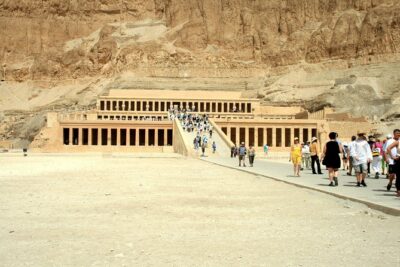
Small group Hurghada to Luxor, Valley of the Kings by Van
Read our review →Luxor Day Tour: Valley of Kings & Queens & Hatchepsut Temples
Read our review →Valley of the Kings and Hatshepsut Temple Day Tour
Read our review →
Luxor Tour with Valley of Kings, Karnak & Tut Tomb
Read our review →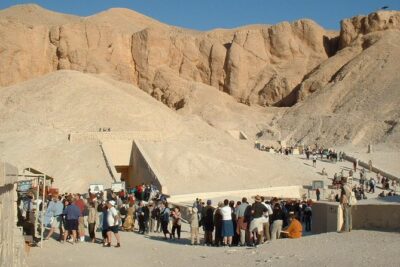
Valley of Kings, Hatchepsut Temple ,Karnak & Luxor-DayTour
Read our review →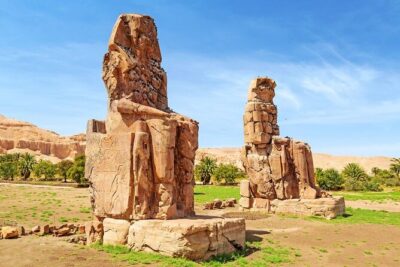
Full Day Tour of Luxor West Bank Temples and Tombs (Private)
Read our review →
Small Group Excursion to Luxor Valley of the Kings from Hurghada
Read our review →Browse the lists this tour appears in