

Reviewed · ABU SIMBEL TOURS
Aswan, Nubian village & Abu Simbel & Luxor in 03 Days overland
Three days, three ancient worlds, one long haul. This private Aswan to Luxor trip packs in Philae, a Nubian village, Abu Simbel, and Luxor’s greatest temples, while keeping your transport and guiding arranged. I like the private air-conditioned vehicle and the freedom to choose your own accommodation. I also like the first-class train ticket from Aswan to Luxor, which saves you from arranging one of the trip’s key connections yourself.
The main catch is that this is not an all-inclusive package. Entrance fees, hotels, meals, drinks, and tips are extra, and Abu Simbel requires an extremely early start. Still, the plan works well for you if you want Egypt’s southern highlights without joining a large group or committing to a Nile cruise.
In This Review
- The essential points at a glance
- Why this three-day route works
- Day one: Philae, the High Dam, and Nubian life
- Philae Temple by boat
- Aswan High Dam and Lake Nasser
- A boat ride to the Nubian village
- Day two: the long road to Abu Simbel
- Ramses II and Nefertari at Abu Simbel
- Day three: Luxor’s West Bank and East Bank
- Valley of the Kings
- Temple of Hatshepsut
- Colossi of Memnon
- Karnak Temple
- Luxor Temple at day’s end
- What the $300 price really covers
- Comfort, pace, and who should book
- Practical advice before you go
- Should you book this Aswan to Luxor tour?
- FAQ
- How long is the experience?
- Is the tour private?
- Is hotel pickup and drop-off included?
- Is accommodation included?
- Is the first-class train ticket from Aswan to Luxor included?
- Are entrance fees included?
- What time does the Abu Simbel day begin?
The essential points at a glance
- Philae sits on an island reached by motorboat, with a guide-led visit and extra time to explore on your own.
- Abu Simbel takes nearly a full day, including roughly three hours of driving each way from Aswan.
- The Nubian village adds a human side to the trip, with colorful homes, handicrafts, herbs, and contact with local families.
- Luxor covers both banks of the Nile, from royal tombs and Hatshepsut’s temple to Karnak and Luxor Temple.
- Your group remains private, so you can ask questions, adjust the pace, and avoid the feel of a large coach tour.
- The $300 price covers transport and guiding, not admission fees or accommodation, so budget beyond the headline cost.
Why this three-day route works
Southern Egypt rewards a focused plan. Aswan gives you the Nile and Nubian culture. Abu Simbel brings the great monuments of Ramses II and Nefertari. Luxor then delivers the largest concentration of temples and tombs in the country.
Trying to arrange all of this independently can mean sorting out cars, boats, train tickets, drivers, convoy timing, and local guides. Here, those moving parts are handled for you. You still have a semi-independent trip because your hotel and meals are your responsibility, but you are not left to solve every transport problem at the roadside.
The private format matters. Only your group participates, and the vehicle is air-conditioned. You can ask for clarification, spend longer at a detail that interests you, or move on when the heat begins to win. Guide Khaled receives especially warm praise for his clear English, patience, historical explanations, photography help, and attention to safety. Mohamed handles operations, while Mahmoud has helped with train arrangements.
The experience has a 4.9 rating from 16 published ratings, with all listed recommendations positive. That is a strong signal, though the sample is not large. One important caution appears in the feedback: one person found the guiding at Abu Simbel unclear or absent. I would confirm in advance whether your Egyptologist will accompany you inside the complex or whether a separate local guide will meet you there.
More Abu Simbel trips from Aswan:
- 4-Days Nile Cruise From Aswan To Luxor including Abu Simbel and Hot Air Balloon
★ 5.0 · 3,142 reviews - From Aswan: Abu Simbel Temple Day Trip with Hotel Pickup
★ 4.4 · 2,807 reviews - 4-Day 3-Night Nile Cruise from Aswan to Luxor&Abu Simbel+Balloon
★ 5.0 · 2,023 reviews
Day one: Philae, the High Dam, and Nubian life

The first day combines engineering, ancient worship, and present-day culture. The order gives you three different ways to understand Aswan, rather than simply stacking one temple after another.
Philae Temple by boat
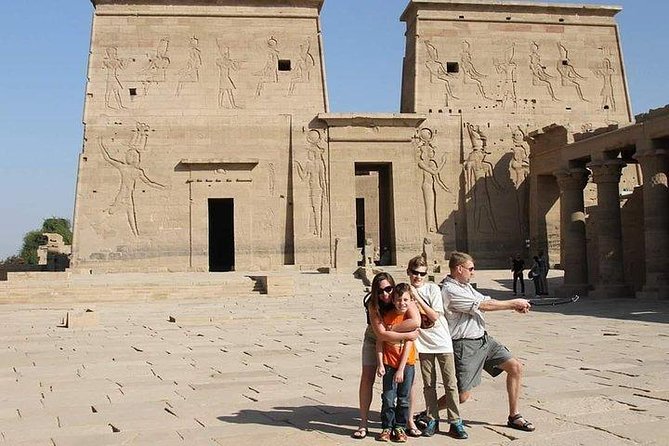
Philae is one of Egypt’s most graceful settings. The temple complex sits on an island in the Nile, reached by a short motorboat ride. That crossing is part of the pleasure. You leave the road behind, watch the water and islands pass, and approach the sanctuary in a way that feels more memorable than arriving at a parking area.
The temple is dedicated mainly to Isis, whose story is closely tied to Osiris and the continuation of life. Shrines and sanctuaries across the site reflect that group of beliefs. Your guide leads a walking visit, explains the major carvings and buildings, then gives you free time to look around independently.
Philae’s current location is not its original one. When the High Dam caused Nile waters to rise, the complex was carefully dismantled and moved about 500 meters to its present island. The buildings were cut into sections, lifted, and rebuilt. That rescue effort gives the visit a second layer: you are not only seeing an ancient religious center, but also a major modern preservation project.
Allow about two hours here. Wear comfortable shoes, carry water, and protect yourself from the sun. Admission is not included, and the boat ride is part of the arranged visit, so it is sensible to ask exactly which boat charges are covered before setting out.
Aswan High Dam and Lake Nasser
The High Dam is a sharp change of subject after Philae. Built from 1960 to 1970, it took a decade to complete and created Lake Nasser, described for this experience as the world’s second-largest artificial lake.
You will have about an hour to see the dam, the lake, and the friendship emblem. This is not a long museum visit or a technical tour. It is a stop for scale and perspective. The dam altered agriculture, electricity production, and the Nile itself, while also forcing the relocation of major ancient monuments.
The connection between this stop and Philae is what makes it useful. At the temple, you see what was saved. At the dam, you see the project that made the rescue necessary. Admission is listed separately, so bring money for site charges.
A few more Aswan outings to price up
- 4-Day 3-Night Nile Cruise from Aswan to Luxor including Abu Simbel, Air Balloon
★ 4.5 · 612 reviews - From Aswan: 3-Day Cruise to Luxor with Hot Air Balloon
★ 4.3 · 598 reviews - From Aswan: 4-Day Nile Cruise from Aswan to Luxor with Guide
★ 4.1 · 593 reviews - 4-Days Nile Cruise From Aswan To Luxor including Abu Simbel and Hot Air Balloon
★ 4.5 · 509 reviews
A boat ride to the Nubian village
The Nubian village visit is the most personal part of day one. You reach it by Nile boat, passing islands and enjoying the river from water level. The ride helps you slow down after the formal monument visits.
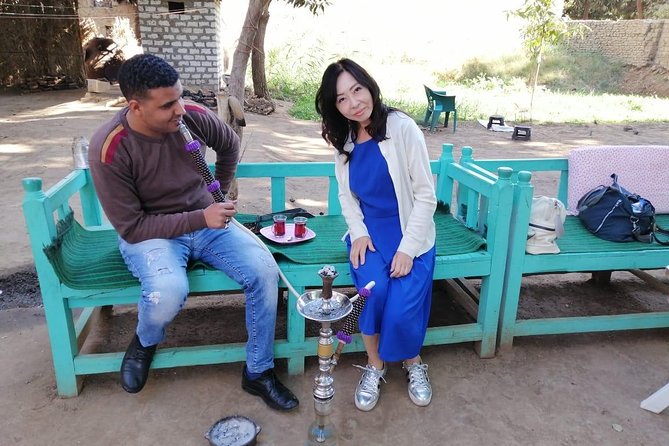
The village is known for brightly painted homes, simple but comfortable living conditions, Nubian handicrafts, aromatic herbs, and souvenir shops. You may enter a Nubian house, take photographs with crocodiles, and speak with local people through your guide. Khaled has helped with translation so visitors could conduct a meaningful conversation with a Nubian family, which is far more useful than simply walking through and buying a souvenir.
This stop lasts about two hours. I would treat it with respect and curiosity. Ask before taking close-up photographs, listen when people explain their homes or traditions, and remember that the village is a living community rather than an open-air museum.
The village can also be the most commercial stop, with handicrafts, herbs, and other items offered for sale. That does not make it inauthentic, but you should expect shopping opportunities. If you want a quieter visit, tell your guide before arriving.
Day two: the long road to Abu Simbel
Abu Simbel is the trip’s biggest logistical challenge and one of its greatest rewards. Pickup is scheduled for approximately 4:00 to 4:15 in the morning, followed by an escorted convoy departing Aswan at about 5:00. The total outing lasts around 11 hours, with close to three hours of driving in each direction and roughly two hours at the temples.
That timetable is not gentle. You will spend much of the day in the vehicle, and the early departure can be difficult after a full first day. But the road journey is the price of reaching one of Egypt’s most important monuments from Aswan in a single day.
Ramses II and Nefertari at Abu Simbel
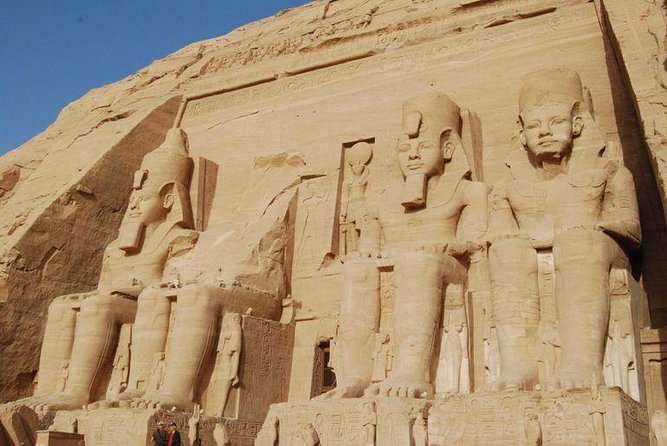
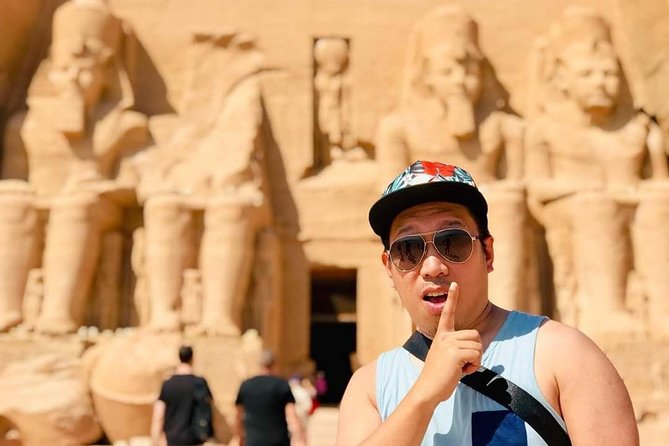
The Abu Simbel complex contains the great temple of Ramses II and the smaller temple associated with Queen Nefertari. The scale is immediate, but the story behind the site is just as important as the facades.
When Lake Nasser was created, rising water threatened to submerge Abu Simbel. The temples were cut into large sections, dismantled, lifted, and reassembled at a higher location. That rescue echoes the story of Philae, but here the size of the monuments makes the engineering achievement even harder to imagine.
Your Egyptologist should explain the statues, temple purpose, royal imagery, and the relocation project before giving you free time. Two hours at the complex is enough for a focused visit, but it is not generous if you want to inspect every carving at leisure or spend time photographing every angle.
The rising-sun arrival is one of the smart features of the schedule. Early light can make the temples especially dramatic, and you reach the site before the hottest part of the day. Bring breakfast or snacks if your hotel can provide them, since meals are not included. Carry water, wear a hat, and use the drive time to rest.
Admission is extra. Confirm the day’s departure arrangements carefully because the convoy schedule controls the whole excursion. The private vehicle does not mean you can leave whenever you wish.
Day three: Luxor’s West Bank and East Bank
Day three shifts from Aswan to Luxor by first-class train. The ticket is included, which is a practical benefit. You avoid the uncertainty of buying a long-distance ticket at the last moment, and you can arrive in Luxor ready for a concentrated day of sightseeing.
The schedule includes the West Bank in the morning or early part of the day, followed by Karnak and Luxor Temple on the East Bank. The pace is brisk. You will see the headline sights, but you will not have the slow, unplanned feel of a multi-night stay in Luxor.
Valley of the Kings
The Valley of the Kings was the burial ground for the rulers of ancient Thebes. You begin with a short stop at the visitors center, then enter the valley and choose the tombs available under the admission arrangement.
Your guide can explain the beliefs, symbols, and decoration outside the tombs, but guides are not permitted inside. That matters because the interior visit becomes partly self-guided. Look closely at the painted walls, ceilings, and burial scenes, and use the explanation you received outside to understand what you are seeing.
The tomb of King Tutankhamun costs extra and is paid directly. If seeing it is important to you, ask about the additional fee and available access before you arrive. The valley is hot, exposed, and uneven in places, so a moderate level of fitness is expected.
Temple of Hatshepsut
Hatshepsut’s temple is one of Luxor’s most distinctive monuments. Its broad terraces and strong lines rise against the desert cliffs, creating a setting unlike the enclosed temple complexes elsewhere in the itinerary.
Your guide introduces Hatshepsut’s route to power and the way she presented herself as a male ruler. After that, you have time to walk through the courtyards and study the hieroglyphic decoration.
The visit lasts about an hour. That is enough to understand the major story and take in the terraces, but you may want more time if you enjoy inscriptions and reliefs. The site is exposed, so bring sun protection and water. Admission is not included.
Colossi of Memnon
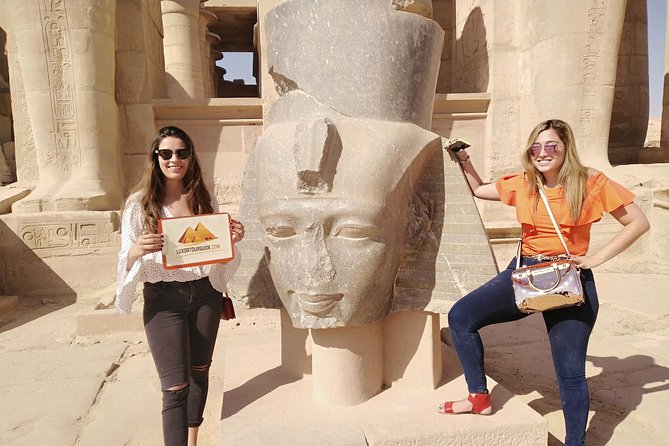
The Colossi of Memnon is a brief stop, just 15 minutes, and admission is included. Two huge statues are all that remain of the funerary temple of Amenhotep III.
This is a quick photo and orientation stop rather than a full exploration. The statues help you picture the scale of a complex that has largely disappeared. Since the stop is short, listen to the explanation first, then use your remaining minutes for photographs.
Karnak Temple
Karnak is the day’s largest temple visit, with about 90 minutes planned. Your route begins along the Avenue of Sphinxes, then continues through the complex as your guide explains how successive pharaohs expanded it over many centuries.
The Great Hypostyle Hall is the showpiece. Its 134 columns rise like a stone forest, and the scale can be hard to grasp from photographs. You also pass through the Great Court and reach the sacred lake, where ancient rituals of purification took place.
Karnak rewards context. Without a guide, it can feel like an enormous collection of columns, pylons, statues, and broken walls. With a good Egyptologist, you can connect the parts to the rulers who added them and understand how the complex grew over more than 3,000 years.
You receive free time after the guided portion. Use it for details, photographs, or a slower look at the hall. Admission is extra, and the site involves a lot of walking. The order of the day may leave you tired by this point, so pace yourself early.
Luxor Temple at day’s end
Luxor Temple is smaller and more concentrated than Karnak, but it has its own appeal. A section of the Avenue of Sphinxes once connected the two temples, and the entrance is dominated by statues of Ramses II.
Inside, columns and walls carry detailed hieroglyphic decoration. Your guide can point out how different rulers shaped the building, including Alexander the Great’s connection to the site. You also see one of the original pair of obelisks. The other now stands in Paris at the Place de la Concorde.
This final visit lasts about an hour. It is a fitting finish because Luxor Temple brings together royal power, religious ceremony, later reuse, and the long survival of an ancient monument through floods and invasions. Afterward, you return to your hotel on Luxor’s East Bank.
What the $300 price really covers
At $300 per person, the package offers good value if you want private transport and a guide across three destinations. The included first-class train ticket is useful, as are the drivers, fuel, parking, air-conditioned vehicles, hotel pickup, and drop-off.
The price does not cover the parts that can add up quickly:
- Entrance fees at nearly all sites
- Accommodation
- Meals and drinks
- Personal expenses
- Laundry
- Gratuities
- King Tutankhamun’s tomb, if you choose to enter
That structure gives you control. You can choose your hotel and avoid paying for meals you do not want. But you need to calculate the real trip cost before booking. Carry enough Egyptian currency or confirm accepted payment methods for admission fees, and keep a separate tip budget for the driver and guide.
The package is best value for two or more people sharing the private arrangement. Solo visitors may still appreciate the convenience, but the per-person price feels heavier once admissions, lodging, food, and tips are added.
Comfort, pace, and who should book
You need a moderate level of physical fitness. Expect walking across temple grounds, standing in the sun, moving through tomb areas, boarding a boat, and spending many hours on the road to Abu Simbel.
This route suits you if you have limited time, want the major southern sites, and prefer a private guide to independent transport. It is also a good fit if safety and coordination matter to you. Several comments praise the careful organization, clear communication, air-conditioning, and sense of being looked after.
It is less suitable if you want slow mornings, long museum visits, or time to wander Luxor without a schedule. Abu Simbel is especially demanding. The reward is major, but the day is mostly road, monument, and road again.
The semi-independent setup deserves careful thought. Your accommodation is booked separately, and the tour ends at your hotel in Luxor. That gives you flexibility, but you must make sure your lodging plans match the train and sightseeing schedule.
Practical advice before you go
Confirm the exact pickup time for each day. The general start time is listed as 6:00 in the morning, but Abu Simbel pickup is approximately 4:00 to 4:15, with the convoy leaving around 5:00.
Ask who will guide you at Abu Simbel. Most of the experience depends on the Egyptologist’s explanations, and one account specifically raised concern about the lack of a visible guide there.
Bring water, sun protection, comfortable walking shoes, and a phone charger. Keep small cash available for admissions, drinks, tips, and purchases in the Nubian village.
Give your guide clear preferences. If you want more time for photography, less shopping, or a slower explanation at one temple, the private format gives you a better chance of adjusting the day than a large group tour.
Free cancellation is available up to 24 hours before the local start time. Changes made within 24 hours are not accepted, and poor weather may lead to a new date or a full refund.
Should you book this Aswan to Luxor tour?

I would book it if you want the strongest collection of Aswan, Abu Simbel, and Luxor sights in only three days, and you value a private car, an Egyptologist, and arranged rail travel. The Nubian village and the first-class train make it more than a simple temple checklist.
I would skip it if you dislike early starts, long drives, or extra entrance fees. For the right person, the schedule is intense but sensible. Go in knowing that Abu Simbel is a full-day effort, budget beyond $300, and confirm the guiding arrangements before paying. Then this can be a very efficient way to see southern Egypt without giving up your own hotel choices or a measure of independence.
FAQ
How long is the experience?
The tour lasts approximately three days.
Is the tour private?
Yes. Only your group participates in the private tour or activity.
Is hotel pickup and drop-off included?
Yes. Hotel pickup, drop-off, and transport by air-conditioned vehicle are included.
Is accommodation included?
No. Accommodation is not included, though it can be arranged by request.
Is the first-class train ticket from Aswan to Luxor included?
Yes. A first-class seating train ticket from Aswan to Luxor is included.
Are entrance fees included?
No. Entrance fees to the sites are not included. The exception listed in the program is the Colossi of Memnon, where admission is included.
What time does the Abu Simbel day begin?
Pickup is approximately 4:00 to 4:15 in the morning, with the escorted convoy departing Aswan around 5:00.
Newly listed around Aswan
- Sailing Nile Cruise from Aswan to Luxor for 2 Nights★ 4.5 · 139 reviews
- Philae Temple and Aswan High-Dam Half-day tour★ 5.0 · 49 reviews
- Private Tour in Aswan : Felucca and Nubian village★ 5.0 · 29 reviews
- Abu Simbel Private Full-Day Tour from Aswan★ 5.0 · 114 reviews
- (3-Nights Cruise From Aswan To Luxor & Balloon, Abu Simbel)★ 4.5 · 23 reviews
- Day Tour to Abu Simbel from Aswan by Bus★ 4.5 · 25 reviews
- 4-Days Aswan sails Nile Cruise Luxor &Abu Simbel.Hot air Balloon★ 4.5 · 77 reviews
- 3-Nights Cruise From Aswan To Luxor, Hot Air Balloon,Abu Simbel★ 4.5 · 46 reviews
Abu Simbel Tours, compared.
4-Days Nile Cruise From Aswan To Luxor including Abu Simbel and Hot Air Balloon
Read our review →

4-Day 3-Night Nile Cruise from Aswan to Luxor&Abu Simbel+Balloon
Read our review →
4-Day 3-Night Nile Cruise from Aswan to Luxor including Abu Simbel, Air Balloon
Read our review →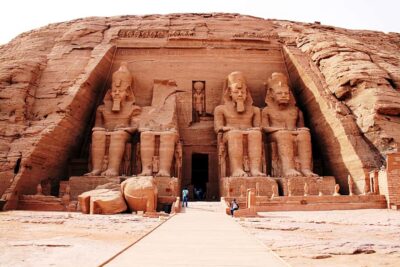
Abu Simbel Temple Private Guided Day Trip with Lunch
Read our review →4-Days Nile Cruise From Aswan To Luxor including Abu Simbel and Hot Air Balloon
Read our review →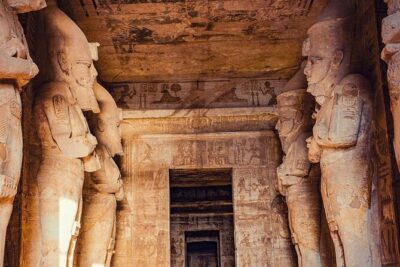
Private Day Tour to Abu Simbel Temples from Aswan
Read our review →4 Days Nile Cruise from Aswan to Luxor including Abu Simbel and Hot Air Balloon
Read our review →Browse the lists this tour appears in