
Reviewed · ABU SIMBEL TOURS
10 Day Egypt Wonders of the Pharaohs Cairo & Alexandria & The Nile & Abu Simbel
Egypt rewards a well-planned route. This 10-day package links the country’s essential ancient sites with a four-night Nile cruise, domestic flights, airport transfers, and five-star accommodation. I like that you see both the famous monuments and less obvious stops such as Saqqara, Memphis, Philae, and Alexandria.
I also like the small operating scale. The maximum group size is listed as two people, so you get the convenience of a planned tour without being lost in a large bus group. The main consideration is pace: Cairo, Luxor, Aswan, Abu Simbel, and Alexandria make for a full schedule, and the long Alexandria and Abu Simbel days require stamina.
In This Review
- Key Points Before You Book
- What This Egypt Package Really Covers
- Day 1: A Simple Cairo Arrival
- Day 2: Giza, Saqqara, and the Old Capital
- Day 3: Tutankhamun, Cairo’s Citadel, and Khan el-Khalili
- Day 4: Luxor Temple and Karnak
- Day 5: Royal Tombs on Luxor’s West Bank
- Days 6 and 7: Edfu, Kom Ombo, Aswan, and Abu Simbel
- Day 8: Returning to Cairo
- Day 9: Alexandria’s Greco-Roman Side
- Day 10: Airport Transfer and Departure
- Is $2,850 a Good Value?
- Who Will Enjoy This Tour Most?
- Should You Book the Egypt Pharaohs Adventure?
- FAQ
- How long is the Egypt Wonders of the Pharaohs tour?
- What cities and sites are included?
- How many nights are spent on the Nile cruise?
- Are domestic flights included?
- Are hotel stays included?
- Is Abu Simbel included?
- How large is the tour group?
- Are tips included in the price?
Key Points Before You Book
- The Giza Plateau gets a proper visit: You have about three hours for the pyramids and Sphinx, with admission included.
- Saqqara and Memphis add essential context: The Step Pyramid and the colossal statue of Ramses II show how Egyptian building styles developed.
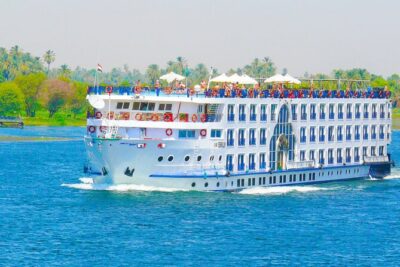
- The Nile cruise is the trip’s backbone: Four nights on a luxury cruise include full board and visits to Luxor, Edfu, Kom Ombo, and Aswan.
- Abu Simbel is a major but demanding day: The temple visit takes about seven hours, making it one of the longest outings.
- Alexandria is handled as a long day trip: You see Pompey’s Pillar, the Catacombs, Qaitbay Citadel, and the Bibliotheca Alexandrina before returning to Cairo.
- The price covers much of the hard work: At $2,850 per person, the package includes hotels, flights, meals, guides, tickets, and private transfers.
What This Egypt Package Really Covers
This is not a slow, stay-in-one-city holiday. It is a broad first visit to Egypt, built around the country’s biggest archaeological sites. You start and finish in Cairo, fly south to Luxor, cruise toward Aswan, fly back north, and make Alexandria a final full-day excursion.
The package includes five nights in a five-star Cairo hotel, although the tour description also refers to four Cairo nights. That difference should be clarified before you pay. The Nile portion is listed consistently as four nights aboard a luxury cruise with full board.
You also receive breakfast on nine days, seven lunches, and four dinners. A qualified Egyptologist guide, activities, admission tickets, and round-trip private transfers are included. Guide and driver tips are not included, so plan for that extra cost.
The maximum group size of two is a real advantage. In practice, this gives you a private-tour feel, along with a guide who can adjust explanations and timing more easily than a large group tour. The tradeoff is that the itinerary is fixed enough to cover many sites in only 10 days.
More Abu Simbel trips from Aswan:
- Egypt 8 nights:Cairo,Luxor,Aswan,Abu Simbel,Nile cruise,Balloon
★ 4.5 · 227 reviews - Our Exceptional 5 days Cairo, Luxor and Abu Simbel Tour Package
★ 5.0 · 212 reviews - From Cairo: 2-Day Abu Simbel & Luxor Tour
★ 3.9 · 136 reviews
Day 1: A Simple Cairo Arrival
The first day is deliberately light. You are picked up and transferred to your hotel, giving you time to recover from the journey and get settled.
That may sound uneventful, but arrival help matters in Cairo. Having someone meet you and handle the transfer removes one of the most tiring tasks after a long flight. Several guides and airport representatives have been praised for making arrivals and airport changes easier, with names including Tarek and Walid.
Do not expect sightseeing on this day. Treat it as an arrival buffer, especially if your flight lands late or you are adjusting to Egypt’s heat and busy city streets.
Day 2: Giza, Saqqara, and the Old Capital
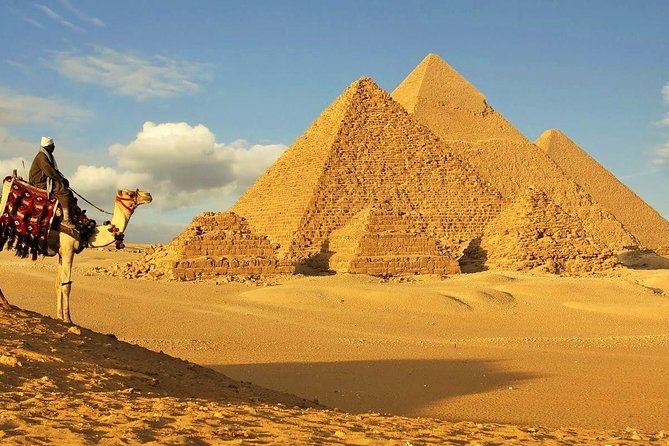
Your first major sightseeing day begins at the Giza Plateau. You have roughly three hours for the Great Pyramids and the Sphinx, with admission included.
The pyramids are famous for good reason, but the scale is still startling. The Great Pyramid was the largest of the three and is the only surviving monument from the ancient Seven Wonders. Give yourself time to look beyond the standard photograph. The stones, the wide desert setting, and the relationship between the pyramids and modern Cairo are all part of the experience.
The Sphinx is nearby, so you can connect the royal tombs with the guardian figure carved from the rock. Your guide should help you understand what you are seeing rather than leaving you with a quick photo stop.
The three-hour block sounds generous, but it can pass quickly. If entering a pyramid matters to you, ask your guide about the available ticket arrangements and physical demands. The tour data confirms admission to the site, but it does not specify every optional interior ticket.
From Giza, you continue to Saqqara, home of the Step Pyramid of Djoser. Built for the Third Dynasty ruler Djoser and linked to the architect Imhotep, it is an important stage in the development of pyramid construction. The six rising levels show how earlier mastaba tomb forms were built upward into a pyramid shape.
You have about three hours at Saqqara. That is valuable because this area is not just one monument. Tombs, courtyards, and changing views of the pyramid help explain how Egyptian funerary architecture evolved.
The day ends at Memphis, the ancient capital of Lower Egypt. The modern remains are limited, but the colossal statue of Ramses II and the alabaster Sphinx of Hatshepsut give the stop real weight. Memphis works best when your guide connects its political importance to the monuments you have already seen.
This is a full day of monuments under the sun. Wear shoes suited to uneven ground, carry water, and expect dust. The reward is a clearer picture of ancient Egypt than you get from visiting Giza alone.
Day 3: Tutankhamun, Cairo’s Citadel, and Khan el-Khalili
The Egyptian Museum receives about three hours. Its collection contains around 120,000 ancient Egyptian objects, though only part of the holdings is on display.
You cannot see everything in one visit, so a guide is particularly useful here. Ask for a clear route through the highlights rather than trying to absorb every case. The treasures connected with King Tutankhamun are a major draw, but the museum’s value also comes from seeing how ordinary objects, statues, burial goods, and royal pieces fit together.
After the museum, you visit Khan el-Khalili, Cairo’s major souk in the historic center of Islamic Cairo. The scheduled time is one hour. That is enough for a first look, some shopping, and a short walk, but not enough for a leisurely exploration of every lane.
This is the place to slow down a little. You will find shops aimed at visitors, but the market remains an active part of Cairo life. If you want spices or food suggestions, say so. A guide named Mo Salah has been praised for introducing people to local food and even helping them choose spices to take home.
The final stop is the Citadel of Saladin and the Mosque of Muhammad Ali. Allow about two hours. The mosque’s Ottoman design, broad courtyard, and high position provide a change from the ancient sites. From the Citadel, you also get a useful view across Cairo.
The schedule works because each stop feels different. The museum is indoor and object-focused, the bazaar is social and commercial, and the Citadel offers architecture and city views. Still, Cairo traffic can make the day feel longer than the sightseeing times suggest.
A few more Cairo outings to price up
- Cairo: Pyramids & Great Sphinx Private Tour with Camel Ride
★ 4.9 · 6,335 reviews - Tour to Giza Pyramids and The Egyptian Museum
★ 5.0 · 6,016 reviews - VIP All inclusive Best of the best Giza Pyramids,Sakkara,Memphis
★ 5.0 · 3,164 reviews - From Cairo: Pyramids of Giza, Sphinx, Saqqara & Memphis Tour
★ 4.7 · 3,110 reviews
Day 4: Luxor Temple and Karnak
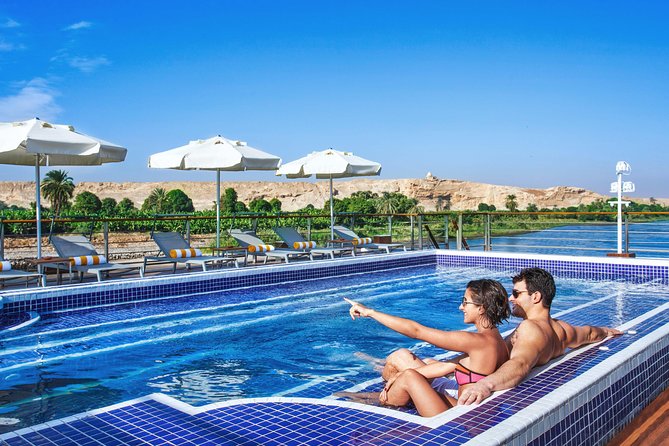
A domestic flight takes you from Cairo to Luxor, beginning the Nile portion of the trip. The exact flight timing is not provided, so confirm how much free time you have before the evening sightseeing.
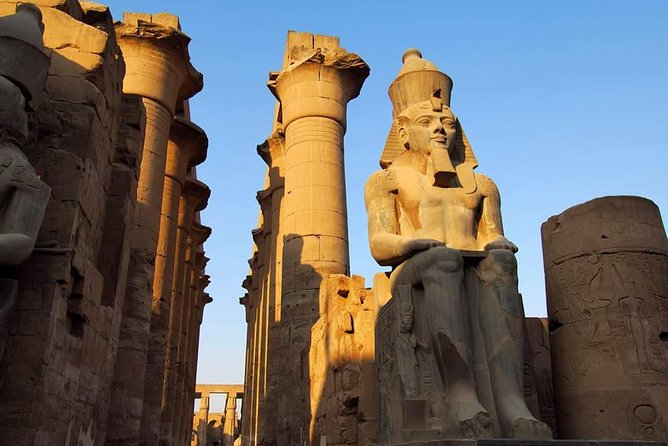
Luxor Temple is an excellent introduction to the city. Built around 1400 BCE, it was known in ancient Egyptian as the southern sanctuary. Its columns, statues, and ceremonial scale make more sense after the earlier Cairo sites, because you can now see how temples served a different purpose from pyramids and tombs.
You have about one hour at Luxor Temple. The shorter visit is enough to see the principal areas, though an evening visit would offer a different mood if the schedule permits.
Karnak receives about two hours. This huge complex was dedicated mainly to Amun and grew over many centuries. Its columns and courtyards can feel almost too large to take in at once. Listen closely to the guide’s explanation of how different rulers added to the site, otherwise Karnak risks becoming a procession of enormous stones.
I like the pairing of Luxor Temple and Karnak because they show two sides of ancient Thebes. One feels more compact and urban, while Karnak spreads across a much larger ceremonial area. You should expect heat, long walks, and plenty of standing.
Day 5: Royal Tombs on Luxor’s West Bank
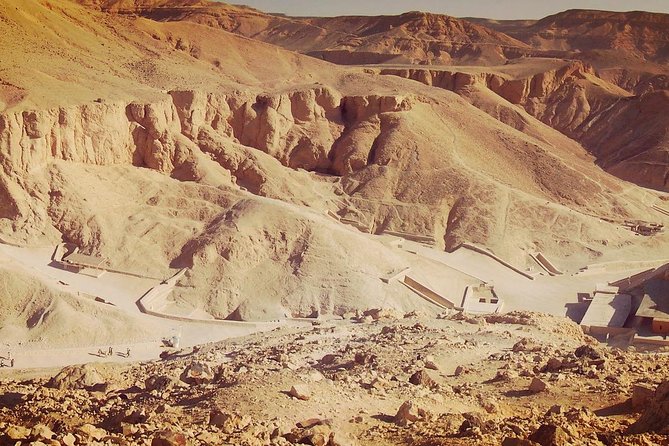
The West Bank is one of the strongest days in the program. The Valley of the Kings was the burial ground for many New Kingdom pharaohs, including Tutankhamun and Ramses IV.
A standard ticket allows entry to three of the 63 tombs, except Tutankhamun’s tomb. Tutankhamun’s tomb requires separate attention, so ask your guide whether its additional ticket is available and worth adding for you.
The tomb interiors are the real prize. Painted walls, narrow passages, and underground chambers show a more intimate side of Egyptian art than the giant monuments. Photography conditions and access rules can change, so follow the site instructions and ask before taking pictures.
The Valley gets about three hours, which gives you time for several tombs without making the morning endless. The ground can be uneven, and some passages are steep or confined. If you dislike tight spaces, tell your guide before choosing which tombs to enter.
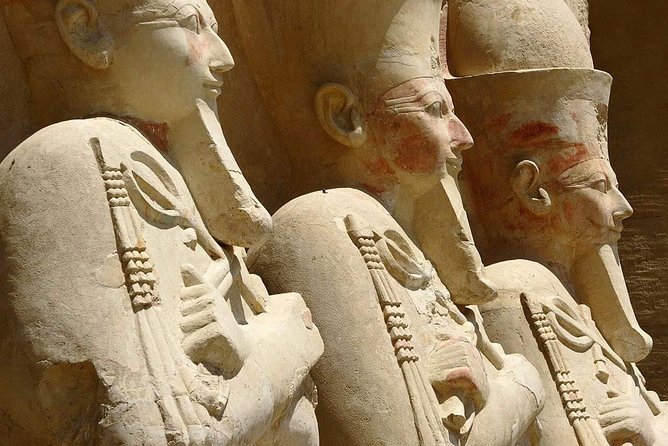
Next comes the Temple of Hatshepsut, scheduled for about one hour. The terraces rise dramatically against the cliffs, and the site introduces one of ancient Egypt’s most notable female rulers. Hatshepsut presented herself as a male king in official imagery, and her successor later removed many references to her rule.
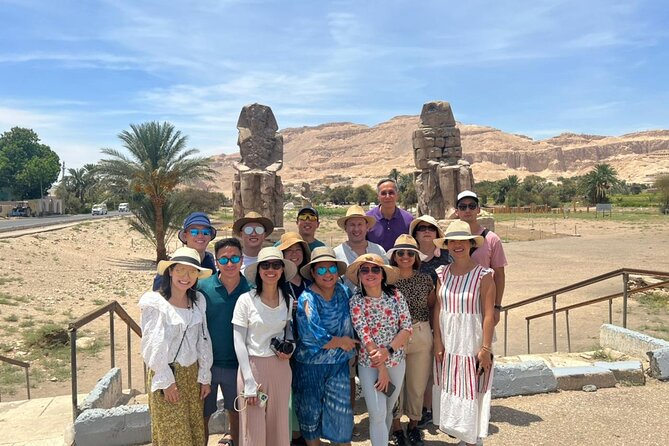
The Colossi of Memnon are a brief stop rather than a long visit. These two enormous statues of Amenhotep III have stood on the West Bank for about 3,400 years. They are easy to photograph and help you picture the scale of the ancient Theban necropolis.
Days 6 and 7: Edfu, Kom Ombo, Aswan, and Abu Simbel
The cruise becomes the central experience as the ship moves south. At Kom Ombo, you visit a rare double temple from the Ptolemaic period, built between 180 and 47 BCE. One side honored Sobek, the crocodile god, while the other was dedicated to Horus.
You have about two hours here. The divided plan gives the temple a clear visual identity, and the site feels different from the older temples in Luxor.
At Edfu, the Temple of Horus receives about three hours. Built between 237 and 57 BCE, it is one of Egypt’s best-preserved ancient monuments. Desert sand helped protect it after pagan worship was banned, and its intact roof gives the interior a powerful sense of enclosure.
The cruise also gives you something the road-based parts cannot: changing river views and a few quieter hours between monuments. Meals are included onboard, and a traditional Galabeya party offers a more social evening. You can dress up and join in, or simply watch from the side.
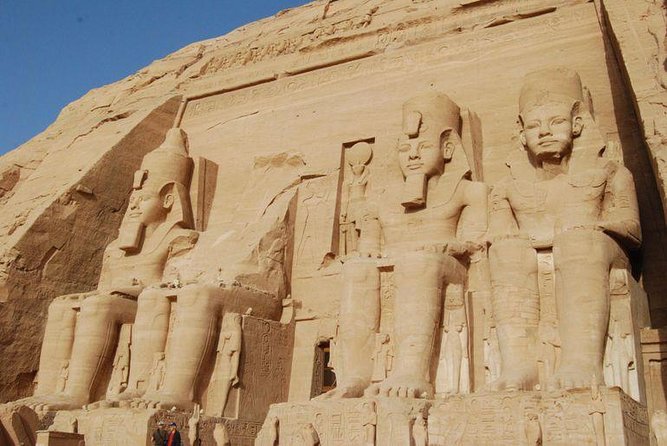
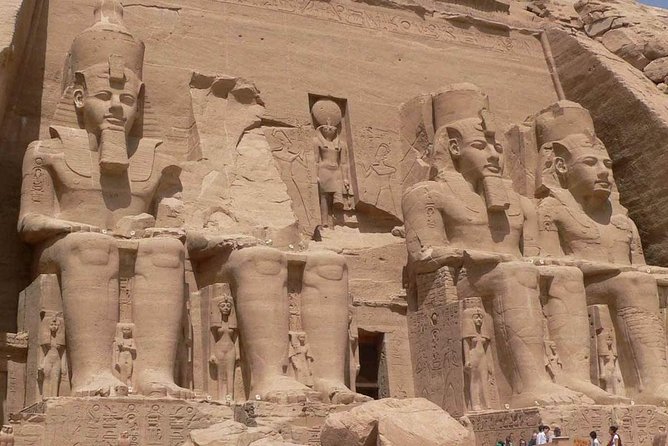
Abu Simbel is the biggest outing from Aswan. The two temples were cut into rock near the Sudanese border, beside Lake Nasser, about 230 kilometers southwest of Aswan. The excursion takes around seven hours, so this is not a casual add-on.
The temples are worth the effort for many people. Their scale, carved facades, and location make them unlike the sites closer to Luxor. You should also be honest about the cost in energy. A seven-hour day after several early starts may be tiring, especially in hot weather.
Philae follows with a two-hour visit. You cross the Nile by motorboat to Agilika Island, where the temples dedicated to Isis were rebuilt block by block after the Aswan High Dam threatened the original site. The rescue project explains why the setting feels planned yet ancient at the same time.
Philae is one of the most atmospheric stops in the program. Its island location and layered Pharaonic, Greek, Roman, and Byzantine additions reward a slower walk.
Day 8: Returning to Cairo
After breakfast, you check out of the cruise and fly from Aswan back to Cairo. A transfer takes you to your hotel, leaving the rest of the day for rest.
This is a useful pause after Abu Simbel and the cruise. The package does not promise a major sightseeing stop, so do not count on having another full Cairo tour built into the day.
Day 9: Alexandria’s Greco-Roman Side
Alexandria is a long day trip of about nine hours. The route includes Pompey’s Pillar, the Catacombs, Qaitbay Citadel, and the Bibliotheca Alexandrina, with lunch at a local restaurant.
Pompey’s Pillar was built in honor of Emperor Diocletian at the end of the fourth century. It once belonged to the Serapeum, a major temple complex. The monument helps shift your understanding of Egypt beyond pharaohs and into its later Greek and Roman periods.
The Catacombs are among the largest Roman cemeteries in Egypt, cut into three underground levels. This stop is very different from the royal tombs near Luxor. The setting is more enclosed, and you should be comfortable with stairs and underground spaces.
Qaitbay Citadel was built on the site associated with Alexandria’s ancient lighthouse. Its waterfront position gives the day a change of pace after the underground catacombs.
The Bibliotheca Alexandrina provides a modern counterpoint to the ancient sites. Together, these stops show Alexandria as a city shaped by Egyptian, Greek, Roman, and modern influences.
Nine hours is a serious commitment, especially with the drive back to Cairo. I would choose this day if Alexandria is important to you. If you prefer a slower holiday, it is the first outing I would question.
Day 10: Airport Transfer and Departure
The final day is arranged around your flight details. You are escorted to the airport for departure.
Because the tour includes airport transfers at the beginning and end, you do not have to arrange transport across Cairo yourself. Confirm the pickup time with the tour manager, particularly if your flight is early.
Is $2,850 a Good Value?
At $2,850 per person, the package is not a budget tour, but it covers a great deal. You receive Cairo hotel nights, four nights on a luxury Nile cruise, domestic flights from Cairo to Luxor, Aswan to Cairo, meals, entrance tickets, a guide, and private transfers.
Booking those pieces separately would take time and would require careful coordination between flights, cruise dates, hotel nights, and local transport. The value here is less about finding the lowest possible fare and more about having one company manage the moving parts.
The five-star labels deserve a practical reading. Hotel and cruise standards can vary, and the exact properties are not named in the supplied details. Ask for the hotel names, cruise name, cabin category, and the reason for the four-night versus five-night Cairo difference before booking.
The tour is booked on average about 90 days ahead, which suggests planning early is sensible. A full refund is available if you cancel at least six full days before the start time. Cancellations two to six days ahead receive 50 percent, while cancellations under two days are nonrefundable.
Who Will Enjoy This Tour Most?
I would recommend it to a first-time Egypt visitor who wants the major sights without handling every transfer, ticket, and domestic flight alone. It also suits couples or friends who value a very small group and prefer an Egyptologist guide at each main stage.
You should be comfortable with early starts, heat, uneven ground, long drives, and a packed sightseeing calendar. The Abu Simbel and Alexandria days are especially demanding.
This is less suitable if you want long stretches of free time, a relaxed pace, or the freedom to change each day. It is also worth asking about the physical demands if you have difficulty with stairs, confined tombs, or extended walking.
The strongest guide experiences have included Hannah in Cairo and Remon on the Nile. Other customers have also praised guides such as Mustafa, Anas, and Walid for clear communication, flexibility, and help at airports. Guide quality can vary by assignment, so requesting an experienced Egyptologist is a sensible step.
Should You Book the Egypt Pharaohs Adventure?
Book it if you want a well-covered first visit with the pyramids, major Cairo museums, Luxor’s temples and tombs, a Nile cruise, Aswan, Abu Simbel, and Alexandria all in one organized package.
Think twice if the idea of seven-hour excursions and a nine-hour Alexandria day makes you tired just reading about them. Before paying, confirm the Cairo hotel count, exact accommodation, cruise vessel, flight times, optional Tutankhamun ticket, and tipping expectations.
For the right kind of visitor, this is a strong Egypt overview: ambitious, practical, and packed with monuments that are difficult to arrange independently.
FAQ
How long is the Egypt Wonders of the Pharaohs tour?
The tour lasts approximately 10 days, from airport pickup on Day 1 to the final airport transfer on Day 10.
What cities and sites are included?
The route includes Cairo, Giza, Saqqara, Memphis, Luxor, Edfu, Kom Ombo, Aswan, Abu Simbel, Philae, and Alexandria.
How many nights are spent on the Nile cruise?
The package includes four nights aboard a luxury Nile cruise with full board.
Are domestic flights included?
Yes. Domestic flights from Cairo to Luxor and from Aswan back to Cairo are included.
Are hotel stays included?
Yes. The package includes five nights at a five-star Cairo hotel, although another description refers to four Cairo nights. Confirm the exact number before booking.
Is Abu Simbel included?
Yes. The Abu Simbel Temple Complex is included, with the excursion scheduled for about seven hours.
How large is the tour group?
The maximum group size is listed as two people.
Are tips included in the price?
No. Tips for the guide and drivers are not included.
Newly listed around Cairo
- Full Day Trip from Cairo to Luxor★ 5.0 · 16 reviews
- Private guide’s trip to Giza pyramids, Great sphinx valley temple★ 5.0 · 37 reviews
- Private half Day Tour to the Great 3 Pyramids of Egypt★ 5.0 · 15 reviews
- VIP Tour inside Giza Pyramids★ 4.5 · 103 reviews
- Full-Day Private Tour to Giza Pyramids, Sphinx, Memphis & Saqqara★ 5.0 · 106 reviews
- Unique Tour to The Grand Egyptian Museum and 12 main galleries★ 4.0 · 38 reviews
- Elite Boats Tour in Cairo & Giza with Drinks Included★ 4.5 · 15 reviews
- Sunset & Night Open Air Nile Cruise in Cairo & Giza★ 5.0 · 158 reviews
Abu Simbel Tours, compared.
4-Days Nile Cruise From Aswan To Luxor including Abu Simbel and Hot Air Balloon
Read our review →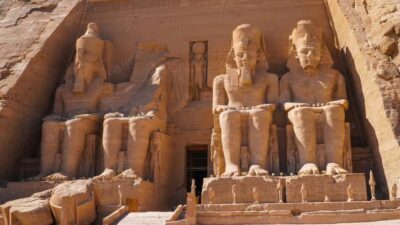

4-Day 3-Night Nile Cruise from Aswan to Luxor&Abu Simbel+Balloon
Read our review →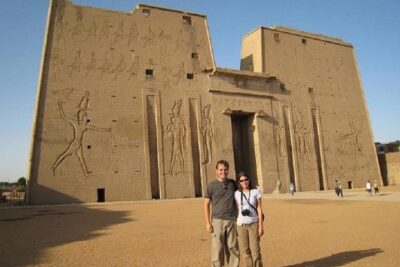
4-Day 3-Night Nile Cruise from Aswan to Luxor including Abu Simbel, Air Balloon
Read our review →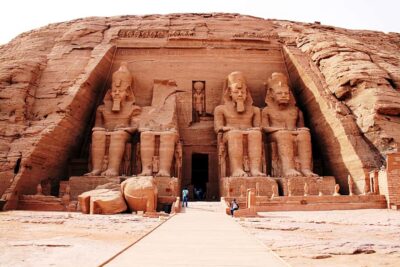
Abu Simbel Temple Private Guided Day Trip with Lunch
Read our review →4-Days Nile Cruise From Aswan To Luxor including Abu Simbel and Hot Air Balloon
Read our review →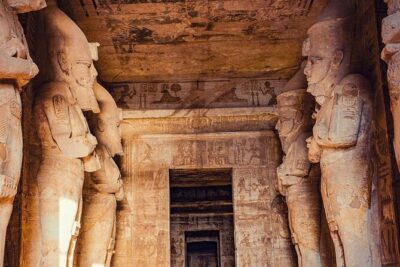
Private Day Tour to Abu Simbel Temples from Aswan
Read our review →4 Days Nile Cruise from Aswan to Luxor including Abu Simbel and Hot Air Balloon
Read our review →Browse the lists this tour appears in