Reviewed · TOURS
Tour to Luxor from Hurghada
Ancient Egypt rewards the early riser. This full-day trip from Hurghada packs Karnak Temple, Hatshepsut’s temple, the Valley of the Kings, lunch by the Nile, and the Colossi of Memnon into one long but memorable day. I like the small-group format, which can make it easier to ask questions and adjust the pace, and I like the strong mix of major sites for a price of $93.06 per person. The catch is the road time: you may spend roughly four and a half hours going each way, so this is a demanding outing rather than a relaxed day trip.
The experience is rated 4 out of 5 from 22 ratings. Guides named Bob, Ali, Mimo, and Nana have been praised for clear explanations, humor, patience, and personal attention. Still, the service has not been perfectly consistent. One booking became a much larger coach trip without advance warning, and another departure was canceled at the last minute, so confirmation and vehicle details matter.
In This Review
- Key points to know before booking
- The long road from Hurghada to Luxor
- Karnak Temple and its forest of columns
- Hatshepsut’s temple at Deir el-Bahari
- Lunch beside the Nile in Luxor
- The Valley of the Kings and the tombs underground
- Colossi of Memnon, a brief final stop
- The missing Luxor Temple question
- Guides, group size, and the value of the price
- Who should book this Luxor trip?
- Should you book it?
- FAQ
- Where does the tour start?
- How long is the excursion?
- What sites are included?
- Is Luxor Temple included?
- Is Tutankhamun’s tomb included?
- Is lunch included?
- How many people are in the group?
Key points to know before booking
- Expect a 5:00 am start: The early pickup helps fit Luxor’s main monuments into a single day.
- Allow about 15 hours: The drive from Hurghada is the biggest part of the schedule.
- Karnak gets 90 minutes: You have time to see the great columns, courtyards, chapels, and sacred lake.
- Tutankhamun’s tomb costs extra: Entry to the Valley of the Kings is included, but the famous tomb is not.
- Luxor Temple is not in the timed itinerary: The description refers to Luxor Temple, but the listed stops do not include a visit inside it.
- The group should be small: The stated maximum is 10 people, though one booking reportedly operated with about 30 passengers.
The long road from Hurghada to Luxor
This tour begins at about 5:00 am with hotel or port pickup. The vehicle is described as an air-conditioned minivan, and transport, fees, and drop-off are included in the price. That matters in Egypt, where arranging the road journey, site entries, lunch, and a guide separately can take time and create extra decisions.
The practical reality is simple: Luxor is not close to Hurghada. One account described about four and a half hours each way, making the drive around nine hours of the day. The total outing is listed at approximately 15 hours. You will likely leave before sunrise and return after a full day on your feet.
I would treat the drive as part of the price you pay for seeing Luxor without changing hotels. The route can also give you a look at everyday life beyond the Red Sea resorts. One highly positive account valued the drive through Luxor itself as an education, not just a transfer between monuments.
The air conditioning is important, especially in warmer months. Bring water, sun protection, and something small to eat for the road. Lunch is included, but drinks at the restaurant are not, and the early departure means you should not assume breakfast will be provided.
There is one point to check before the morning of departure. The stated group limit is 10 people, but a larger coach of around 30 people was used for at least one departure. That added roughly two hours to the road time. Ask the operator to confirm the vehicle and group size before you commit, especially if a compact group is a major reason you are booking.
A few more Cairo outings to price up
- Cairo: Pyramids & Great Sphinx Private Tour with Camel Ride
★ 4.9 · 6,335 reviews - Tour to Giza Pyramids and The Egyptian Museum
★ 5.0 · 6,016 reviews - VIP All inclusive Best of the best Giza Pyramids,Sakkara,Memphis
★ 5.0 · 3,164 reviews
Karnak Temple and its forest of columns
Karnak is the first major stop, with about 90 minutes allotted and admission included. This is a sensible opening to the day because the complex gives you the scale of ancient Thebes before the tour moves to the west bank of the Nile.
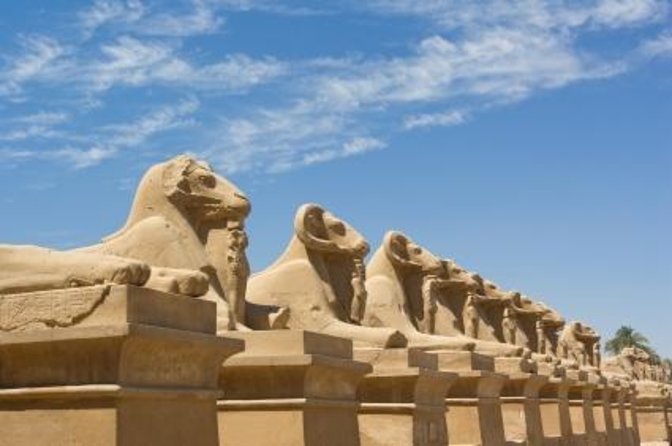
Karnak was built and expanded over many centuries, from about 2200 to 360 BC. Several rulers added temples, chapels, gateways, and monuments. The great temple of Amun is the main draw, but the site is much larger than a single building. You will also see the sacred lake and work connected with rulers such as Hatshepsut, Seti I, Ramses II, and Ramses III.
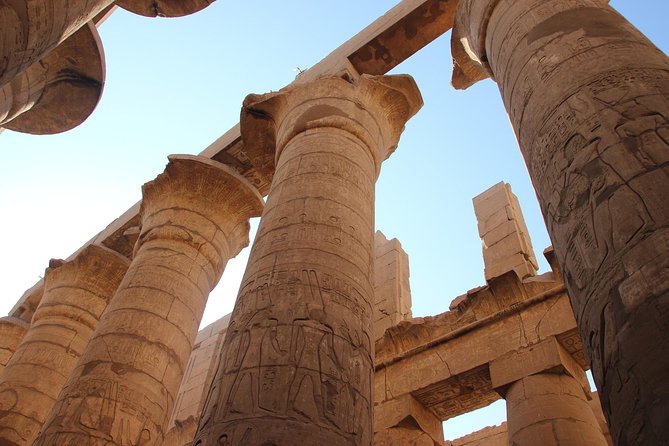
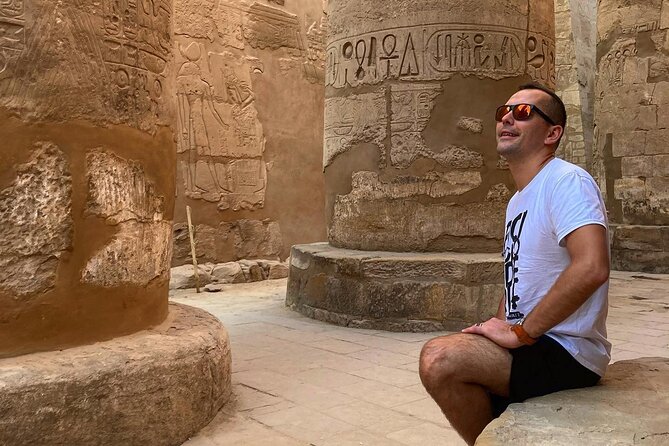
The Great Hypostyle Hall is the visual centerpiece. Its huge columns turn the temple into a stone forest. Your guide can help explain how different pharaohs altered the complex and why the site became such an important religious center.
Ninety minutes is useful but not generous. You can see the principal areas and hear a guided explanation, but you will not examine every wall or wander every corner. The best use of your time is to stay close during the main explanation, then use any free minutes for photographs and a closer look at the carved scenes.
Guide quality makes a noticeable difference here. Some visitors had excellent experiences with Bob, Ali, Mimo, and Nana, while one account described a guide who repeated information and spent too long speaking at each stop. If your guide gives a long explanation, politely signal when you want time to explore on your own.
Hatshepsut’s temple at Deir el-Bahari
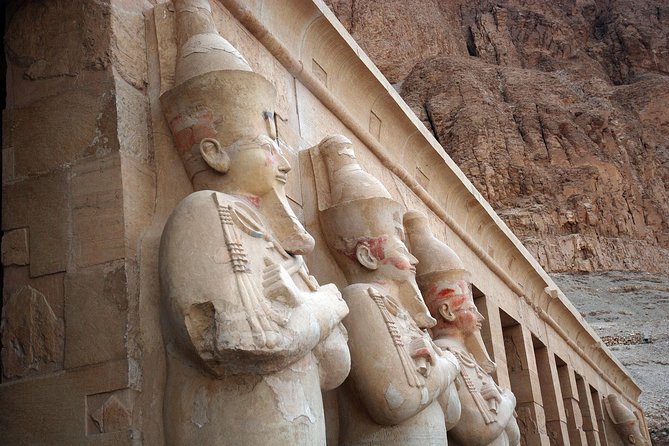
Next comes the Temple of Hatshepsut, also known as Deir el-Bahari. The visit lasts about an hour, with entry included. This is one of the most distinctive monuments in Luxor because it is built into the rock face in a series of three broad terraces.
Hatshepsut ruled Egypt for a long period and remains one of its most remarkable leaders. Her temple was designed by Sennenmut and built during the seventh to twenty-first years of her reign. Its layout differs from the more enclosed temple complexes, giving you long terraces, strong horizontal lines, and a dramatic setting against the cliffs.
The site tells you something about royal image-making. Hatshepsut presented herself as a legitimate pharaoh, not simply a temporary stand-in. Reliefs and architectural choices helped support that claim, and the guide’s explanation can make the monument more meaningful than a quick photo stop.
The one-hour schedule is enough to understand the plan and see the major features. It is not enough for a slow study of every carved scene. The open terraces can also feel hot, so carry water and use the shorter walking intervals wisely.
This stop is especially good for anyone who wants more than famous names and grand statues. Hatshepsut’s story adds political drama to the day, and the temple offers a clear contrast with the vast columned spaces at Karnak.
Lunch beside the Nile in Luxor
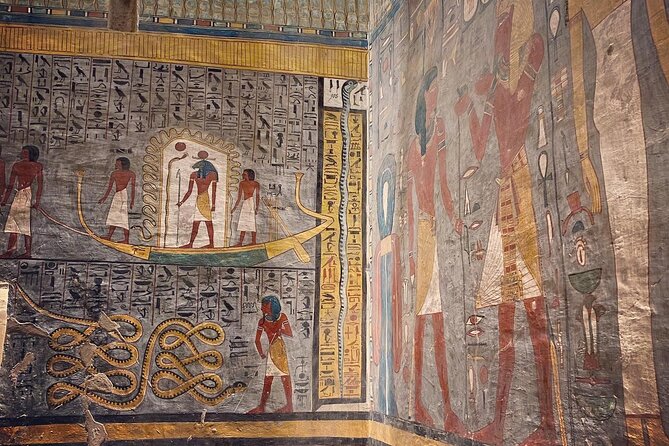
After Hatshepsut’s temple, the group stops at a restaurant by the Nile for a buffet lunch. About 45 minutes is scheduled, and the meal is included. Drinks are extra.
The lunch break is welcome because the morning begins early and both Karnak and Deir el-Bahari require walking in the sun. A buffet also gives you some choice rather than forcing everyone into one fixed meal. One account specifically praised the lunch, while another suggested bringing a packed breakfast because the day starts so early.
Do not expect a long, leisurely meal. Forty-five minutes must cover sitting down, eating, and regrouping. If you want a drink beyond what is included, keep some Egyptian pounds or another accepted payment method handy. The supplied information confirms that restaurant drinks are not part of the tour price.
The Nile setting adds something important to the day. Luxor’s monuments were not built in isolation. The river shaped settlement, farming, transport, religion, and royal power. Even a short meal beside it helps connect the temples and tombs to the living geography of the region.
Some accounts also describe an unplanned short Nile boat ride, with one group visiting a banana plantation and seeing the sunset. That sounds like a pleasant bonus, but it is not part of the guaranteed itinerary. Treat it as extra rather than something to count on.
Same base, a completely different sort of day:
- From Cairo: Pyramids of Giza, Sphinx, Saqqara & Memphis Tour
★ 4.7 · 3,110 reviews - Cairo 8 Hour Private Tour of Pyramids, Egyptian Museum and Bazaar
★ 5.0 · 2,931 reviews - From Cairo: Half-Day Tour to Pyramids of Giza and the Sphinx
★ 4.6 · 2,891 reviews - Cairo: Pyramids, Sakkara & Memphis Tour with Lunch
★ 4.6 · 2,493 reviews
The Valley of the Kings and the tombs underground
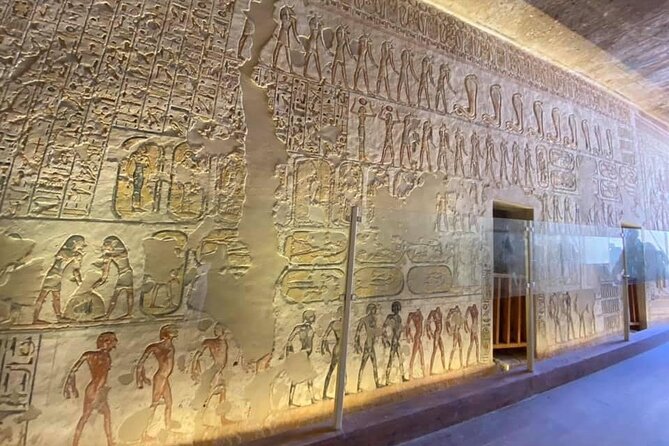
The Valley of the Kings receives about 90 minutes, with admission included. This ancient burial ground contains more than 60 tombs cut into the rock and served as the main royal cemetery for many New Kingdom pharaohs.
The valley was once called Ta Iset Maat, meaning place of truth. Thutmose I of the Eighteenth Dynasty was the first pharaoh buried there. The setting helps explain the choice: instead of building enormous pyramids in open country, rulers placed their tombs in a hidden valley on the west bank.
Inside the tombs, the experience changes completely. The open temples give way to narrow passages, chambers, painted walls, and carefully planned burial spaces. The decoration was not simply ornamental. It helped guide the dead ruler through the afterlife and showed religious texts, gods, and royal scenes.
Your included entry covers the Valley of the Kings, but Tutankhamun’s tomb requires a separate ticket. This is an important detail. Tut’s tomb is famous because of the extraordinary treasure found there, but the chamber itself is relatively small compared with the public attention it receives. If seeing it is a personal priority, budget for the additional entrance fee.
Ninety minutes is a workable amount of time for a guided visit, but it limits how many tombs you can enter and how long you can study each one. The exact tombs available can change, so I would listen to your guide’s advice and avoid spending the entire stop in one place unless that is your main interest.
The heat and walking can be tiring by this stage. Wear practical shoes, bring water, and keep your camera ready for the approach, but follow the rules inside the tombs. The point is not to rush through every possible chamber. It is to understand why the valley mattered and appreciate the painted interiors you do see.
Colossi of Memnon, a brief final stop
The final listed monument is the Colossi of Memnon, with about 20 minutes provided and admission included. These two enormous seated statues once guarded the funerary temple of Amenhotep III on Luxor’s west bank.
The statues are around 3,400 years old. They show the pharaoh seated with his hands on his knees and looking toward the rising sun. Smaller figures of his mother, Queen Mutemwiya, and his wife, Queen Tiy, appear in the lower section.
Twenty minutes is enough for photographs and a short explanation. It is not meant to be a full archaeological visit. The statues work well as a final stop because they are immediately impressive, even after a long day of temples and tombs.
The stop also gives you a final reminder that much of ancient Luxor has been lost, damaged, or altered over time. The Colossi are survivors from a much larger funerary complex. Seeing them after the Valley of the Kings helps round out the story of royal death and commemoration.
The missing Luxor Temple question
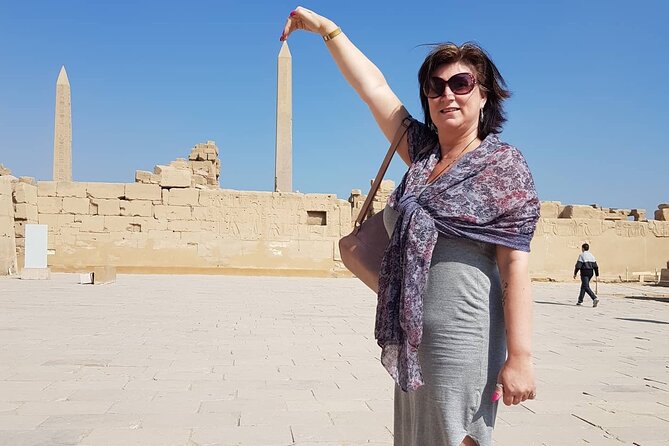
The tour description refers to the imposing kings at Luxor Temple and mentions royal stories at Karnak. But the timed itinerary lists Karnak, Hatshepsut’s temple, lunch, the Valley of the Kings, and the Colossi of Memnon. It does not include a scheduled visit inside Luxor Temple.
That distinction matters because Luxor Temple is one of the city’s major ancient sites. If you specifically want to walk through its entrance and courtyards, ask Egyptio Tours for a clear answer before booking. Do not assume that a mention in the general description guarantees admission or time there.
This is the most important content issue with the experience. The listed route still covers several essential monuments, but it is not a complete tour of every famous Luxor site. A one-day trip from Hurghada has tight limits, and the schedule already contains a lot. Still, you should know exactly what you are buying.
Guides, group size, and the value of the price
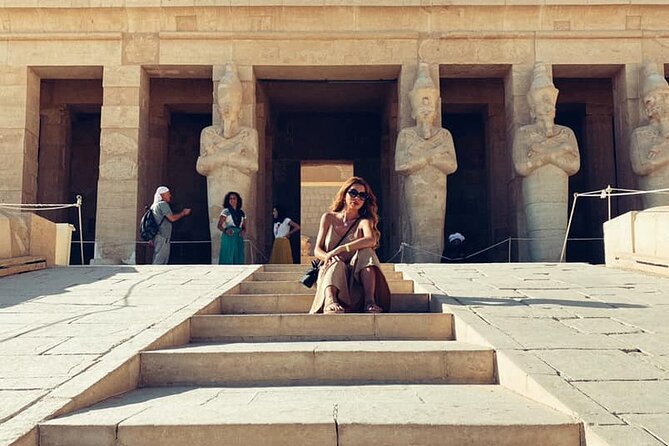
At $93.06 per person, the tour offers solid value if you want transport, entrance fees, a guide, lunch, and hotel or port pickup handled in one booking. The price is particularly reasonable for a full day that includes several of Egypt’s best-known ancient sites.
The guide is central to that value. Bob was praised for making the day enjoyable, while Ali was said to be helpful and flexible with a small group. Mimo was described as informative and funny, and Nana received strong praise for her English and attention. These details suggest that the experience can be much better when the guide explains the monuments clearly without taking over every minute.
There is also a real warning here. One account described a guide whose explanations were repetitive and condescending, leaving too little time to look around. Another departure used a much larger bus than expected. Service can vary, so I would confirm the guide language, vehicle type, and group limit in advance.
The booking information says confirmation arrives within 48 hours, subject to availability. Pickup is offered, and the maximum group size is stated as 10. Most people can participate, but children must be accompanied by an adult. Free cancellation is available up to 24 hours before the start time. Changes or cancellations inside that window are not accepted for a refund.
Who should book this Luxor trip?
I would choose this tour if you are staying in Hurghada and want to see Luxor without arranging a private car, hotel, guide, and site tickets yourself. It suits first-time visitors who value coverage and explanation more than a slow pace.
It is also a good choice for people who enjoy ancient sites but have limited time in Egypt. Karnak, Hatshepsut’s temple, the Valley of the Kings, and the Colossi give you a strong introduction to Luxor’s temples and tombs.
I would hesitate if long road journeys leave you miserable, if you need a quiet schedule, or if Luxor Temple and Tutankhamun’s tomb are essential priorities. In those cases, a longer stay in Luxor would give you more time and fewer compromises.
Before paying, ask three direct questions: Will the vehicle be a minivan with no more than 10 people? Is Luxor Temple included in the actual route? What additional fees apply to Tutankhamun’s tomb? Those answers will tell you if the tour matches your expectations.
Should you book it?
Book this tour if you want a high-value first look at Luxor and can handle a 15-hour day. The monuments are extraordinary, the included lunch and transport simplify the logistics, and a good guide can turn a rushed schedule into a clear story about pharaohs, temples, and royal burial.
Do not book it without checking the vehicle and Luxor Temple details. The long drive is unavoidable, and the experience depends heavily on guide quality and group size. For the right person, this is an efficient and memorable way to reach ancient Thebes from the Red Sea. For a slower, more complete Luxor experience, spend at least one night in the city instead.
FAQ
Where does the tour start?
The tour starts from Hurghada with hotel or port pickup offered. The listed start time is 5:00 am.
How long is the excursion?
The experience lasts approximately 15 hours. The drive from Hurghada may take about four and a half hours each way.
What sites are included?
The scheduled stops are Karnak Temple, the Temple of Hatshepsut at Deir el-Bahari, the Valley of the Kings, and the Colossi of Memnon. Lunch in Luxor is also included.
Is Luxor Temple included?
Luxor Temple is mentioned in the general description, but it is not listed as a timed stop in the detailed itinerary. Confirm this directly with Egyptio Tours before booking.
Is Tutankhamun’s tomb included?
No. Entry to Tutankhamun’s tomb is not included and requires an additional entrance fee.
Is lunch included?
Yes. A buffet lunch at a restaurant beside the Nile is included. Drinks at the restaurant are not included.
How many people are in the group?
The stated maximum is 10 people. One departure reportedly operated with about 30 passengers, so confirm the expected vehicle and group size before the tour date.
Newly listed around Cairo
- Full Day Trip from Cairo to Luxor★ 5.0 · 16 reviews
- Private guide’s trip to Giza pyramids, Great sphinx valley temple★ 5.0 · 37 reviews
- Private half Day Tour to the Great 3 Pyramids of Egypt★ 5.0 · 15 reviews
- VIP Tour inside Giza Pyramids★ 4.5 · 103 reviews
- Full-Day Private Tour to Giza Pyramids, Sphinx, Memphis & Saqqara★ 5.0 · 106 reviews
- Unique Tour to The Grand Egyptian Museum and 12 main galleries★ 4.0 · 38 reviews
- Sunset & Night Open Air Nile Cruise in Cairo & Giza★ 5.0 · 158 reviews
- Private Day Tour to Giza Pyramids & Sphinx , with Pickup★ 5.0 · 60 reviews
Tours, compared.
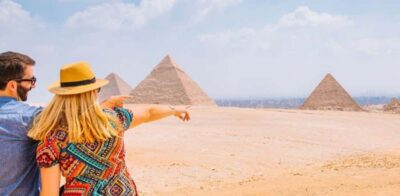
Pyramids & Great Sphinx Private Tour with Camel Ride
Read our review →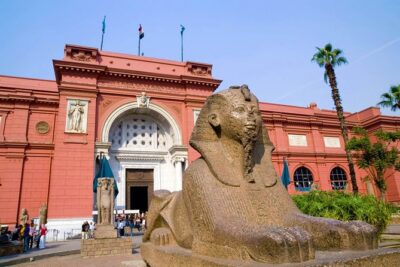
Tour to Giza Pyramids and The Egyptian Museum
Read our review →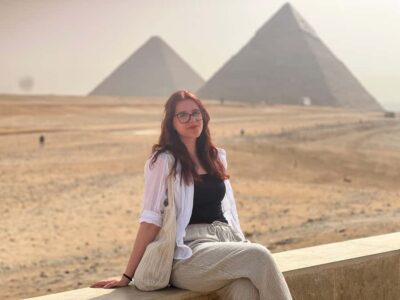
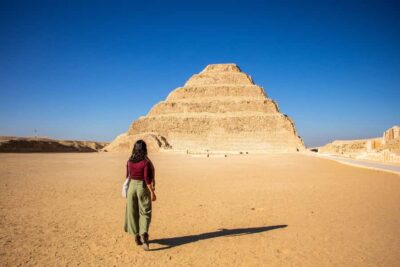
Pyramids of Giza, Sphinx, Saqqara & Memphis Tour
Read our review →
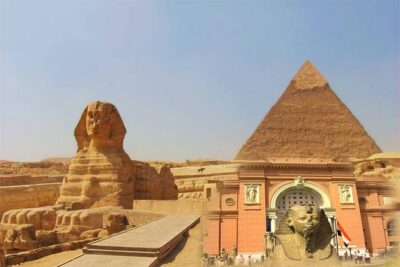
Cairo 8 Hour Private Tour of Pyramids, Egyptian Museum and Bazaar
Read our review →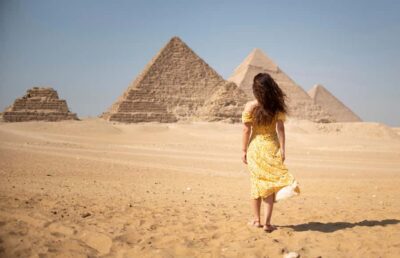
Half-Day Tour to Pyramids of Giza and the Sphinx
Read our review →