
Reviewed · SAQQARA AND MEMPHIS TOURS
Saqqara with Serapeum, Memphis and Dahshur private quality tour
Ancient Egypt feels bigger outside Cairo. This private day tour links Saqqara, Memphis, and Dahshur with a licensed Egyptologist, private car, hotel pickup, and the freedom to shape the day around your interests. I like the one-car private format, which avoids the stop-and-go routine of a large group, and I like the chance to enter the Red and Bent Pyramids or add Saqqara’s Serapeum and noble tombs.
The main caution is simple: Saqqara is enormous, and the long list of possible tombs, museums, pyramids, and sanctuaries cannot always fit into a four-hour visit. You should decide your priorities before setting out, especially if you want the all-inclusive ticket package.
In This Review
- Key points before you book
- Why Saqqara deserves the first half of your day
- Djoser, Ti, Unas, and Kagemni
- Should you pay extra for the Serapeum?
- Memphis puts the pyramids in context
- Dahshur gives you two very different pyramids
- How the private format changes the day
- Timing, heat, and physical effort
- Is $120 per person good value?
- Who should book this experience?
- Should you book the Saqqara, Memphis, and Dahshur tour?
- FAQ
- Is pickup included from my Cairo hotel?
- Are entrance tickets included?
- Does the tour include the Serapeum?
- How long does the tour take?
- Can I enter the Red and Bent Pyramids?
- Is lunch included?
Key points before you book
- Three major archaeological areas in one day: Saqqara, Memphis, and Dahshur give you a broad view of pyramid building and ancient Egyptian life.
- Private guide and vehicle: Your Egyptologist can adjust the order, explain the sites at your pace, and answer questions without a large group waiting.
- The Serapeum requires the higher ticket option: It is not part of the basic admission package, so check the price choice carefully.
- Early departure helps: A 7 a.m. start means cooler temperatures and fewer people at Saqqara, according to the strongest practical advice from past participants.
- Expect physical effort: The interior routes inside the Red and Bent Pyramids involve steep, extended descents and climbs.
- Good value at $120 per person: The price is strongest for a small private group that wants transport, guiding, water, and flexibility rather than a bare transfer.
Why Saqqara deserves the first half of your day
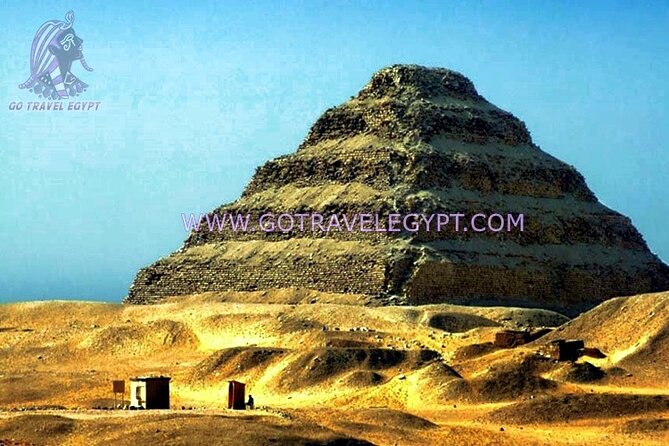
Saqqara is where Egypt’s pyramid story begins. The centerpiece is the Step Pyramid of Djoser, built during the Third Dynasty and generally regarded as the first pyramid and the earliest large stone building in Egypt.
The complex was designed by Imhotep, a remarkable official whose reputation grew so great that later generations treated him as a wise man and healer. The six-tier pyramid is not the smooth-sided shape most people picture when they hear the word pyramid. Its stacked levels show an early stage in the change from traditional flat-roofed tombs to the great pyramids that followed.
Your guide can help you read the site as an architectural experiment rather than simply another pyramid photo stop. That context matters. At Giza, the pyramids appear as finished masterpieces. At Saqqara, you see the ideas taking shape.
The basic ticket includes the Step Pyramid and its funerary complex, the Imhotep Museum, the Mastaba of Ti, the Pyramid of Unas, and the Mastaba of Kagemni. These stops make a sensible core visit, but they are spread across a large archaeological zone. Driving between areas is part of the experience, not wasted time.
More Saqqara, Memphis and Dahshur days:
- VIP All inclusive Best of the best Giza Pyramids,Sakkara,Memphis
★ 5.0 · 3,164 reviews - From Cairo: Pyramids of Giza, Sphinx, Saqqara & Memphis Tour
★ 4.7 · 3,110 reviews - Cairo: Pyramids, Sakkara & Memphis Tour with Lunch
★ 4.6 · 2,493 reviews
Djoser, Ti, Unas, and Kagemni
The Step Pyramid is the natural anchor, but the smaller tombs often provide the most personal scenes. A mastaba is a rectangular elite tomb with sloping sides, and the Mastaba of Ti is decorated with scenes of farming, food preparation, crafts, animals, and daily work.
These painted and carved scenes help you picture ancient Egypt beyond kings and monuments. I would give your guide permission to slow down here if you care about daily life, social rank, or ancient art.
The Pyramid of Unas is important for another reason. Unas was the final king of Egypt’s Fifth Dynasty, and the pyramid is associated with early pyramid texts, religious writings placed inside royal burial monuments. The exterior is far less dramatic than Djoser, but the interior symbolism makes it a worthwhile stop for anyone interested in the beliefs surrounding kingship and the afterlife.
The Mastaba of Kagemni belonged to a powerful vizier from the early Sixth Dynasty. Its scenes add another layer to Saqqara, showing that the necropolis was not only for pharaohs. Senior officials and their families built elaborate tombs close to the royal burial grounds, hoping to share in the prestige and spiritual protection of the area.
The Imhotep Museum is a useful pause between outdoor visits. It gives you a chance to see artifacts connected with Saqqara and to escape the sun for a short time. Do not expect a large museum experience. Its value is in helping you connect objects with the monuments you have just seen.
Should you pay extra for the Serapeum?
If Saqqara is your main reason for booking, I would seriously consider the all-inclusive ticket. It adds the Serapeum, several noble tombs, New Kingdom tombs, the Tomb of Mereruka, the Tomb of Mehu, and the Tomb of the Two Brothers.
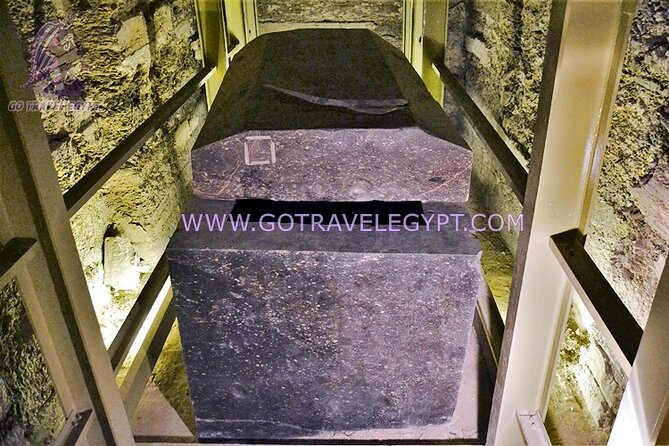
The Serapeum is one of Saqqara’s most memorable additions. This underground complex was devoted to the sacred Apis bulls, and its great stone sarcophagi give the visit a powerful sense of scale. The passageways and burial chambers are very different from the open pyramid complexes above ground.
The Tomb of Mereruka is another strong choice. Mereruka was a high official, and the tomb is known for its many decorated chambers and scenes of work, animals, offerings, and household life. The Tomb of Mehu provides another look at elite burial decoration.
The Tomb of the Two Brothers belonged to Niankh Khnum and Khnumhotep, officials whose shared tomb is unusual and especially interesting for visitors curious about family, work, and social relationships in ancient Egypt. The precise order of these visits depends on the day’s timing and your guide’s plan.
Here is the important practical point: the all-inclusive option does not guarantee that every named room will receive equal time. Saqqara covers a huge area, and the tour lasts roughly four to eight hours overall. Tell your guide which two or three places matter most to you. A private tour works best when you use that flexibility instead of trying to collect every stop.
Memphis puts the pyramids in context
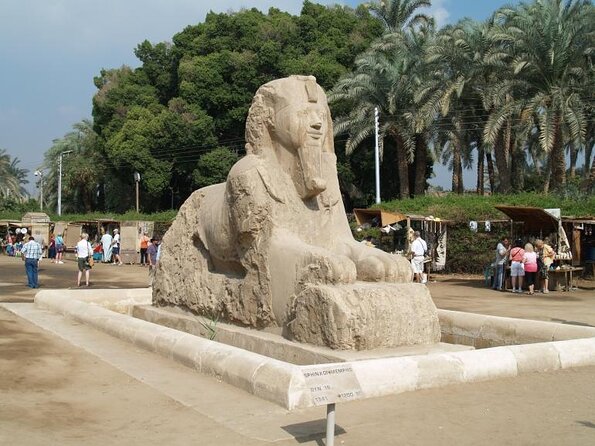
Memphis was the ancient capital of Egypt and a major religious and political center. Today, the visit focuses on the Mit Rahina open-air museum, where large statues and fragments remain among the modern settlement.
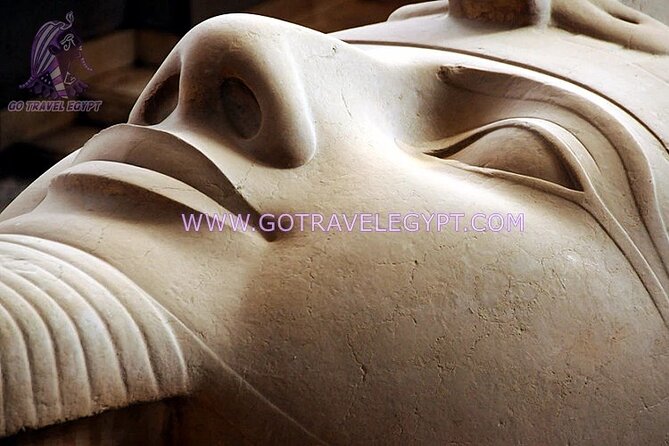
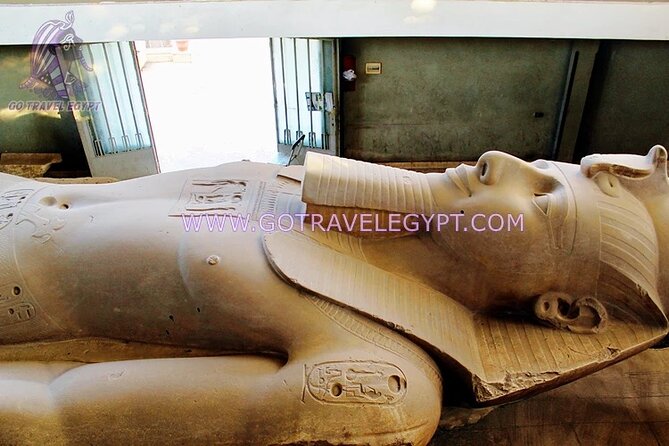
The highlight is the colossal limestone figure of Ramses II, displayed lying down because of its condition. The scale is difficult to grasp in photographs, and the museum setting lets you get close enough to study the details.
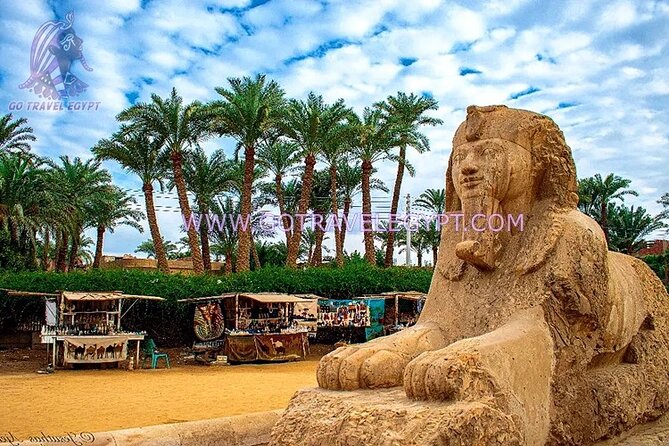
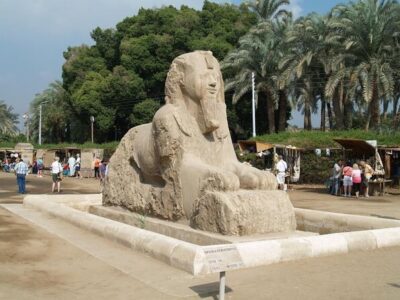
You will also see another monumental Ramses II statue and the Sphinx of Memphis. These pieces show how royal art worked in a city that once controlled a large part of the country.
Memphis is not as visually complete as Saqqara or Dahshur. You are not walking through a fully preserved ancient city. Instead, you are seeing major surviving pieces in an open-air setting. I find the stop valuable because it fills a gap in the story: Saqqara shows burial grounds, while Memphis helps explain the powerful city and religious center that supported the royal system.
Admission to the Mit Rahina Museum is listed separately from the guide and vehicle option, so check your selected package. Your guide can also suggest a nearby restaurant for lunch. Lunch itself is not included.
A few more Cairo outings to price up
- Cairo: Pyramids & Great Sphinx Private Tour with Camel Ride
★ 4.9 · 6,335 reviews - Tour to Giza Pyramids and The Egyptian Museum
★ 5.0 · 6,016 reviews - Cairo 8 Hour Private Tour of Pyramids, Egyptian Museum and Bazaar
★ 5.0 · 2,931 reviews - From Cairo: Half-Day Tour to Pyramids of Giza and the Sphinx
★ 4.6 · 2,891 reviews
Dahshur gives you two very different pyramids
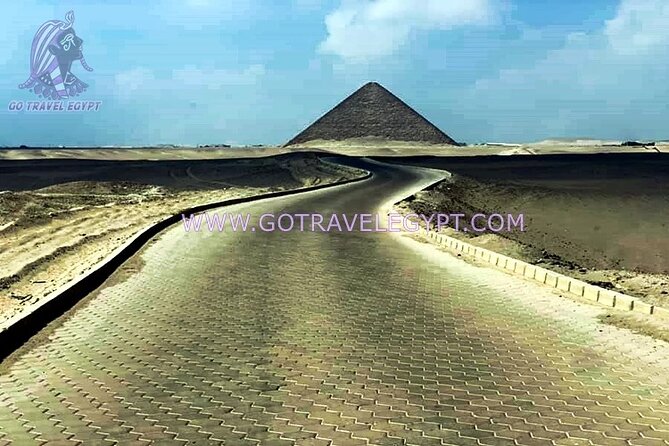
Dahshur is the tour’s best lesson in pyramid design. The Red Pyramid and Bent Pyramid were both built under King Sneferu, a ruler of the Fourth Dynasty and the father of Khufu, builder of the Great Pyramid at Giza.
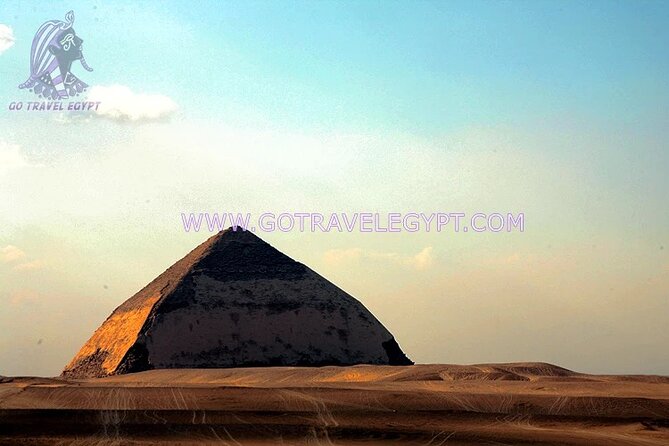
The Bent Pyramid looks as if the builders changed their minds halfway up. Its lower section has steep sides, while the upper section has a gentler angle. The change likely helped prevent structural problems as the pyramid rose, though your Egyptologist can explain the competing theories and the development of pyramid construction.
The Red Pyramid gets its name from the reddish limestone used in much of its core. It has a more regular smooth-sided form and is often described as Egypt’s first successful true pyramid. Its size is impressive, but the interior route is the part that many people remember most.
Entering these pyramids is not a casual stroll. One account describes the descent into the Bent Pyramid as about 61 meters and the Red Pyramid route as about 71 meters. Those figures give you a useful warning: the passages involve long, steep movement, cramped sections, and plenty of squatting or bending.
If you have knee, back, heart, or breathing problems, think carefully before entering. You can still enjoy the exterior monuments without making the interior climb. If you do go inside, bring water, move at your own pace, and avoid treating the descent as a race.
The reward is a rare sense of the pyramid as a built structure rather than a distant silhouette. You see the narrow passages, the changing air, and the stark chambers that make the monument feel less like a postcard and more like an engineering project.
How the private format changes the day
The tour includes pickup and drop-off from a Cairo or Giza hotel, an airport, or another Cairo-area address. A professional driver remains with you while your guide escorts you through the sites.
That arrangement matters in Cairo. The distances between the archaeological areas are substantial, and having a private car keeps you from arranging separate taxis or negotiating each transfer. Bottled water is included, and the vehicle is described as modern, clean, air-conditioned, and comfortable in the strongest accounts of the experience.
The guide is expected to meet you at your address, handle or scan tickets at the entrances when tickets are included, explain the archaeology, answer questions, help with photographs, and assist with practical issues during the day. The company also says it can help with souvenir shopping and bargaining at trusted shops.
That last service is not essential to everyone. If you want a focused archaeology day, say so clearly. One useful benefit of this tour is that you can ask for a plan without a shopping stop, and a German-speaking guide was specifically praised for avoiding a tourist shop. Confirm your preferences when arranging the day.
The available guide languages are English, Spanish, French, Greek, Italian, Portuguese, and Russian. Individual guide assignments vary, but names praised in the supplied feedback include Radwa, Mohammed, Mo, Dr. Azmy, Hashem, Adele, Eslam, Esraa, Amir, and Ahmed. The repeated theme is strong personal service, clear explanations, and guides who adjust their delivery to the group’s interests.
Timing, heat, and physical effort
The advertised duration is about four to eight hours, but the full combination of Saqqara, Memphis, and Dahshur deserves the longer end of that range. If you want the Serapeum, several tombs, and pyramid interiors, plan for a full day rather than a quick outing.
An early start is one of the best choices you can make. A 7 a.m. departure brings cooler temperatures and quieter conditions at Saqqara. It also leaves more room for the larger ticket package before the day becomes tiring.
Wear practical shoes. The ground at archaeological sites can be uneven, and the pyramid interiors demand more effort than the short outdoor stops suggest. Moderate physical fitness is required, and the combination of walking, heat, stairs, low passages, and long pyramid descents can be demanding.
Carry sun protection and enough personal water for the day, even though bottled water is provided. A lunch stop can be arranged, but lunch is not part of the price. Keep some cash available for meals and customary tips if you choose to give them.
Is $120 per person good value?
At $120 per person, the tour is not the cheapest way to see the southern pyramid sites. It can be good value if your group wants a private vehicle, hotel transfers, a licensed Egyptologist, and the ability to change the emphasis during the day.
The ticket structure needs close attention. The guide and car option does not include entrance tickets. Two other choices include tickets, with the all-inclusive option adding the Serapeum and extra tombs. Compare the three choices before paying, since the advertised stop list is much broader than the basic admission package.
For a couple or small family, private transport and guiding can justify the price. You are paying for time saved, direct transfers, personal explanations, and less waiting around. For a solo visitor, the per-person price may feel higher, though the service still offers a straightforward way to reach places that are awkward to combine independently.
The current score is 4.9 out of 5 from 79 ratings, with 96 percent recommending the experience. The most praised elements are the guides, the safe drivers, the clean air-conditioned cars, the flexibility, and the depth of historical explanation.
Who should book this experience?
I would choose this tour if you want more than the famous Giza pyramids. Saqqara and Dahshur show the stages of pyramid development, while Memphis adds the story of the capital and its royal monuments.
It is especially suitable for people who care about Egyptology, ancient art, engineering, burial customs, and the difference between royal pyramids and private tombs. Families can benefit from the private format because the guide can adjust the pace and explain difficult subjects in a way that fits the group.
It is less suitable if you want a very short, low-effort outing. The archaeological zones are spread out, the day can reach eight hours, and entering the pyramids involves serious physical exertion.
Cancellation is free up to 24 hours before the start time. Changes or cancellations made inside that window are not accepted for a refund.
Should you book the Saqqara, Memphis, and Dahshur tour?
Book it if you want a well-organized day focused on the less familiar pyramid sites around Cairo. Choose the all-inclusive ticket if the Serapeum, Mereruka, Mehu, and the Two Brothers tomb are high on your list.
Before the day begins, send your guide a short priority list. My suggested order would be the Step Pyramid and two or three tombs at Saqqara, the Serapeum if included, Memphis, then the Red and Bent Pyramids at Dahshur. Start early, and only enter the pyramids if your knees, lungs, and sense of adventure are ready for a serious workout.
The tour’s strongest asset is not simply the number of monuments. It is the combination of private transport and a guide who can turn a crowded list of ancient sites into a clear story. At $120 per person, that is a fair trade for a small group that wants comfort, context, and control over the day.
FAQ
Is pickup included from my Cairo hotel?
Yes. Private pickup and drop-off are included from a Cairo or Giza hotel, Cairo Airport, or another address in Cairo or Giza.
Are entrance tickets included?
Tickets are not included in the private guide and car option. The other two booking options include tickets, and the all-inclusive package adds the Serapeum and several additional tombs. Check the three choices carefully before booking.
Does the tour include the Serapeum?
The Serapeum is included only with the all-inclusive ticket option. It is not included with the basic ticket package.
How long does the tour take?
The stated duration is approximately four to eight hours. A longer day is more realistic if you want several Saqqara tombs, the Serapeum, Memphis, and both Dahshur pyramids.
Can I enter the Red and Bent Pyramids?
The tour includes visits to the Red and Bent Pyramids, and entrance inside may be available with the applicable tickets. The interior routes require long, steep descents and climbs, so a moderate level of physical fitness is needed.
Is lunch included?
No. Lunch is not included, but the guide can suggest nearby restaurants during the day.
Newly listed around Cairo
- Full Day Trip from Cairo to Luxor★ 5.0 · 16 reviews
- VIP Tour inside Giza Pyramids★ 4.5 · 103 reviews
- Private guide’s trip to Giza pyramids, Great sphinx valley temple★ 5.0 · 37 reviews
- Private half Day Tour to the Great 3 Pyramids of Egypt★ 5.0 · 15 reviews
- Full-Day Private Tour to Giza Pyramids, Sphinx, Memphis & Saqqara★ 5.0 · 106 reviews
- Unique Tour to The Grand Egyptian Museum and 12 main galleries★ 4.0 · 38 reviews
- Elite Boats Tour in Cairo & Giza with Drinks Included★ 4.5 · 15 reviews
- Sunset & Night Open Air Nile Cruise in Cairo & Giza★ 5.0 · 158 reviews
Saqqara and Memphis Tours, compared.
VIP All inclusive Best of the best Giza Pyramids,Sakkara,Memphis
Read our review →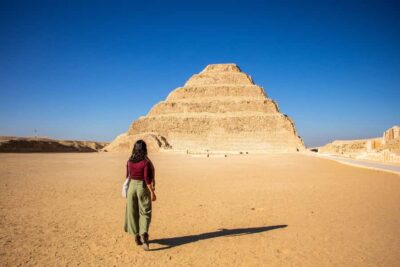
Pyramids of Giza, Sphinx, Saqqara & Memphis Tour
Read our review →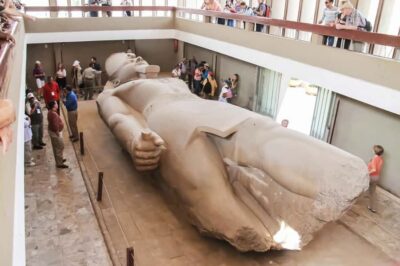
Private Day Tour Giza Pyramids, Sphinx, Memphis, and Saqqara
Read our review →
Private tour: GIza Pyramids, Memphis City & Sakkara Pyramid
Read our review →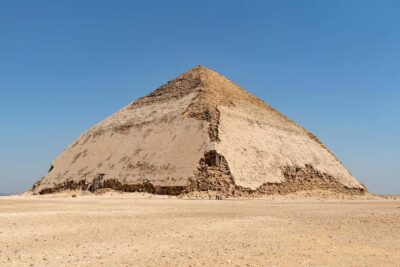
Sakkara, Memphis & Dahshur (Pyramid & Felucca Options)
Read our review →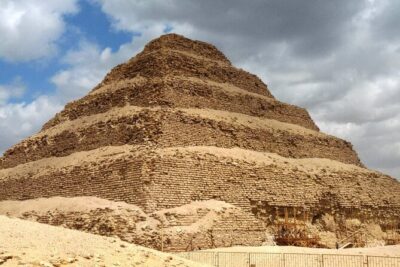
Private Full-Day Tour to Giza Pyramids,Sphinx,Memphis, and Saqqara
Read our review →
All-inclusive Private Trip Giza Pyramids Sphinx Saqqara, Dahshur
Read our review →Browse the lists this tour appears in