Reviewed · PRIVATE
Private Tour 3-Days in Cairo, Giza & Luxor
See Egypt’s greatest sites in three packed days. This private tour links Cairo’s pyramids, Old Cairo, the Egyptian Museum, and Luxor’s major temples with hotel pickup, an Egyptologist guide, private transport, and a round-trip flight. I like the unusual first day, which starts at Dahshur and Saqqara before reaching Giza, and I like the easy Cairo-to-Luxor flight rather than a long overland journey.
The main drawback is the pace. Day 3 lasts about 12 hours, and every day begins early. Accommodation is not included, so the $1,000 per-person price makes the most sense if you are traveling with enough time for a short Cairo stay and want a private package that handles transport, tickets, meals, and guiding.
In This Review
- Five useful things to know before booking
- Day One: From Snefru’s pyramids to Giza
- Dahshur and the Red Pyramid
- Saqqara’s Step Pyramid and Old Kingdom tombs
- Giza, the Valley Temple, and the Sphinx
- Day Two: Museum treasures and Cairo’s layered faiths
- The Egyptian Museum’s royal and human stories
- Coptic Cairo and the cave of the Holy Family
- Saladin’s Citadel and the Mosque of Muhammad Ali
- Khan Al-Khalili after the monuments
- Day Three: Luxor’s temples in a single long day
- Karnak Temple
- Hatshepsut’s temple and the Valley of the Kings
- Luxor Temple and the Colossi of Memnon
- What the $1,000 price really covers
- Guides, pace, and the private format
- Who should book this three-day Egypt tour?
- Final call: a strong short Egypt package
- FAQ
- What is included in the tour price?
- Is accommodation included?
- How long does the tour last?
- What time does the tour start?
- Is this a private tour?
- How do you travel from Cairo to Luxor?
- Which pyramids are visited?
- Are meals included?
- What is the cancellation policy?
Five useful things to know before booking
- Dahshur comes before Giza: You begin with the Red and Bent Pyramids, which gives the day a better sense of architectural progress.
- Saqqara is more than one pyramid: The Step Pyramid, pyramid texts, ancient tombs, and causeways make this a serious archaeology stop.
- The itinerary covers two very different Cairos: You see pharaonic monuments, Coptic churches, Islamic architecture, and Khan Al-Khalili.
- Luxor is a very long day: The flight saves road time, but Karnak, Hatshepsut’s temple, the Valley of the Kings, Luxor Temple, and the Colossi of Memnon still make for a demanding schedule.
- The guide can shape the experience: Guides praised by name include Hala, Muhammad Raki, Dr. Mo, and Mark, with particular credit for clear explanations, enthusiasm, and answering questions.
- The package is private: Only your own group takes part, and hotel pickup and drop-off are included.
Day One: From Snefru’s pyramids to Giza
The first day begins at 7:00 a.m. with pickup from your hotel. You travel in an air-conditioned vehicle with your private guide, which matters in Cairo. You can ask questions as you go, stop to clarify a point, and avoid being tied to the interests of a large group.
A few more Cairo outings to price up
- Cairo: Pyramids & Great Sphinx Private Tour with Camel Ride
★ 4.9 · 6,335 reviews - Tour to Giza Pyramids and The Egyptian Museum
★ 5.0 · 6,016 reviews - VIP All inclusive Best of the best Giza Pyramids,Sakkara,Memphis
★ 5.0 · 3,164 reviews
Dahshur and the Red Pyramid
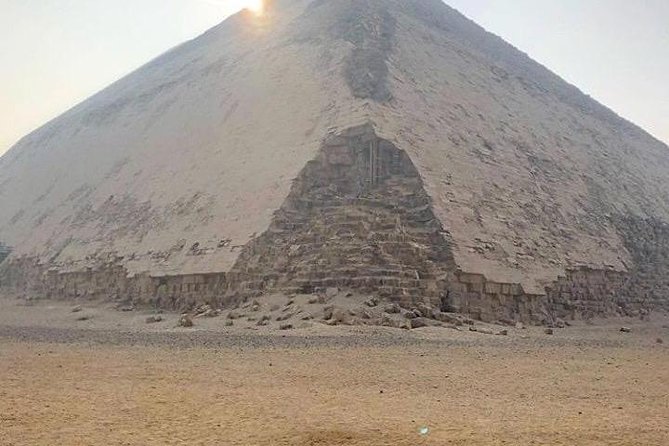
Dahshur is an excellent opening stop because it shows how pyramid building changed over time. The Red Pyramid is described as the first true pyramid, while the Bent Pyramid records an earlier attempt to solve the same engineering problem.
Both were built for King Snefru, the father of Khufu and founder of Egypt’s Fourth Dynasty. The Bent Pyramid was closed for restoration from 1960 until it reopened to visitors in 2019. That detail gives the site a special appeal, since you are seeing a monument that only recently became available again after restoration work.
You have about two hours here, with admission included. Ask your guide to explain the different slopes and why the Bent Pyramid changes angle partway up. That question helps turn a quick photo stop into a lesson in ancient construction.
Saqqara’s Step Pyramid and Old Kingdom tombs
Saqqara receives another two hours. This is one of the strongest parts of the route for anyone who wants more than the standard Giza visit.
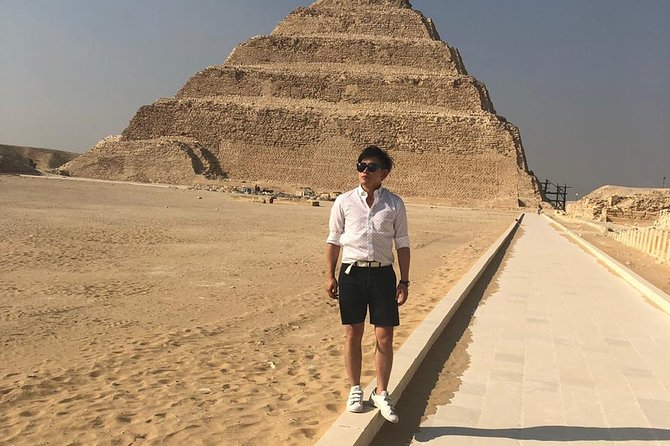
The Step Pyramid complex of King Djoser is presented as the oldest complete stone building. Its stacked design looks different from the smooth-sided pyramids at Giza, and your Egyptologist guide can place it within the development of royal tombs.
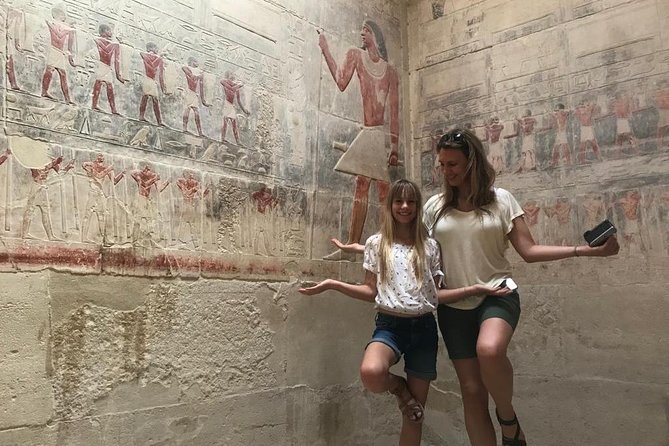
You also see the Pyramid of Unas, identified by its pyramid texts, along with the causeway of Unas, the Pyramid of Userkaf, and the Pyramid of Teti. The Pyramid of Teti is accessible and contains pyramid texts inside. The tomb of Kagemni adds another point of view. Instead of focusing only on kings, it introduces the burial place of an Old Kingdom nobleman from around 2200 B.C.
The advantage of a private guide is especially clear here. Saqqara contains several sites spread across a broad area, and it can be hard to understand what you are seeing without context. The downside is that six major stops between Dahshur, Saqqara, and Giza leave little time for lingering.
Giza, the Valley Temple, and the Sphinx
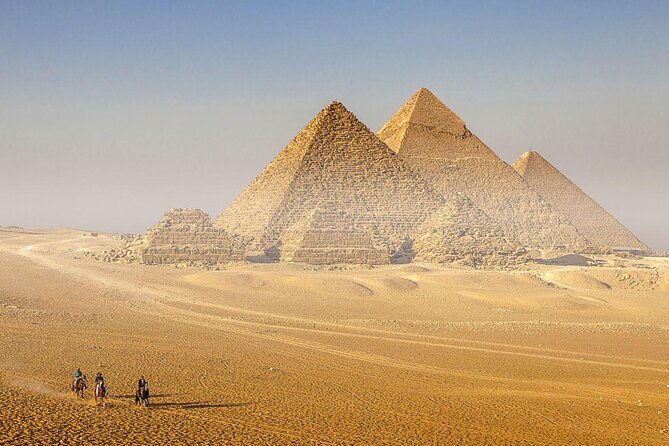
The final major stop is the Giza plateau, where you see the pyramids of Cheops, Chephren, and Mycerinus. The scale is the point, but the guide’s explanation helps you separate the three monuments and understand their place in the royal complex.
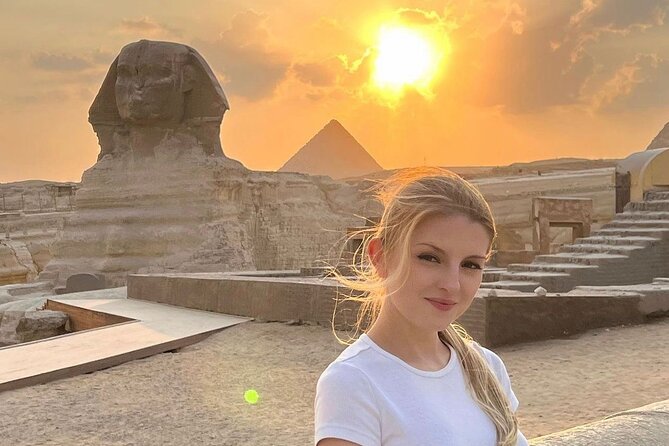
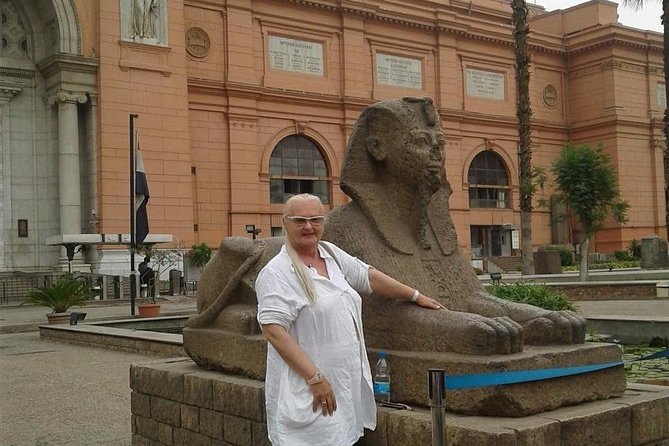
The itinerary also includes the Valley Temple, where the king’s body was mummified, and the Great Sphinx. The Sphinx is described as the oldest and largest sphinx carved in ancient Egypt, dating to the time of King Chephren around 2550 B.C.
You finish with lunch at a local restaurant before returning to your hotel. Lunch is included each day, which is useful on a tight schedule. Still, expect the first day to feel full. The stated visit times add up to roughly six hours before driving, meals, and transfers are counted.
Same base, a completely different sort of day:
- From Cairo: Pyramids of Giza, Sphinx, Saqqara & Memphis Tour
★ 4.7 · 3,110 reviews - Cairo 8 Hour Private Tour of Pyramids, Egyptian Museum and Bazaar
★ 5.0 · 2,931 reviews - From Cairo: Half-Day Tour to Pyramids of Giza and the Sphinx
★ 4.6 · 2,891 reviews - Cairo: Pyramids, Sakkara & Memphis Tour with Lunch
★ 4.6 · 2,493 reviews
Day Two: Museum treasures and Cairo’s layered faiths
Day Two begins at the Egyptian Museum, followed by Coptic Cairo, the Citadel, and Khan Al-Khalili. This is a good contrast to the first day. You move from royal monuments to objects, places of worship, medieval fortifications, and everyday Cairo.
The Egyptian Museum’s royal and human stories
The museum visit lasts about two hours, with admission included. The planned highlights include the Animal Mummy Room, mummy portraits, and King Tutankhamun’s jewelry.
That selection gives you three different ways to look at ancient Egypt. Animal mummies show religious practice and the importance of sacred animals. Mummy portraits bring you closer to the people behind the monuments. Tutankhamun’s jewelry offers the familiar spectacle of royal wealth.
Two hours is enough for a focused visit, not enough for every gallery. I would ask your guide to help you choose what deserves your full attention rather than trying to cover the entire building. Guide quality matters here. Hala is praised for making complex subjects easy to follow, while Muhammad Raki is described as both passionate about ancient Egyptian culture and able to discuss contemporary Arab culture. Those qualities are useful in a museum, where a good explanation can save you from simply walking past case after case.
Coptic Cairo and the cave of the Holy Family
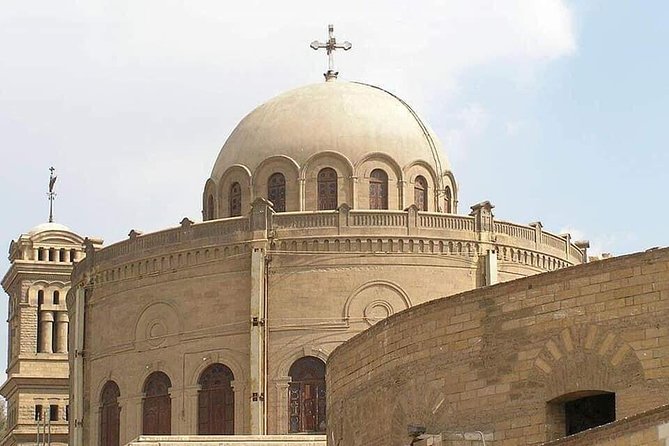
The tour then goes to Old Coptic Cairo for about two hours. Stops include the Roman Fortress of Babylon, the Hanging Church, the Church of Abu Serga, the Jewish Synagogue of Ben Ezra, and Saint George Church.
The area gives you a clear reminder that Cairo’s story is not only pharaonic or Islamic. The churches and synagogue reflect the city’s long religious history, while the Roman fortress shows an earlier layer of the site.
The itinerary also includes the cave where the Holy Family is said to have sheltered during its time in Cairo. Your guide can explain the tradition and the place’s meaning to Christian communities.
This part of the day rewards questions. Ask about the differences between the churches, the function of the fortress, and how the Jewish synagogue fits into the district’s past. Several praised guides, including Hala and Muhammad Raki, are described as friendly and good at explaining mosques, churches, and their settings. That range is valuable because the visit crosses religious and cultural lines in a short time.
Saladin’s Citadel and the Mosque of Muhammad Ali
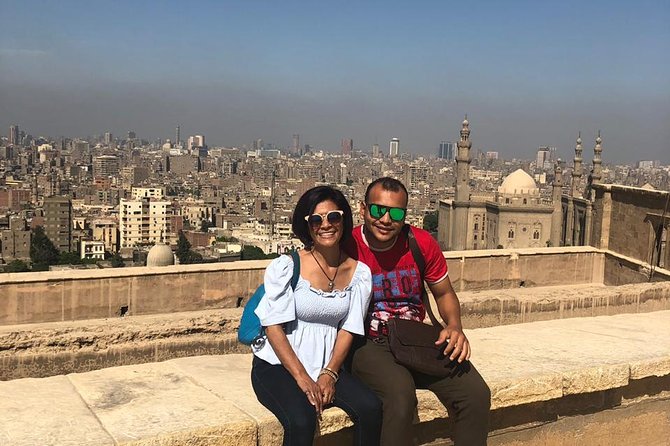
At the Citadel of Saladin, you have about one hour for the panorama and the Mosque of Muhammad Ali Pasha. The Citadel’s hilltop position gives you a broad view over Cairo, and the mosque is hard to miss because of its large scale and prominent location.
The mosque was built in 1848 and is described as a copy of Hagia Sophia in Istanbul. Look up as you enter and give yourself time to take in the dome and interior space. The stop is shorter than the museum and Coptic Cairo, so your visit will be more about the main architectural impression than a full study of the complex.
Khan Al-Khalili after the monuments
The final stop lasts about two hours at Khan Al-Khalili, Cairo’s major bazaar. The market was founded during the Mamluk period by Sultan Barquq, after the land was given to his friend Jahrkas Al-Khalili. Its location also reflects the city’s changing urban story, since a Fatimid cemetery was cleared to make room for the market.
This is the least formal part of the tour. Walk, look, and enjoy the street life, but keep your expectations practical. Two hours lets you browse and absorb the atmosphere, not inspect every lane. Your guide can help you understand the market’s background and may also make the experience less confusing for a first visit.
Day Three: Luxor’s temples in a single long day
The Luxor day is the tour’s biggest promise and its biggest physical challenge. A driver takes you from your hotel to the airport, and you fly to Luxor. A local guide meets you on arrival, then leads you through the main East Bank and West Bank sights before you fly back to Cairo.
The flight is a smart choice. Luxor is far from Cairo, and an air journey makes a one-day visit possible. But the schedule remains intense. The day is listed at about 12 hours, so you should choose this tour because you value seeing the major sites, not because you want a slow archaeological trip.
Karnak Temple
Karnak is the first major Luxor stop. It is the largest temple complex on the route and includes the Temple of Amun, the Hypostyle Hall, and the Avenue of Sphinxes.
The Hypostyle Hall is the visual centerpiece. Your guide can help you read the columns and understand how the temple was expanded over time. Without context, Karnak can feel like a huge collection of columns and fallen stones. With a guide, you can better follow the religious and royal purpose of the complex.
Hatshepsut’s temple and the Valley of the Kings
On the West Bank, you visit the temple of Queen Hatshepsut, also called Deir el-Bahari, and the Valley of the Kings. These two stops make a good pair. Hatshepsut’s temple is built into the cliffs in broad terraces, while the Valley of the Kings places royal burial chambers below the desert hills.
Admission details for Luxor are listed as free within this package, while entrance fees are included overall. Because tomb access can vary by site and ticket conditions, ask your guide at the start of the day which tombs are included and how much walking is expected.
Mark has been praised for giving clear historical facts at Luxor, which is exactly what you need here. The valley can otherwise become a quick sequence of painted walls and narrow corridors. Listen for explanations of the images, burial traditions, and the role of the tombs.
Luxor Temple and the Colossi of Memnon
The day also includes Luxor Temple and the two statues of Memnon. Luxor Temple is an urban monument with a different feel from Karnak. Seeing both helps you compare the major temple sites rather than treating them as interchangeable ruins.
The Colossi of Memnon provide a shorter photographic stop, but they also mark the scale of royal monuments on the West Bank. Lunch follows the Luxor sightseeing, then you return to the airport for the flight to Cairo.
This schedule leaves little room for delay. A late start, flight disruption, or a longer visit at one site could affect the rest of the day. Confirm the flight times and the exact order of stops before departure.
What the $1,000 price really covers
At $1,000 per person, this is not a low-cost sightseeing option. The value comes from the amount of coordination included: private transfers, an air-conditioned vehicle, an Egyptologist guide, entrance fees, snacks, three lunches, and the Luxor flight ticket.
You are also paying for convenience. Hotel pickup and drop-off remove the need to arrange taxis across Cairo, airport transfers, and transport at Luxor. A private group means you are not sharing the guide’s attention with strangers.
The price is harder to justify if you already have transport, a guide, or accommodation arranged separately. It also excludes accommodation, so the real trip budget will be higher. Group discounts may improve the per-person value for families or friends traveling together.
The best value comes when you have only three sightseeing days and want the main ancient sites handled in one package. If you have a week in Egypt, I would prefer more time in Luxor rather than compressing it into one day.
Guides, pace, and the private format
Guide quality will shape this trip. Hala, also called Sugar Queen by some past clients, is praised for her energy, clear English, and ability to explain ideas with simple drawings. Muhammad Raki is praised for his strong command of ancient Egyptian and modern Arab culture. Dr. Mo is described as an excellent storyteller, and Mark receives particular praise for Luxor.
You may not receive one of these specific guides, so treat the names as examples of the company’s praised staff rather than a guaranteed assignment. At booking, ask who will guide each day and whether the same person will accompany you throughout.
The private format is a real advantage. You can ask for more time at the pyramids, spend less time at a site that does not interest you, or request a clearer explanation when the material gets dense. The schedule is still fixed enough that major changes may not be possible, especially on the flight day.
Free cancellation is available up to 24 hours before the start time for a full refund. Cancellations or changes within 24 hours are not refunded, and poor weather may lead to a different date or a full refund.
Who should book this three-day Egypt tour?
I would recommend it to first-time visitors who want Cairo and Luxor in one short visit. It suits couples, families, and solo visitors who prefer a private guide and do not want to arrange domestic flights, airport rides, meals, and site tickets on their own.
It is also a good fit if you care about explanation, not just photographs. The strongest praise attached to the guides focuses on historical detail, friendly company, enthusiasm, and the ability to answer questions.
I would hesitate if you dislike early starts, long sightseeing days, or frequent transfers. The Luxor schedule is especially demanding, and the lack of included accommodation means you still need to plan your hotel carefully.
Final call: a strong short Egypt package
Book this tour if your priority is coverage and convenience. You will see Dahshur, Saqqara, Giza, the Egyptian Museum, Coptic Cairo, the Citadel, Khan Al-Khalili, and Luxor’s main temples without building the transport plan yourself.
Skip it if you want a slow, thoughtful visit to each site. For most people with only three days, though, the private format, included meals, entrance fees, and Luxor flight make the package practical. Just budget for accommodation, confirm the flight schedule, and prepare for a very full final day.
FAQ
What is included in the tour price?
The price includes entrance fees, hotel pickup and drop-off, transport in an air-conditioned vehicle, a private tour, a qualified Egyptologist guide, snacks, three lunches, and the Luxor flight ticket.
Is accommodation included?
No. You must arrange and pay for your own accommodation.
How long does the tour last?
The experience lasts approximately three days. The Luxor portion is listed as about 12 hours.
What time does the tour start?
The stated start time is 7:00 a.m.
Is this a private tour?
Yes. Only your group participates in the activity.
How do you travel from Cairo to Luxor?
You are picked up from your hotel, taken to the airport, and fly to Luxor. You then fly back to Cairo after the sightseeing.
Which pyramids are visited?
The tour visits the Red Pyramid and Bent Pyramid at Dahshur, the Step Pyramid complex and other pyramids at Saqqara, and the pyramids of Cheops, Chephren, and Mycerinus at Giza.
Are meals included?
Yes. Lunch is included on all three days, and snacks are also included.
What is the cancellation policy?
You can cancel at least 24 hours before the start time for a full refund. Cancellations or changes made less than 24 hours before the start time are not refunded or accepted. If poor weather causes cancellation, you are offered a different date or a full refund.
Newly listed around Cairo
- Full Day Trip from Cairo to Luxor★ 5.0 · 16 reviews
- Private guide’s trip to Giza pyramids, Great sphinx valley temple★ 5.0 · 37 reviews
- Private half Day Tour to the Great 3 Pyramids of Egypt★ 5.0 · 15 reviews
- VIP Tour inside Giza Pyramids★ 4.5 · 103 reviews
- Full-Day Private Tour to Giza Pyramids, Sphinx, Memphis & Saqqara★ 5.0 · 106 reviews
- Unique Tour to The Grand Egyptian Museum and 12 main galleries★ 4.0 · 38 reviews
- Elite Boats Tour in Cairo & Giza with Drinks Included★ 4.5 · 15 reviews
- Sunset & Night Open Air Nile Cruise in Cairo & Giza★ 5.0 · 158 reviews
Private, compared.
Pyramids & Great Sphinx Private Tour with Camel Ride
Read our review →
Cairo 8 Hour Private Tour of Pyramids, Egyptian Museum and Bazaar
Read our review →Private ViP all-inclusive Giza Pyramids,Sphinx,Inside Pyramid
Read our review →
Private guided tour to Giza Pyramids, and Great Sphinx
Read our review →
Half Day Tour Giza Pyramids &Great Sphinx with Private Tour Guide
Read our review →
Private tour to Giza Pyramids,Sphinx,Egyptian Museum with Local Lunch
Read our review →
Giza Pyramids and Sphinx: Half-Day Private or Group Tour
Read our review →