Reviewed · GIZA PYRAMIDS TOURS
Private Giza Pyramids & Sphinx Day Tour with Lunch from Cairo
The pyramids make a short day feel enormous. This private Cairo tour gives you hotel pickup, air-conditioned transport, and a local English-speaking guide, then takes you across the Giza Plateau to the Great Pyramid, Menkaure, Khafre, the Sphinx, and several viewing points. I like the efficient half-day format and the chance to shape the visit around your own group. The $35 price is also appealing, though optional entry fees, lunch, camel rides, and quad biking can raise the final cost.
The guide can make or break a visit here. Eman Mostafa is praised for her detailed explanations, while Tito is noted for being friendly, caring, and well informed. Wael’s clear English has also helped non-native English speakers. The main caution is that guide quality may vary, and one quiet guide offered less explanation than expected.
In This Review
- Key points to know before booking
- Why this half-day Giza tour works well
- The Great Pyramid and the Giza Necropolis
- Khufu’s Great Pyramid and its unfinished story
- Menkaure’s smaller pyramid complex
- Khafre’s pyramid and the surviving cap
- Meeting the Great Sphinx
- The Giza Plateau and panoramic views
- What the private guide adds
- Lunch, camel rides, and other optional costs
- Who will get the most from this tour
- Booking advice and cancellation terms
- Should you book the Giza Pyramids and Sphinx tour?
- FAQ
- How long does the tour last?
- Is hotel pickup included?
- Is the tour private?
- What sites are included in the route?
- Is an English-speaking guide included?
- Is lunch included?
- Are pyramid entry fees included?
- Are camel rides and quad biking included?
- Can I cancel for a full refund?
Key points to know before booking
- Private sightseeing for about 3 to 4 hours: Your group travels together rather than joining a large shared bus.
- Seven major stops in one half-day: The route covers the Giza Plateau, all three main pyramids, the Sphinx, and a panoramic viewpoint.
- Hotel pickup and drop-off: Transport is provided from hotels in Cairo or Giza in an air-conditioned vehicle.
- The $35 price is a starting point: Basic-area admission is included, but some entrance fees and activities are optional.
- Lunch needs clarification: Koshari at a local restaurant is listed as optional, despite the tour title suggesting lunch is included.
- Guide quality matters: Eman Mostafa, Tito, and Wael receive especially warm praise for clear explanations and friendly service.
Why this half-day Giza tour works well
Giza is close to Cairo on a map, but the visit is easier when someone handles the driving, route, and site order. You are collected from your hotel in Cairo or Giza, then taken to the pyramid complex at the western edge of the Nile Valley. That saves you from arranging separate transport and gives you a guide who can explain what you are seeing as the monuments come into view.
I like the private format for a place as busy and open as Giza. You can ask questions, request more time for photographs, or move on when the heat begins to wear you down. The advertised duration is about 3 to 4 hours, with the listed stops adding up to roughly four hours, so this is a focused introduction rather than a full archaeological day.
The tour also suits a short Cairo stay. If you have only one free morning or afternoon, you can see the central monuments without giving up an entire day. If you want extended time inside the pyramids, a long camel ride, or a museum visit, you will need a larger plan.
More ways to see the Pyramids and the Sphinx:
- Cairo: Pyramids & Great Sphinx Private Tour with Camel Ride
★ 4.9 · 6,335 reviews - Tour to Giza Pyramids and The Egyptian Museum
★ 5.0 · 6,016 reviews - VIP All inclusive Best of the best Giza Pyramids,Sakkara,Memphis
★ 5.0 · 3,164 reviews
The Great Pyramid and the Giza Necropolis
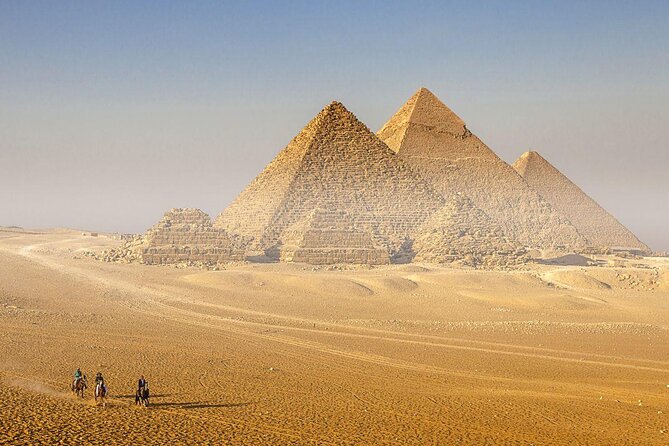
The first major stop is the Giza pyramid complex, also called the Giza Necropolis. This enormous site includes the Great Pyramid of Khufu, the Pyramid of Khafre, the Pyramid of Menkaure, the Great Sphinx, causeways, valley temples, cemeteries, and the remains of a workers’ village.
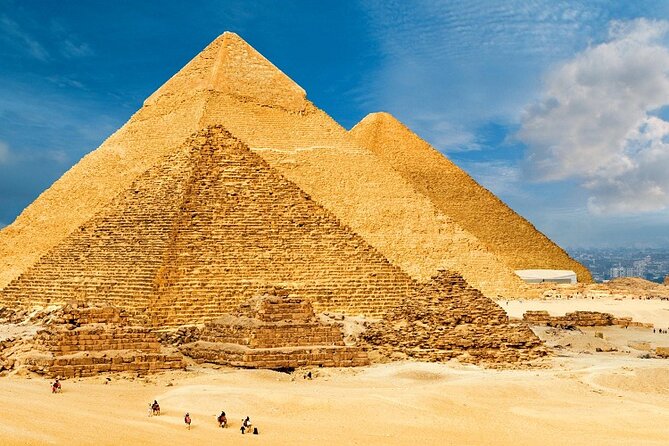
The three main pyramids date from Egypt’s Fourth Dynasty during the Old Kingdom. The Great Pyramid and Khafre’s pyramid are the largest of the group, and together they form the image most people carry in their heads before arriving. Seeing them at close range changes the scale of the story. Blocks that look small in photographs become huge pieces of built stone.
The first stop is scheduled for about an hour and includes admission to the basic area. Your guide can help put the monuments in order, explain their purpose, and point out how the pyramid complexes were arranged. This orientation is valuable because the site is spread across a broad plateau, and it is easy to focus only on the biggest pyramid and miss the surrounding structures.
The drawback is time. An hour goes quickly once you account for walking, photographs, traffic inside the site, and explanations. If you want a slow visit, ask your guide at the start how the time will be divided.
Khufu’s Great Pyramid and its unfinished story
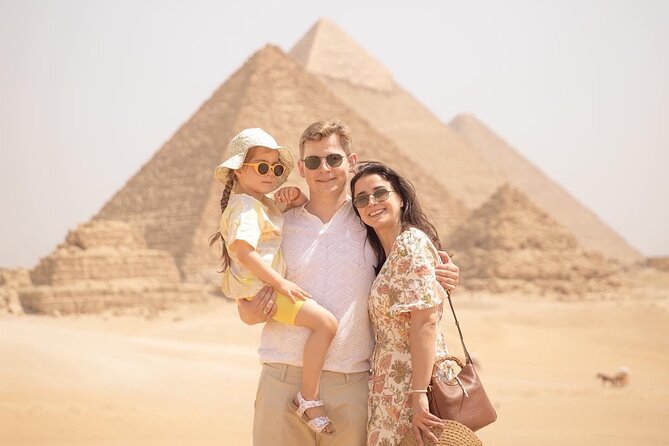
The Great Pyramid of Cheops, also called Khufu, receives about 30 minutes on the planned route. This is the largest and most famous pyramid at Giza, but the tour does not automatically promise access to every interior area.
The complex originally included a valley temple, a causeway, a mortuary temple, and the king’s pyramid. Much of the valley temple is buried beneath Nazlet el-Samman, and parts of the original causeway were lost when the village was built over the area. Those details help you understand that Giza is not just three isolated pyramids. It was a carefully planned ceremonial center with a long route from the Nile toward the royal tomb.
The basic area admission does not necessarily cover optional interior entry. The supplied information specifically says that entrance fees depend on the option chosen, so you should confirm exactly what your booking includes before arrival. If entering Khufu’s pyramid is important to you, do not assume it is part of the $35 base price.
Thirty minutes is enough for an exterior introduction and photographs. It is less generous if you want a long explanation, interior access, and time around the surrounding ruins.
Menkaure’s smaller pyramid complex
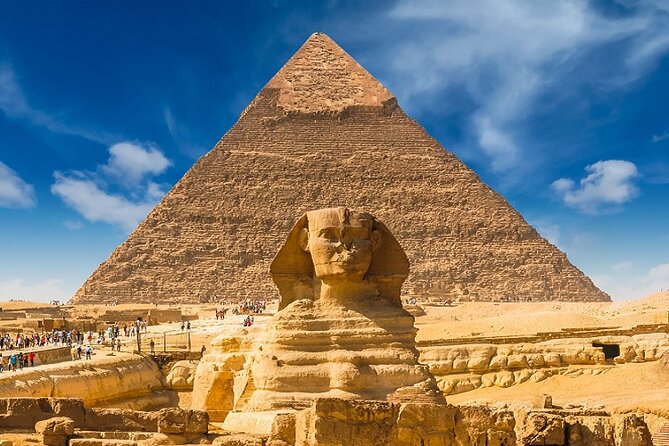
Menkaure’s Pyramid gets its own 30-minute stop. It is smaller than Khufu and Khafre, but that does not make it a throwaway visit. Its complex included a valley temple, causeway, mortuary temple, and the king’s pyramid. Several statues of Menkaure were once held in the valley temple, and a smaller ante-temple was added during Egypt’s Fifth Dynasty.
This stop helps correct the usual pyramid checklist. You are not simply seeing three similar triangles. Each complex had its own buildings, processional route, and religious purpose. A good guide can use Menkaure to explain how the pyramid fields developed and how the royal monuments worked as a group.
The short time allocation is practical for a first visit, especially if the heat is strong. Still, the experience depends on how much detail your guide provides. This is one of the places where a clear, engaged guide adds real value.
A few more Cairo outings to price up
- Cairo: Pyramids, Sakkara & Memphis Tour with Lunch
★ 4.6 · 2,493 reviews - Cairo: Grand Egyptian Museum, Pyramids, Sphinx Tour & Lunch
★ 4.7 · 2,282 reviews - Private tour to Giza Pyramids,Sphinx,Egyptian Museum with Local Lunch
★ 5.0 · 1,530 reviews - From Cairo Alexandria Catacombs, Citadel Day Trip with Lunch
★ 4.6 · 1,312 reviews
Khafre’s pyramid and the surviving cap
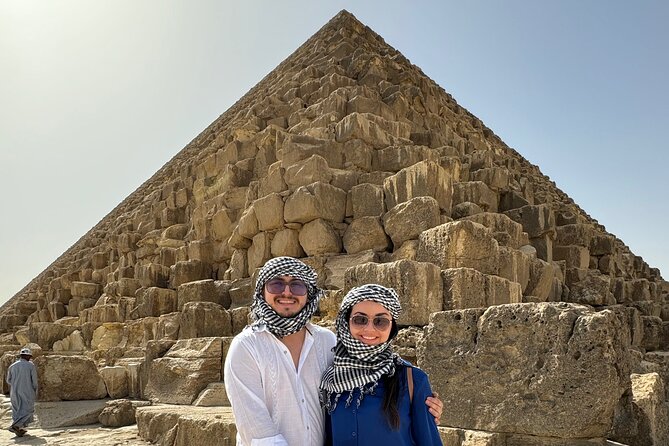
Khafre’s Pyramid also receives about 30 minutes. It can look taller than Khufu because it sits on higher ground and retains some of its original smooth casing near the top. That remaining cap is one of the most useful visual details to watch for during the visit.
Khafre’s complex included a valley temple, the Sphinx temple, a causeway, a mortuary temple, and the king’s pyramid. Several statues of Khafre were found in the valley temple, including discoveries made by Auguste Mariette in 1860. Your guide may use this area to connect the pyramid, the Sphinx, and the ceremonial buildings into one plan.
The route gives you enough time to see the main features, but not to linger at every ruin. If archaeology interests you more than quick photographs, tell the guide. In a private tour, that request is more realistic than it would be on a large group outing.
Meeting the Great Sphinx
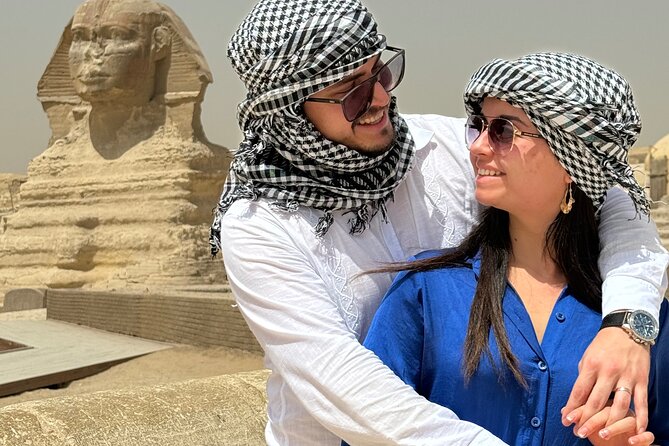
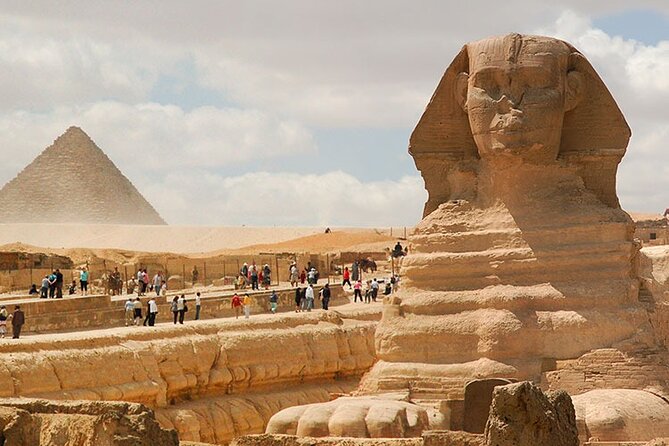
The Great Sphinx is scheduled for another 30 minutes, and this is one of the most memorable parts of the visit. The monument lies on the eastern side of the pyramid complex, close to Khafre’s associated buildings. The current view among Egyptologists is that the Sphinx’s head represents Khafre.
The Sphinx is best understood as part of the surrounding complex rather than a separate statue dropped into the desert. Its relationship with Khafre’s valley temple and Sphinx temple gives the site a stronger sense of design and purpose. Your guide should explain that connection, not just repeat the familiar facts about the monument’s face.
Photographs are a major part of this stop. Guides often know the most useful angles, and one of the strongest compliments given to the service is its help with photographs. That matters here because the best framing depends on where you stand and how you position the pyramid behind the Sphinx.
Thirty minutes is enough for a close look and several photographs. If you want long quiet time at the monument, the schedule may feel brisk.
The Giza Plateau and panoramic views
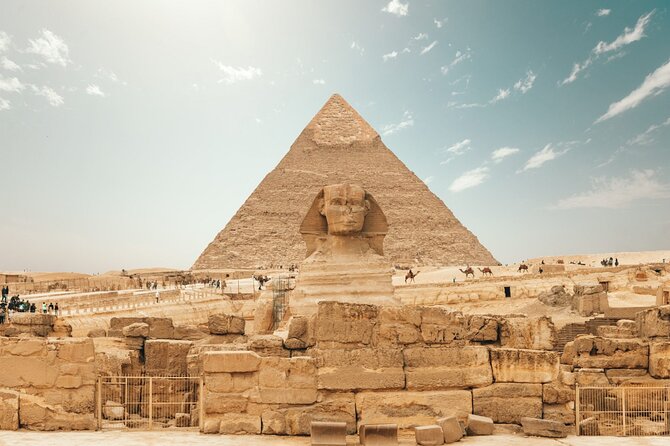
The broader Giza Plateau is a limestone rise about 60 meters above sea level. It forms the northern end of the large pyramid fields along the western edge of the Nile Valley. The plateau contains the major pyramids and Sphinx, but also cemeteries, a workers’ village, and an industrial complex.
The itinerary includes a separate plateau stop and a panoramic viewpoint, each planned for about 30 minutes. These stops are useful because the monuments look different when you step back. From a wider angle, you can see the relationships between the three pyramids and understand how the site occupies the open ground at the edge of the Western Desert.
The panoramic stop is especially good for photographs. You can take in the pyramids from several angles while the guide explains their importance and arrangement. It is also a natural point to ask for a final set of pictures before leaving the plateau.
The open setting can mean sun, dust, and heat. Bring water, use the bottled water supplied by the tour, and wear practical shoes. The tour includes transport, but you will still spend time outdoors and on foot.
What the private guide adds
A private guide is the most important feature here, not a luxury extra. Giza contains enough monuments and names to blur together, especially on a first visit. A guide can keep Khufu, Khafre, and Menkaure distinct and explain why the Sphinx belongs to the same royal complex.
The best guide feedback centers on clear English, warmth, flexibility, and strong explanations. Eman Mostafa is singled out for giving such useful information about Egyptian history that a separate museum visit felt less necessary to one party. Tito is praised for combining detailed explanations with polite, caring service. Wael is noted for speaking English clearly enough for Japanese visitors to follow comfortably.
That said, do not expect every guide to have the same style. One experience involved a shy, quiet guide who provided less information than expected and did not explain how long each stop would last. You can reduce that risk by asking at pickup for the plan, the time available at each site, and the subjects you most want covered.
You should also state clearly if you want to skip shopping stops. One piece of advice is to ask to avoid an oil-making stop. The supplied itinerary does not list such a stop, so it may depend on the guide or day, but speaking up early is sensible.
Lunch, camel rides, and other optional costs
The price is listed at $35 per person, which is good value for private transport, hotel pickup and drop-off, a guide, bottled water, and a compact tour of the main Giza monuments. Group discounts may also be available, making the price more attractive for a small party.
There is an important inconsistency about lunch. The tour title and highlights present lunch as part of the experience, but the detailed inclusions say that lunch at a local restaurant, specifically koshari, is optional. Treat lunch as an extra unless the operator confirms in writing that it is included in your selected option.
Camel rides are optional too, as is a one-hour quad-bike activity. These can add variety, but they also use time that could otherwise go toward the pyramids and Sphinx. If the monuments are your priority, agree on the schedule before adding activities.
Personal items and tipping are not included. Entry fees vary by the selected tour option, and basic-area admission is distinguished from optional access. The low headline price is attractive, but you should compare the final total rather than judging the tour by $35 alone.
Who will get the most from this tour
This tour suits you if you want the essential Giza sights in one compact outing. It is particularly practical for first-time visitors, short Cairo stays, couples, families, and small groups who value hotel pickup and a private vehicle.
It also works well if you want control over the pace. You can ask for extra photo time, request a stronger focus on architecture, or keep the visit moving if you have other plans. The private format is more flexible than a large scheduled group.
You may want a longer or more specialized visit if you are deeply interested in archaeology, want to enter multiple pyramids, or hope to spend hours at the workers’ village and cemeteries. The 3 to 4-hour schedule is designed for the headline monuments, not every corner of the necropolis.
The tour is also a reasonable choice for non-native English speakers, provided you confirm guide language needs at booking. Wael’s clear English and the positive comments about Eman and Tito suggest that the operator can provide strong communication, but the individual guide still matters.
Booking advice and cancellation terms
Confirmation is provided at booking, and the experience is a private activity for your group only. Pickup is offered from hotels in Cairo or Giza, and the site is near public transportation, though this tour’s included vehicle makes independent connections less important.
Most people can participate, but the information does not give a detailed accessibility plan. If you have mobility needs, ask the operator directly about walking distances, surfaces, and vehicle arrangements before paying.
Free cancellation is available up to 24 hours before the local start time for a full refund. Changes or cancellations made less than 24 hours ahead are not accepted for a refund.
Should you book the Giza Pyramids and Sphinx tour?
I would book this tour if I wanted a reasonably priced, private introduction to Giza with hotel transport and a guide who could explain the monuments in plain English. The strongest value comes from the private format, efficient route, and chance to see all three pyramids, the Sphinx, and the panoramic views in one half-day.
Before confirming, I would ask three direct questions: Which entry fees are included? Is lunch actually included in my selected option? How much time will we spend at each stop? I would also request a guide with strong English and ask to avoid any shopping stop unless I wanted one.
Choose it for convenience, flexibility, and the main sights. Skip it if you want a slow archaeological study or guaranteed lunch and interior pyramid access without checking the final price first.
FAQ
How long does the tour last?
The tour lasts approximately 3 to 4 hours.
Is hotel pickup included?
Yes. Pickup and drop-off are provided from hotels in Cairo or Giza.
Is the tour private?
Yes. Only your group participates in the private tour or activity.
What sites are included in the route?
The route includes the Giza Pyramids, the Great Pyramid of Khufu, Menkaure’s Pyramid, Khafre’s Pyramid, the Great Sphinx, the Giza Plateau, and a panoramic pyramid viewpoint.
Is an English-speaking guide included?
Yes. A local guide is included, and the tour information specifies an English-speaking guide.
Is lunch included?
The detailed tour information lists lunch at a local restaurant, such as koshari, as optional. Confirm this with the operator because the tour title presents lunch differently.
Are pyramid entry fees included?
Basic-area admission is included, but optional entrance fees depend on the tour option selected. Interior access should be confirmed before booking.
Are camel rides and quad biking included?
No. Camel rides and a one-hour quad-bike activity are optional extras.
Can I cancel for a full refund?
Yes, if you cancel at least 24 hours before the experience start time, based on the local time. Cancellations or changes made less than 24 hours ahead are not accepted for a refund.
Newly listed around Cairo
- Full Day Trip from Cairo to Luxor★ 5.0 · 16 reviews
- Private guide’s trip to Giza pyramids, Great sphinx valley temple★ 5.0 · 37 reviews
- Private half Day Tour to the Great 3 Pyramids of Egypt★ 5.0 · 15 reviews
- VIP Tour inside Giza Pyramids★ 4.5 · 103 reviews
- Full-Day Private Tour to Giza Pyramids, Sphinx, Memphis & Saqqara★ 5.0 · 106 reviews
- Unique Tour to The Grand Egyptian Museum and 12 main galleries★ 4.0 · 38 reviews
- Elite Boats Tour in Cairo & Giza with Drinks Included★ 4.5 · 15 reviews
- Sunset & Night Open Air Nile Cruise in Cairo & Giza★ 5.0 · 158 reviews
Giza Pyramids Tours, compared.
Pyramids & Great Sphinx Private Tour with Camel Ride
Read our review →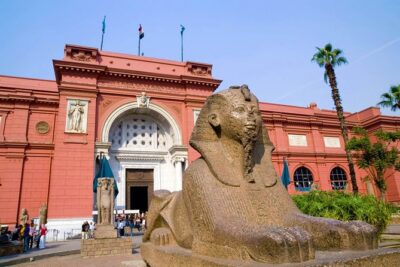
Tour to Giza Pyramids and The Egyptian Museum
Read our review →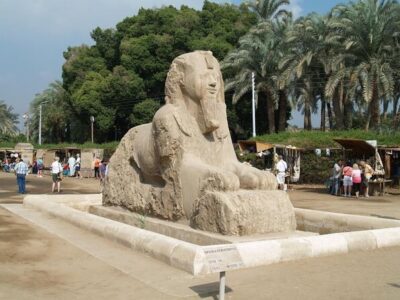
VIP All inclusive Best of the best Giza Pyramids,Sakkara,Memphis
Read our review →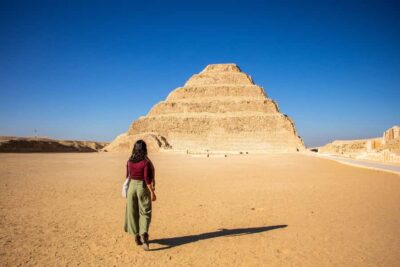
Pyramids of Giza, Sphinx, Saqqara & Memphis Tour
Read our review →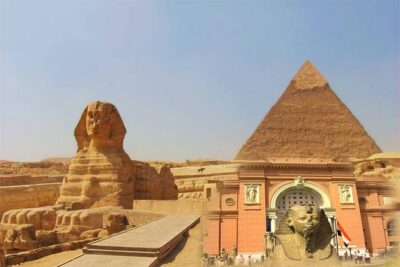
Cairo 8 Hour Private Tour of Pyramids, Egyptian Museum and Bazaar
Read our review →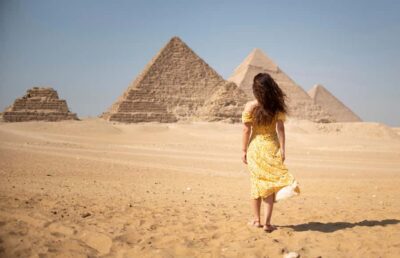
Half-Day Tour to Pyramids of Giza and the Sphinx
Read our review →