Reviewed · GIZA PYRAMIDS TOURS
Giza Pyramids, the Sphinx, Islamic & Coptic Cairo Tour
One day, three eras, and a camel ride. This private Cairo tour packs ancient pyramids, Christian landmarks, medieval mosques, and Ottoman architecture into about eight hours, with an Egyptologist guide and hotel pickup included. It is a strong choice if you have limited time and want to see more than the usual pyramid circuit.
I like the private vehicle and flexible pace, especially in a city where traffic and heat can quickly wear you down. I also like the range: you get the Giza Pyramids and Sphinx, then move into Coptic Cairo and the Citadel of Saladin. The main drawback is that admission fees, food, drinks, and gratuities are extra, so the $43 price is only the starting point.
The tour is designed for a private group, not a mixed coach. That makes it easier to ask questions, linger at a favorite site, or move on when a stop has run its course. Guide Muhammad Swefy is praised for his enthusiasm and for showing both major sights and less familiar corners of Old Cairo. Another guide, Mo, has been especially attentive to practical details such as water, snacks, and lunch advice.
In This Review
- Five useful things to know before booking
- Seeing the Giza Pyramids before the crowds and heat build
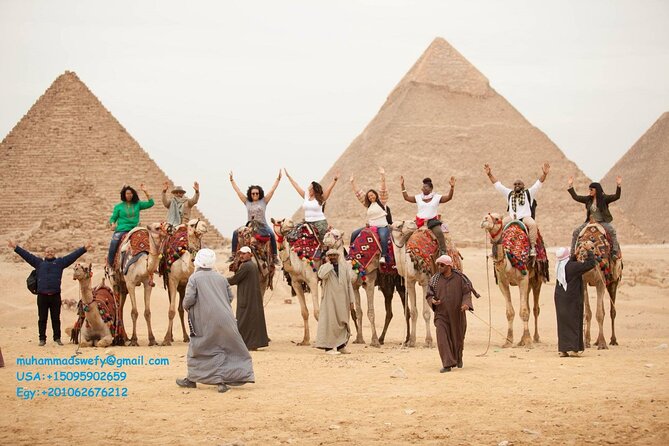
- A short camel ride with the pyramids behind you
- The Sphinx and Valley Temple, two different faces of Giza
- Coptic Cairo, where churches rise inside Old Cairo
- The Hanging Church and its unusual setting
- The Citadel of Saladin and Cairo from above
- The Muhammad Ali Mosque and its Ottoman profile
- A walk through the lesser-known Islamic monuments
- Lunch, timing, and the real cost of the day
- Who will enjoy this private Cairo day?
- Should you book this Giza and Cairo tour?
- FAQ
- Is hotel pickup included?
- What time does the tour start?
- Is this a private tour?
- Are entrance tickets included?
- Is the camel ride included?
- Can I cancel for a full refund?
Five useful things to know before booking
- Nine pyramids are part of the Giza visit: The route focuses on the three famous pyramids but also gives you views of the wider group.
- A short camel ride is included in the plan: It is mainly for desert views and photographs, not a long riding expedition.
- Hotel pickup and return are offered: You travel in a private air-conditioned vehicle with mineral water onboard.
- The day mixes Christian and Islamic Cairo: The Hanging Church, Coptic landmarks, mosques, the Citadel, and the Muhammad Ali Mosque all fit into one outing.
- Entrance fees are not included: Budget for tickets, lunch, drinks, and gratuities in addition to the advertised price.
- The pace can be intense: One full-day schedule covers a lot, and there may be little time for long meal or coffee breaks.
Seeing the Giza Pyramids before the crowds and heat build
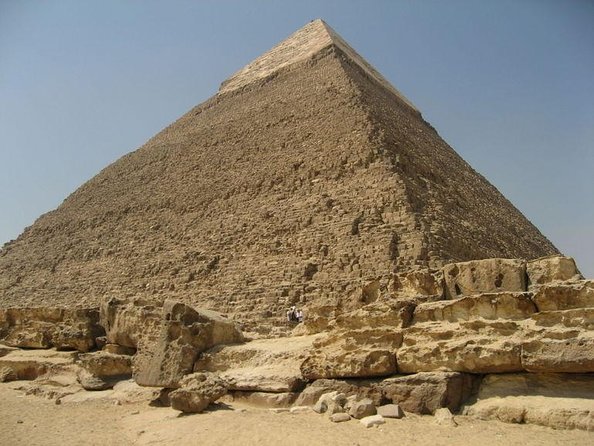
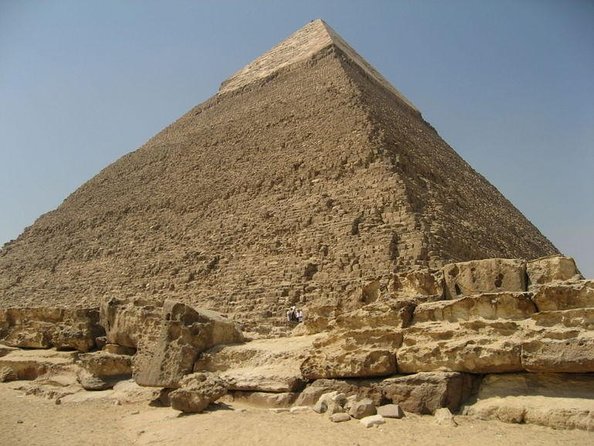
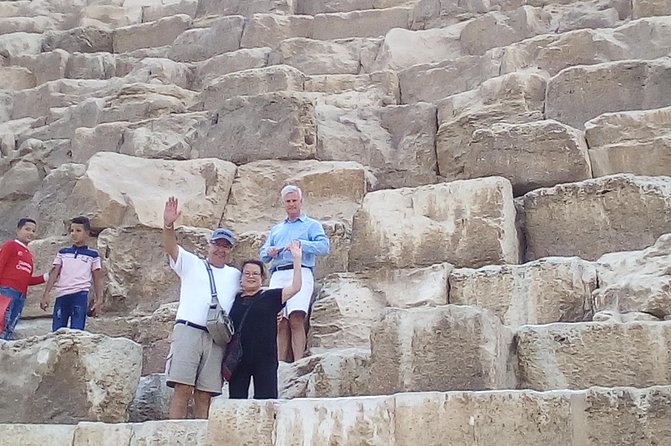
The tour begins with Egypt’s most famous sight, the Giza plateau. You visit Cheops’s Great Pyramid, the only surviving wonder of the ancient world, along with the pyramids of Chephren and Mykerinus. The wider view includes the smaller pyramids and related monuments, giving you the chance to see the group of nine pyramids described in the tour plan.
Your Egyptologist guide is important here. Without context, the pyramids can feel like huge stone triangles with a long line of photo stops. With a guide, you can connect the monuments to the rulers who built them, understand the difference between the main pyramid complex and the surrounding smaller pyramids, and ask questions while you still have the energy to take it all in.
The panoramic viewpoint is one of the best parts of the Giza section. From there, you can frame several pyramids in one view and take the classic desert photographs. Bring a hat, sunscreen, and water even though mineral water is supplied in the vehicle. The open plateau offers little shade, and the sun can feel strong.
Admission tickets are not included in the $43 price. That keeps the advertised cost low, but you should check the current entrance charges before you go, especially if you want to enter one of the pyramids rather than simply view it from outside. The tour description clearly includes the pyramid grounds and nearby sights, but it does not list interior pyramid entry as part of the package.
More ways to see the Pyramids and the Sphinx:
- Private guided tour to Giza Pyramids, and Great Sphinx
★ 5.0 · 1,755 reviews - VIP Giza Pyramids,Sphinx,ATV bike,CamelRide,Shopping&DinnerCruise
★ 5.0 · 704 reviews - From Hurghada: Pyramids and Egyptian Museum Tour & Boat Ride
★ 4.4 · 381 reviews
A short camel ride with the pyramids behind you
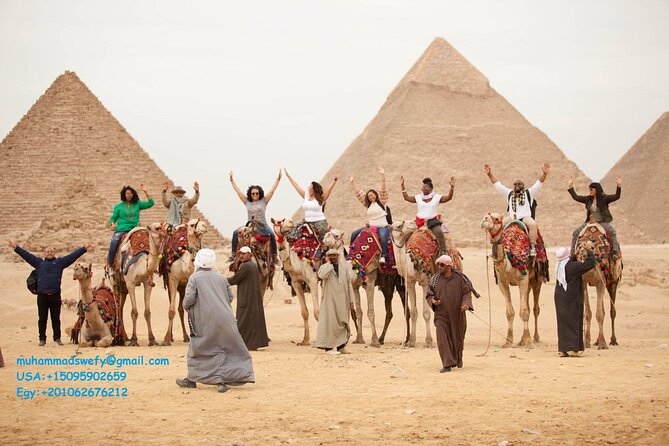
The camel ride adds a traditional desert image to the Giza visit. You ride near the pyramids, with the wider plateau behind you, and have time for photographs. The description calls it a short ride, so you should think of it as a brief scenic activity rather than a full desert trek.
That distinction matters. If you have never ridden a camel, a short outing is enough to experience the slow, swaying motion without making it the central event of your day. The tour guide can also help you decide if the ride suits your comfort level. One guide helped a rider choose a camel named Mickie, a small detail that shows how a private tour can feel more personal than a fixed group schedule.
The tour plan includes a panoramic point and a camel ride, but the list of included services does not separately spell out every camel-related charge. Ask your operator what is covered before setting out. You should also follow your guide’s advice about mounting and dismounting, since the camel’s sudden rise can catch first-time riders off guard.
The Sphinx and Valley Temple, two different faces of Giza
The Great Sphinx is visited after the main pyramid area. Carved from a single block of stone at the foot of the Pyramid of Chephren, it combines a human head with a lion’s body and remains one of Cairo’s most recognizable sights.
The Sphinx viewing area can feel more compact than the broad pyramid plateau. Your guide can explain the connection between the Sphinx and the Valley Temple nearby, a carefully built structure once linked to the burial complex of Chephren. The Valley Temple is made from large stone blocks and gives you a better sense of the engineering behind the royal complex.
Plan your expectations carefully. This is a busy, highly photographed part of Giza. The value comes from understanding what you are seeing, not from expecting a quiet encounter. Your guide can help you find the best available angle for photographs and keep the visit moving.
A stop at an essential oil maker is also included after the Sphinx section. You learn about oils associated with ancient Egyptian skincare, rituals, and the preservation of mummies. Some visitors enjoy this cultural and commercial presentation, while others may prefer more time at the monuments. If shopping stops are not your priority, ask how long the visit will last.
Coptic Cairo, where churches rise inside Old Cairo
The Coptic Cairo portion changes the mood completely. Here, the focus moves from pharaohs to Egypt’s Christian tradition, with the Babylon Fortress, old churches, and sites connected to the Coptic Orthodox community.
The area includes the Church of Saints Sergius and Bacchus, also called Abu Serga. Christian tradition holds that the Holy Family stayed in this area during its time in Egypt. That tradition gives the neighborhood a personal and religious dimension that is easy to miss if you only rush between monuments.
Coptic Cairo also includes the Greek Church of St. George and the Coptic Museum among its important sites. The tour description allows about two hours for this part of the day, though the exact order and time at each church can change. The churches are not simply decorative stops. Their placement within Old Cairo reflects the long religious story of the city, before and after the Muslim conquest in the seventh century.
The strongest reason to visit with a guide is the detail. Architectural features, church traditions, and the relationship between the fortress and the surrounding churches are easier to understand when someone explains them on the spot. The private format also makes it easier to ask sensitive questions about Coptic history and religious practice.
A few more Giza outings to price up
- Egyptian Museum in Cairo: Private Guided Tour
★ 5.0 · 316 reviews - Private Tour to explore Giza Pyramids – Saqqara -Memphis
★ 5.0 · 294 reviews - Cairo: Grand Egyptian Museum QR Ticket
★ 4.7 · 243 reviews - Sharm El-Sheikh: Full-Day Tour of Cairo and Pyramids by Bus
★ 4.8 · 237 reviews
The Hanging Church and its unusual setting
The Hanging Church, officially Saint Virgin Mary’s Coptic Orthodox Church, is one of the best-known sights in Coptic Cairo. A church has occupied this site since the third century, and the present building is associated with the Coptic Orthodox Church of Alexandria.
Its popular name comes from its position above the Roman-era remains of the Babylon Fortress. Inside, you can expect an atmosphere shaped by old woodwork, religious icons, and the unusual feeling of a church built over earlier structures. The planned visit lasts about 20 minutes, so this is an introduction rather than a slow architectural study.
Dress modestly and behave quietly. This is an active place of worship, not only a museum stop. The same courtesy applies to the other churches on the route. Admission is listed as free for this stop, though the broader tour does not include all entrance tickets.
The Citadel of Saladin and Cairo from above
After Coptic Cairo, the tour heads to the Cairo Citadel, also called the Citadel of Saladin. Salah ad-Din began the medieval fortification, and later rulers expanded it. For nearly 700 years, it served as the seat of government and the residence of Egypt’s rulers.
The Citadel gives you a helpful break from street-level Cairo. Its elevated position provides broad city views, and the stone walls and open courtyards create a sharp contrast with the narrow lanes of Old Cairo. The planned stop lasts about an hour and a half, giving you enough time to see the main sights without turning the visit into a rushed photo stop.
The Citadel’s admission fee is not included. Since the tour covers several paid areas, keep some Egyptian currency or another accepted payment method available. The operator states that all service charges and taxes are included, but that does not cover attraction tickets, food, or gratuities.
The Muhammad Ali Mosque and its Ottoman profile
The Great Mosque of Muhammad Ali Pasha is the Citadel’s visual centerpiece. It was commissioned between 1830 and 1848 in memory of Tusun Pasha, Muhammad Ali’s oldest son, who died in 1816.
The mosque is also called the Alabaster Mosque because of its extensive alabaster facing. Its twin minarets and large domes make it one of Cairo’s most visible buildings. From many parts of the city, its outline helps you understand where the Citadel sits.
Allow about 30 minutes for the mosque itself. That is enough to appreciate the courtyard, domes, minarets, and interior scale, but not enough for a slow examination of every detail. Wear clothing that covers shoulders and knees, and be ready to remove shoes if requested. The mosque is an active religious site, so follow your guide’s instructions.
The tour summary refers to an Ali Pasha mosque, while the detailed stop identifies the Muhammad Ali Mosque. Confirm the exact planned site when booking if this distinction matters to you. The supplied information clearly points to the Muhammad Ali Mosque at the Citadel.
A walk through the lesser-known Islamic monuments
The Islamic Cairo portion is ambitious. In addition to the Citadel and Muhammad Ali Mosque, the route description includes Al-Ishaqi Mosque, Bab Zuweila, Al-Salih Tala’i Mosque, the Faraj ibn Barquq funerary complex, Sabil-Kuttab, Al Kurdi Mosque, Gani Bek Mosque, Al Burdayni Mosque, Saint Safiyya Mosque, and Al Azhar University.
Bab Zuweila is especially memorable. This Fatimid gate once marked an entrance to the old city, and its stones carry stories of power, punishment, and changing dynasties. Al-Salih Tala’i Mosque offers a different architectural period, with distinctive 12th-century design.
The route also introduces you to the Mamluk era through Al-Ishaqi Mosque and the Faraj ibn Barquq complex. These places can be less immediately familiar than the main Cairo sights, but that is precisely their value. You get a better sense of how Cairo developed through mosques, schools, tombs, fountains, and fortified gates rather than through a few isolated monuments.
The Museum of Islamic Art is another major stop named in the route plan. Its collection covers art and objects from across the Islamic world. Check with the operator about the day’s exact sequence and entrance arrangements, since the overall tour includes many sites and tickets are not included.
Al Azhar University adds an important intellectual chapter. It is one of the oldest continuously operating universities in the world, and its presence helps explain why Cairo became a major center of Islamic learning. You will get more from this section if you ask your guide how the university relates to the surrounding mosques and madrasas.
Lunch, timing, and the real cost of the day
A lunch stop is planned at a deluxe Egyptian food court, but the meal is your own expense. Food and drinks are not included, and one useful improvement would be to build in a clearer coffee or rest break. The schedule covers a full day of sightseeing, and six or more hours without a proper pause can feel long in Cairo’s heat.
At $43 per person, the tour offers good value for a private vehicle, hotel transfers, an Egyptologist guide, and a packed route. You are paying less for a single ticketed attraction and more for having transport and interpretation arranged across several parts of the city.
Still, calculate the full cost. Add entrance tickets, lunch, drinks beyond the onboard mineral water, the camel arrangement if it is charged separately, and a tip for the guide and driver. The advertised rate is attractive, but the final amount will be higher.
Pickup and return are offered from Cairo or Giza hotels. The general meeting information also mentions a centrally located park or mosque, so confirm your exact pickup point and start time. The stated start time is 9:00 a.m.
Who will enjoy this private Cairo day?
I would choose this tour if you have one full day and want Cairo’s major ancient, Christian, and Islamic sights in one organized outing. It suits first-time visitors who prefer a guide and private transport over arranging several taxis and tickets on their own.
It is also a good fit for families with older children, couples, and small groups who want to adjust the pace. Children must be accompanied by an adult, and everyone should have moderate physical fitness. You will walk through outdoor archaeological areas, churches, mosques, and the Citadel, often under warm conditions.
I would not choose it if you want a slow, single-theme visit. The schedule is full, and you may only get a short look at some sites. It is also less suitable if you dislike shopping presentations or want long, unhurried meals.
The strongest praise goes to the guides’ personal care and enthusiasm. Muhammad Swefy is especially good for readers who want both major sights and lesser-known corners explained in detail. Mo is noted for anticipating practical needs such as water, snacks, and lunch. Those details matter on a long Cairo day.
Should you book this Giza and Cairo tour?
Book it if you value range, private transport, and strong guide support more than a relaxed pace. For $43 per person, the base price is appealing, particularly for a private day with hotel transfers and an Egyptologist.
Before paying, confirm the exact pickup point, current entrance fees, camel ride charges, lunch plan, and which Islamic Cairo sites can fit into the day. Cancel at least 24 hours before the 9:00 a.m. start for a full refund. With those details settled, this is a practical way to connect the pyramids with the religious and political story of Cairo.
FAQ
Is hotel pickup included?
Yes. Pickup and return are offered from Cairo or Giza hotels. The meeting information also mentions a centrally located park or mosque, so confirm the exact pickup point when booking.
What time does the tour start?
The stated start time is 9:00 a.m., and the tour lasts approximately eight hours.
Is this a private tour?
Yes. Only your group participates, and the tour uses a private air-conditioned vehicle.
Are entrance tickets included?
No. Entrance fees are not included in the advertised price. Food, drinks, and gratuities are also extra.
Is the camel ride included?
A short camel ride is part of the planned Giza visit. However, the included services do not separately list every camel-related charge, so confirm the cost before the tour.
Can I cancel for a full refund?
Yes. You can cancel at least 24 hours before the experience start time for a full refund. Changes or cancellations made less than 24 hours in advance are not accepted for a refund.
Newly listed around Giza
- Full Day Trip from Cairo to Luxor★ 5.0 · 16 reviews
- VIP Tour inside Giza Pyramids★ 4.5 · 103 reviews
- Private guide’s trip to Giza pyramids, Great sphinx valley temple★ 5.0 · 37 reviews
- Private half Day Tour to the Great 3 Pyramids of Egypt★ 5.0 · 15 reviews
- Full-Day Private Tour to Giza Pyramids, Sphinx, Memphis & Saqqara★ 5.0 · 106 reviews
- Unique Tour to The Grand Egyptian Museum and 12 main galleries★ 4.0 · 38 reviews
- Elite Boats Tour in Cairo & Giza with Drinks Included★ 4.5 · 15 reviews
- Sunset & Night Open Air Nile Cruise in Cairo & Giza★ 5.0 · 158 reviews
Giza Pyramids Tours, compared.
Pyramids & Great Sphinx Private Tour with Camel Ride
Read our review →
Tour to Giza Pyramids and The Egyptian Museum
Read our review →
VIP All inclusive Best of the best Giza Pyramids,Sakkara,Memphis
Read our review →
Pyramids of Giza, Sphinx, Saqqara & Memphis Tour
Read our review →
Cairo 8 Hour Private Tour of Pyramids, Egyptian Museum and Bazaar
Read our review →
Half-Day Tour to Pyramids of Giza and the Sphinx
Read our review →