
Reviewed · CRUISES & BOAT TOURS
From Cairo: 8-Day Tour of Cairo, Luxor and Aswan with Cruise
Egypt packs a lot into eight days. This tour links Cairo’s pyramids and churches with Luxor’s temples, a four-night Nile cruise, Aswan, and Abu Simbel, all with transport, meals, entrance fees, and guides arranged for you. I especially like the private Cairo sightseeing and the calm change of pace aboard the Nile cruise. The main caution is simple: this is a busy schedule, and some days begin before sunrise.
I also like the daily WhatsApp planning, which has helped many visitors know the next pickup time, guide name, and itinerary before going to bed. Coordinators such as Zeinab, Marina, and Marolla have earned repeated praise for staying in touch and fixing problems quickly. Still, expect tipping, occasional shopping stops, and a few rushed visits, especially at Abu Simbel, Philae, Edfu, and Kom Ombo.
In This Review
- Key points to know before booking
- What $1,400 buys you across eight days
- Day 1: A gentle landing, lunch, and dinner on the Nile
- Day 2: Giza, Memphis, and Saqqara in one long day
- Day 3: Cairo’s Islamic and Coptic quarters
- Day 4: Flight to Luxor and the first Nile cruise evening
- Day 5: The optional balloon ride and Luxor’s west bank
- Day 6: Edfu and Kom Ombo by riverboat
- Day 7: Abu Simbel, Philae, and a final felucca ride
- Day 8: Returning to Cairo
- The real pace: efficient, tiring, and worth understanding
- Who should book this Egypt tour?
- Final verdict: strong value for a fast first visit
- FAQ
- What is included in the $1,400 price?
- Is the hot air balloon ride included?
- How long is the Nile cruise?
- Does the tour visit Abu Simbel?
- Are drinks included with the meals?
- Are guides available in languages other than English?
- Can each person in a group have a private room?
Key points to know before booking
- $1,400 covers the major costs: Cairo and Nile cruise accommodation, domestic flights, private transport, guides, entrance fees, and three meals daily are included.
- The itinerary reaches Abu Simbel: You get the long but worthwhile journey to Ramses II’s great temples, plus Philae Temple in Aswan.
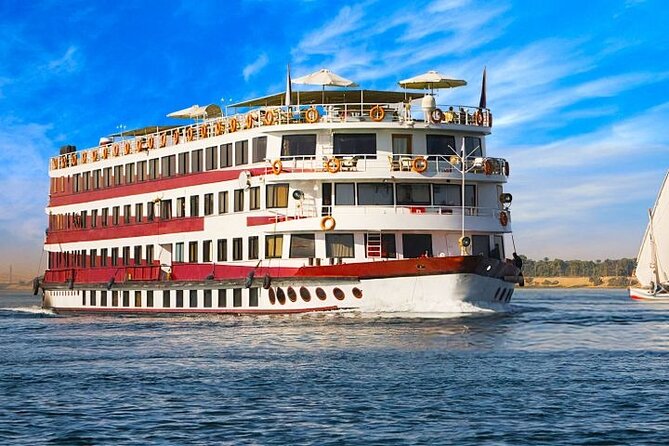
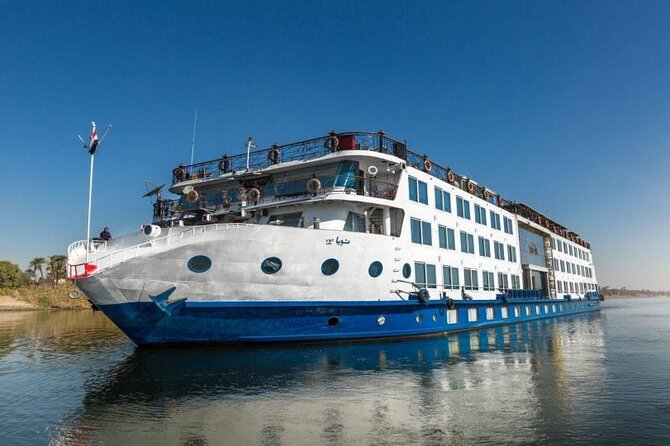
- The Nile cruise is the trip’s breathing space: Four nights aboard the boat break up the fast pace of Cairo and Luxor sightseeing.
- Cairo is handled by private car and guide: This makes the pyramids, Memphis, Saqqara, Citadel, and Coptic churches far easier to connect.
- The optional balloon ride costs $130: It requires an early start and is available for children aged six and older.
- This is an overview tour, not a slow study trip: You will see Egypt’s headline sights, but you will not have long free periods at every monument.
What $1,400 buys you across eight days
At $1,400 per person, this is a strong-value package if you want Egypt arranged from arrival to departure. The price includes three nights in a five-star Cairo hotel, four nights on a Nile cruise from Luxor to Aswan, flights from Cairo to Luxor and Aswan back to Cairo, private car or van transport, entrance fees, a private guide, and breakfast, lunch, and dinner each day.
That list matters in Egypt. Moving between Cairo, Luxor, Aswan, and Abu Simbel requires several transfers, tickets, and early departures. Handling all of that yourself can be tiring. Here, your coordinator sends the next day’s plan and connects you with the driver and guide. Zeinab, Marina, and Marolla are especially praised for quick WhatsApp replies and close attention to changes.
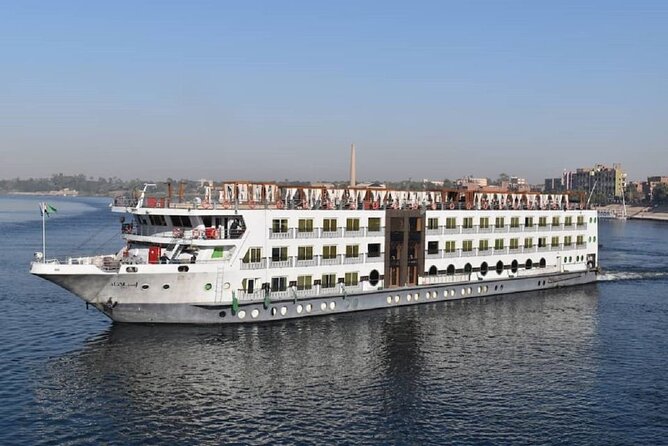
The word five-star needs a little care. The Cairo hotels were generally described as comfortable, and one booking included a room facing the Giza Pyramids. Cruise quality can vary by boat and package, and one ship was described as dated even though its buffet and staff were well regarded. Another group received an upgrade and enjoyed a newer Cairo hotel, so the exact property matters.
Drinks are not included. You should also set aside cash for tips to guides, drivers, boat staff, restaurant staff, and small service encounters. Shopping visits can also appear during sightseeing. Some people enjoy seeing papyrus, cotton, spice, or carpet workshops, but you may feel pressure to buy.
A few more Cairo outings to price up
- Cairo: Pyramids & Great Sphinx Private Tour with Camel Ride
★ 4.9 · 6,335 reviews - Tour to Giza Pyramids and The Egyptian Museum
★ 5.0 · 6,016 reviews - VIP All inclusive Best of the best Giza Pyramids,Sakkara,Memphis
★ 5.0 · 3,164 reviews
Day 1: A gentle landing, lunch, and dinner on the Nile
Your arrival begins with a representative meeting you outside the airport exit hall, holding a Nice Tours sign. You are then taken to a restaurant for a traditional Egyptian lunch before checking into your Cairo hotel.
The evening is more than a simple meal. Around 7 p.m., you board a Nile dinner cruise for food, moving river views, folklore, and traditional performances. It is a pleasant first look at Egyptian music and social life, especially after a flight.
The schedule is forgiving compared with the days ahead, but flight delays can affect the first day. One booking made at the last minute had a technical problem that created extra expense after an agreed start time changed. Send your arrival details clearly and confirm the meeting plan before flying.
Day 2: Giza, Memphis, and Saqqara in one long day
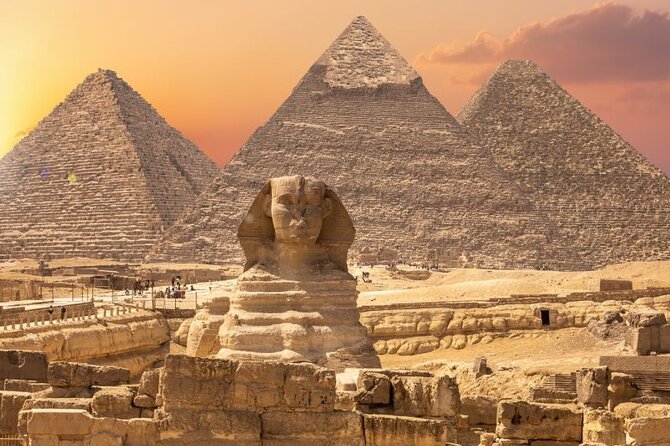
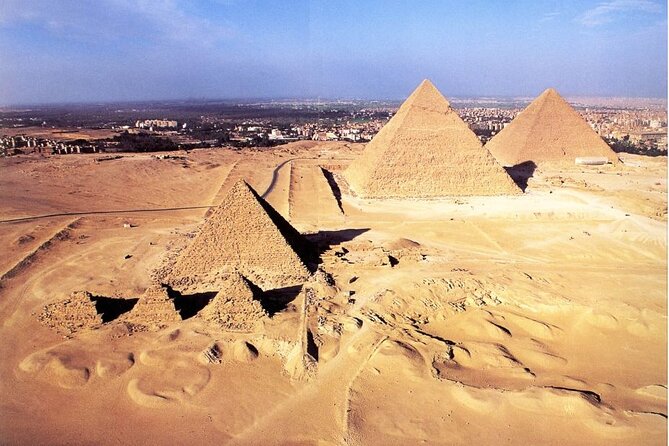
The Great Pyramids of Giza are the headline act, and you get time with the three major pyramids and the Sphinx. Your private guide explains the monuments and helps with photographs, which is useful because the site is broad and the approach can feel confusing on a first visit.
The pyramids are not just a quick photo stop. You will be near the oldest surviving wonder of the ancient world, built as royal tombs more than four thousand years ago. Entry inside a pyramid is not listed as included, so ask your guide what your ticket covers before adding anything.
Memphis gives the day historical depth. This former capital was tied to the worship of Ptah, and its surviving statues and fragments hint at the scale of the city that once dominated northern Egypt. It is less visually grand than Giza, but it helps connect the pyramids to the wider Old Kingdom world.
Saqqara is often the day’s surprise. The Step Pyramid of Djoser is an important turning point in pyramid design, and the surrounding necropolis includes tombs from several rulers. You get lunch between visits, then return to the hotel for dinner.
This day is packed, but the private vehicle makes the route practical. Cairo guides have received some of the strongest praise. Mahmoud, Christine, Mira, Amr, Ghada, Essam, and Mostafa are among the names singled out for clear explanations, care, and help with photos. Guide assignments are not guaranteed, so consider requesting a preferred guide only after your booking is confirmed.
Day 3: Cairo’s Islamic and Coptic quarters
Day three shifts from pharaohs to the city’s Islamic and Christian past. At the Cairo Citadel, Saladin’s medieval fortress occupies a hill above the city. The Muhammad Ali Mosque, often called the Alabaster Mosque, is the visual star, with broad courtyards, tall domes, and interior decoration that catches the light.
The site works best with a guide who can explain how the Citadel functioned as a seat of government, rather than treating it as just another photo stop. Mostafa was praised for making this part of the day clear and enjoyable, while other Cairo guides were appreciated for their patience and strong English.
Coptic Cairo offers a different mood. Saint George Church is built over an ancient Roman tower and is notable for its round form. The Hanging Church contains more than a hundred icons, including very old examples made from ebony and ivory.
You also visit the Hanging Church, one of Egypt’s oldest basilica-style churches, and learn how Christian communities continued here through long periods of political and religious change. Lunch at a local restaurant breaks up the sightseeing.
This is another full day, so wear comfortable shoes and keep water with you. One lunch received criticism for slow service and missing items, while other meals were described as good or surprisingly varied, including for vegetarians. Food quality can differ by restaurant and hotel.
Same base, a completely different sort of day:
- From Cairo: Pyramids of Giza, Sphinx, Saqqara & Memphis Tour
★ 4.7 · 3,110 reviews - Cairo 8 Hour Private Tour of Pyramids, Egyptian Museum and Bazaar
★ 5.0 · 2,931 reviews - From Cairo: Half-Day Tour to Pyramids of Giza and the Sphinx
★ 4.6 · 2,891 reviews - Cairo: Pyramids, Sakkara & Memphis Tour with Lunch
★ 4.6 · 2,493 reviews
Day 4: Flight to Luxor and the first Nile cruise evening
After breakfast, you transfer to Cairo Airport for the flight to Luxor. A representative meets you at Luxor Airport and takes you to the east bank, where the ancient city’s two great temple complexes await.
Karnak is enormous and layered. It was built and expanded by many rulers over roughly 1,500 years, so you see different periods in one sprawling complex. The great columns, sacred avenues, courtyards, and carved walls need context. A good guide turns the site from a forest of stone into a sequence of royal projects and religious spaces.
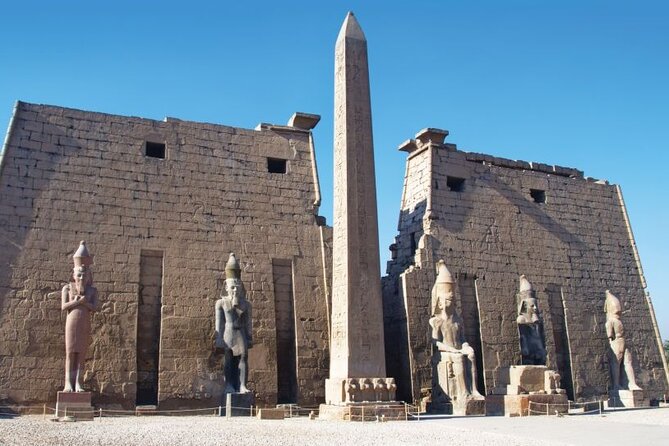
Luxor Temple is smaller and more compact. Its well-preserved statues and hieroglyphs made it a center for the annual Opet festival, when the sacred images of the gods traveled between temples. The contrast with Karnak is useful: Karnak feels like a vast religious precinct, while Luxor Temple feels easier to read as a ceremonial monument.
You check into the cruise around lunchtime. Later, a one-hour felucca ride lets you see the Nile from a small traditional sailboat before you return to the larger vessel. The felucca is not a major historical visit, but it adds a welcome quiet hour after the temples.
Day 5: The optional balloon ride and Luxor’s west bank
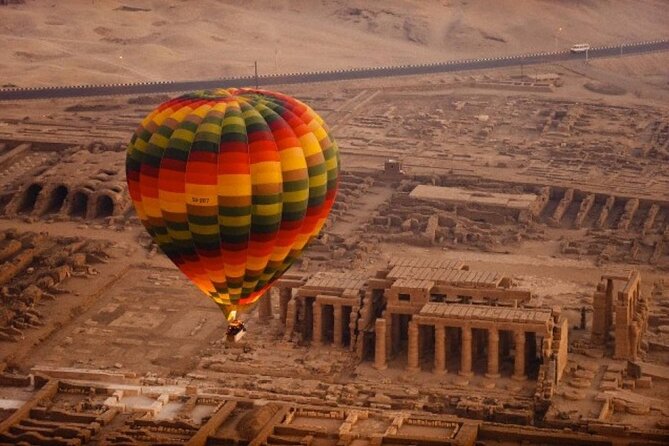
The hot air balloon ride begins before sunrise, with a breakfast box requested from reception. For $130 per person, you rise above Luxor and look across the Nile, with the east and west banks spread out below. The view is the point: temples, fields, river, and desert appear in one frame.
The ride has a minimum age of six. It is optional, so you can skip it if the early start does not suit you. If you go, expect a very early morning followed by a full sightseeing day.
On the west bank, the Valley of the Kings puts royal burial customs in close focus. The valley looks stark from outside, but its tombs contain painted scenes and carved passages built for the afterlife. Your ticket may cover a set number of tombs, and additional tombs can require extra payment, so ask your guide before entering.
The Temple of Hatshepsut is dramatically set against the cliffs. Its reliefs describe the queen’s birth and her trading expedition to Punt, generally linked with parts of modern Somalia or the nearby region. The site is broad and exposed, so sun protection and water matter.
The Colossi of Memnon make a quick final stop. These huge seated statues are ideal for photographs, though the Valley of the Kings and Hatshepsut Temple deserve most of your attention. You return to the boat for lunch and sail toward Edfu.
Luxor guides are often a highlight. Martina, Nirmeen, Salah, Mena, Abanoub, Ahmed Bahaa, and Ashraf are praised for enthusiasm, patience, and strong explanations. The experience depends partly on who is assigned, but the better guides clearly add value at the tombs and temples.
Day 6: Edfu and Kom Ombo by riverboat
Edfu Temple is dedicated to Horus and dates mainly from the Ptolemaic period. Its large pylons, enclosed courts, and detailed reliefs give you a strong sense of how an Egyptian temple was organized. Horse carriage transport may be used for the approach, and one person specifically suggested making that option voluntary because some carriage drivers were unpleasant.
You return to the ship for lunch, then continue to Kom Ombo. This unusual temple honors two gods, Sobek, the crocodile god, and Haroeris, the falcon form of Horus. Its divided design and river setting make it one of the more distinctive stops on the cruise.
The sightseeing window can be short. Edfu and Kom Ombo are tied to the ship’s sailing schedule, and late pickups can reduce time at the monuments. Some guides provide only a basic explanation, while others give the site real character. Keep your expectations realistic: these are efficient port visits, not private half-day explorations.
The night sailing toward Aswan is one of the cruise’s best features. After two demanding days in Luxor, you can sit on deck, watch the riverbanks pass, and let the boat do the work.
Day 7: Abu Simbel, Philae, and a final felucca ride
Abu Simbel requires the hardest start of the trip. You leave in the early morning with a breakfast box and travel as part of a group. The road journey takes roughly three hours each way, with about an hour at the temples.
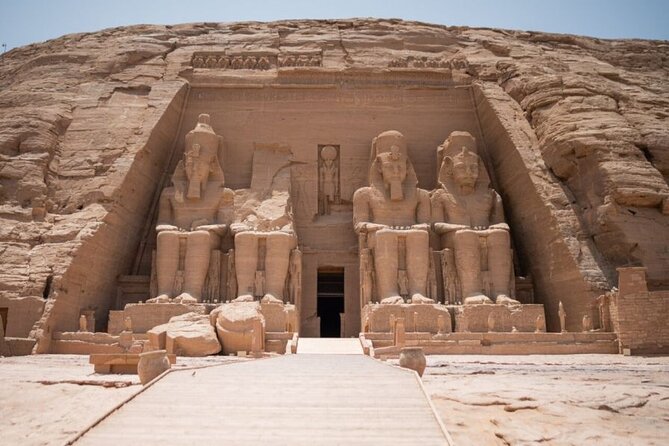
That is a lot of time on the road for a short visit, but Abu Simbel earns its place. Ramses II carved the great temple into the rock and dedicated it to Ptah, Ra, Amun, and his deified royal self. The four colossal seated figures at the entrance are unforgettable, and the interior reliefs show the power Ramses wanted to project.
Your guide also explains the modern rescue effort that moved the temples to higher ground when the Aswan High Dam threatened them with flooding. The site is now part of a UNESCO World Heritage listing. The long ride is tiring, but skipping Abu Simbel would leave out one of southern Egypt’s most memorable monuments.
Back in Aswan, lunch on the boat is followed by a visit to Philae Temple. Reached by boat on an island, Philae feels different from the land temples. Its inscriptions and sculpted gods remain remarkably evocative, and the short boat ride adds to the sense of arrival.
You finish with another traditional felucca ride before returning for dinner. Philae can feel rushed, especially after Abu Simbel. Allow yourself to enjoy the boat approach and the temple setting, even if the formal explanation is brief.
Guide quality at Abu Simbel and Aswan varies. Ahmed and Khaled were praised for care and strong historical explanations, while another Abu Simbel guide was described as unfriendly. In Aswan, Heba and Shezly received warm praise. The staff aboard boats such as Queen of Sheba were described as friendly, helpful, and attentive.
Day 8: Returning to Cairo
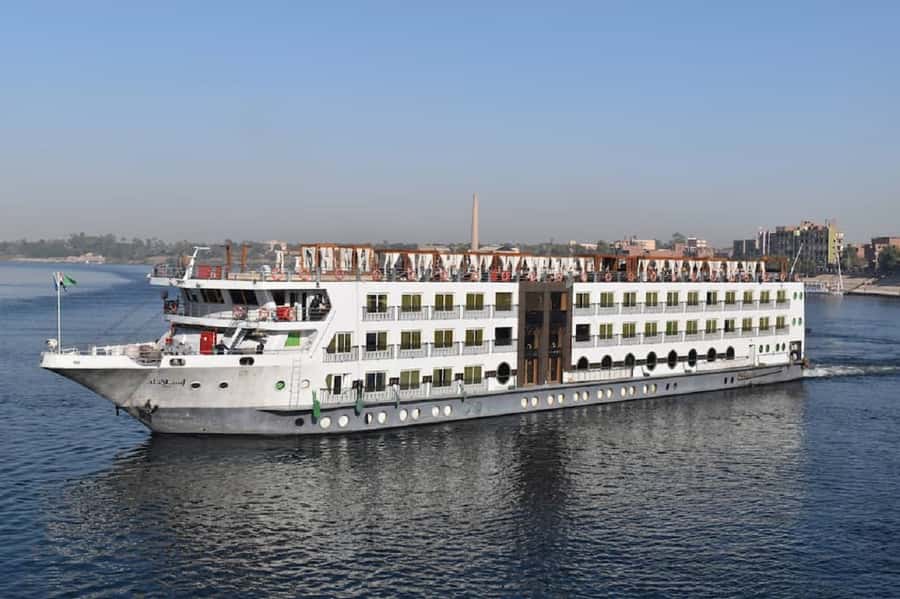
After breakfast on the ship, you transfer to Aswan Airport and fly back to Cairo. A representative meets you on arrival and takes you to your hotel or onward arrangements, depending on your return flight.
This final day is mainly a travel day. If your international flight leaves Cairo the same day, confirm the timing carefully with the coordinator. The schedule includes a transfer to Cairo, but it does not promise a final sightseeing block.
The real pace: efficient, tiring, and worth understanding
The strongest feature of this package is also its main weakness. You see the pyramids, Saqqara, Memphis, Cairo’s medieval monuments, Karnak, Luxor Temple, the Valley of the Kings, Hatshepsut, Edfu, Kom Ombo, Abu Simbel, and Philae in eight days. That is an impressive amount of Egypt.
The price buys convenience, but not leisure. Early mornings for the balloon ride and Abu Simbel can follow nights aboard the cruise, and some people report consecutive short nights. The Nile boat gives you rest during sailing hours, yet the shore visits remain tightly timed.
You should also expect several different guides. This can be useful because each city has local specialists, but the quality and English level may vary. The best guides, including Mahmoud in Cairo, Sara at Karnak, Aladdin in the Valley of the Kings, Shaima at Philae, Ahmed at Abu Simbel, and Amr at Edfu, can make the monuments memorable.
Shopping stops deserve a firm but polite approach. Papyrus, cotton, spices, and carpet workshops may be included in the route. You can look, ask questions, and decline to buy. Do not assume a free demonstration means you must purchase, and compare prices before spending.
Who should book this Egypt tour?
I would choose this tour if you want the main ancient sites with little planning and strong local support. It suits first-time visitors, families who prefer arranged transport, couples who want a ready-made honeymoon route, and anyone who values a private Cairo vehicle and a cruise between Luxor and Aswan.
It is less suitable if you want long museum visits, quiet mornings, independent restaurant choices, or extended time at each temple. The schedule favors coverage over lingering.
The daily messages from the coordinator are a major practical benefit. You are told who will meet you, when to leave, and what comes next, often the previous afternoon or evening. That support matters in a country where airport transfers, train and flight timing, temple entrances, and boat schedules can otherwise become a full-time job.
Final verdict: strong value for a fast first visit
I would book this tour for the coverage and the logistics, not for a slow, polished luxury holiday. At $1,400, the included flights, cruise, hotels, meals, entrance fees, guides, and private transport make the cost attractive, especially when you add Abu Simbel and the two felucca rides.
Go in ready for early alarms, tips, changing guides, shopping stops, and a cruise that may feel comfortable rather than truly five-star. If that trade-off suits you, this is a practical way to see Egypt’s biggest sights, with the Nile cruise providing just enough calm between the long sightseeing days.
FAQ
What is included in the $1,400 price?
The price includes three nights in a five-star Cairo hotel, four nights on a five-star Nile cruise, flights from Cairo to Luxor and Aswan to Cairo, private transport, a private guide, entrance fees, hotel pickup and drop-off, felucca rides in Luxor and Aswan, and breakfast, lunch, and dinner each day.
Is the hot air balloon ride included?
No. The hot air balloon ride is optional and costs an additional $130 per person. The minimum age is six years old.
How long is the Nile cruise?
The Nile cruise lasts four nights and travels from Luxor to Aswan.
Does the tour visit Abu Simbel?
Yes. The tour includes a group trip to Abu Simbel from Aswan. The journey takes about three hours each way, with approximately one hour at the temples.
Are drinks included with the meals?
No. Drinks are not included in the package price.
Are guides available in languages other than English?
The activity lists Arabic, English, French, German, and Spanish guide options. Spanish, German, or French-speaking guides may involve an additional choice or cost, so confirm the language arrangement when booking.
Can each person in a group have a private room?
Yes, but each person who wants an individual room needs a separate booking.
Newly listed around Cairo
- Full Day Trip from Cairo to Luxor★ 5.0 · 16 reviews
- VIP Tour inside Giza Pyramids★ 4.5 · 103 reviews
- Private guide’s trip to Giza pyramids, Great sphinx valley temple★ 5.0 · 37 reviews
- Private half Day Tour to the Great 3 Pyramids of Egypt★ 5.0 · 15 reviews
- Full-Day Private Tour to Giza Pyramids, Sphinx, Memphis & Saqqara★ 5.0 · 106 reviews
- Unique Tour to The Grand Egyptian Museum and 12 main galleries★ 4.0 · 38 reviews
- Elite Boats Tour in Cairo & Giza with Drinks Included★ 4.5 · 15 reviews
- Sunset & Night Open Air Nile Cruise in Cairo & Giza★ 5.0 · 158 reviews
Cruises & Boat Tours, compared.
Orange Bay Island Boat Trip w/ Breakfast and Lunch
Read our review →
Royal Seascope Submarine Cruise with Snorkel Stop
Read our review →
3 Islands, Dolphins & Snorkel Yacht Trip w/ Lunch
Read our review →
4-Days Nile Cruise From Aswan To Luxor including Abu Simbel and Hot Air Balloon
Read our review →
Dinner Cruise on the Nile River with Entertainment
Read our review →
Nile Sunset Dinner Cruise, Show & Optional Transfer
Read our review →