
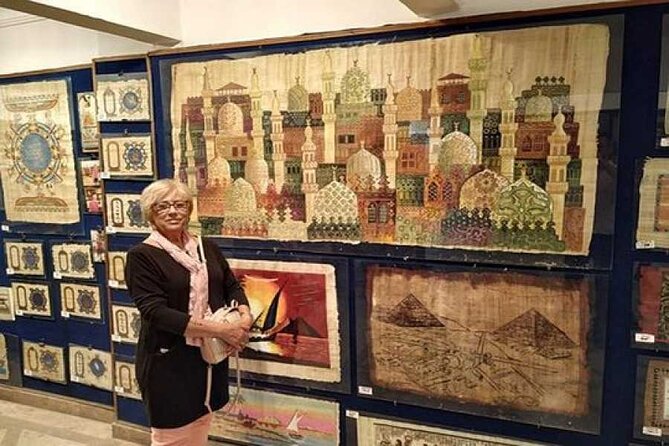
Reviewed · SHOPPING TOURS
Cairo Shopping tour Private Papyrus Essential oils Bazar Cotton
Cairo shopping comes with a sales pitch. This private tour takes you by car from Cairo or Giza to papyrus, essential oils, Egyptian cotton, jewelry, and government-linked bazaars. I like the private vehicle and hotel pickup, and I like having a guide beside me while prices, products, and Arabic labels swirl around.
The tour also includes bottled water, tea or coffee, and a local lunch of koshari or falafel. The main caution is shopping pressure and pricing. Some buyers found the stores expensive, especially for papyrus and cotton, while one person completed the planned shopping in about 90 minutes despite the advertised seven-hour duration.
In This Review
- Key points before you book
- What this Cairo shopping tour is really for
- Pickup from Cairo or Giza
- Mamluk jewelry and the bazaar stop
- How papyrus is made by hand
- Essential oils and the seven sacred oils story
- Egyptian cotton at the Three Pyramids Bazaar
- Lunch, timing, and what is actually included
- Guide quality and the private format
- Who should book this shopping day?
- Should you book it?
- FAQ
- How long does the Cairo shopping tour last?
- Where does pickup take place?
- Is this a private tour?
- Is lunch included?
- What can I buy during the tour?
- Are other guide languages available?
- Can I cancel for a full refund?
Key points before you book
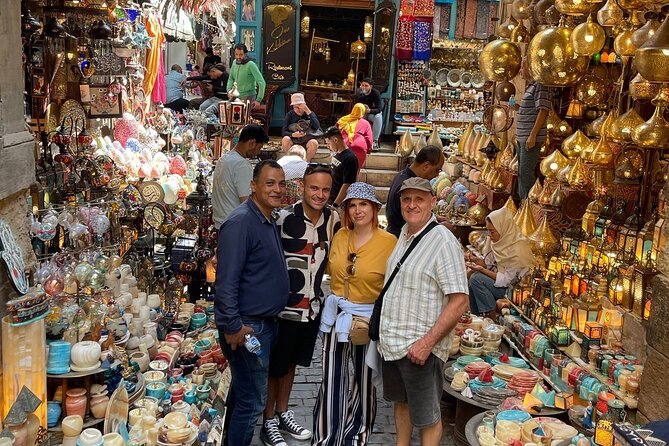
- Four shopping-focused stops: Expect jewelry and souvenirs, handmade papyrus, essential oils, Egyptian cotton, and perfume products rather than major ancient sites.
- Private transport and pickup: Pickup is offered from Cairo and Giza hotels, hostels, and private homes, with extra charges for several outlying areas.
- A strong guide can make the difference: Guide Adelle was praised for being friendly and helpful, while the driver also received good marks.
- Price checking matters: Some stores may charge much more than street sellers or independent shops, and bargaining may be limited.
- Lunch is included: The meal is listed as local koshari or falafel, while drinks beyond tea, coffee, and bottled water cost extra.
- The schedule may be flexible: Four stops are listed for about seven hours, but the actual shopping time can be much shorter.
What this Cairo shopping tour is really for
This is not a Cairo sightseeing tour with a little shopping added. It is a dedicated buying trip. You are collected from your accommodation, driven between shops, shown how selected products are made, and returned to your hotel.
That focus can be useful if you want souvenirs but dislike negotiating alone. Cairo’s shopping scene ranges from established stores to sidewalk sellers, and quality can be hard to judge when you are seeing papyrus paintings, silver cartouches, oils, cotton sheets, statues, magnets, and perfume bottles in quick succession.
The tour gives you a guide and driver for your own group. That means you do not share the vehicle with strangers, and you can ask questions as you go. The company says guides are available in English, Spanish, Italian, German, French, Chinese, Japanese, and other languages at no extra charge.
Still, you should treat the word private as a transport and guiding benefit, not as a promise of low prices. The main purpose of these shops is to sell. You may get help choosing an item, but you should not assume that a government-linked or official-looking shop has the cheapest deal in Cairo.
The advertised duration is about seven hours. Each of the first three stops is listed at two hours, and the perfume factory at one hour. In practice, the length can vary. One customer reported finishing the shopping portion in roughly an hour and a half, so ask your guide early how much time is planned at each stop.
A few more Cairo outings to price up
- Cairo 8 Hour Private Tour of Pyramids, Egyptian Museum and Bazaar
★ 5.0 · 2,931 reviews - Giza pyramids, Sphinx, ATV bike, Lunch,Camel ride, Dinner cruise& shopping tour
★ 5.0 · 798 reviews - Cairo: Private Pyramids, Museum & Bazaar Tour with Lunch
★ 4.6 · 744 reviews
Pickup from Cairo or Giza
Pickup is available from hotels, hostels, and private homes in Cairo and Giza. That is a real convenience in a city where crossing town by taxi can take time and patience.
The package includes private transport, hotel pickup, and hotel drop-off. It also includes a driver who speaks English. The description says all travellers are picked up, but it separately lists extra charges for New Cairo, all areas of 6 October, airport areas, Heliopolis, Nasr City, the Alexandria Desert Road, and other distant locations.
Confirm your address and any surcharge before departure. This matters especially if you are staying near the airport or in New Cairo, since a tour advertised at $5 per person may cost more once a remote pickup is added.
The price is unusually low for a private, seven-hour outing with a vehicle, guide assistance, lunch, water, and several included visits. In practical terms, the price may function as an entry point to the shopping circuit. Your real spending is likely to come from whatever you buy.
That is not automatically a problem. A private car and guide can save you time and reduce the worry of getting lost. But if your only goal is the lowest price for a cotton shirt or papyrus print, this may not be the right arrangement.
Mamluk jewelry and the bazaar stop
The first stop introduces you to Egyptian jewelry and souvenirs. The selection is described as including real gold, real silver cartouches, golden cartouches, statues, magnets, and other keepsakes.
A cartouche is a name written in Egyptian hieroglyphs, usually on a pendant or plaque. This can be one of the more personal souvenirs on the tour, especially if you want something tied to ancient Egyptian writing rather than a generic pyramid magnet.
The sales staff can write your name in hieroglyphs, and the guide can help explain the choices. Ask exactly what metal you are buying, how it is marked, and what the final price includes. If you choose gold or silver, request the weight and purity in writing before paying.
The stop is described as a trusted government bazaar. That may reassure you, but it does not remove the need to compare prices. Official connections and quality control do not mean every item is a bargain.
I would set a budget before you enter. Decide whether you want one meaningful item, such as a silver cartouche, or a handful of small gifts. Without a limit, the combination of personalized designs and a guide’s encouragement can push your spending far beyond the original tour cost.
The two-hour estimate gives you time to browse. If you are not interested in jewelry, tell the guide. The itinerary is shopping-heavy, so you will want to manage your time rather than wait quietly while others examine pieces.
How papyrus is made by hand
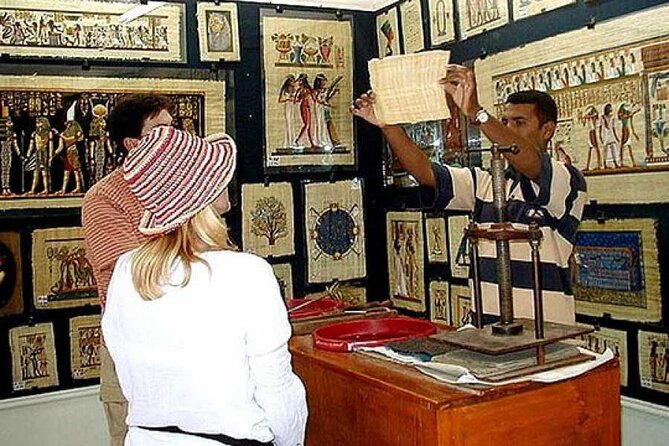
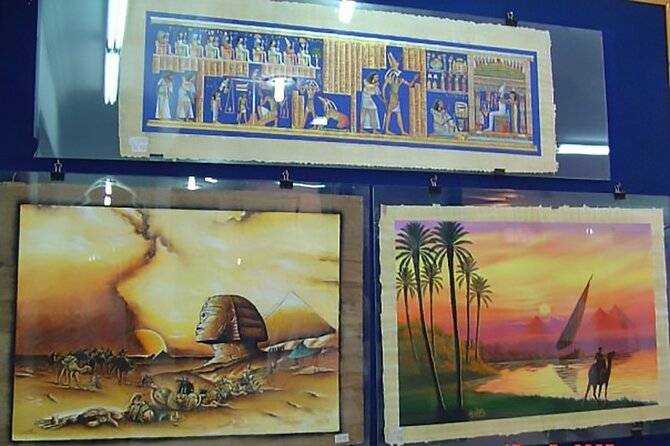
The papyrus stop is meant to be more than a shop visit. You are shown how papyrus, one of the earliest forms of paper, is made by hand.
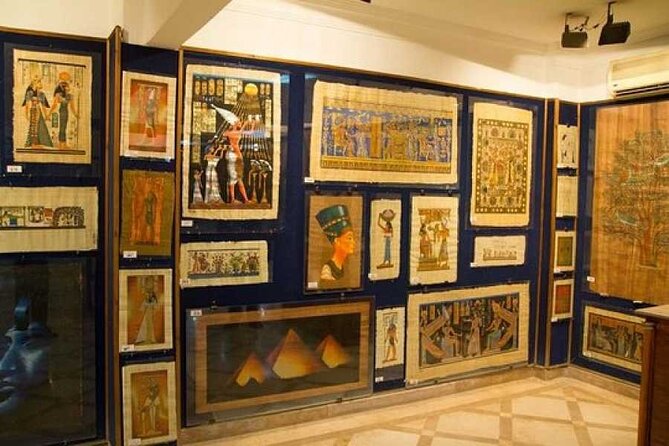
That demonstration gives you a useful way to judge the paintings. Look at the fibers, the feel of the sheet, and the colors. The shop sells handmade paintings and papyrus works with Egyptian scenes in bright colors. You may find this stop interesting even if you decide not to buy, since the making process adds context to an otherwise simple souvenir.
The concern is price. One customer felt that papyrus sold here cost several times more than similar pieces found elsewhere. That is the central shopping lesson of this tour: a demonstration can be worthwhile, but it does not prove that the shop offers the best deal.
Ask whether the piece is genuinely made from papyrus, how it should be transported, and whether it can be rolled safely for your flight. Also ask for the total price before the painting is wrapped. If the design is personalized or especially large, check whether that changes the cost.
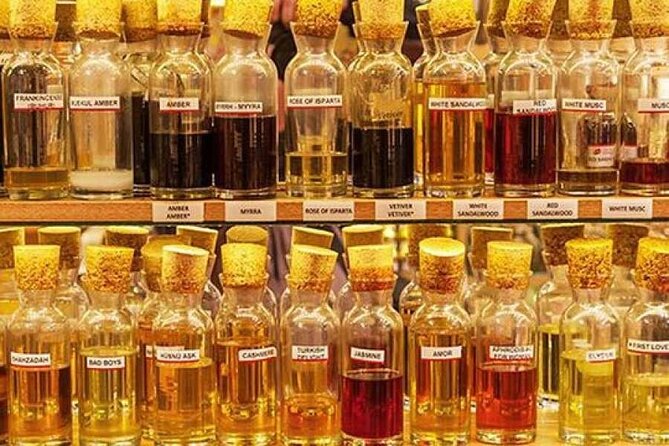
The stop also introduces lotus, blue lily flowers, and ancient Egyptian fragrance traditions. The description connects the scent display with the ancient world, though the practical value is simple: you can smell the products before deciding if you like them.
This is a good place to remember that aroma is personal. A scent that seems pleasant for a few seconds may feel strong after repeated testing. Take your time, and do not buy a large bottle simply because the product is presented as ancient or sacred.
Same base, a completely different sort of day:
- Cairo: Pyramids & Great Sphinx Private Tour with Camel Ride
★ 4.9 · 6,335 reviews - Tour to Giza Pyramids and The Egyptian Museum
★ 5.0 · 6,016 reviews - VIP All inclusive Best of the best Giza Pyramids,Sakkara,Memphis
★ 5.0 · 3,164 reviews - From Cairo: Pyramids of Giza, Sphinx, Saqqara & Memphis Tour
★ 4.7 · 3,110 reviews
Essential oils and the seven sacred oils story
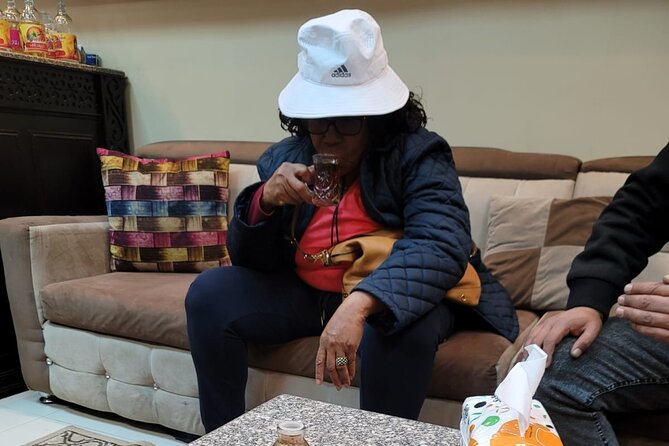
The perfume and oil portion takes place in a Bedouin family house and a perfume factory setting. You are shown pure essential oils and told about the seven sacred oils associated with the tomb of Kagemni, an official described as chief justice and vizier under King Teti in Egypt’s Sixth Dynasty.
The tomb is dated to about 2330 B.C. The story connects the oils with ancient Egyptian use of flowers and fragrance. It gives the stop a cultural angle that you will not get from simply walking into a modern cosmetics shop.
You can smell different oils and learn how the products are presented. The tour description calls them pure essential oils and mentions seven oils linked to the Kagemni story. Treat those claims as part of the sales presentation and ask clear questions about ingredients, concentration, intended use, and packaging.
Storage deserves attention. One customer was concerned that oils were kept in transparent jars under bright light, which can affect some oils over time. You cannot judge quality from the scent alone, so check labels and ask how the oil should be stored once you take it home.
Prices can also be high. A perfume stop often feels relaxed at first, then turns into a strong sales conversation. You are not required to buy. If you do want an oil, compare bottle size and price rather than choosing based only on the name attached to it.
Tea is also mentioned in connection with the stop. One person objected to tea being kept in open boxes. That is a fair reason to inspect how loose products are stored. If hygiene or freshness concerns you, skip the tea and focus on sealed items.
Egyptian cotton at the Three Pyramids Bazaar
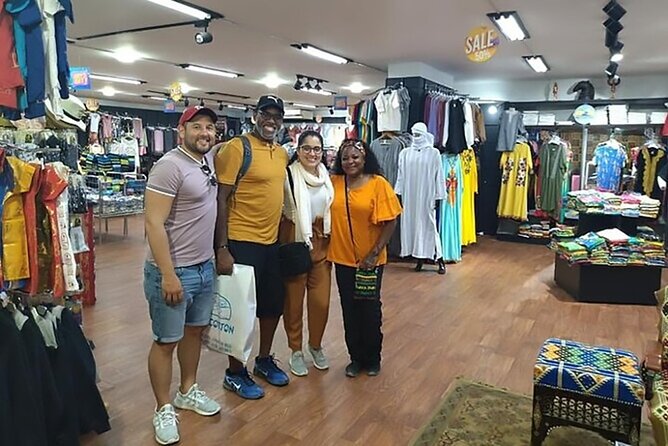
The third major stop covers Egyptian cotton and additional souvenirs. Egyptian cotton is an important export for Egypt, and the store may carry cotton goods along with silver and gold cartouches, statues, magnets, and related gifts.
The cotton stop is potentially useful if you want bedding, clothing, towels, or fabric gifts. Ask what the item is made of, whether it is pure cotton, and how the price compares with similar pieces elsewhere. The label and written details matter more than the phrase Egyptian cotton printed on a sign.
This is also the part of the tour that drew the sharpest criticism. One buyer described the cotton shop as poor and said prices were high with little room to bargain. That does not mean every item is bad, but it does mean you should enter with modest expectations and avoid buying quickly.
If you are shopping for a serious cotton purchase, inspect the fabric yourself. Feel the weave, check the stitching, and ask about washing instructions. For small gifts, the convenience may be worth the markup. For expensive bedding or several garments, comparison shopping is wiser.
The bazaar can also be used for smaller souvenirs. Magnets and statues are easier purchases because the financial risk is lower. You can ask to see several versions and compare size, material, and finish before deciding.
Lunch, timing, and what is actually included
Lunch is included and is listed as local Egyptian food, either koshari or falafel. Koshari is a filling dish made with ingredients such as rice, pasta, lentils, chickpeas, tomato sauce, and fried onions. Falafel is another familiar Egyptian choice.
Drinks are not included, apart from the listed bottled water and coffee or tea. Carry some small cash for drinks or extras, but do not assume the $5 price covers every purchase made during the day.
The schedule allows an optional lunch stop. Ask when lunch will happen and whether it is included at that specific location. A clear answer helps you avoid confusion, especially if you are hungry but still in the middle of a sales presentation.
The tour is described as lasting approximately seven hours, but the actual pace is flexible. Each stop has a suggested time, not necessarily a fixed shopping session. If you want a shorter outing, say so at the start. If you want a careful look at jewelry or papyrus, make sure the driver and guide understand that you do not want to rush.
Guide quality and the private format
The most praised part of the service is the human help. Guide Adelle was described as very nice and helpful, and the driver was also praised. That kind of support matters more here than a long lecture about Cairo.
A good guide can explain a cartouche, help with language, keep the day moving, and make it easier to refuse a purchase politely. The company also says local guides in several languages are available without an additional fee.
The private format gives you more control than a large group outing. You can ask questions, spend longer at a stop that interests you, or leave a shop sooner. You also avoid waiting for a full bus to gather.
The downside is that a private guide may take you directly through the company’s preferred shopping circuit. You should be friendly but firm about your limits. Say what you want to buy, what you do not want, and how much time you wish to spend.
Who should book this shopping day?
I would consider this tour if you want a simple, arranged introduction to Egyptian souvenirs and do not want to handle transport alone. It suits first-time visitors who want a private car, hotel pickup, a guide, and several product demonstrations in one day.
It also suits you if you are curious about papyrus-making, Egyptian cotton, cartouches, and perfume traditions, even if you plan to buy only one small item.
I would be cautious if your top priority is low prices. Street sellers and independent shops may offer cheaper goods, although they bring their own questions about quality and authenticity. The tour’s stores may provide a more controlled setting, but that convenience can come with a markup.
The tour is also a poor fit if you want pyramids, museums, mosques, or old Cairo sights. The name Three Pyramids Bazaar refers to a shopping stop, not a visit to the Giza pyramids.
Should you book it?
Book this if you value private transport, hotel pickup, guide support, and convenience more than bargain hunting. The low starting price makes it an inexpensive way to see how several Egyptian products are presented, and the included lunch and water add practical value.
Skip it if you dislike sales stops or want to spend your day sightseeing. If you book, confirm pickup charges, ask how long each stop will last, set a firm budget, and compare prices before buying papyrus, oils, cotton, or jewelry. Cancel without a fee at least 24 hours before the start time if you change your mind. Within 24 hours, the payment is not refunded.
FAQ
How long does the Cairo shopping tour last?
The tour is advertised as approximately seven hours. The itinerary lists two hours for the jewelry bazaar, two hours for the papyrus and oils stop, two hours for the cotton bazaar, and one hour for the perfume factory. Actual shopping time may be shorter.
Where does pickup take place?
Pickup is offered from hotels, hostels, and private homes in Cairo and Giza. Extra charges may apply for New Cairo, 6 October, airport areas, Heliopolis, Nasr City, Alexandria Desert Road, and other distant areas.
Is this a private tour?
Yes. The activity is private, and only your own group participates. Transport is by private vehicle.
Is lunch included?
Yes. Local Egyptian food, listed as koshari or falafel, is included. Drinks are not included, although bottled water and coffee or tea are listed among the included items.
What can I buy during the tour?
You can shop for papyrus paintings, silver and gold cartouches, jewelry, Egyptian cotton products, essential oils, perfume items, statues, magnets, and other souvenirs.
Are other guide languages available?
The company says guides are available in English, Spanish, Italian, German, French, Chinese, Japanese, and other languages without an additional guide charge.
Can I cancel for a full refund?
Yes, if you cancel at least 24 hours before the experience start time. Cancellations or changes made within 24 hours are not refunded.
Newly listed around Cairo
- Full Day Trip from Cairo to Luxor★ 5.0 · 16 reviews
- VIP Tour inside Giza Pyramids★ 4.5 · 103 reviews
- Private guide’s trip to Giza pyramids, Great sphinx valley temple★ 5.0 · 37 reviews
- Private half Day Tour to the Great 3 Pyramids of Egypt★ 5.0 · 15 reviews
- Full-Day Private Tour to Giza Pyramids, Sphinx, Memphis & Saqqara★ 5.0 · 106 reviews
- Unique Tour to The Grand Egyptian Museum and 12 main galleries★ 4.0 · 38 reviews
- Elite Boats Tour in Cairo & Giza with Drinks Included★ 4.5 · 15 reviews
- Sunset & Night Open Air Nile Cruise in Cairo & Giza★ 5.0 · 158 reviews
Shopping Tours, compared.
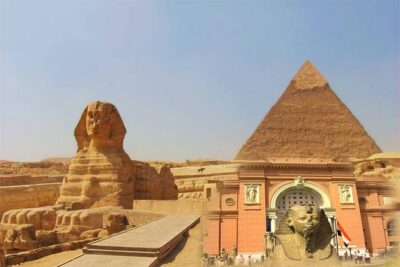
Cairo 8 Hour Private Tour of Pyramids, Egyptian Museum and Bazaar
Read our review →
Morning or Sunset Sights Guided Tour with Shopping
Read our review →
Giza pyramids, Sphinx, ATV bike, Lunch,Camel ride, Dinner cruise& shopping tour
Read our review →
Private or Shared City Tour with Guide & Shopping
Read our review →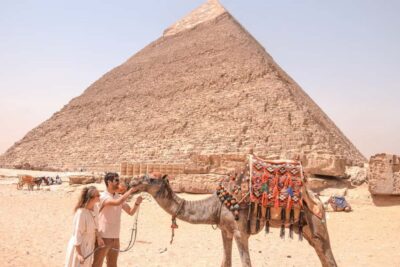
Private Pyramids, Museum & Bazaar Tour with Lunch
Read our review →
VIP Giza Pyramids,Sphinx,ATV bike,CamelRide,Shopping&DinnerCruise
Read our review →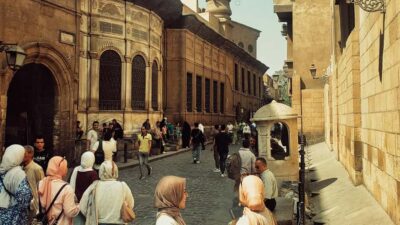
Local Markets & Khan el Khalili Private Shopping Tour
Read our review →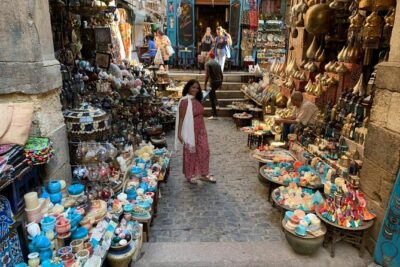
Day Tour to Giza Pyramids Complex, Egyptian Museum & Bazaar
Read our review →Browse the lists this tour appears in