
Reviewed · TRAIN EXPERIENCES
Cairo : Luxor East and West Banks Tour & Overnight SLEEPER Train Rounded trip
Egypt’s great monuments fit into one intense day. This three-day Cairo to Luxor trip combines round-trip sleeper trains, station transfers, and a private air-conditioned vehicle with an Egyptologist guide. I like that you can reach Luxor without arranging hotels or domestic flights, and I like the carefully chosen route through both the West and East Banks.
The trade-off is the tight schedule. You spend about nine hours on each overnight train and reach Cairo around 5 AM on the final morning. I would also budget carefully, since entrance fees are separate and the sleeper train experience may not suit anyone who needs a quiet, comfortable night.
In This Review
- Key Points Before You Book
- What the Three-Day Plan Really Feels Like
- Valley of the Kings: Tombs, Color, and Extra Fees
- Hatshepsut’s Temple and the West Bank
- Karnak Temple: The Day’s Biggest Site
- Luxor Temple at the End of a Long Day
- Is the Sleeper Train Worth the Trade-Off?
- How the $350 Price Adds Up
- The Guide Can Make or Break the Day
- Who Should Choose This Luxor Tour?
- Should You Book It?
- FAQ
- How long does the Cairo to Luxor tour last?
- Are sleeper train tickets included?
- Are meals included on the train?
- Are entrance fees included in the tour price?
- Can an international student card reduce entrance costs?
- Where does pickup take place?
- Which sites are visited in Luxor?
- Is a guide included?
- How large can the group be?
- What happens after arriving back in Cairo?
Key Points Before You Book
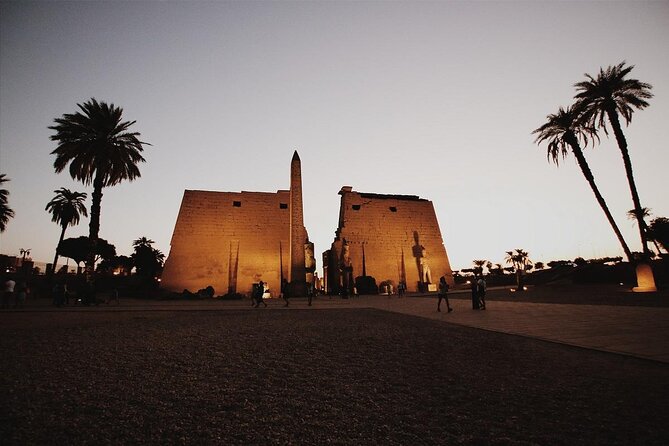
- One full day covers Luxor’s essential monuments: The route includes the Valley of the Kings, Hatshepsut’s temple, the Colossi of Memnon, Karnak, and Luxor Temple.
- Hany receives especially warm praise: He is described as an excellent Egyptologist guide who explains the sites clearly and answers questions well.
- The $350 price includes the big transport pieces: You get round-trip sleeper tickets, station transfers, guiding, vehicle transport, breakfast, and dinner on the trains.
- Entrance fees are not included: Pay for the sightseeing tickets in Egyptian pounds at the sites. An international student card gives a 50 percent discount on entrance fees.
- The train is the weak point for some people: This is the only sleeper train service used around Egypt for the route, so you have little choice if the cabin or schedule does not suit you.
- The group is capped at 15 people: That keeps the tour more manageable than a large coach outing, though the exact feel may depend on the day’s group.
What the Three-Day Plan Really Feels Like
This is not a leisurely Luxor holiday. It is a well-packed transfer from Cairo, followed by a long day among ancient monuments, then another overnight ride home.
On Day 1, pickup is offered from your hotel in Cairo or Giza. A driver takes you to the Cairo train station, helps with the departure process, and gets you settled for the overnight ride to Luxor. The train journey takes about nine hours, with dinner and breakfast provided onboard.
That arrangement saves you the cost and time of a hotel night in Luxor. It also means you do not lose a full sightseeing day to daytime rail travel. I see the appeal for anyone with limited time in Egypt, especially if Cairo is your base and Luxor is the one major addition you want to make.
You arrive in Luxor in the morning and meet the local guide at the station. From there, the tour uses a private air-conditioned vehicle for the monuments. At the end of the sightseeing day, you return to the station for the overnight train back to Cairo.
The final morning is early. Arrival is listed at about 5 AM, followed by pickup and transfer to your hotel in Cairo or Giza. If you have a later flight, this timing may work well. If you need to function at full speed that morning, plan on a tired start.
A few more Cairo outings to price up
Valley of the Kings: Tombs, Color, and Extra Fees
The first major stop is the Valley of the Kings on Luxor’s West Bank. This is where many of ancient Egypt’s rulers were buried, including Tuthmosis I, Tuthmosis III, Tut-Ankh-Amon, Ramses VI, Merenptah, and Amenhotep II.
The scheduled visit lasts about two hours. That gives you time to see the valley and enter the tombs covered by your admission ticket. Entrance is not included in the tour price, so keep Egyptian pounds ready for the site fees.
The valley is one of the strongest reasons to choose this day trip. The royal tombs are cut into the barren hills, and the painted chambers give you a close look at ancient funerary art. Your guide’s explanations matter here because the tombs can otherwise blur together after the first few rooms.
Tut-Ankh-Amon’s tomb is specifically named in the route, but the information provided does not confirm which tombs or number of tomb entries are included in your entrance ticket. Ask your guide what the standard ticket covers and what requires an extra payment.
I would also bring your camera, as requested by the operator, though you should follow the site’s current photography rules. The valley is not a quick photo stop. Two hours sounds generous, but it goes fast once you account for the transfer, ticketing, and time inside the tombs.
Hatshepsut’s Temple and the West Bank
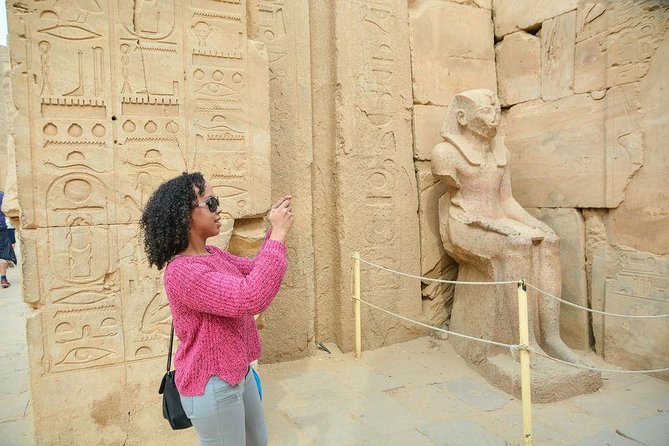
From the Valley of the Kings, you continue to the Temple of Queen Hatshepsut at Deir el Bahari. The visit lasts about 90 minutes, giving your guide enough time to explain both the architecture and Hatshepsut’s unusual position as the only female ruler highlighted in the tour description.
The temple is built against a dramatic cliff setting, with broad terraces leading toward the rock face. Its design feels different from the enclosed tombs in the valley, so the change of pace is welcome.
I especially like this stop for visitors who want more than a list of kings and dates. Hatshepsut’s reign brings questions about power, royal identity, and how ancient Egypt presented its rulers. A good guide can turn the stone terraces into a story rather than another monument to photograph.
Admission is extra here as well. Since the tour includes several paid sites in one day, the final cost will be higher than the advertised $350. The supplied information does not give the exact entrance total, so I would ask for the current amount in Egyptian pounds before departure.
The West Bank portion ends with the Colossi of Memnon, a shorter stop lasting about 40 minutes. These two huge seated statues represent Amenhotep III and once formed part of his mortuary temple. The original complex is not presented in the same complete form as Karnak or Luxor Temple, but the statues make a useful pause between the West and East Banks.
Karnak Temple: The Day’s Biggest Site
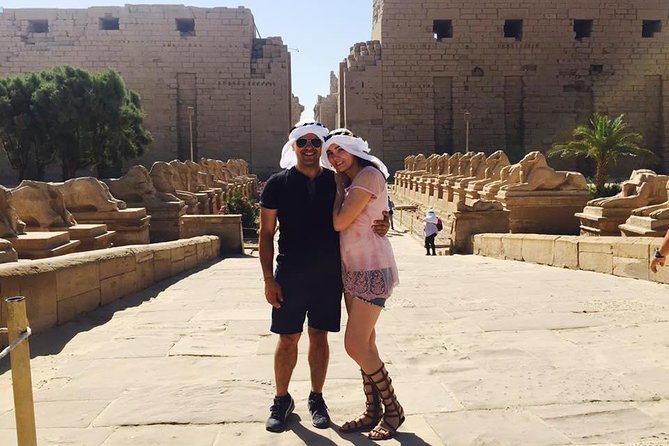
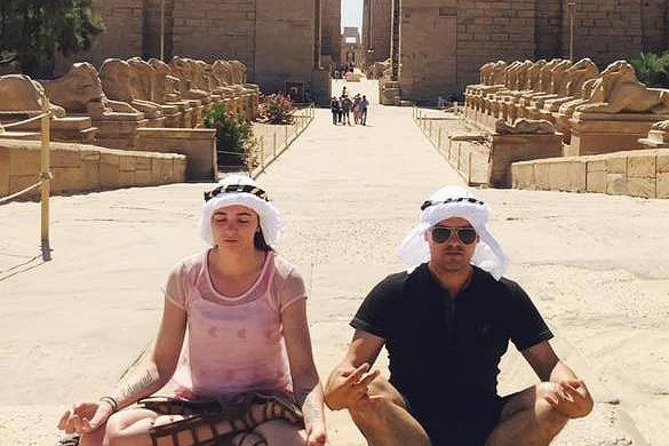
After crossing to the East Bank, you visit Karnak Temple for about two hours. This is the largest and most demanding stop of the day, so the air-conditioned vehicle and guide are valuable after the West Bank visits.
Karnak began as a place of worship dedicated to Amen Ra, his wife Mut, and their son Khonsu, though the supplied description uses the name Khanoum. More than 20 temples and additions spread across the vast complex, with later rulers adding their own work over many centuries.
The Hypostyle Hall is the showpiece. Its forest of giant papyrus-shaped columns gives you a sense of the scale ancient builders achieved. It is easy to rush through Karnak while trying to keep up with a group, so stay close to the guide during the main explanation, then use any spare minutes for your own photographs.
Two hours is enough for a strong introduction, not a complete study of every corner. The site covers a very large area, and the tour must still reach Luxor Temple and the train station. I would view this as a focused highlight visit rather than an all-day archaeological exploration.
Admission is not included. Karnak is one of the places where your student card could make a meaningful difference, since the stated discount is 50 percent for international students.
Same base, a completely different sort of day:
- Cairo: Pyramids & Great Sphinx Private Tour with Camel Ride
★ 4.9 · 6,335 reviews - Tour to Giza Pyramids and The Egyptian Museum
★ 5.0 · 6,016 reviews - VIP All inclusive Best of the best Giza Pyramids,Sakkara,Memphis
★ 5.0 · 3,164 reviews - From Cairo: Pyramids of Giza, Sphinx, Saqqara & Memphis Tour
★ 4.7 · 3,110 reviews
Luxor Temple at the End of a Long Day
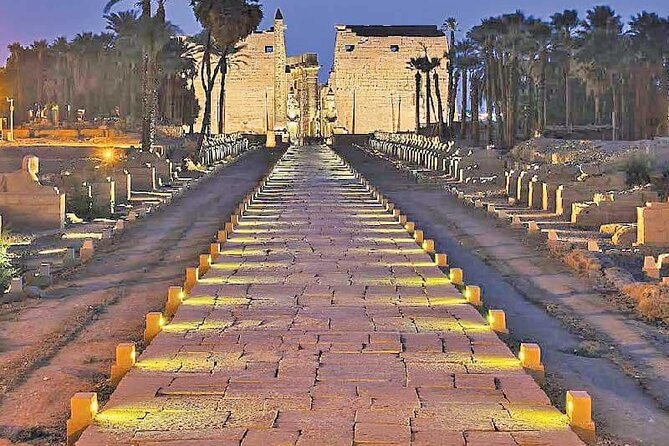
Luxor Temple is the final monument, with about 90 minutes scheduled for the visit. Its position on the East Bank makes it a fitting last stop before the return to the railway station.
The temple has a different mood from Karnak. It is more compact, and its columns, courtyards, and processional spaces are easier to take in after a long day. Your guide can help connect the two sites, since they were linked by an avenue and served related religious purposes.
By this point, you may be tired from the overnight train and the West Bank walking. Comfortable shoes and water will help, though the provided information only specifically requires bringing a camera. The tour does not state that meals or refreshments are included during the sightseeing day, so do not assume that the onboard breakfast and dinner cover your full food needs.
Luxor Temple is also the point where the schedule can feel rushed. Ninety minutes gives you a worthwhile visit, but it does not leave much room for delays earlier in the day. The operator may adjust the order or timing, but the stated plan moves directly from the major sites to the train station.
Is the Sleeper Train Worth the Trade-Off?
The sleeper train is both the clever idea and the main risk. It removes the need for a hotel in Luxor and lets you travel while you sleep, at least in theory. Round-trip tickets are included, along with dinner and breakfast on both journeys.
The train ride takes about nine hours each way. Some passengers find the cabin arrangement and overnight conditions less comfortable than expected. One of the strongest criticisms of the experience concerns the train rather than the Luxor sightseeing.
You should choose this tour because the train is an acceptable part of the adventure, not because you expect hotel-level rest. If you sleep lightly or need a high degree of comfort, a flight-based Luxor option may be a better match. The provider itself offers a same-day tour using round-trip flights, according to its response to a booking concern.
There is also only one sleeper train around Egypt used for this route, so the operator cannot offer several rail products for comparison. That limits flexibility. On the positive side, the included transfers reduce the chance of being left to find your way between a Cairo hotel, railway station, Luxor station, and tour vehicle.
A useful practical detail comes from a three-person booking: the pickup driver took the party from the hotel to the station and helped them reach their cabin. That kind of station assistance can matter, especially if you are unfamiliar with Cairo’s rail system or are managing luggage at night.
How the $350 Price Adds Up
At $350 per person, this is not simply a ticket to Luxor. The package includes pickup and drop-off at the train stations, sleeper tickets in both directions, dinner and breakfast each way, all listed transfers, the air-conditioned vehicle, an Egyptologist guide, service charges, taxes, landing fees, and parking fees.
That makes the price easier to understand. You are paying for a coordinated overnight trip with staff handling the movement between hotels, stations, trains, and monuments. Independent visitors could potentially spend less, but they would need to arrange the rail tickets, transfers, guiding, and site visits themselves.
The important catch is that all entrance fees are separate. The sightseeing tickets must be paid at each site in Egyptian pounds. The international student card discount can reduce those costs by half, so bring the card if you have one.
One booking raised concern about the total price and the way the costs were understood. The provider explained that pickup, transfers, guides, ticket handling, tours, service, and taxes were part of the wider cost. My advice is simple: confirm the full per-person amount, what is included, and the expected entrance-fee budget before you commit.
The tour is best value if you place a high price on saved time and organized transport. It is less attractive if you are comfortable booking trains, hiring a guide locally, and arranging your own station transfers.
The Guide Can Make or Break the Day
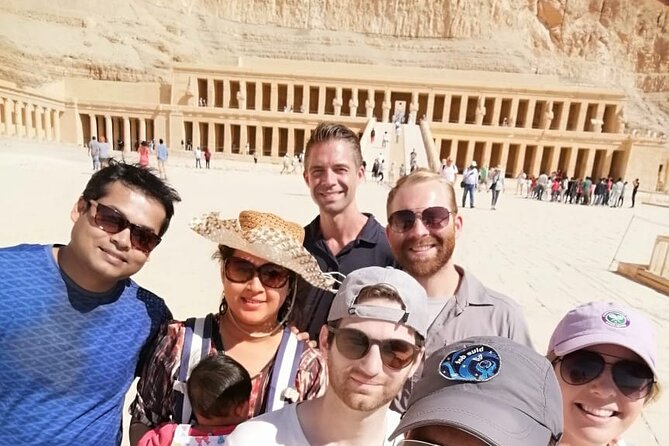
The guide is central to this experience because Luxor’s monuments are too large and layered for a quick visit without context. Hany receives especially strong praise for his Egyptology explanations, clear answers, and ability to keep the day moving.
One useful detail is that he reportedly offered extra help when the sightseeing finished early. That suggests some flexibility, though you should not assume that every departure will have time for added stops. The published route is already full.
The experience offers expert guides in different languages, but the available information does not list every language or guarantee a specific guide for each booking. If language is important, confirm it before paying.
The group maximum is 15 people, which is a sensible limit for monuments such as Karnak. A smaller group can make it easier to hear explanations and ask questions, though this is not advertised as a private tour for every person. The transport itself is described as a private air-conditioned vehicle, while the group format may still apply to the guided sightseeing.
Who Should Choose This Luxor Tour?
I would recommend this trip to you if:
- You have only three days to add Luxor to a Cairo visit.
- You want the major Luxor sights without booking separate trains, transfers, and guides.
- You are comfortable with two overnight rail journeys.
- You value an Egyptologist’s explanation at the monuments.
- You want to avoid paying for a separate Luxor hotel.
- You are willing to pay entrance fees separately in Egyptian pounds.
I would hesitate if you need two restful nights, dislike fixed schedules, or want long visits at each monument. The itinerary is efficient, but efficiency here means a full day with little spare time.
Families can take part, but children must be accompanied by an adult. Most people can participate, according to the supplied information, though the day includes several monument visits and a great deal of standing and walking.
The cancellation rule is strict near departure. You receive a full refund if you cancel at least three full days before the start time. Changes or cancellations inside that three-day window are not accepted and are not refunded.
Should You Book It?
Book this tour if your priority is seeing Luxor’s major monuments from Cairo in the shortest practical time. The guide, station transfers, included sleeper tickets, and full West Bank and East Bank route remove much of the planning burden.
Do not book it expecting a relaxed Nile journey or guaranteed premium sleep. The sleeper train is the compromise, and entrance fees add to the advertised cost. For many visitors, the chance to see the Valley of the Kings, Hatshepsut, Karnak, and Luxor Temple in one organized day makes that compromise worthwhile.
FAQ
How long does the Cairo to Luxor tour last?
The experience lasts approximately three days. You travel overnight from Cairo to Luxor, tour the monuments during the day, return overnight to Cairo, and arrive around 5 AM on Day 3.
Are sleeper train tickets included?
Yes. Round-trip sleeper train tickets between Cairo and Luxor are included.
Are meals included on the train?
Yes. Dinner and breakfast are provided onboard each way.
Are entrance fees included in the tour price?
No. Entrance fees for the sightseeing stops are paid separately at the sites in Egyptian pounds.
Can an international student card reduce entrance costs?
Yes. An international student card provides a 50 percent discount on entrance fees in Egypt, according to the supplied tour information.
Where does pickup take place?
Pickup is offered from hotels in Cairo or Giza. You are then taken to the Cairo train station.
Which sites are visited in Luxor?
The route includes the Valley of the Kings, the Temple of Hatshepsut at Deir el Bahari, the Colossi of Memnon, Karnak Temple, and Luxor Temple.
Is a guide included?
Yes. An expert Egyptologist guide is included, with different language options available.
How large can the group be?
The activity has a maximum of 15 participants.
What happens after arriving back in Cairo?
The train arrives at Cairo station at about 5 AM. A pickup transfer then takes you to your hotel in Cairo or Giza.
Newly listed around Cairo
- Full Day Trip from Cairo to Luxor★ 5.0 · 16 reviews
- Private guide’s trip to Giza pyramids, Great sphinx valley temple★ 5.0 · 37 reviews
- Private half Day Tour to the Great 3 Pyramids of Egypt★ 5.0 · 15 reviews
- VIP Tour inside Giza Pyramids★ 4.5 · 103 reviews
- Full-Day Private Tour to Giza Pyramids, Sphinx, Memphis & Saqqara★ 5.0 · 106 reviews
- Unique Tour to The Grand Egyptian Museum and 12 main galleries★ 4.0 · 38 reviews
- Private Day Tour to Giza Pyramids & Sphinx , with Pickup★ 5.0 · 60 reviews
- Elite Boats Tour in Cairo & Giza with Drinks Included★ 4.5 · 15 reviews
Train Experiences, compared.

6 Days Nile Cruise:Luxor,Aswan,Abu Simbel with Train Tickets from Cairo
Read our review →
Egypt on Budget – 8 Days ( Cairo , Aswan , Nile Cruise – Luxor ) Sleeper Train
Read our review →
Overnight Luxor Tours by train from Cairo with Hot Air Balloon and much more
Read our review →
4 Days Nile Cruise luxor.Aswan.abu simbel with Train Tickets from Cairo
Read our review →
6- Days Aswan , Abu Simbel , Cruise , Luxor & Round Sleeper Train
Read our review →
Luxor East and West Banks Tour by Overnight Sitting Train Rounded trip
Read our review →
3-Day Aswan , Nubian Village ,Abu Simbel , Luxor & Train ticket
Read our review →
3-Day Guided tours to Aswan, Abu Simbel and Luxor & Train and Transfers
Read our review →Browse the lists this tour appears in