Reviewed · PRIVATE
8 Days Egypts Ancient Civilization Private Tour
Egypt rewards a well-organized plan. This eight-day tour links Cairo, Alexandria, Aswan, and Luxor with private transfers, domestic flights, and three nights on a Nile cruise, giving you a broad look at the country’s major ancient sites without asking you to arrange every connection yourself. I especially like the combination of private Cairo and Alexandria touring with the slower rhythm of a five-star Nile cruise.
I also like that an English-speaking Egyptologist guide accompanies the major visits. Guides such as Fayed Gamal, Nancy, and Abanoub have earned especially warm praise for clear explanations, patience, language skills, and personal attention. The main drawback is pace: Alexandria is a long day from Cairo, and the tour packs many major monuments into a short time.
In This Review
- Key points to know before booking
- What the eight-day plan does well
- Day 1: A simple Cairo arrival
- Day 2: Giza, the Sphinx, and five thousand years of art
- Day 3: Alexandria and a long Mediterranean day
- Day 4: Flying south to Aswan and boarding the Nile
- Day 5: Kom Ombo, Edfu, and temples from the water
- Day 6: The Valley of the Kings and Luxor’s West Bank
- Day 7: Karnak, Luxor Temple, and the flight north
- Day 8: Departure without extra sightseeing
- What $1,950 per person really buys
- The guides and the human side of the trip
- Who should book this Egypt tour?
- Should you book the 8 Days Egypt Ancient Civilization tour?
- FAQ
- How long does the tour last?
- What cities and regions does the tour visit?
- Is the tour private?
- What accommodation is included?
- Are domestic flights included?
- Are meals included?
- What is not included in the price?
Key points to know before booking
- Three nights on a Nile cruise: Your floating hotel links Aswan, Kom Ombo, Edfu, and Luxor while meals are included onboard.
- A serious ancient Egypt hit list: You visit the Giza Pyramids, Sphinx, Egyptian Museum, Valley of the Kings, Karnak, Luxor Temple, Philae, Edfu, and more.
- Private touring in Cairo and Alexandria: Your group has its own air-conditioned vehicle and guide for these land-based sightseeing days.
- Cruise sightseeing is shared: The Nile cruise visits use shared English-speaking guides and transportation, unlike the private touring elsewhere.
- Flights save valuable time: Domestic flights connect Cairo with Aswan and Luxor with Cairo, avoiding much longer overland journeys.
- The price includes most core costs: At $1,950 per person, the package covers hotels, cruise accommodation, sightseeing admissions, transfers, guides, meals listed, and domestic flights.
What the eight-day plan does well
I see this as a greatest-hits tour for a first visit. You get the monumental sights that define Egypt, plus Alexandria for a change of pace and a Nile journey that lets you see temples in a logical sequence.
The schedule is carefully arranged around transport. You begin in Cairo, fly south to Aswan, sail north toward Luxor, then fly back to Cairo for departure. That routing cuts down on wasted time, though it does not create much room for unscheduled wandering.
The published rating is 4.9 from 15 ratings, with 100 percent recommending the experience. The strongest praise centers on organization and the guides. Mohammed, who handles planning and communication, is repeatedly described as responsive and willing to adjust arrangements. Fayed is praised for historical knowledge, warm presentation, and Spanish-language ability. Nancy receives similar praise in Cairo, especially for bringing the Pyramids and Egyptian Museum to life. These details matter because a good guide changes Egypt from a parade of impressive stones into a readable story.
Still, you should understand the structure. The tour is private for your group in Cairo and Alexandria, but the Nile sightseeing is shared. The package also includes four nights in a three-star Cairo hotel, not four or five-star city lodging. The cruise is five-star, so accommodation quality changes during the trip.
A few more Cairo outings to price up
- Cairo: Pyramids & Great Sphinx Private Tour with Camel Ride
★ 4.9 · 6,335 reviews - Tour to Giza Pyramids and The Egyptian Museum
★ 5.0 · 6,016 reviews - VIP All inclusive Best of the best Giza Pyramids,Sakkara,Memphis
★ 5.0 · 3,164 reviews
Day 1: A simple Cairo arrival
Your first day is intentionally easy. After landing at Cairo International Airport, a representative meets you after baggage collection and drives you to your hotel in a deluxe private vehicle. The transfer takes about 30 minutes, depending on traffic.
I like this arrangement after an international flight. You do not need to find a taxi, negotiate a fare, or work out the hotel address in a new city. There is no sightseeing scheduled, which is sensible. Use the evening to rest, organize your belongings, and prepare for an early start.
The package includes airport pickup and drop-off, assistance in all destinations, and transportation in modern air-conditioned private vehicles. International airfare, the Egyptian entry visa, personal expenses, and tips are separate, so budget for those before you arrive.
Day 2: Giza, the Sphinx, and five thousand years of art
The first full day delivers Egypt’s biggest icons. After breakfast, you meet your private Egyptologist guide and visit the Three Pyramids of Giza. The scheduled visit lasts about two hours, with admission included.
The Pyramids are not a quick photo stop. Their scale is hard to grasp until you are close, and your guide can explain the purpose of the complex, the role of the pharaoh, and how the monuments fit into ancient Egyptian beliefs. You should expect open, exposed areas and plenty of walking, so comfortable shoes, water, and sun protection are practical choices.
The Great Sphinx follows, with about an hour scheduled. This enormous limestone figure, usually shown with a human head and lion’s body, is one of Egypt’s most recognizable sights. The Sphinx area adds a different kind of drama to Giza: the Pyramids express mathematical order and royal power, while the Sphinx feels more symbolic and watchful.
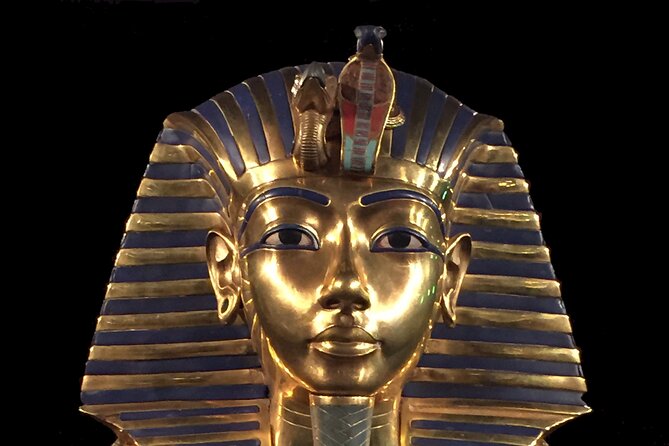
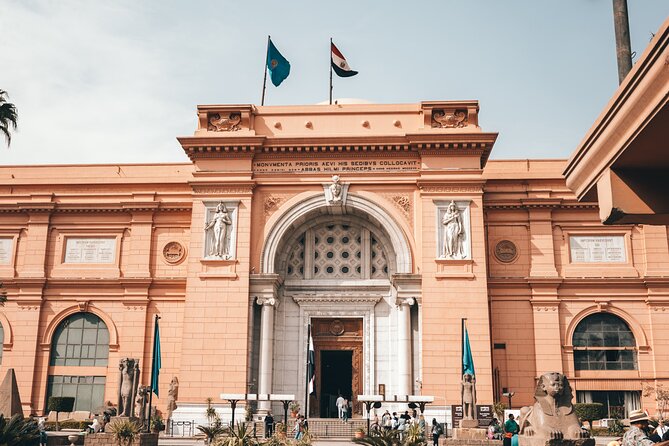
In the afternoon, you visit the Egyptian Museum for about two hours. Its collection covers roughly 5,000 years of Egyptian art, with more than 250,000 ancient artifacts presented. That number is almost too large to imagine, and two hours will only give you an introduction.
I recommend treating the museum as a guided sampler rather than trying to see everything. Listen for the objects your guide considers most important, then spend your remaining time with the pieces that catch your attention. Nancy has been praised for her archaeological background and for making the Cairo sites easier to understand, which is exactly the kind of help you want in a museum this large.
This is a full day, but the order works well. Giza provides the outdoor spectacle, the Sphinx adds another major monument, and the museum supplies the detail and objects behind the grand story.
Day 3: Alexandria and a long Mediterranean day
Alexandria adds a welcome change from the desert monuments of Cairo. The city was founded by Alexander the Great and sits on Egypt’s Mediterranean coast. The drive from Cairo takes about three hours each way, so this is one of the most demanding days in the program.
Your first stop is the Catacombs of Kom el Shoqafa, with an hour planned. These underground burial chambers reflect the mixture of Egyptian, Greek, and Roman influences that shaped Alexandria. The setting is more intimate than Giza, and the descent into the catacombs gives you a closer look at funerary customs and the city’s layered past.
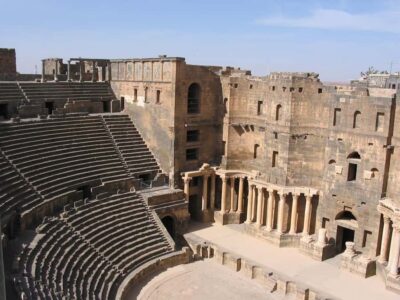
You then visit the ancient Roman Amphitheater for about an hour. The remains show how public life and entertainment were organized in a Roman-era city. It is a useful counterpoint to the royal tombs and temples elsewhere on the tour.
Pompey’s Pillar is a shorter stop, about 30 minutes. The red-granite column is about 28 meters high, with a base diameter of 2.7 meters, and is described as Egypt’s largest memorial column. The name is misleading, since the column was not actually erected for Pompey, but the site remains an easy way to picture the scale of ancient Alexandria.
The day ends at the Citadel of Qaitbay on the Mediterranean shoreline. The fortress was built in the late fifteenth century by the Mameluke Sultan Al-Ashraf Qaitbay on the site associated with the ancient Alexandria Lighthouse. You get a valuable shift in period here, from ancient burial chambers and Roman remains to medieval military architecture.
I like Alexandria as an addition because it broadens the story of Egypt. The tradeoff is time. Three hours out and three hours back can make the day feel more like a historical expedition than a relaxed city visit. If you prefer slow mornings and long meals, this may be the least comfortable day. If you want to see more than Cairo and the Nile Valley, it earns its place.
Same base, a completely different sort of day:
- From Cairo: Pyramids of Giza, Sphinx, Saqqara & Memphis Tour
★ 4.7 · 3,110 reviews - Cairo 8 Hour Private Tour of Pyramids, Egyptian Museum and Bazaar
★ 5.0 · 2,931 reviews - From Cairo: Half-Day Tour to Pyramids of Giza and the Sphinx
★ 4.6 · 2,891 reviews - Cairo: Pyramids, Sakkara & Memphis Tour with Lunch
★ 4.6 · 2,493 reviews
Day 4: Flying south to Aswan and boarding the Nile
After breakfast, you check out and are escorted to the airport for your flight from Cairo to Aswan. On arrival, a representative meets you and transfers you to the cruise boat, which becomes your accommodation for the next three nights.
The first Aswan visit is the High Dam, planned for about an hour. The dam is a major modern engineering project and a reminder that Egypt’s relationship with the Nile is not only ancient. Its construction changed settlement patterns and created Lake Nasser, while also putting historic sites at risk from rising water.
That story becomes clear at the Temple of Philae. The temple was moved to Agilika Island after flooding threatened its original location on Philae Island. You have about two hours here, enough time to appreciate the temple’s columns, reliefs, and island setting while learning how the rescue project preserved the site.
This is a strong first day on the cruise because it combines modern Egypt with an ancient sanctuary. You also get your first taste of the cruise rhythm: sightseeing, returning to the boat, and letting the Nile become part of the journey instead of merely a backdrop.
The cruise is listed as five-star and includes breakfast, lunch, and dinner for three nights. That provides a clear value advantage, especially since you are not paying separately for daily meals during the sailing portion. Keep in mind that cruise sightseeing uses shared transportation and an English-speaking shared guide.
Day 5: Kom Ombo, Edfu, and temples from the water

The boat sails to Kom Ombo after breakfast. The temple is dedicated to two gods, Horus and Sobek, and its unusual double design reflects that pairing. You have about an hour to explore.
Kom Ombo works especially well on a cruise because the river journey puts the temple in context. You are not simply driving from one isolated monument to another. You arrive by water, walk through the site, and return to the boat for lunch as it continues toward Edfu.
Edfu is home to the Temple of Horus, one of the best-preserved temples in Egypt. The building belongs mainly to the Ptolemaic period, with construction beginning under Ptolemy III around 237 BC and finishing under Ptolemy IV. Later Ptolemaic rulers and the Roman emperor Augustus added to it, and the work took about 180 years in total.
The visit lasts about two hours. That extra time is useful because Edfu is large and its inscriptions and reliefs reward careful attention. Your guide can help you read the scenes as religious and political messages rather than decorative wall art.
Dinner is served onboard as the boat sails toward Luxor. This is one of the tour’s most enjoyable transitions. You see major monuments during the day, then return to a moving hotel without packing another suitcase or changing rooms.
Day 6: The Valley of the Kings and Luxor’s West Bank
The West Bank of Luxor is the tour’s most concentrated day of tombs and funerary monuments. You begin with the Valley of the Kings, where 62 pharaohs are buried in tombs cut into the hills. The site was chosen as a secret burial area and guarded to discourage tomb robbers.
You have about three hours here, but the admission arrangement does not mean every tomb is automatically included. The supplied details do not specify which individual tombs are covered, so ask your guide or tour operator before arrival if you have a particular tomb in mind.
The Valley can be physically demanding. You will walk over uneven ground, deal with heat, and may climb or descend into tomb entrances. The tour asks for a moderate level of fitness, and that is a fair description of the day.
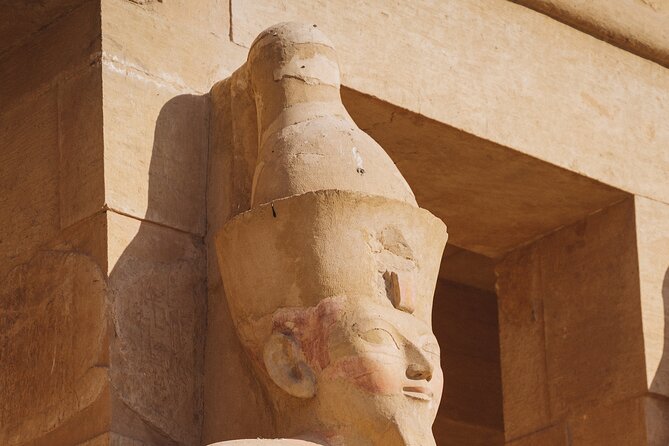
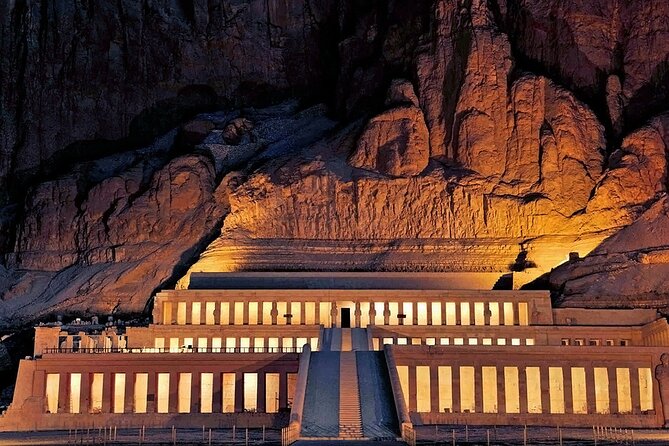
Next comes the Temple of Hatshepsut at Deir el-Bahri, scheduled for two hours. Queen Hatshepsut’s funerary temple is distinctive for its broad terraces and limestone construction, unlike the sandstone used in many New Kingdom funerary temples. The setting against the cliffs makes it one of Luxor’s most memorable architectural sites.
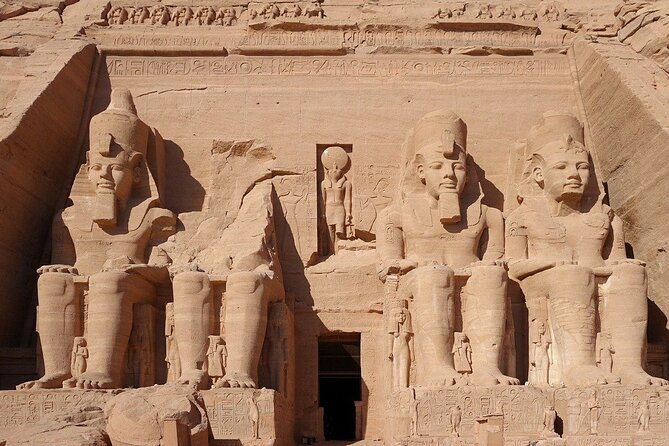
The final stop is the Colossi of Memnon, two seated statues of Amenhotep III, each about 21 meters tall. The statues once stood before a mortuary temple that was later destroyed. Thirty minutes is enough for photographs and a guide’s explanation, though this is a brief stop compared with the Valley and Hatshepsut.
You then return to the boat for lunch and time to rest. I appreciate that pause. This is a hot, information-heavy morning, and a meal onboard is more comfortable than adding another restaurant stop.
Day 7: Karnak, Luxor Temple, and the flight north
You check out after breakfast and visit Karnak Temple with your Egyptologist guide. About two hours are scheduled for the site, which was the largest and most important religious complex in ancient Egypt at its height.
The Temple of Amun-Ra is the central structure, linked to the god Amun, his wife Mut, and their son Khonsu. Karnak is not one tidy building. It is a vast collection of temples, courts, columns, and additions made over many centuries, so a guide is particularly useful here. Without help, the scale can blur into a series of impressive walls.
Luxor Temple follows, with another two hours. Its purpose differed from a typical temple built solely for worship. It was connected to the renewal of kingship, and later rulers used the site to support their claims to legitimacy. Alexander the Great claimed a connection with the temple, although the historical details are disputed.
These final visits provide a fitting close to the Nile portion. Karnak shows religious power on a vast scale, while Luxor Temple brings the focus back to kingship and political ceremony.
After sightseeing, you are taken to Luxor Airport for the flight to Cairo. The domestic flight is a major convenience, but this is still a long day. You should keep your final evening simple rather than planning a demanding Cairo activity after landing.
Day 8: Departure without extra sightseeing
The final morning includes breakfast, hotel checkout, and transfer to the airport. No sightseeing is planned, which is helpful if you have an early departure or simply need time to repack.
The tour ends back at the Cairo meeting point. Airport transfers are included, along with assistance in the destinations visited, so the final handoff should be straightforward as long as your flight details are correctly supplied.
What $1,950 per person really buys
At $1,950 per person, the price is not just paying for entrance tickets. It bundles four nights in a Cairo three-star hotel on a bed-and-breakfast basis, three nights on a five-star Nile cruise with full board, two domestic flights, private ground transport in Cairo and Alexandria, shared cruise transport, guides, admissions, airport transfers, taxes, and service charges.
That is a substantial package. The value is strongest if you want convenience and broad coverage. Arranging the same sequence yourself would mean coordinating airport pickups, two domestic flights, a cruise, several long sightseeing days, entry tickets, and multiple guides.
The price is less compelling if you expect luxury hotels throughout. The Cairo accommodation is three-star, while the cruise is five-star. You should also allow extra money for the Egyptian entry visa, international flights, personal purchases, and tips for guides and drivers.
Lunch and dinner inclusions deserve a close look. The package specifies five lunches, three dinners, and seven breakfasts, while the cruise includes full board. Because meal timing can change on touring days, confirm exactly which meals are included on your dates.
The guides and the human side of the trip
The strongest personal element is the guiding. Fayed Gamal is praised for making ancient history understandable, showing patience, and speaking Spanish impressively. Nancy is singled out for her archaeological background and for making Cairo’s major sites engaging. Abanoub is also praised in connection with Cairo and Luxor visits.
Those names are useful, but guide assignments can change. I would ask in advance whether a particular language is required and which portions of the trip use a private guide. The information provided confirms an English-speaking Egyptologist guide, with shared English-speaking guiding on the cruise.
Mohammed is repeatedly praised for communication and customization. That suggests the company can handle requests, but you should still put important preferences in writing, especially room arrangements, flight timing, dietary needs, and any extra monument you hope to see.
Who should book this Egypt tour?
I would recommend it to a first-time Egypt visitor who wants the major sights with minimal transport stress. Families, couples, and small private groups can benefit from the private vehicle and the ability to communicate directly with a tour coordinator.
It also suits people who want a clear historical progression: pyramids and museum objects in Cairo, Alexandria’s Greek and Roman layers, Aswan’s river setting, Ptolemaic temples, and Luxor’s royal tombs and religious complexes.
I would hesitate if you want a slow, deeply local trip. Alexandria is a long out-and-back day, and the whole program leaves little free time. The Nile portion is not fully private, and the Cairo hotel category is modest compared with the cruise.
You need a moderate physical fitness level. Walking through temple grounds, visiting tombs, and managing airport transfers can be tiring, especially in the heat. I would pack light, wear firm shoes, and carry water each day.
Cancellation terms are strict close to departure. A full refund requires cancellation at least six full days before the start time, a 50 percent refund applies two to six days before departure, and cancellations less than two days ahead are nonrefundable.
Should you book the 8 Days Egypt Ancient Civilization tour?
Book it if you want Egypt’s essential monuments, a Nile cruise, and a single team handling the moving parts. The strongest reasons are the carefully connected route, included domestic flights, private Cairo and Alexandria touring, and guides who are praised for patience and clear storytelling.
Skip it if you need generous free time, luxury lodging in every city, or private guiding throughout the cruise. For most first-time visitors, though, $1,950 is a fair package price for the amount of transportation, accommodation, food, guiding, and admission costs included. Just arrive ready for full days, confirm the details before paying, and treat the schedule as an efficient introduction rather than a leisurely exploration.
FAQ
How long does the tour last?
The tour lasts approximately eight days, from arrival at Cairo International Airport on Day 1 through airport transfer and departure on Day 8.
What cities and regions does the tour visit?
The tour visits Cairo, Giza, Alexandria, Aswan, and Luxor. It includes attractions in each of these destinations.
Is the tour private?
The Cairo and Alexandria touring is private for your group. Sightseeing during the Nile cruise uses shared English-speaking guides and shared transportation.
What accommodation is included?
Four nights are included at a three-star Cairo hotel with breakfast. Three nights are included on a five-star Nile cruise with breakfast, lunch, and dinner.
Are domestic flights included?
Yes. The package includes a flight from Cairo to Aswan and a flight from Luxor to Cairo.
Are meals included?
Seven breakfasts, five lunches, and three dinners are listed as included. The Nile cruise is provided on a full-board basis.
What is not included in the price?
International airfare, the Egyptian entry visa, personal expenses, and tips for guides, drivers, and other staff are not included.
Newly listed around Cairo
- Full Day Trip from Cairo to Luxor★ 5.0 · 16 reviews
- Private guide’s trip to Giza pyramids, Great sphinx valley temple★ 5.0 · 37 reviews
- Private half Day Tour to the Great 3 Pyramids of Egypt★ 5.0 · 15 reviews
- VIP Tour inside Giza Pyramids★ 4.5 · 103 reviews
- Full-Day Private Tour to Giza Pyramids, Sphinx, Memphis & Saqqara★ 5.0 · 106 reviews
- Unique Tour to The Grand Egyptian Museum and 12 main galleries★ 4.0 · 38 reviews
- Elite Boats Tour in Cairo & Giza with Drinks Included★ 4.5 · 15 reviews
- Sunset & Night Open Air Nile Cruise in Cairo & Giza★ 5.0 · 158 reviews
Private, compared.
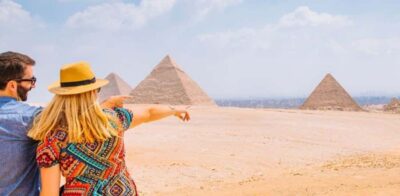
Pyramids & Great Sphinx Private Tour with Camel Ride
Read our review →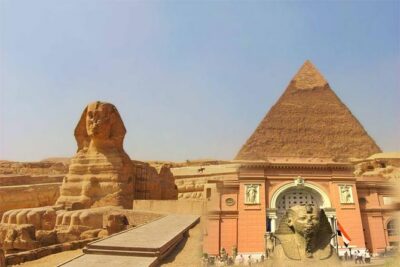
Cairo 8 Hour Private Tour of Pyramids, Egyptian Museum and Bazaar
Read our review →Private ViP all-inclusive Giza Pyramids,Sphinx,Inside Pyramid
Read our review →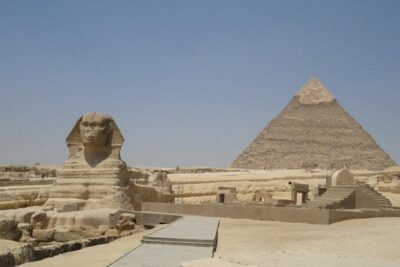
Private guided tour to Giza Pyramids, and Great Sphinx
Read our review →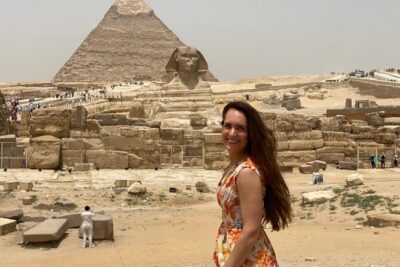
Half Day Tour Giza Pyramids &Great Sphinx with Private Tour Guide
Read our review →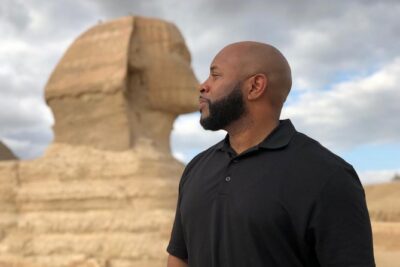
Private tour to Giza Pyramids,Sphinx,Egyptian Museum with Local Lunch
Read our review →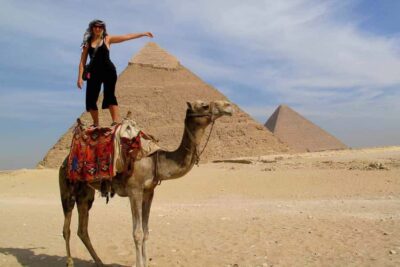
Giza Pyramids and Sphinx: Half-Day Private or Group Tour
Read our review →