
Reviewed · GIZA PYRAMIDS TOURS
7 Day Pyramids & Nile Cruise By Air
Ancient Egypt rewards good planning. This seven-day program links Cairo’s pyramids with a three-night Nile cruise, using private transfers, domestic flights, hotels, and local guides to remove much of the guesswork. I like the strong lineup of major sights, especially Giza, Abu Simbel, and the Valley of the Kings, and I like having Egyptologists explain what you are seeing instead of leaving you to decode a wall of hieroglyphs alone.
I also like the personal handling from Journey To Egypt. The company arranges airport meet-and-assist service, private vehicles, and a guide who reviews the schedule with you on arrival. Guides named in past feedback include Osama, Mena, Meyer, George, John, Alfred, and Marcos. The main drawback is pace: seven days covers an enormous amount, so you will spend plenty of time moving between airports, temples, tombs, and the ship.
In This Review
- Key points before you book
- Why this seven-day plan works
- Arrival in Cairo and a practical first evening
- Giza, the Sphinx, and the Egyptian Museum
- Flying to Aswan and visiting Philae
- Abu Simbel and the crocodiles of Kom Ombo
- Edfu and Luxor’s great eastern temples
- The Valley of the Kings and Hatshepsut’s temple
- What the $2,400 price really covers
- Who should book this Egypt tour?
- FAQ
- How long is the Pyramids and Nile Cruise by Air tour?
- What cities and areas does the tour visit?
- Are domestic flights included?
- How many nights are spent on the Nile cruise?
- What meals are included?
- Is Abu Simbel included?
- Is Tutankhamun’s tomb included in the entrance fees?
- Is this a private tour?
- What is excluded from the $2,400 price?
- Should you book it?
Key points before you book
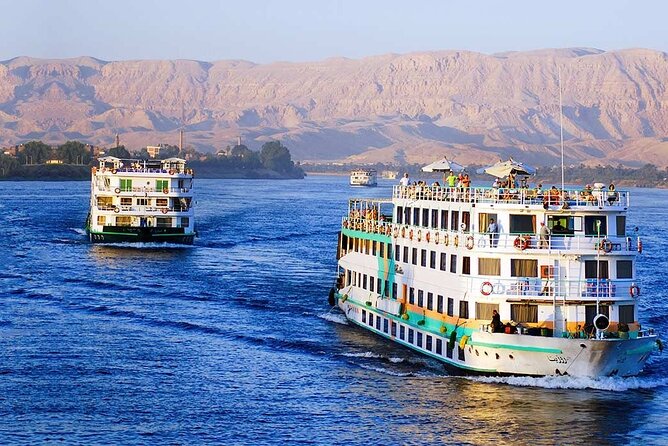
- A three-night Nile cruise connects Aswan and Luxor: You see ancient sites while your hotel moves with you, rather than packing and unpacking each day.
- Abu Simbel is part of the southern Egypt program: Ramses II’s massive temple façade is one of the trip’s biggest rewards.
- The Cairo portion combines icons and museum time: Giza, the Sphinx, a camel ride, lunch, and the Egyptian Museum fill a full day.
- Domestic flights save long overland transfers: The package includes Cairo to Aswan and Luxor to Cairo.
- A private tour keeps the schedule flexible: Only your group participates, and the company has adjusted longer trips for individual requests.
- The price covers much of the practical work: At $2,400 per person, hotels, cruise accommodation, transport, guides, entrances, selected meals, and bottled water are included.
Why this seven-day plan works
Egypt is not a simple country to arrange independently. The best sights are spread across Cairo, Aswan, Kom Ombo, Edfu, and Luxor, and the distances can turn a short holiday into a tiring chain of hotel changes and transport bookings.
This program solves that problem with a sensible north-to-south structure. You begin in Cairo, fly to Aswan, travel north by Nile cruise, and fly back to Cairo from Luxor. That route gives you both the famous pyramid complex and the temple-rich stretch of the Nile without asking you to handle every connection yourself.
The experience is private rather than a large shared group. That matters at crowded monuments. You can ask your guide to slow down at a relief, explain a royal family tree, or clarify the difference between a temple and a tomb. The trip also uses a mix of transportation: private air-conditioned vehicles, domestic flights, and the cruise boat itself.
The schedule is full, but it is not only a checklist. Time on the river gives you a slower middle section after Cairo’s busy streets and before Luxor’s heavy concentration of monuments. One especially pleasant touch is the included felucca ride in Aswan, a traditional sailing boat outing that offers a change from the larger cruise ship.
More Nile Cruises in Cairo
- Luxury Felucca on the Nile with Lunch
★ 5.0 · 994 reviews - Giza: Sakkara, Memphis & Dahshur (Pyramid & Felucca Options)
★ 4.8 · 626 reviews - Private Felucca Ride on the Nile River
★ 4.2 · 537 reviews
Arrival in Cairo and a practical first evening
Your first day begins at Cairo International Airport. A Journey To Egypt representative meets you before the immigration counters with a sign bearing your name, then takes you to your Cairo hotel in a private air-conditioned vehicle.
That airport greeting is useful after an international flight. You do not need to work out a taxi, locate a driver, or negotiate your first ride in Egypt while tired. At the hotel, a guide reviews the holiday schedule and confirms pickup times for the following tours.
There is no meal included on day one, and the airport-to-hotel transfer takes about 45 minutes. Since the exact hotel can affect the feel of this evening, it is worth confirming its location before booking. One past assessment praised the location of the Steigenberger in Giza for pyramid visits but found the hotel itself below expectations. That is a useful reminder to ask about the specific property, not only its star rating.
Giza, the Sphinx, and the Egyptian Museum
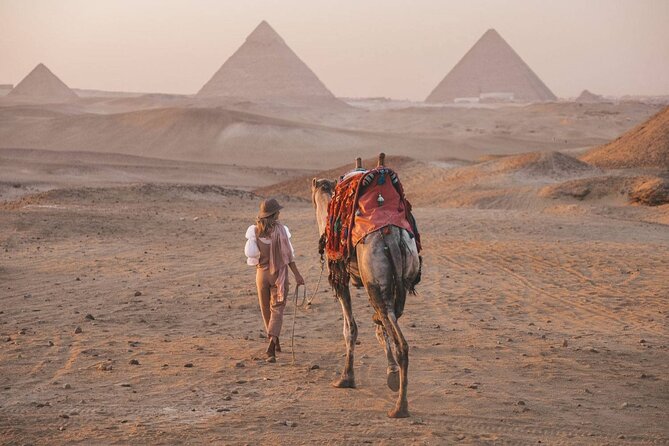
The second day is your main Cairo sightseeing day, and it packs several of Egypt’s biggest attractions into roughly seven hours. You start at the Great Pyramid of Cheops, built between 2551 and 2528 BC from an estimated 2.5 million stone blocks.
The pyramid rises to about 137 meters. Numbers like that can feel abstract until you reach the plateau and see the scale of the masonry for yourself. Your guide takes you to the panorama area for photographs of all three pyramids, then onward to the Great Sphinx and the Valley Temple.
The Sphinx is more than a quick photo stop. Its lion body and human head express royal power, while the nearby Valley Temple shows the polished stonework used in the pyramid complex. Your guide can help connect these places to the wider funerary purpose of the site.
A camel ride is included during the pyramid tour. It is a short, classic Egypt experience rather than a wilderness expedition, so treat it as a memorable photo opportunity and a novelty built into the day.
Lunch at a local Cairo restaurant follows the Giza visits. The schedule then continues to the Egyptian Museum, one of the world’s best-known collections of ancient Egyptian objects. This is a lot for one day. If you enjoy museum time, you may wish the visit lasted longer. If you prefer a clear introduction to the main sights, the guided format helps you focus on the most important pieces without wandering through every room.
The strongest benefit here is the guide. Past feedback gives special praise to Alfred for the Cairo portion, while Mena, Meyer, George, John, and Marcos are also named for attentive explanations across different Egypt programs. Guide assignments can change, so do not assume a particular person is guaranteed, but you can request a preferred guide when asking about availability.
Flying to Aswan and visiting Philae
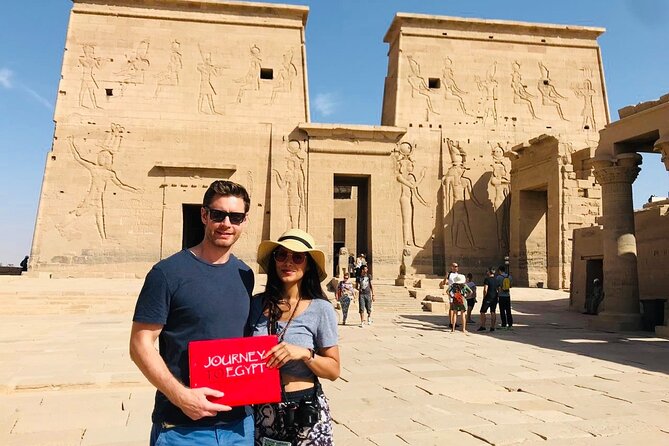
On day three, you fly from Cairo to Aswan. The domestic flight is included, along with airport assistance and a private transfer. After meeting your guide at the exit door, you visit the Aswan High Dam and the Temple of Philae before boarding the Nile cruise before lunch.
The High Dam is important context for the whole southern itinerary. Its construction changed the Nile and created the need to protect major ancient sites from rising water. Philae was moved to its present setting because of that project, giving you an immediate example of how modern engineering affected ancient monuments.
Philae is dedicated to Isis and Hathor. Its island setting makes the visit feel different from the desert monuments around Cairo, and the water approach adds a strong visual element. The package also includes a felucca tour in Aswan, so you get both the practical river cruise and a smaller traditional sailing experience.
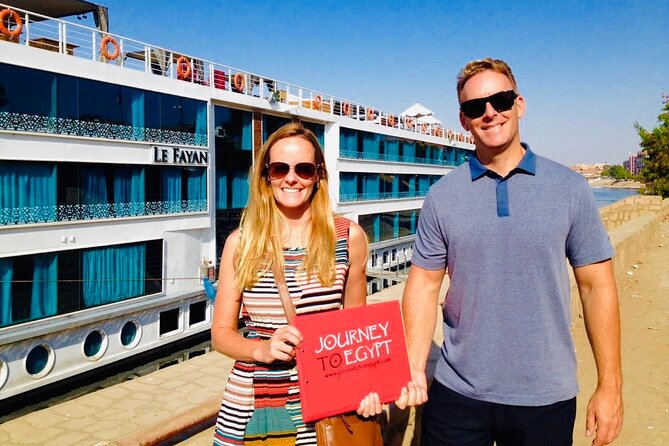
After lunch, you settle onto the five-star cruise boat. The cruise includes three nights on a full-board basis, with dinner on board in Aswan. This is where the pace changes. Your cabin becomes your base while the ship carries you toward the next temples.
More ways to see the Pyramids and the Sphinx:
- Cairo: Pyramids & Great Sphinx Private Tour with Camel Ride
★ 4.9 · 6,335 reviews - Tour to Giza Pyramids and The Egyptian Museum
★ 5.0 · 6,016 reviews - VIP All inclusive Best of the best Giza Pyramids,Sakkara,Memphis
★ 5.0 · 3,164 reviews - From Cairo: Pyramids of Giza, Sphinx, Saqqara & Memphis Tour
★ 4.7 · 3,110 reviews
Abu Simbel and the crocodiles of Kom Ombo
Day four brings one of the most dramatic visits of the trip: Abu Simbel. The twin temples were built for Ramses II and Queen Nefertari, with four huge statues of Ramses dominating the main façade. Their scale is the point, but the setting and story are just as important.
The temples were dismantled and moved to protect them from the floodwaters created by the Aswan High Dam. Seeing Abu Simbel after visiting the High Dam and Philae gives the preservation story a clear arc. You are not just looking at an isolated monument. You are seeing how Egypt saved major ancient sites in the modern era.
The Abu Simbel outing can make this day demanding, depending on the operating schedule and transport arrangements. Confirm the exact departure time and length with the operator before you go. The supplied schedule gives a short stop duration, which may reflect an entry in the booking system rather than the full excursion time.
Back on the cruise route, you stop at Kom Ombo. The temple is dedicated to Haroeris, associated with the sun and sky, and Sobek, the crocodile god. This unusual double dedication gives the complex a different feel from the royal monuments of Cairo.
You can view mummified crocodiles at the site. The display connects directly with Sobek worship and with the Nile environment, where crocodiles once lived along the riverbanks. Kom Ombo is a compact stop, but it rewards careful attention to the carvings and the temple’s unusual shared design.
Edfu and Luxor’s great eastern temples
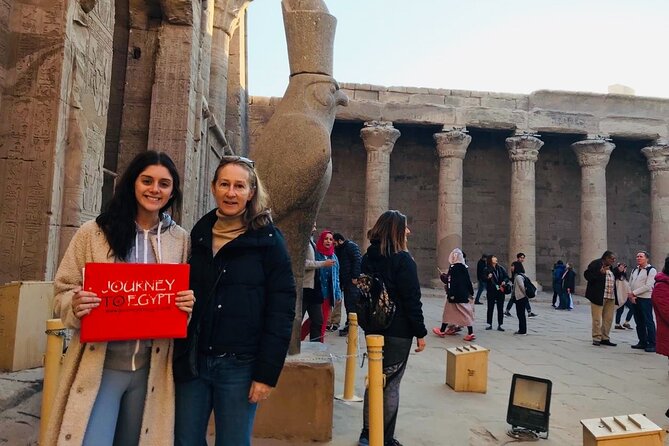
The cruise continues toward Edfu, where you visit the Temple of Horus. Built in 230 BC under Ptolemy III, it is among the best-preserved temple structures in Egypt. Its relatively late construction date can surprise you: ancient Egyptian religious traditions continued under Greek-speaking rulers long after the great pyramid age.
Horus appears here as a falcon-headed sky god. The temple’s preserved walls and colorful details help you picture how ritual spaces once looked before centuries of weather and human damage took their toll.
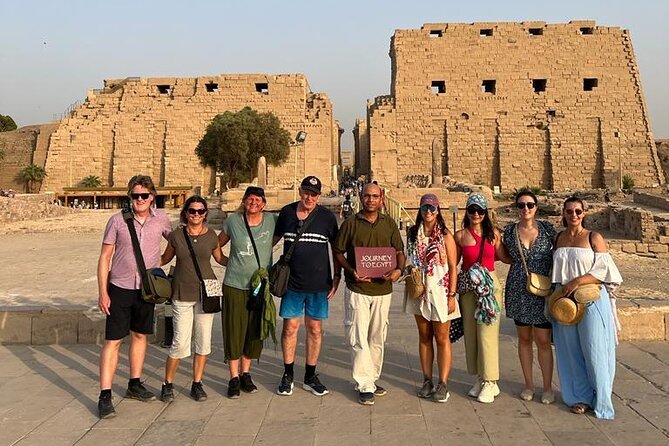
The ship then reaches Luxor, and the program turns to the east bank of the Nile. Karnak is a vast religious complex where successive pharaohs added their own monuments and inscriptions. The Great Hypostyle Hall is the visual centerpiece, with columns rising about 80 feet above you.
Your guide is especially valuable here because Karnak can feel like a city of stone. Names, gods, royal claims, and later additions overlap. A good explanation gives you a way to read the site instead of simply photographing the columns.
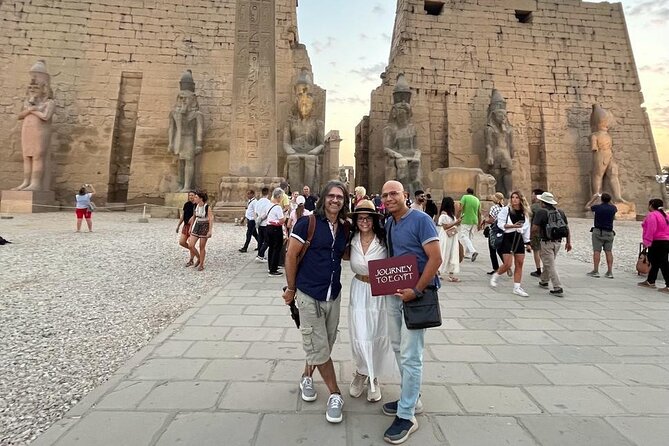
The visit continues to Luxor Temple. You see the statues of Ramses II at the front, the Courtyard of Ramses II, and the Colonnade of Amenhotep III. The two temples are close enough in theme to compare, but they do not feel identical. Karnak is sprawling and layered; Luxor Temple feels more compact and direct.
Day five combines Edfu, a cruise arrival, Karnak, and Luxor Temple. That is a demanding sequence. You should expect an early start or a long touring day, with little room for an unplanned afternoon. The reward is a strong concentration of major architecture in a short period.
The Valley of the Kings and Hatshepsut’s temple
Day six takes you to Luxor’s west bank, the ancient Necropolis of Thebes. The first stop is the Colossi of Memnon, two large stone figures that once guarded a temple complex. They are an easy introduction to the west bank before you continue to the Temple of Hatshepsut.
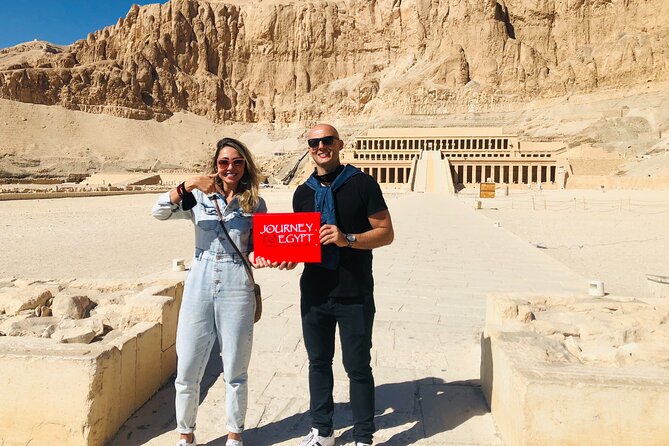
Hatshepsut was ancient Egypt’s first female pharaoh and is regarded as one of its most successful rulers. Her temple uses broad terraces and strong horizontal lines, making it very different from the dense columns of Karnak. The setting against the cliffs also gives the visit a memorable shape.
The main event is the Valley of the Kings, a UNESCO World Heritage Site and burial ground for pharaohs and nobles. Tombs were cut here over roughly 500 years beginning in the 16th century BC. Unlike the pyramids, these royal burials were hidden in a valley, with painted chambers below ground.
The standard entrance includes the sites specified in the program, while entering Tutankhamun’s tomb requires an extra ticket. That distinction matters because the young king’s tomb is one of the most famous names in Egypt, but it is not automatically covered by the included entrance fees.
Tutankhamun’s tomb was found in 1922 by British archaeologist Howard Carter. If you choose to pay for the extra entry, you are paying for access to a small, highly significant burial chamber rather than a huge complex. Your guide can provide the context, but the site itself is more intimate than many first-time visitors expect.
Five hours is allocated for the west-bank program. Wear practical clothing and plan for heat, walking, and steps. The trip is not presented as a mobility-focused program, and the information does not promise special accessibility arrangements, so anyone with mobility concerns should ask before booking.
What the $2,400 price really covers
At $2,400 per person, this is not a budget trip. The value comes from how much of the costly and confusing structure is bundled together.
The package includes three Cairo hotel nights with breakfast, three nights on a five-star Nile cruise with full board, the Cairo to Aswan and Luxor to Cairo flights, private airport and hotel transfers, guides, listed entrance fees, meals during the tours, bottled water outside the hotels, a camel ride, and a felucca outing.
That list covers the backbone of a seven-day Egypt visit. You are not only paying for sightseeing. You are paying to avoid arranging separate hotels, flights, guides, airport pickups, cruise bookings, and monument tickets across several cities.
The price does not include international airfare, the Egyptian entry visa, optional tours, personal spending, or tips for guides and the cruise crew. Keep those costs in your budget. Tipping is specifically excluded, and the cruise crew is part of the service structure for three nights.
The private format also adds value for couples and families. Past feedback describes strong communication from Osama and a willingness to adjust longer programs, including adding a Cairo day or weaving in extra requests. This seven-day version is fixed enough to keep logistics tidy, but the company may be able to customize it if you ask before booking.
Who should book this Egypt tour?
I would recommend it to a first-time visitor who wants the essential ancient sites without managing Egypt’s internal transport. It suits couples, families, and anyone who prefers a private guide to a large coach group.
It is also a good match if you value comfort between sightseeing days. The cruise gives you a stable room for three nights, while the hotels and private vehicles keep the trip from becoming a constant negotiation over taxis and luggage.
I would hesitate if you want a slow, independent Cairo holiday, long museum sessions, or several free afternoons. The schedule is built around the classic highlights, not open-ended exploration. Abu Simbel, Edfu, Kom Ombo, Karnak, Luxor, and the Valley of the Kings arrive in quick succession.
The cancellation terms require attention. Cancel at least six full days before the start for a full refund, two to six days before for a 50 percent refund, and within two days for no refund. Changes follow the same cutoff rules.
FAQ
How long is the Pyramids and Nile Cruise by Air tour?
The tour lasts approximately seven days, from arrival at Cairo International Airport on day one to departure from Cairo International Airport on day seven.
What cities and areas does the tour visit?
The program covers Cairo, Giza, Aswan, Kom Ombo, Edfu, and Luxor, including both the east and west banks of the Nile in Luxor.
Are domestic flights included?
Yes. The package includes a domestic flight from Cairo to Aswan and a domestic flight from Luxor to Cairo.
How many nights are spent on the Nile cruise?
You receive three nights of accommodation on a five-star Nile cruise ship on a full-board basis.
What meals are included?
The package includes daily breakfast during the Cairo hotel stay, meals on the Nile cruise, and meals listed during the sightseeing days. The stated totals are six breakfasts, four lunches, and three dinners.
Is Abu Simbel included?
Yes. The itinerary includes a visit to Abu Simbel and its temples dedicated to Ramses II and Queen Nefertari.
Is Tutankhamun’s tomb included in the entrance fees?
No. Entry to Tutankhamun’s tomb requires an extra ticket.
Is this a private tour?
Yes. Only your group participates in the private tour or activity.
What is excluded from the $2,400 price?
International airfare, the Egyptian entry visa, optional tours, personal spending, and tips for the tour guides and Nile cruise crew are excluded.
Should you book it?
Book this tour if you want Egypt’s greatest hits handled by one local company, with guides, private transfers, flights, hotels, cruise accommodation, and most meals already arranged. The strongest reasons are the private format, the high concentration of important sites, and the river cruise that turns a difficult route into a more comfortable journey.
Think twice if your ideal Egypt trip includes lots of free time or independent wandering. For a first visit, though, the $2,400 package offers a practical way to see Giza, Abu Simbel, the Nile temples, and Luxor’s tombs in one well-supported week.
More 7-Day Experiences in Cairo
- Incredible 7 Days Tour around Cairo, Luxor, and Hurghada
★ 5.0 · 117 reviews - 7 Days Egypt Tour Package to Cairo and Nile Cruise
★ 5.0 · 62 reviews - 7 Days & 6 Nights by Flight Cairo Pyramids & Nile cruise Aswan To Luxor(Private)
★ 5.0 · 38 reviews
Newly listed around Cairo
- Full Day Trip from Cairo to Luxor★ 5.0 · 16 reviews
- Private guide’s trip to Giza pyramids, Great sphinx valley temple★ 5.0 · 37 reviews
- Private half Day Tour to the Great 3 Pyramids of Egypt★ 5.0 · 15 reviews
- VIP Tour inside Giza Pyramids★ 4.5 · 103 reviews
- Full-Day Private Tour to Giza Pyramids, Sphinx, Memphis & Saqqara★ 5.0 · 106 reviews
- Unique Tour to The Grand Egyptian Museum and 12 main galleries★ 4.0 · 38 reviews
- Elite Boats Tour in Cairo & Giza with Drinks Included★ 4.5 · 15 reviews
- Sunset & Night Open Air Nile Cruise in Cairo & Giza★ 5.0 · 158 reviews
Giza Pyramids Tours, compared.
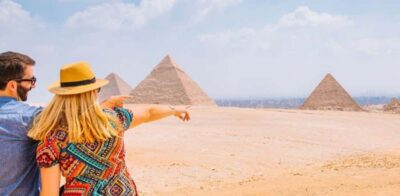
Pyramids & Great Sphinx Private Tour with Camel Ride
Read our review →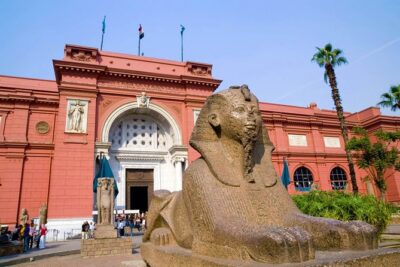
Tour to Giza Pyramids and The Egyptian Museum
Read our review →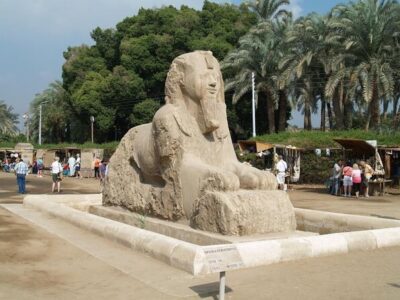
VIP All inclusive Best of the best Giza Pyramids,Sakkara,Memphis
Read our review →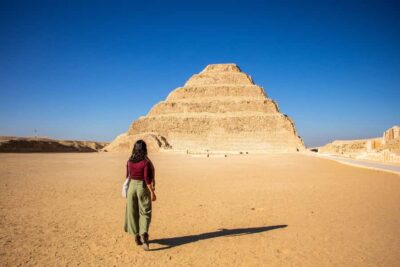
Pyramids of Giza, Sphinx, Saqqara & Memphis Tour
Read our review →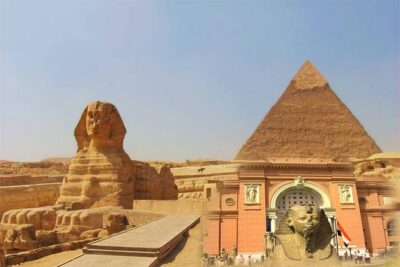
Cairo 8 Hour Private Tour of Pyramids, Egyptian Museum and Bazaar
Read our review →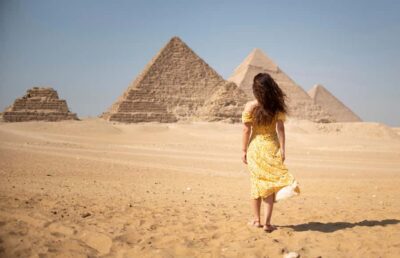
Half-Day Tour to Pyramids of Giza and the Sphinx
Read our review →
Private ViP all-inclusive Giza Pyramids,Sphinx,Inside Pyramid
Read our review →Browse the lists this tour appears in