Reviewed · HURGHADA TOURS
Private 02-Day Trips to Luxor from Hurghada with overnight 5-star Hotel
Luxor rewards anyone willing to leave the coast. This private two-day trip from Hurghada gives you time for Karnak, the Valley of the Kings, Hatshepsut Temple, and the Colossi of Memnon, without asking you to arrange a hotel, driver, guide, or meals on your own. I especially like the private format and the chance to see Luxor’s east and west banks at a less frantic pace than a single-day outing.
The strongest points are the Egyptologist guide and the overnight stay in a five-star hotel. Guide Khaled is praised again and again for his clear explanations, friendly manner, punctuality, and ability to adjust the pace. The main drawback is the amount of time on the road: Hurghada to Luxor takes about four hours each way, and both touring days are long. Entrance fees are also extra, so the advertised $300 price is not the final cost.
In This Review
- Key points before you book
- Why two days is better than a rushed Luxor day trip
- The four-hour road from Hurghada to Luxor
- Karnak Temple and the Avenue of Sphinxes
- The five-star overnight stay in Luxor
- Valley of the Kings and the extra cost of Tutankhamun’s tomb
- Hatshepsut Temple and the Colossi of Memnon
- Meals, local food, and what is not included
- What $300 per person really buys
- The guide can shape the whole experience
- Who should book this Luxor trip?
- Should you book it?
- FAQ
- How long is the trip from Hurghada to Luxor?
- Is hotel pickup available?
- What accommodation is included?
- Which Luxor sites are included?
- Are entrance tickets included?
- Is this a private tour?
Key points before you book
- The trip begins early: Pickup from your Hurghada hotel is around 5:30 a.m. in the examples provided, with roughly four hours of driving to Luxor.
- Karnak gets proper attention: You enter through the Avenue of Sphinxes and explore the Great Court and Great Hypostyle Hall with an Egyptologist.
- The overnight stay changes the pace: A five-star hotel and breakfast mean you do not have to return to Hurghada after the first day.
- The west bank is packed into one morning: You visit three royal tombs, Hatshepsut Temple, and the Colossi of Memnon before lunch.
- All entrance fees are separate: This includes the main sites, and Tutankhamun’s tomb requires an additional ticket.
- The tour is private: Only your group takes part, so you can ask questions and discuss the pace with your guide.
Why two days is better than a rushed Luxor day trip
Luxor is not a small side trip from Hurghada. The drive takes about four hours in each direction, which makes a one-day visit a tiring exercise in highway arithmetic. With this arrangement, you still have long days, but you avoid trying to squeeze every major sight into a single return journey.
I like the overnight format because Luxor’s major monuments are split between the east and west banks of the Nile. Karnak is on the east bank, while the Valley of the Kings, Hatshepsut Temple, and the Colossi of Memnon are on the west bank. Seeing both sides across two days gives each group of monuments more breathing room.
Do not expect a leisurely resort break, though. Day one is listed at about eight hours, not counting the drive from Hurghada, and day two runs about ten hours before the return drive. The early start and the heat can make this a demanding outing, especially for anyone who dislikes long car journeys.
Still, the private vehicle, hotel stay, guide, breakfast, and two lunches remove much of the planning work. You can focus on the monuments instead of arranging separate transport between distant sites.
A few more Hurghada outings to price up
- From Hurghada: Cairo and Giza Highlights Full-Day Tour
★ 4.5 · 6,014 reviews - Hurghada: Luxury Cruise Trip to Orange Bay with Lunch
★ 4.9 · 5,451 reviews - Hurghada: Orange Bay Island Boat Trip w/ Breakfast and Lunch
★ 4.9 · 5,345 reviews
The four-hour road from Hurghada to Luxor
Pickup is offered from your Hurghada hotel, and the trip uses an air-conditioned vehicle. The early departure matters. A sample departure time is around 5:30 a.m., allowing you to reach Luxor in the morning rather than losing the best part of the day on the road.
The drive itself is a major part of the experience. You should bring water, sun protection, and anything that helps you rest in a vehicle. The provided information does not specify the exact vehicle model or the number of passengers, so ask the operator if those details matter to you.
The private setup is useful here. You are not waiting for a large coach group at every hotel, and your own party can speak directly with the driver and guide. Past praise focuses on punctual pickups, a good vehicle, and transport that was arranged from start to finish.
Guide Khaled receives especially warm praise. He is described as friendly, experienced, clear in English, and willing to listen to what each group wanted to see or avoid. Mohamed is also named as a tour agent and guide in some feedback, while another French-speaking family appreciated Mohamed’s ability to adjust the pace for young children. Since the assigned guide may vary, you should confirm the name and language before departure.
Karnak Temple and the Avenue of Sphinxes
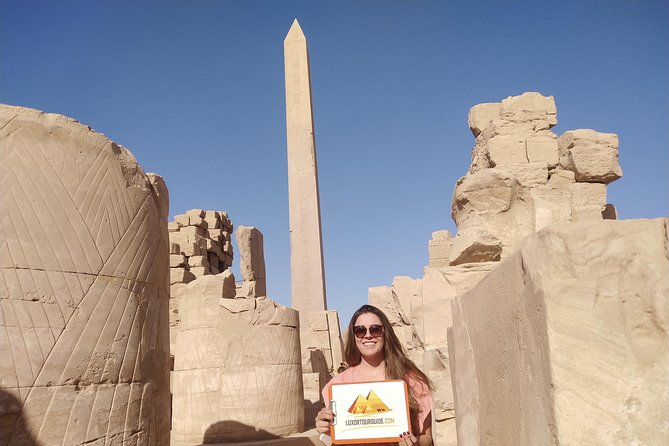
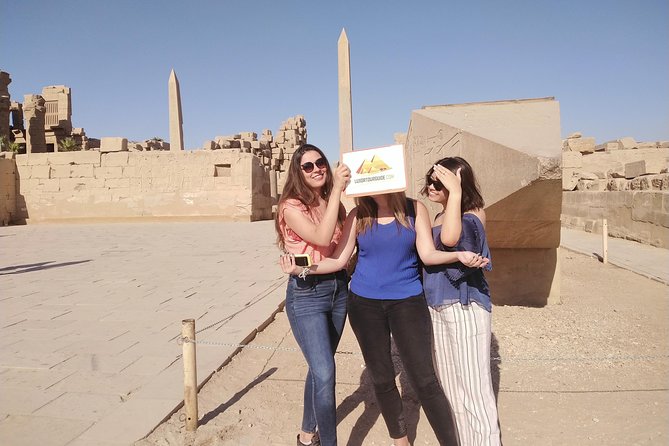
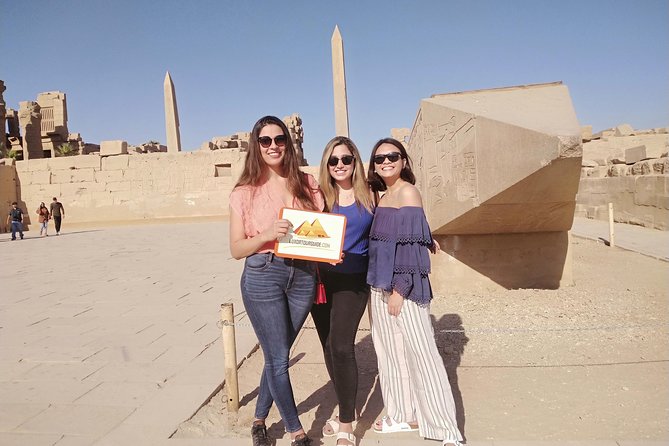
Karnak is the opening monument, and it is an excellent choice. This is not one tidy temple built by one ruler. It is a huge religious complex that grew over more than 3,000 years, with different pharaohs adding courts, gateways, columns, chapels, and inscriptions.
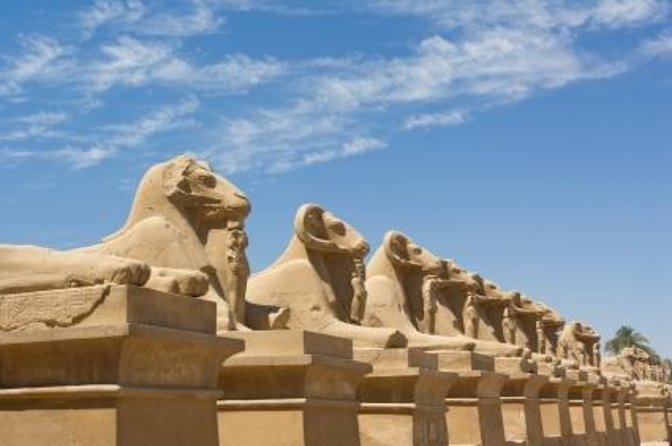
Your guide leads you along the Avenue of Sphinxes toward the complex. This approach gives the visit a sense of arrival before you reach the massive entrance. Once inside, the changing styles and layers of construction make more sense when someone explains which ruler added what.
The Great Court gives you space to understand the scale of the site. Then comes the Great Hypostyle Hall, with its 134 columns rising overhead. Even if you know little about ancient Egyptian architecture, this room is easy to remember. The columns create the feeling of an enormous stone forest, and a good guide can point out how the hall functioned and why its scale mattered.
The private guide is most valuable here. Without context, Karnak can become a long walk among names and stones. With explanations, the site becomes a record of changing rulers and religious power. You can also stop to ask about construction, the pharaohs, and the symbols carved into the walls.
Admission to Karnak is not included. This is one of the most important details when judging the $300 price. Ask for the current entrance costs before you go, since the tour information does not provide a total figure.
The five-star overnight stay in Luxor
The hotel is described as five-star accommodation with breakfast, but its name is not given. That means you should confirm the property, room arrangement, check-in time, and what facilities are included before booking.
The hotel is less about luxury for its own sake than about breaking up the journey. After a full day at Karnak and the road from Hurghada, having a bed in Luxor is far more comfortable than immediately starting the return drive. Breakfast is included before the west bank visit on day two.
The accommodation also gives you a practical base for the second morning. You cross the Nile for the Valley of the Kings instead of beginning the day with another long drive from the Red Sea coast. That is the real value of the overnight stop.
Do keep your expectations precise. The supplied details promise five-star accommodation, not a particular hotel, Nile view, pool, dinner, or evening program. Personal expenses, drinks, laundry, and other items are not included.
Same base, a completely different sort of day:
- Hurghada: Royal Seascope Submarine Cruise with Snorkel Stop
★ 4.4 · 4,637 reviews - Hurghada: 3 Islands, Dolphins & Snorkel Yacht Trip w/ Lunch
★ 4.7 · 4,609 reviews - Hurghada or Makadi: Discover the Magic of Dolphin House
★ 4.8 · 4,198 reviews - Sindbad Submarines – Hurghada (Egypt) – 2 Hours
★ 5.0 · 3,985 reviews
Valley of the Kings and the extra cost of Tutankhamun’s tomb

After breakfast, the guide takes you to Luxor’s west bank and the Valley of the Kings. More than 62 tombs are associated with the valley, dating to the New Kingdom period beginning around 1550 B.C. The tour includes visits to three tombs.
Three tombs give you a useful sample without trying to inspect every corridor in the valley. The interiors can be more rewarding than the exterior ruins because the walls preserve painted scenes, symbols, and funerary decoration. Your guide’s explanations help you understand what those scenes were meant to communicate.
Tutankhamun’s tomb is treated separately. The information specifies an extra ticket, so you should budget for it if seeing the young king’s burial chamber is important to you. One particularly strong account describes Khaled allowing plenty of time to visit the tombs without pressure, which is exactly the approach you want in a place where visitors often feel rushed.
The valley can be physically demanding. You walk between sites, and the sun is strong. Wear practical shoes, carry water, and use sunscreen. The tour description does not promise shaded rest stops or special mobility arrangements, so anyone with limited mobility should ask before booking.
The main admission fees are excluded from the tour price. This lets you decide which optional areas matter most, but it also means you need a clear budget before you leave Hurghada.
Hatshepsut Temple and the Colossi of Memnon
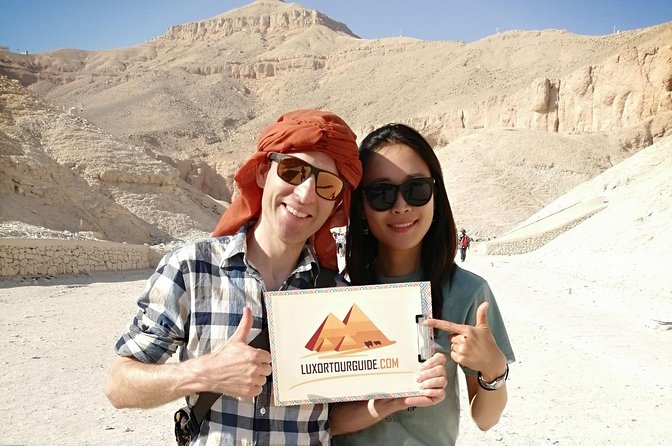
The next stop is Hatshepsut Temple, a striking monument cut into the cliffs. Its three terraces create a strong geometric shape, and the setting helps explain why this temple feels different from the enclosed spaces at Karnak.
Your guide can give the political and religious context behind Hatshepsut’s rule, but the provided details do not specify exactly how long you stay. Because day two includes several stops and a long return drive, ask whether you can spend more time here if architecture and photography are your main interests.
The Colossi of Memnon are a shorter stop, but an essential one. These two huge statues represent Amenhotep III and once guarded the entrance to his temple. Behind them, you can see the remains of that temple complex.
I like this stop as a visual counterpoint to the Valley of the Kings. The tombs are hidden in the hills and designed for the dead, while the Colossi were public statements of royal power. The site is often visited quickly, so your guide’s explanation is useful even if the physical stop is brief.
Meals, local food, and what is not included
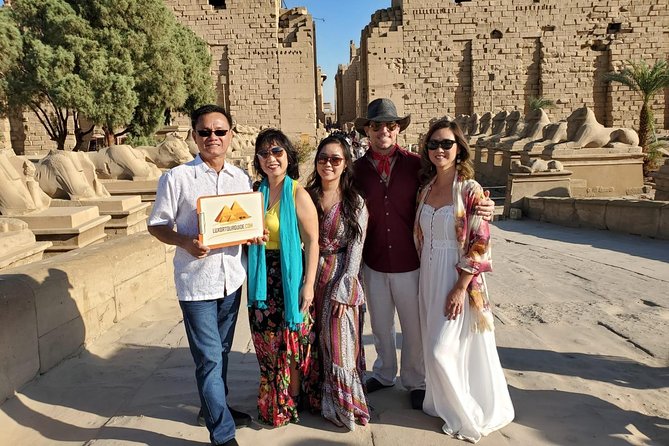
The package includes breakfast at the hotel and two lunches. That saves you from finding restaurants while moving between widely separated monuments.
There is a welcome personal touch in the way some guides handle lunch. Khaled is praised for taking a group to two local restaurants for Egyptian food rather than treating every meal as a generic roadside stop. The exact restaurants are not named, so do not book this expecting a particular menu or dining room.
Drinks are not included. Personal expenses are also your responsibility, including laundry and other items of a personal nature. Carry small Egyptian currency for drinks, snacks, and gratuities.
Gratuities are recommended but not included. You should allow for tips for the guide and driver if the service is punctual, helpful, and well explained. The tour is private, so you are not sharing that cost across a large bus group.
What $300 per person really buys
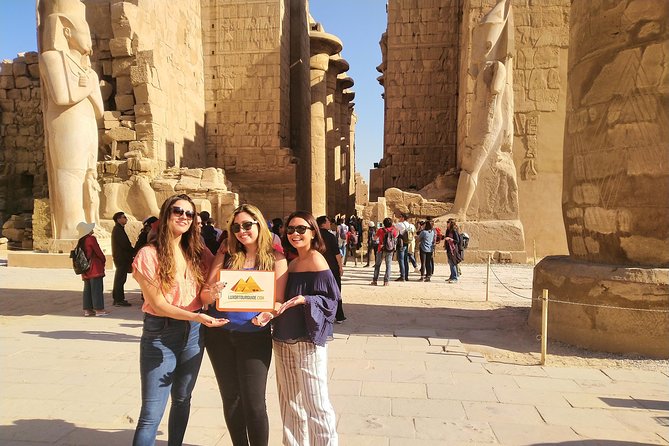
At $300 per person, this is not the cheapest way to see Luxor. The price makes more sense when you add up the private transport from Hurghada, the air-conditioned vehicle, an English-speaking Egyptologist, one hotel night, breakfast, and two lunches.
The important catch is the entrance fees. Karnak, the Valley of the Kings, Hatshepsut Temple, and other sites are not included. Tutankhamun’s tomb costs extra on top of the general admission. You should ask the provider for the current total before deciding if the package fits your budget.
For a private group, the value is strongest when you care about convenience and flexibility. You avoid researching a hotel, arranging a private car, and finding a qualified guide separately. You also have one point of contact for the full journey.
For one or two people, $300 can feel expensive after adding tickets and tips. For a family or small group, group discounts may improve the value. Ask how the discount applies and whether the quoted rate changes by group size.
The guide can shape the whole experience
Ancient sites are only half the trip. The guide determines how much you understand and how rushed you feel.
Khaled is repeatedly praised for his command of Egyptian history, architecture, and local culture. He is also described as punctual, friendly, entertaining, and flexible. One person specifically appreciated that he listened to what the group wanted to see and what it preferred to avoid.
That flexibility is a major advantage of a private tour. You can ask for a slower explanation at Karnak, more time for photographs at Hatshepsut Temple, or a careful discussion of the tomb paintings. The tour still has a fixed route and long driving periods, but the conversation does not have to follow a rigid script.
English is the stated guide language. Several comments praise the guide’s English skills, and French-language service is also suggested by the account of a French-speaking family. Confirm your preferred language in advance rather than assuming it is guaranteed.
Who should book this Luxor trip?
I would recommend this tour to you if you are staying in Hurghada but do not want to miss Egypt’s major ancient monuments. It suits first-time visitors who want one organized package, families who value a private vehicle, and small groups who want to share a guide and possibly receive a discount.
It is also a good choice if you want to see both banks of Luxor without planning hotel and transport details yourself. The overnight stop is especially useful for anyone who finds a same-day return from Luxor too punishing.
I would be more cautious if you have limited stamina, dislike early mornings, or want a slow archaeological visit. The schedule remains full, and the drive to and from Hurghada takes about eight hours in total. You should also reconsider if the $300 price needs to cover every expense, since tickets, drinks, and gratuities come separately.
Free cancellation is available if you cancel at least 24 hours before the start time. Changes made inside that window are not accepted, and poor weather may lead to a different date or a full refund.
Should you book it?
Book this two-day Luxor trip if your priority is seeing the essential monuments with a private guide and a hotel already arranged. The strongest reasons are the well-regarded guides, the private transport, and the chance to visit Karnak and the west bank across separate days.
Before paying, confirm the hotel name, guide language, pickup time, group discount, current entrance fees, and the added cost of Tutankhamun’s tomb. If you accept the long road journey and budget for those extras, this is a practical and well-supported way to turn a Hurghada beach holiday into a far more memorable Egyptian trip.
FAQ
How long is the trip from Hurghada to Luxor?
The drive takes about four hours each way. The tour lasts approximately two days, with about eight hours of touring on day one and ten hours on day two.
Is hotel pickup available?
Yes. Pickup is offered from your hotel in Hurghada.
What accommodation is included?
The package includes one night in five-star accommodation in Luxor, with breakfast. The specific hotel name is not provided.
Which Luxor sites are included?
The program includes Karnak Temple, the Valley of the Kings, Hatshepsut Temple, and the Colossi of Memnon. It covers both the east and west banks of Luxor.
Are entrance tickets included?
No. Entrance fees to all sites are excluded. Tutankhamun’s tomb also requires an additional ticket.
Is this a private tour?
Yes. Only your group participates, and transport is provided in an air-conditioned vehicle with a qualified English-speaking Egyptologist guide.
Newly listed around Hurghada
- Viva Egypt hurghada Hula Hula Island & Lunch & Water sports 3*1★ 5.0 · 54 reviews
- Hurghada Full Day Desert Tour★ 5.0 · 51 reviews
- Private Transfers Hurghada Airport to Hurghada, Safaga, Soma Bay★ 5.0 · 19 reviews
- Hurghada to Luxor: Private Transfer & Dendara optional★ 5.0 · 27 reviews
- Full Day Luxor Excursion★ 5.0 · 16 reviews
- morning quad bike★ 5.0 · 22 reviews
- Parasailing Ride in Hurgada single&double with private Transfer★ 5.0 · 16 reviews
- Snorkeling and Swimming at Orange Bay Island★ 5.0 · 19 reviews
Hurghada Tours, compared.


Orange Bay Island Boat Trip w/ Breakfast and Lunch
Read our review →
Royal Seascope Submarine Cruise with Snorkel Stop
Read our review →
3 Islands, Dolphins & Snorkel Yacht Trip w/ Lunch
Read our review →
Hurghada or Makadi: Discover the Magic of Dolphin House
Read our review →
Sindbad Submarines – Hurghada (Egypt) – 2 Hours
Read our review →