
Reviewed · SHARM EL SHEIKH TOURS
PADI Open Water Diver Course
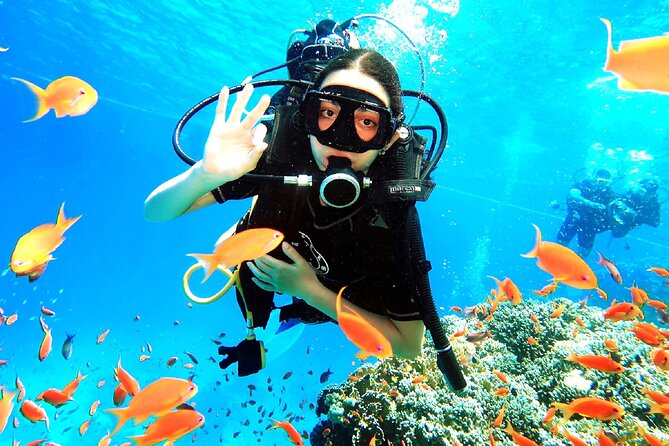
The Red Sea makes a fine classroom. This three-day PADI Open Water course combines classroom instruction, pool-style skill work, and four sea sessions in Sharm el Sheikh, where coral reefs and plentiful fish give new divers something memorable to see once the lessons begin to click. I like the clear structure, with five theory sessions and nine practical sessions, and I like that hotel pickup, equipment, lunch, and soft drinks are included.
The main consideration is cost clarity. At $411.31 per person, the package covers most of the work and equipment, but the PADI certification fee, manual, and online learning materials are extra. The course also needs three to four days, and you should not fly within 24 hours after your final underwater session.
You are taught by a PADI professional instructor, with past students praising calm, patient teaching from instructors including Mena, Amr, Mohamed Abdelkarim, Farid, Mina, and Shiref. That matters when you are learning to clear a mask or manage your breathing underwater and would rather hear a steady voice than a rushed command.
In This Review
- Key points to know before booking
- Why Sharm el Sheikh works for a first scuba course
- The three-day course structure
- Theory sessions: learning before entering the water
- Confined-water sessions: where confidence grows
- Four open-water sessions in the Red Sea
- The Red Sea setting and what you may see
- Instructor quality is especially important here
- What the $411.31 price really covers
- Age rules, medical checks, and flight planning
- Group size and the feel of the day
- Who should book this PADI course
- Should you book the Sharm el Sheikh Open Water course?
- FAQ
- How long does the PADI Open Water course take?
- What time does the course start?
- What is included in the course price?
- Are the PADI certification and manual included?
- What depth does the certification allow?
- Is the certification recognized internationally?
- What is the minimum age?
- Can I fly immediately after completing the course?
- What happens if poor weather cancels the course?
Key points to know before booking
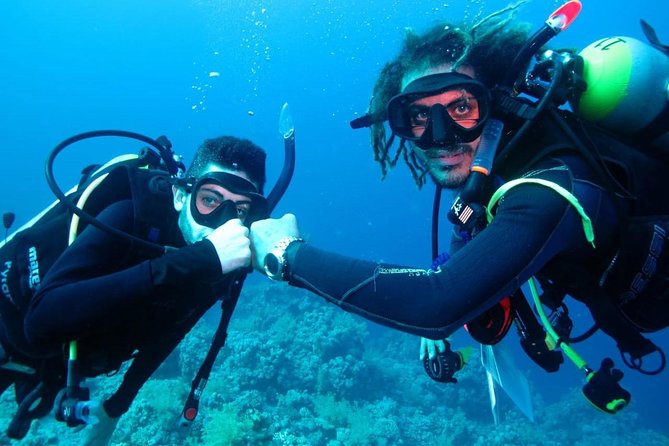
- Four Red Sea sea sessions: You get the important practical work in Sharm el Sheikh’s clear, marine-filled waters rather than completing the whole course in a confined setting.
- Five confined-water sessions: These are where you learn and repeat the basic skills before taking them into the open sea.
- Five theory sessions in three days: The pace is efficient, but you should be ready for full days of learning rather than a casual holiday outing.
- Certification to 18 metres: Adults who complete the course receive a globally recognized PADI qualification allowing independent scuba activity to that depth, subject to normal buddy and safety rules.
- Junior limits apply: Participants aged 10 to 15 are certified for depths of up to 12 metres. At age 15, the qualification changes to the adult depth limit of 18 metres.
- Hotel transport and equipment included: Air-conditioned pickup and drop-off, scuba gear, lunch, soft drinks, and bottled water are covered.
Why Sharm el Sheikh works for a first scuba course
Sharm el Sheikh is a practical place to learn because the Red Sea is the star attraction, not merely a backdrop. The course takes its open-water training into marine areas known for coral and fish, giving you a real reason to master each skill.
That setting can help motivation. Classroom lessons are necessary, but it is easier to stay focused when the reward is a trip below the surface among coral formations and schools of fish. One past participant described the reef as full of life, with abundant fish and healthy-looking coral. You should still keep expectations sensible: marine sightings depend on conditions, location, and luck.
The course is designed for beginners, not certified divers seeking advanced techniques. You learn how scuba equipment works, how to use it safely, and how to respond to common problems. The exact teaching order may vary, but the supplied plan includes five theory sessions, five confined-water sessions, and four open-water sessions.
This is the right level if you have never used scuba equipment before and want a proper qualification rather than a single introductory swim. It is not a quick tryout. You will be expected to understand the rules, demonstrate the required skills, and complete all course components.
A few more Sharm el Sheikh outings to price up
- Sharm El-Sheikh: Ultimate ATV Quad, Stargazing & BBQ Dinner
★ 4.7 · 4,084 reviews - Sharm El-Sheikh: Jeep Adventure to Blue Hole, Canyon & Dahab
★ 4.7 · 3,759 reviews - From Sharm: White Island and Ras Mohamed Snorkeling Trip
★ 4.7 · 3,194 reviews
The three-day course structure
The advertised duration is three days, though the course may take three to four days. That small difference matters when planning flights, hotel nights, and other excursions.
The schedule begins at about 8:30 am. Hotel pickup is offered in an air-conditioned vehicle, which removes some of the morning fuss. You should still keep the day flexible because weather, instruction speed, and individual comfort can affect timing.
Theory sessions: learning before entering the water
The five theory sessions give you the information needed to make safe decisions underwater. This is not filler. A certified diver needs to understand equipment, air use, pressure, communication, and the limits of the qualification.
For a first-timer, theory can feel less exciting than seeing coral. I would treat it as the part that makes the later sea sessions less intimidating. When your instructor explains a skill before you try it, you have a better chance of knowing what to do instead of reacting in panic.
The teaching style seems to be one of the strongest parts of this course. Several participants singled out Mohamed Abdelkarim for clear explanations, patience, and reassurance. Mena was praised for repeating instructions when a student was unsure, while Amr was described as calm and willing to take the time needed.
Those details are especially useful if you feel nervous. Good instruction is not about rushing you to the reef. It is about helping you understand what you are doing and why.
Confined-water sessions: where confidence grows
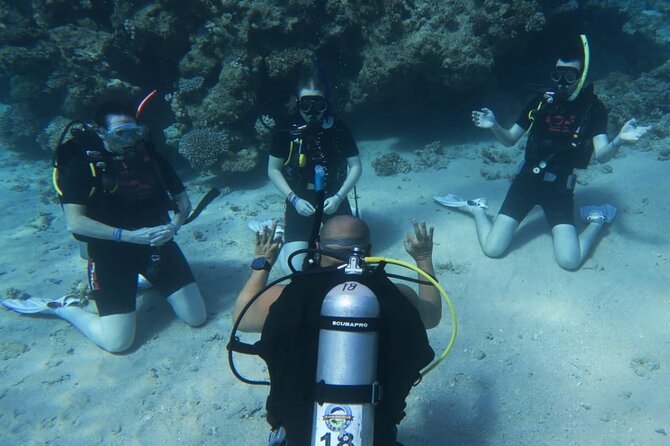
The five confined-water sessions are the practice ground. Here you learn the handling of your mask, regulator, buoyancy equipment, and other required gear while working through the basic skills.
This is where repetition earns its keep. You might understand an instruction on land but need several attempts before it feels natural in the water. The course appears well suited to that learning process, with multiple participants praising instructors for waiting while students demonstrated skills again.
Do not be embarrassed if you need extra practice. A patient instructor such as the ones praised by students can make a major difference, particularly during the first session when breathing through a regulator feels unfamiliar.
The equipment is included, which improves the value of the price. You do not need to rent the basic scuba setup separately for each session. Still, you should expect normal fitting and adjustment time, and you should tell the instructor promptly if anything feels uncomfortable.
Same base, a completely different sort of day:
- Sharm El Sheikh: White Island and Ras Mohamed Cruise Adventure
★ 4.5 · 1,824 reviews - Discover Scuba Diving
★ 5.0 · 1,676 reviews - Sharm El-Sheikh: Luxury Ras Mohammed & White Island Cruise
★ 4.6 · 1,462 reviews - Sharm ElSheikh: ATV Quad & Buggy Adventure Sunrise or Sunset
★ 4.7 · 1,374 reviews
Four open-water sessions in the Red Sea
The four sea sessions are the heart of the course. This is where you apply your training in the actual Red Sea, with coral and fish providing the memorable part of your qualification.
The supplied plan does not promise particular reef sites, so I would not book this expecting one named location every day. Conditions, boat planning, and training needs can shape the route. The attraction is the chance to train in Sharm el Sheikh’s marine environment, not a guaranteed checklist of animals.
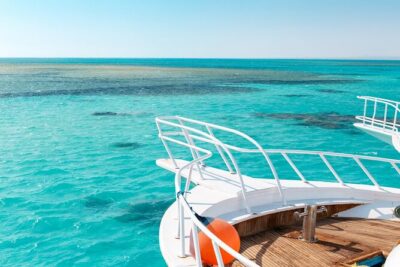
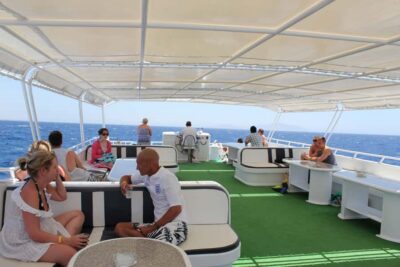
A related account of a boat day described three stops, plenty of time in the water, a clean and spacious boat, and a meal onboard. That gives you a useful picture of the boat component, though your exact course schedule may differ. The boat is not just transport. It is where you rest between sessions, eat lunch, drink water, and reset before the next practical lesson.
The boat portion may appeal more than shore-based training, but it can also make for a long day. If you prefer a slower start, ask how much of your course is planned from shore and how much from the boat before booking. One experienced participant specifically recommended using boat sessions rather than shore training for more of the program, but that is personal advice, not a guarantee of the schedule.
The Red Sea setting and what you may see
The Red Sea is a strong reason to choose this course over a landlocked training option. The appeal is not only clear water. The coral environment and fish life give you a genuine marine setting in which to build your skills.
Past participants praised the coral and the number of fish, describing the reef as very alive. That is encouraging for a beginner who wants the first qualification to feel like an adventure, not a series of drills.
At the same time, your first priority is skill control. It is easy to spend the whole session looking for fish and forget your breathing, position, or instructor signals. Listen first, look around second. The best moments usually come once you feel settled enough to notice the surroundings without losing focus.
Visibility and sea conditions are not guaranteed. The operator states that the course depends on favorable weather. If poor weather forces cancellation, you should be offered another date or a full refund.
Instructor quality is especially important here
A scuba qualification is only as useful as the understanding behind it. The strongest pattern in the feedback is praise for instructors who were calm, patient, and clear.
Mohamed Abdelkarim received repeated praise for encouraging students when they struggled and waiting until they could demonstrate a skill properly. Mena was praised for one-to-one teaching and for explaining both the action and the reason behind it. Amr was highlighted for working well with younger students and building confidence.
Mina was also praised by a family whose ten-year-old completed the course. That is worth noting if you are considering this for a child, although age eligibility does not remove the need for maturity, comfort in water, and medical suitability.
Instructor assignment is not specified in advance, so you should not assume you will receive a particular person. But the range of positive comments about different instructors suggests that the center has several staff members who focus heavily on reassurance and safety.
What the $411.31 price really covers
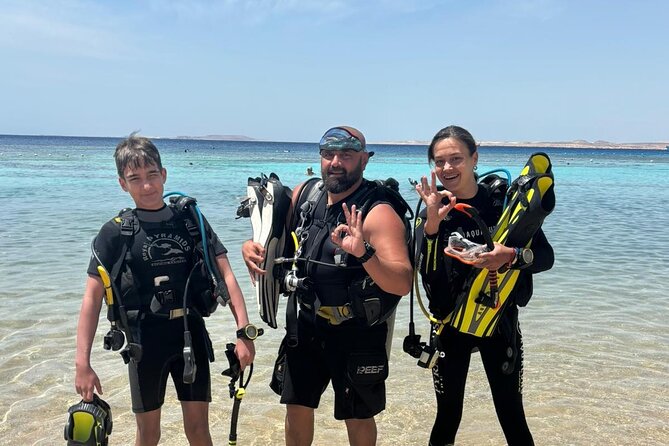
At $411.31 per person, this is not the cheapest possible way to enter scuba. It is also not simply a half-day activity. You are paying for a three-day training program, professional instruction, equipment use, confined-water practice, four sea sessions, five theory sessions, hotel transport, lunch, soft drinks, and bottled water.
That makes the price easier to justify if you already want a recognized qualification. The certification is intended to last for life, with no renewal fees, and it is recognized worldwide. You are paying for a skill you can use in other destinations, not just a single Red Sea outing.
The important extra costs are the PADI certification and manual, plus e-learning materials. These are excluded, so check the final total before committing. Souvenir photographs are also optional purchases.
If you only want to try scuba once, a short introductory session may suit you better. If you expect to continue, the full course offers better long-term value because it gives you a formal qualification and a foundation for future scuba trips.
Age rules, medical checks, and flight planning
The minimum age is 10. Children aged 10 through 15 receive junior certification for a maximum depth of 12 metres. Once the child turns 15, the qualification changes to the adult limit of 18 metres.
You must complete a health questionnaire before entering the water. The course is not suitable for pregnant participants or people with back problems, heart complaints, or other serious medical conditions. Conditions such as asthma or heart problems may prevent participation, so speak with your doctor if you have any concern.
A current valid passport is required on the day. That is an easy detail to overlook, especially if you normally leave your passport in a hotel safe.
Flight timing needs care. Flying within 24 hours of the final underwater session is not recommended. If you are leaving Sharm el Sheikh soon after the course, schedule a proper gap rather than squeezing the qualification into the last days of your holiday.
Group size and the feel of the day
The maximum group size is 15 people. That is not a tiny private lesson, but it is also not a giant outing. Your actual class may be smaller, and private instruction may be available, though it is not promised in the package description.
A group of up to 15 can bring useful company, especially on the boat. It may also mean that practical skills take longer if several students need extra attempts. If you want one-to-one attention, ask before booking about private instruction and any added cost.
The best approach is to allow the course to set the pace. This is not the place to hurry because you have a desert trip or evening reservation waiting. The aim is to leave with sound habits and confidence, not merely a certificate in your wallet.
Who should book this PADI course
I would recommend this course to you if you want a recognized scuba qualification, have at least three days available, and like the idea of learning in the Red Sea. It suits first-timers who value patient teaching and want equipment and transport handled for them.
Families may also consider it for children aged 10 and above, provided the child is comfortable with the medical and practical demands. The positive account involving a ten-year-old suggests that a supportive instructor can make the process enjoyable, but a parent should judge the child’s readiness carefully.
You might choose another activity if you only have one free day, dislike structured lessons, or cannot leave 24 hours between the final session and a flight. The non-refundable policy also means you should check your health, passport, schedule, and likely weather conditions before paying.
The course has a maximum of 15 participants, hotel pickup, and mobile ticket confirmation. Those touches make it simple to arrange, but they do not change the need to read the exclusions carefully.
Should you book the Sharm el Sheikh Open Water course?
I would book it if your goal is a real scuba qualification rather than a one-off underwater introduction. The Red Sea setting, full equipment package, repeated practical training, and patient instruction praised across several accounts give the course a strong foundation.
I would pause if your schedule is tight or if the extra PADI materials and certification costs push the total beyond your budget. Confirm the final price, ask how the three days are divided between shore and boat sessions, and leave at least 24 hours before flying.
For a prepared beginner, this is a sensible way to earn a worldwide PADI qualification while seeing one of Egypt’s best-known underwater environments. Just remember that the certificate is the beginning of your scuba education, not permission to ignore the limits you learned in class.
FAQ
How long does the PADI Open Water course take?
The course takes approximately three days, though the stated duration can be three to four days.
What time does the course start?
The listed start time is 8:30 am.
What is included in the course price?
The price includes a PADI professional instructor, required scuba equipment, five confined-water sessions, four open-water sea sessions, five theory sessions, hotel pickup and drop-off in an air-conditioned vehicle, lunch, soft drinks, and bottled water.
Are the PADI certification and manual included?
No. The PADI certification and manual are excluded. E-learning materials are also excluded.
What depth does the certification allow?
Adults who complete the course receive certification to scuba independently to 18 metres. Participants aged 10 to 15 receive junior certification to 12 metres. At age 15, the qualification changes to the adult depth limit of 18 metres.
Is the certification recognized internationally?
Yes. The qualification is described as a worldwide PADI license, and there are no renewal fees.
What is the minimum age?
The minimum age is 10 years old.
Can I fly immediately after completing the course?
Flying within 24 hours of the final underwater session is not recommended.
What happens if poor weather cancels the course?
If poor weather causes cancellation, you will be offered an alternative date or a full refund. The activity is otherwise non-refundable and cannot be changed for other reasons.
Newly listed around Sharm el Sheikh
- Full-Day Hike Tour at St. Catherine’s Monastery★ 5.0 · 23 reviews
- Mount Sinai Sunrise and St. Catherine’s Monastery Trip from Dahab★ 4.0 · 26 reviews
- St Catherine Monastery and Mt Sinai Sunrise Tour from Dahab★ 4.5 · 23 reviews
- 1-Day Jeep Excursion from Dahab to Small Colored Canyon★ 4.5 · 19 reviews
- 3-Day Expedition in the Sinai Desert Climb Seek and Find★ 5.0 · 41 reviews
- Tiran Island: Full-day Snorkeling, Diving Boat Trip★ 3.5 · 15 reviews
- Sharm El Sheikh: Trip to Luxor & Tutankhamun Tomb by Plane★ 4.4 · 151 reviews
- Sharm: Introductory Dive from the Shore & PADI Courses★ 4.4 · 19 reviews
Sharm el Sheikh Tours, compared.
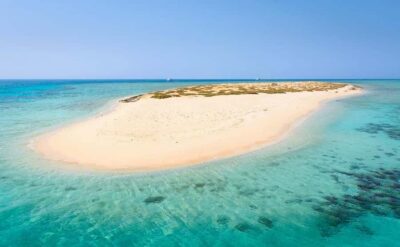

White Island and Ras Mohamed Cruise Adventure
Read our review →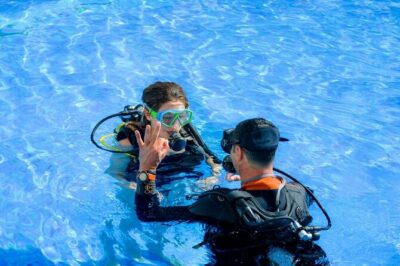

Sharm ElSheikh: ATV Quad & Buggy Adventure Sunrise or Sunset
Read our review →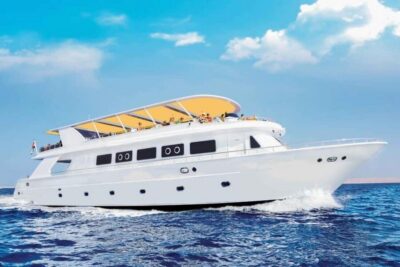
Browse the lists this tour appears in