Reviewed · HURGHADA TOURS
Hurghada SPACE OBSERVERS(Desert Stargazing)
Stars look different beyond the resort lights. Hurghada Space Observers combines a desert sunset and Bedouin dinner with a serious evening of astronomy, using a GPS-directed Meade telescope to show planets, moons, and distant objects. I like the mix of local culture and science, and I like that the astronomy is led by specialists rather than treated as a quick photo stop.
The best part is the clear desert sky, where you may see the Milky Way, bright planets, and constellations that disappear over Hurghada. Guides including Ibrahim, Moussa, Adam, and Sedek have earned strong praise for their explanations. The main drawback is the ride: expect a long, rough journey in a jeep, and bring a coat because the desert becomes cold after dark.
In This Review
- Key points to know before booking
- Why Hurghada is a good base for stargazing
- The drive from Hurghada into the desert
- Sunset above the Hurghada desert
- Bedouin tea, bread making, and village life
- Candlelit dinner in the open desert
- Three hours with the Meade telescope
- What the $35 price really covers
- Who will enjoy this evening most
- What to pack for the desert night
- Weather, cancellation, and practical limits
- Should you book Hurghada Space Observers?
- FAQ
- How long is the Hurghada Space Observers experience?
- What is included in the $35 price?
- Is pickup available outside Hurghada?
- How many people can join the tour?
- What can I see through the telescope?
- Is the desert ride bumpy?
- What should I wear?
- What happens if bad weather cancels the trip?
Key points to know before booking
- A real telescope session: The 15-inch Meade telescope is used to view planets, moons, stars, and deep-space objects.
- A long desert ride: The route can involve 40 to 60 minutes on the road, followed by at least 45 minutes over bumpy desert tracks.
- More than stargazing: You visit a Bedouin camp, drink herb tea, see bread making, and may have a camel ride.
- Dinner under candlelight: The buffet is described as simple but tasty, with dishes such as rice, salad, kofta, chicken, and Bedouin bread.
- Cold after sunset: Pack a jumper or light coat, plus sturdy shoes for the rocky viewing area.
- Good value at $35: Hotel transport, dinner, tea, the camp visit, and astronomy guidance are included, though some pickup areas and government fees cost extra.
Why Hurghada is a good base for stargazing
Hurghada is built along the Red Sea, with bright hotels, roads, and town lights competing with the stars. This experience takes you into the desert, with the camp described as roughly 35 kilometers from Hurghada and reached after leaving the main resort zone.
That distance matters. You are not simply stepping outside a hotel for a quick look at the moon. The drive is part of the outing, and the purpose is to reach darker ground where faint stars and the Milky Way have a better chance of appearing.
The sky is never fully guaranteed. Moonlight, haze, dust, and weather can affect what you see. One person found the Milky Way less clear than hoped, while others saw it plainly and viewed Saturn, Jupiter, and four of Jupiter’s moons. I would book this for the setting and the guided astronomy, not for a promise of one exact planet or galaxy.
The operator has worked in Egypt since 2008 and presents itself as an astronomy specialist with more than 15 years of experience. That background shows in the design of the evening: the telescope and explanations are central, not a small extra after a desert dinner.
A few more Hurghada outings to price up
- From Hurghada: Cairo and Giza Highlights Full-Day Tour
★ 4.5 · 6,014 reviews - Hurghada: Luxury Cruise Trip to Orange Bay with Lunch
★ 4.9 · 5,451 reviews - Hurghada: Orange Bay Island Boat Trip w/ Breakfast and Lunch
★ 4.9 · 5,345 reviews
The drive from Hurghada into the desert
Pickup and drop-off from your Hurghada hotel or accommodation are included. The vehicle arrangement can vary, but the outing includes a jeep ride into the desert, and the drive is repeatedly described as bumpy and entertaining.
Allow more time than the basic five-hour estimate might suggest. The road portion may take 40 to 60 minutes, followed by a rough desert section that can last 45 minutes or longer. The return can also run late, so I would avoid scheduling a tight dinner reservation or airport transfer afterward.
The rough track is part of the fun for some people. Children enjoyed the bouncing ride, and several people described it as a small desert adventure in its own right. For others, it may be uncomfortable. If you have back pain, motion sickness, or trouble with rough transport, this is the part to take seriously. A motion-sickness tablet may help, but anyone with significant back trouble should consider a gentler evening activity.
The vehicles may have side-facing seats, which can make the bumps feel stronger. If you have a physical limitation, tell the company before departure. One guide, Adam, gave up a front seat to help a person with a bad back, but you should not depend on that arrangement being available every time.
Sunset above the Hurghada desert
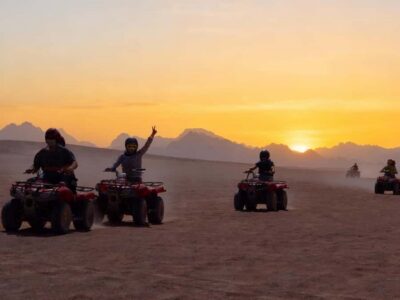
The first stop takes you a short distance into the desert, described as about five kilometers to the observation area. The timing is designed to catch the sunset before the evening program begins at the Bedouin camp.
The sunset stop gives the outing a visual opening before the technical astronomy begins. You can take photos from the observation area, and the open desert gives you views that are very different from the Red Sea promenade and hotel strip.
You will need to watch your footing. The sunset viewpoint may involve a small climb over rocky ground, and sturdy shoes are a sensible choice. Sandals are not ideal if you plan to walk up the slope or move around after dark.
Photography is a major part of the experience for some people. A photographer may offer an optional photo package, with one person reporting a price of 15 euros and another describing a small fixed fee per family. That charge is not included in the $35 tour price, so ask for the current cost before accepting the service.
Bedouin tea, bread making, and village life
At the camp, you receive a cold drink and traditional Bedouin tea flavored with herbs. The tea is a modest touch, but it helps slow the pace after the jeep ride and gives you a chance to sit in the camp before dinner.
The cultural part is fairly light, but it adds meaning to the desert visit. You may see women making bread and receive an introduction to Bedouin life. The camp is not presented as a full village stay or a long cultural workshop. Think of it as a short encounter built into a wider desert and astronomy program.
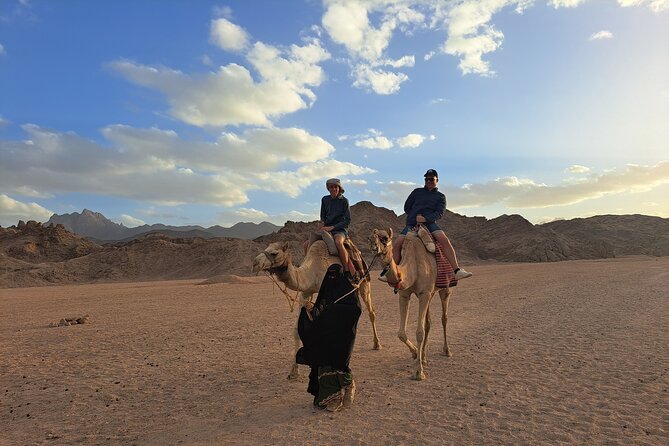
A camel ride is also included in the experience described by several people, though the formal inclusions specifically list the Bedouin village and not a separate camel-riding charge. Because of that difference, I would confirm the camel portion when you book if it is important to you.
This stop works best when you treat it as an introduction rather than a complete picture of Bedouin culture. You get tea, bread, a camp visit, and a glimpse of daily traditions. The astronomy remains the main event.
Same base, a completely different sort of day:
- Hurghada: Royal Seascope Submarine Cruise with Snorkel Stop
★ 4.4 · 4,637 reviews - Hurghada: 3 Islands, Dolphins & Snorkel Yacht Trip w/ Lunch
★ 4.7 · 4,609 reviews - Hurghada or Makadi: Discover the Magic of Dolphin House
★ 4.8 · 4,198 reviews - Sindbad Submarines – Hurghada (Egypt) – 2 Hours
★ 5.0 · 3,985 reviews
Candlelit dinner in the open desert
Dinner is served at the camp, with candles creating a simple evening setting. The meal is described as a Bedouin buffet, often including rice, salad, kofta, chicken, and Bedouin bread.
The food receives generally warm praise for taste and cleanliness, but portions may feel limited to some people. One person specifically felt the meal was not enough. I would regard it as a basic included dinner, not a feast. If you have a large appetite, a snack before pickup is sensible.
The timing is useful. Dinner fills the gap between sunset and full darkness, and it gives the astronomy team time to prepare the telescope. You are not expected to stare at a dark sky for five straight hours. The evening has several changes of pace: drive, sunset, tea, camp activities, dinner, then the main sky session.
Candlelight also helps preserve the mood. Bright electric lights would make the camp more comfortable but would work against the purpose of the night. Expect a rustic setting rather than a restaurant with polished service.
Three hours with the Meade telescope
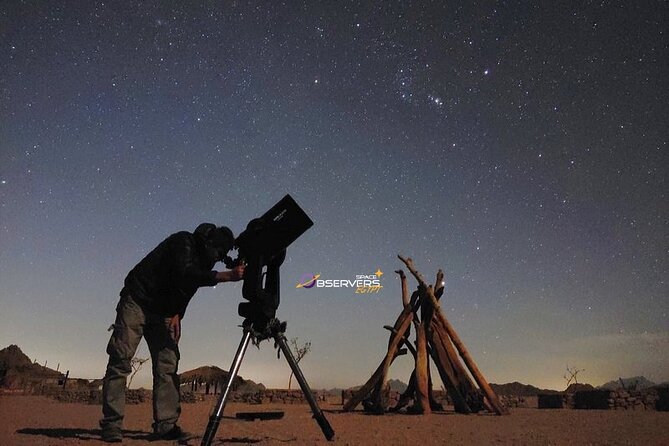
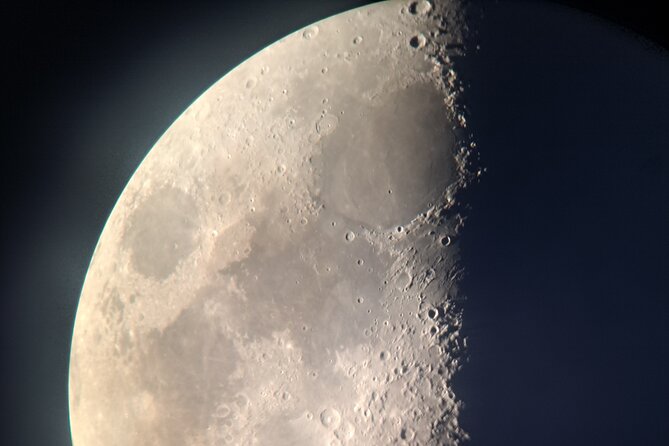
The astronomy session is scheduled for about three hours, which is the strongest reason to choose this outing over a standard desert safari. The operator uses a 15-inch Meade telescope with GPS direction, along with explanations from professional astronomy guides.
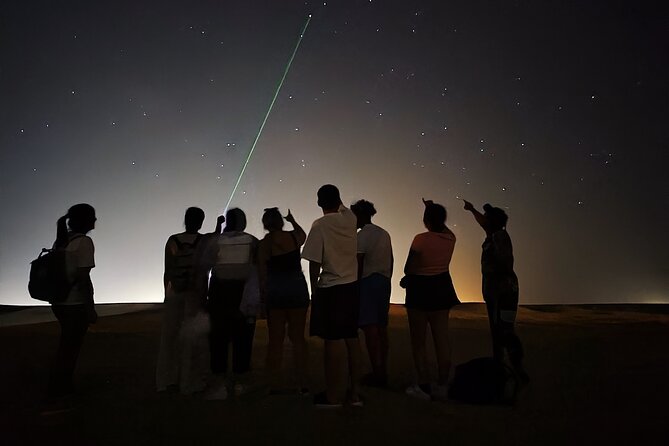
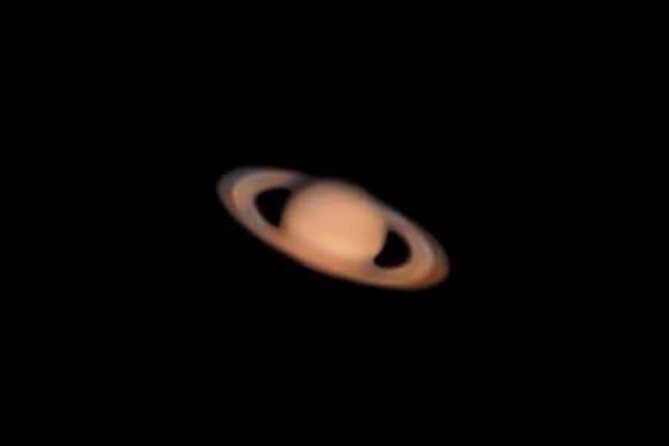
What you see depends on the date and conditions. Past sessions have included Saturn, Jupiter, four of Jupiter’s moons, the moon, constellations, and the Milky Way. The guide may also point out deep-space objects and explain their distance and characteristics.
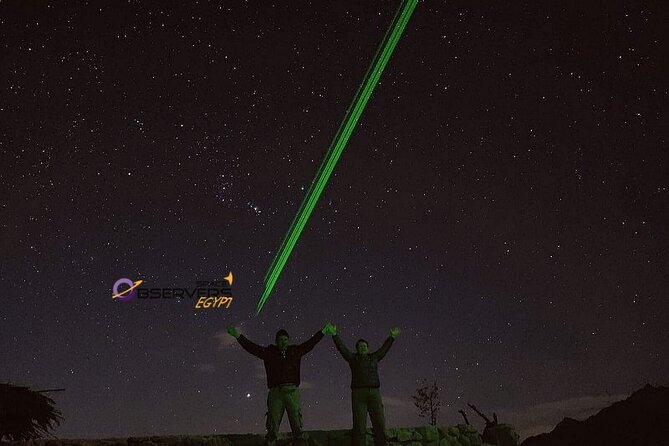
I especially like the human element here. Ibrahim has been praised for explaining both Bedouin life and the night sky. Moussa is described as strong on astronomy and constellation stories, using a laser pointer to connect individual stars into recognizable patterns. Sedek has also guided people through planets, stars, and their basic features. The company uses guides who speak different languages, though the available language for your specific departure should be checked in advance.
The session is guided rather than fully independent. You look through the telescope as the astronomer directs the program. One person wished for more telescopes and more time to look independently, so you should not expect every member of a large group to have a private telescope for the whole evening.
The maximum group size is 27 people. That is not a tiny private outing, but it is still more manageable than a very large coach group. With several people waiting for telescope turns, the laser-pointer explanation and naked-eye stargazing remain important parts of the program.
The guide’s explanations can make the difference between simply seeing bright points and understanding what you are looking at. You may learn how far away a planet is, how constellations are identified, and why objects appear in certain positions. This makes the experience suitable for families and beginners, not only people who already own a telescope.
What the $35 price really covers
At $35 per person, the price is strong if you want several experiences in one evening. The package includes hotel transport in Hurghada, a candlelight dinner, Bedouin tea, the camp visit, a GPS-directed telescope, and astronomy guidance.
A separate desert transfer, dinner, and astronomy evening could easily become expensive if arranged individually. Here, the cost is kept down by using a shared group and a simple camp. You are paying for access to the desert, transport, food, equipment, and the team’s astronomy knowledge in one package.
There are important extra charges. Pickup from Sahl Hasheesh, Makadi, El Gouna, and Safaga is not covered at the standard price. The stated supplements are 10 euros per person for Sahl Hasheesh, Makadi, and El Gouna, and 20 euros per person for Safaga. Governmental fees in Hurghada are also listed separately.
Read the pickup terms carefully before paying. One booking dispute arose when an extra amount was requested at the last minute, with the company pointing to the outside-area charge and government fees. The practical lesson is simple: confirm the full price for your hotel, including any local fees, before the day of departure.
The experience is booked an average of 18 days ahead, which suggests that planning early can be wise during busy periods. Confirmation is provided at booking, and the group can reach 27 people.
Who will enjoy this evening most
I would recommend this outing to families, couples, friends, and anyone curious about astronomy but not ready for a technical observatory visit. You do not need advanced knowledge. The guides explain the sky in a friendly, accessible way, and the desert setting gives children something active to enjoy before the telescope work begins.
It also suits people who want a cultural touch without giving up the main purpose of the night. Tea, bread making, a camel encounter, and dinner add variety, while the telescope session keeps the experience focused.
This is not the best choice for a person seeking a calm, polished excursion. The ride can be rough, the camp is basic, the dinner is not unlimited, and the telescope may be shared among the group. Anyone with a weak stomach or back problems should think twice.
It is also a poor match if you need a fixed return time. The stated duration is about five hours, but the actual outing may last longer than advertised. Plan with extra time on both ends.
What to pack for the desert night
The temperature can drop sharply after sunset, even when Hurghada feels warm during the day. Bring a jumper, sweater, or light coat. You will be sitting outside at night, and the cold may be more noticeable during the long telescope session.
Wear good shoes. The sunset viewpoint includes a small climb over rocky ground, and you will want stable footing in low light. Closed shoes are more practical than thin sandals.
A small personal snack and water bottle may be useful, especially if you usually need more food than a basic buffet provides. Keep your camera and phone ready for the sunset, but remember that the optional photographer’s service costs extra.
Do not use bright phone lights around the telescope unless the guide permits it. White light makes it harder for everyone to adjust to the dark. A dim screen or red light is kinder to the group’s night vision.
Weather, cancellation, and practical limits
The program needs good weather. If poor conditions force cancellation, you are offered a different date or a full refund. The same applies if the minimum number of participants is not reached.
You can cancel for a full refund up to 24 hours before the start time. Cancellations or changes made within 24 hours are not refunded or accepted, so keep the local Egyptian time in mind.
Most people can take part, but the physical details matter more than the general participation statement. You must handle a long vehicle ride, rough desert tracks, a rocky climb, and an outdoor evening. If that sounds tiring rather than fun, another Hurghada activity may suit you better.
The overall rating is 4.8 from 332 ratings, with 97 percent recommending the experience. That high score fits the strongest parts of the program: the guides, the desert atmosphere, the sunset, and the chance to see planets through a proper telescope. The lower marks point to practical issues rather than a weak central idea, especially extra fees, limited food, and uneven telescope viewing time.
Should you book Hurghada Space Observers?
Book it if you want an active evening with a clear purpose: leave the resort lights, eat a simple desert dinner, and learn your way around the Egyptian night sky. At $35, the combination of transport, food, camp activities, and a 15-inch telescope offers good value.
I would book early, confirm every pickup fee, and ask about the expected camel ride and guide language. Bring warm clothing, sturdy shoes, and extra time for the return.
Skip it if rough transport, motion sickness, back pain, or an unpredictable finish will spoil your night. For everyone else, this is one of Hurghada’s more memorable after-dark outings, especially when Saturn, Jupiter, or the Milky Way appears above the desert.
FAQ
How long is the Hurghada Space Observers experience?
The advertised duration is approximately five hours. The actual outing may run longer, so allow extra time after the stated finish.
What is included in the $35 price?
The price includes hotel pickup and drop-off from Hurghada accommodation, candlelight dinner, Bedouin herb tea, a visit to the Bedouin village, use of the GPS-directed Meade telescope, and astronomy guidance.
Is pickup available outside Hurghada?
Pickup from Sahl Hasheesh, Makadi, El Gouna, and Safaga is available for an additional fee. The stated supplements are 10 euros per person for Sahl Hasheesh, Makadi, and El Gouna, and 20 euros per person for Safaga.
How many people can join the tour?
The maximum group size is 27 people.
What can I see through the telescope?
Depending on the date and sky conditions, you may see planets, stars, the moon, constellations, and deep-space objects. Previous sessions included Saturn, Jupiter, and four of Jupiter’s moons.
Is the desert ride bumpy?
Yes. The drive includes a road section and a rough desert section. The bumpy jeep ride can be fun, but it may be uncomfortable for people with back pain or motion sickness.
What should I wear?
Bring a jumper, sweater, or coat because the desert becomes cold at night. Good shoes are recommended for the rocky climb to the sunset viewing area.
What happens if bad weather cancels the trip?
You will be offered a different date or a full refund if poor weather causes cancellation. A full refund is also available when you cancel at least 24 hours before the start time.
Newly listed around Hurghada
- Viva Egypt hurghada Hula Hula Island & Lunch & Water sports 3*1★ 5.0 · 54 reviews
- Hurghada Full Day Desert Tour★ 5.0 · 51 reviews
- Private Transfers Hurghada Airport to Hurghada, Safaga, Soma Bay★ 5.0 · 19 reviews
- Hurghada to Luxor: Private Transfer & Dendara optional★ 5.0 · 27 reviews
- Full Day Luxor Excursion★ 5.0 · 16 reviews
- morning quad bike★ 5.0 · 22 reviews
- Parasailing Ride in Hurgada single&double with private Transfer★ 5.0 · 16 reviews
- Snorkeling and Swimming at Orange Bay Island★ 5.0 · 19 reviews
Hurghada Tours, compared.
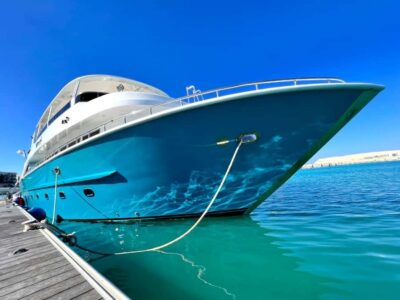
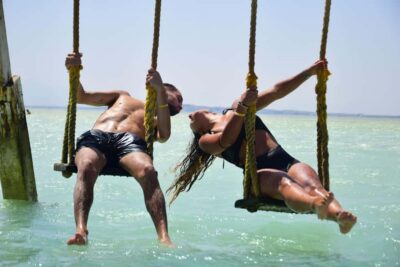
Orange Bay Island Boat Trip w/ Breakfast and Lunch
Read our review →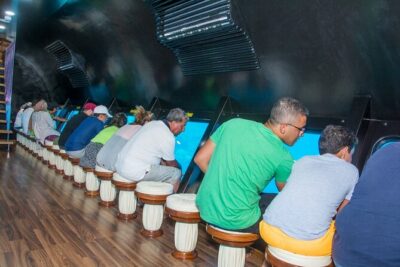
Royal Seascope Submarine Cruise with Snorkel Stop
Read our review →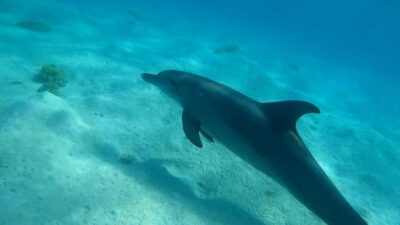
3 Islands, Dolphins & Snorkel Yacht Trip w/ Lunch
Read our review →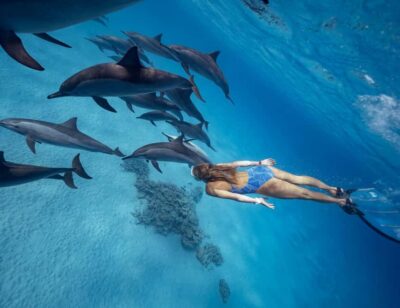
Hurghada or Makadi: Discover the Magic of Dolphin House
Read our review →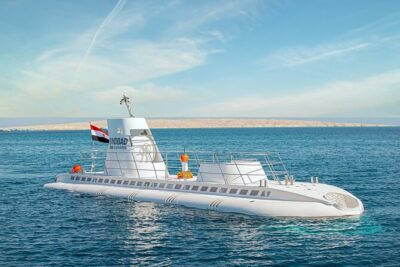
Sindbad Submarines – Hurghada (Egypt) – 2 Hours
Read our review →