
Reviewed · MORNING
From Sharm: Mount Moses Trekking, Sunrise & Monastery Visit
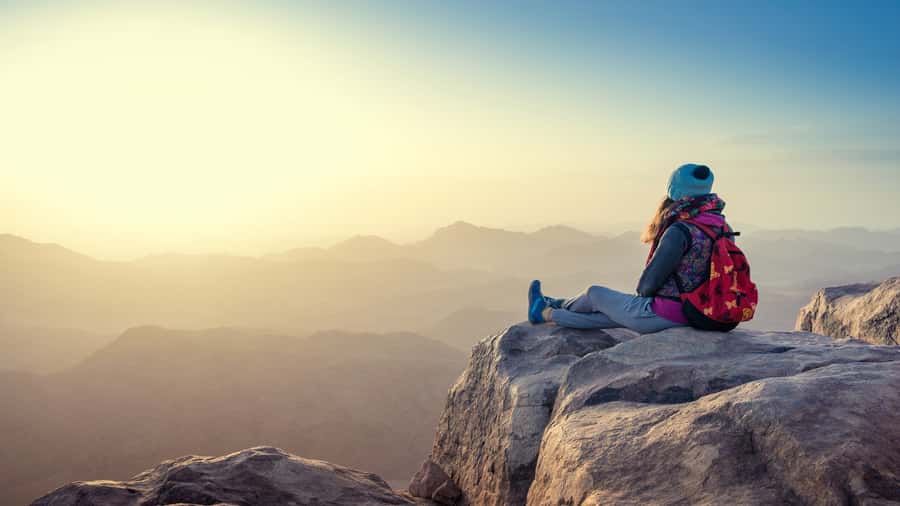
Sleep can wait for Sinai. This overnight trip from Sharm El Sheikh takes you up Mount Sinai for sunrise, then into St. Catherine’s Monastery, one of the world’s oldest working Christian monasteries. I like the powerful mix of mountain, faith, and desert scenery, and I like that Bedouin guides support you on the trail. The catch is simple: the climb is harder than the cheerful tour description suggests.
I also like the value. At $50 per person, you get hotel pickup, transport, water, an Egyptologist guide, a Bedouin mountain guide, the trek, and the monastery visit. The weak point is transport organization, which can mean late pickup changes, crowded vehicles, and a very long ride after an already sleepless night.
In This Review
- Key points before you book
- The long night from Sharm El Sheikh
- Beginning the Mount Sinai climb at night
- The 750 steps to the summit
- Waiting in the cold for sunrise
- The descent and the cost of tired legs
- Inside St. Catherine’s Monastery
- What $50 buys you
- Who should book this mountain trip?
- What to pack for Mount Sinai
- Should you book this Mount Moses tour?
- FAQ
- How long does the Mount Moses tour take?
- What time is pickup from Sharm El Sheikh?
- How difficult is the Mount Sinai climb?
- Can I ride a camel all the way to the summit?
- What should I wear for the sunrise?
- Is breakfast included?
- Is St. Catherine’s Monastery always open?
Key points before you book
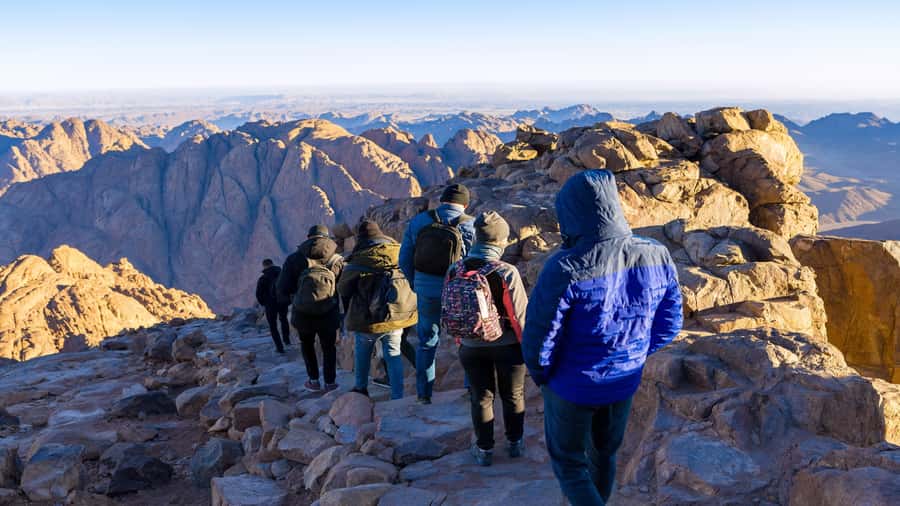
- Sunrise at 2,285 meters: You climb through darkness and reach the summit before dawn, with wide views across the Sinai mountains.
- The final 750 steps are the real test: They are uneven stone steps and boulders, not a neat staircase.
- Expect a 16 to 17-hour day: The drive from Sharm takes about four hours each way, with security checks and many hotel pickups possible.
- The summit can be freezing: In winter, temperatures around minus 2 to minus 10 degrees Celsius are possible, with strong wind.
- St. Catherine’s Monastery adds real depth: You can see the burning bush site, a sixth-century church, old manuscripts, icons, and a small museum.
- Carry cash and a proper light: Toilets, drinks, snacks, blankets, and camel rides cost extra, and phone flashlights are not ideal on rough ground.
The long night from Sharm El Sheikh
Pickup is scheduled between 8:00 PM and 9:00 PM, though the exact time may arrive late. Some groups have received a last-minute change, while others have spent extra time collecting people from hotels. You wait at the main gate of your hotel along the highway, not at reception, so confirm that meeting point before you go to bed.
The first vehicle may be a minibus, followed by a larger air-conditioned coach. The change can make the ride more comfortable, but the experience is not always roomy. One bus had passengers on folding seats in the aisle, and another was described as crowded enough for people to stand briefly.
That matters because the drive is roughly four hours each way. Add stops, security checkpoints, and a large number of hotel pickups, and you have a serious amount of sitting. I would wear loose clothes, keep water and snacks within reach, and avoid packing anything you do not need for the climb.
The road journey is part of the practical price of this trip. You are not simply paying for a mountain walk. You are paying for the long transfer into South Sinai, the guides, the transport back, and the chance to combine two major religious sites in one day.
A few more Sharm El Sheikh outings to price up
- Full-Day Hike Tour at St. Catherine’s Monastery
★ 5.0 · 23 reviews - Hurghada: Hiking , dinner & stargazing
★ 5.0 · 19 reviews
Beginning the Mount Sinai climb at night
At the mountain, your Egyptologist guide handles the general tour, while a Bedouin guide takes charge of the trek. The tour guide is generally available until base camp, so do not expect the same person to lead every step of the climb.
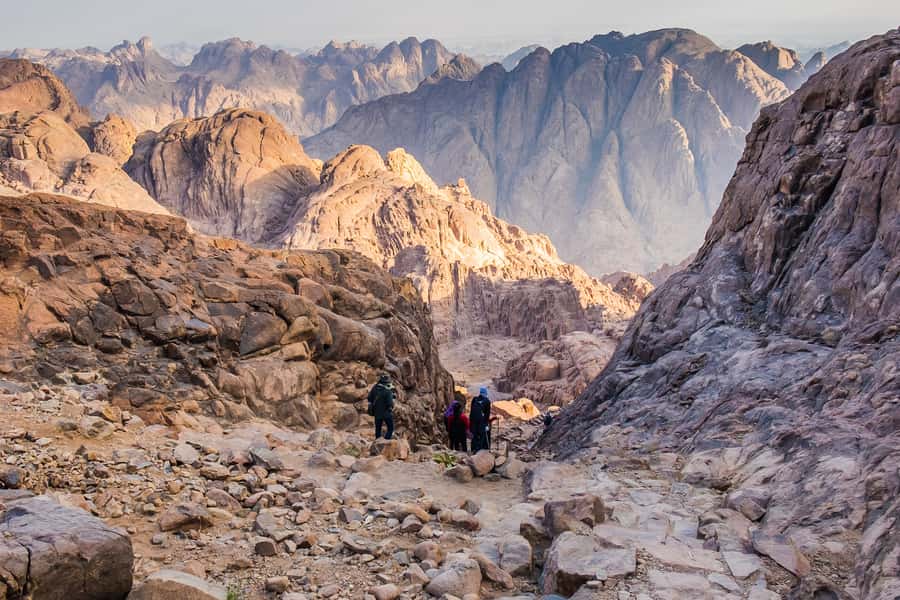
The walking route rises from roughly 1,300 meters to the summit at 2,285 meters. The full trip up and down is commonly described as about 15 to 16 kilometers, though the organized description gives around seven kilometers for the uphill route. Allow two to three hours for the ascent, depending on the group, then around two hours to descend.
The first section is a steep, uneven trail. You walk in darkness, usually among other groups and camels. A torch is not optional in any sensible packing plan. The ground can be dirty from camel traffic, and it is easy to miss a loose stone when you are tired.
The pace varies. Some groups move slowly, stopping often for breath, hot drinks, toilets, and snacks. Several people found the climb manageable because of these pauses, while others felt the Bedouin guide set a brisk pace. If you walk quickly, you may move ahead. If you need a slower rhythm, tell the guide early rather than trying to keep up until you are spent.
The Bedouin guides receive the warmest praise for practical help. Guides named Ibrahim, Ali, Ashrof, Amr, Jimmy, Mohammad, and two young guides both called Yousef were singled out for kindness, humor, encouragement, and care. They check on the group, help people over rough sections, and know how to judge the mountain at night.
The 750 steps to the summit
The last part is where the description can understate the work. You climb about 750 steps, but these are not uniform steps in a city stairway. They are rough stones and boulders of different heights, with some sections steep enough to force frequent pauses.
People who exercise regularly but do little hiking have found this section surprisingly tough. A reasonable level of fitness helps, but endurance is not the whole story. You are climbing after a night drive, in the dark, at altitude, and often while carrying warm clothing and water.
You can hire a camel for the earlier section if you are struggling. The camel option does not take you up the final 750 steps, so you still finish the steepest part on foot. The provider does not recommend the camel ride, but people with respiratory problems or a medical limitation have found it useful. One participant paid 650 Egyptian pounds, while another reported about $25 in May 2025. Prices can change, so ask before agreeing.
I would not treat the camel as a casual novelty. Mount Sinai is a demanding walk, and a camel can help conserve energy for the summit section. At the same time, the animals share the trail, and you must give way as they pass.
There are basic toilets along the route, usually costing around 5 to 20 Egyptian pounds. Bring tissues. Small shops sell tea, coffee, water, chocolate, and other snacks. The prices may feel high for simple goods, so carry enough water from Sharm and keep small notes in Egyptian pounds, euros, or US dollars.
Waiting in the cold for sunrise
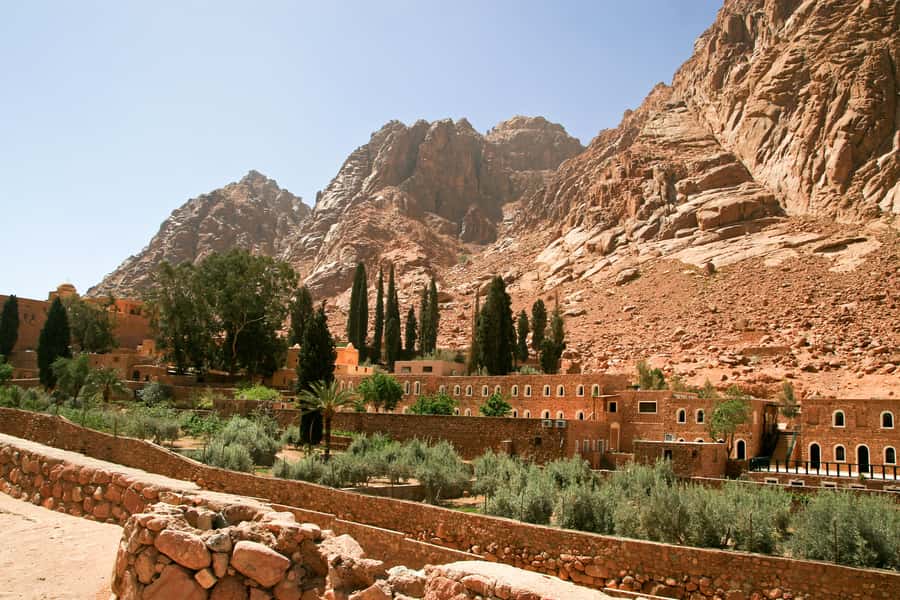
The guides aim to get you to the top before sunrise, sometimes by a large margin. Arriving one to two hours early can give you a better place to sit, but it also means more time exposed to the wind.
This is the point where warm clothing earns its space in your bag. In January and February, the summit can be bitterly cold, with one reported reading of minus 2 degrees Celsius and another warning of minus 5 to minus 10. Even in milder months, wind can cut through damp clothing after the climb.
Bring a hat, gloves, wool socks, and several layers. A fleece, down jacket, and windproof outer layer worked well for one February ascent. Blankets can be rented near the top, with one person paying about 200 Egyptian pounds. I would budget for one unless you are unusually comfortable sitting still in cold mountain air.
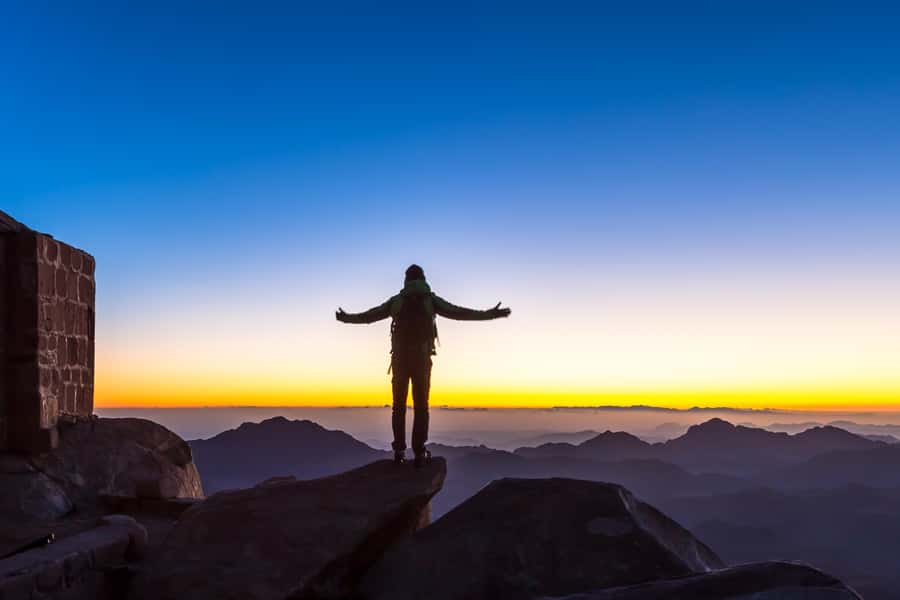
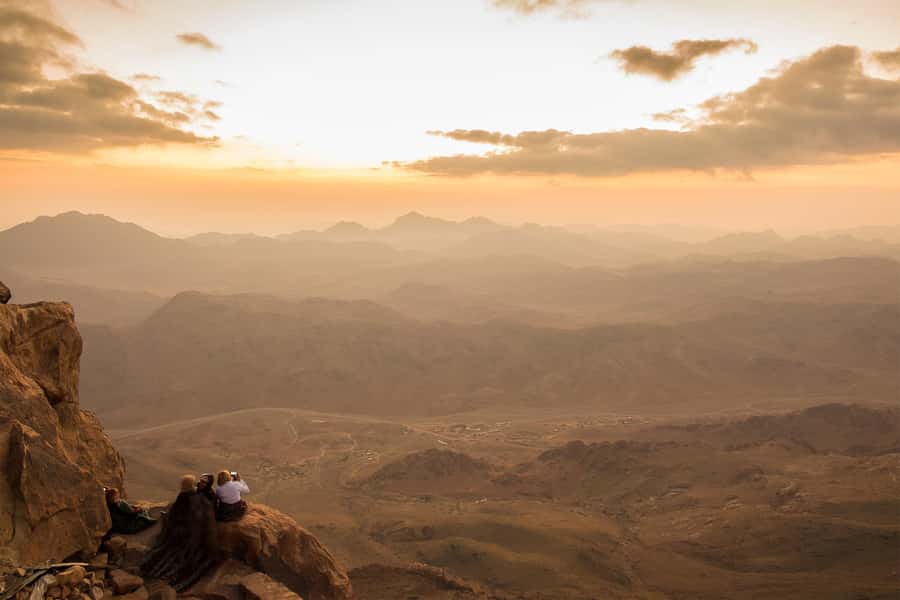
Then the sky begins to change. The attraction is not only the sun itself, but the slow reveal of the ridges and valleys around you. In the darkness, the trail feels narrow and personal. At dawn, the surrounding Sinai peaks appear in layers, and the long effort finally has a clear reward.
You can take photographs, pray, or simply sit quietly. The summit can be crowded and noisy, especially when several groups arrive together, so this is not a private wilderness moment. Still, the religious setting gives the sunrise a weight that a standard viewpoint does not have.
Same base, a completely different sort of day:
- Sharm El-Sheikh: Ultimate ATV Quad, Stargazing & BBQ Dinner
★ 4.7 · 4,084 reviews - Sharm El-Sheikh: Jeep Adventure to Blue Hole, Canyon & Dahab
★ 4.7 · 3,759 reviews - From Sharm: White Island and Ras Mohamed Snorkeling Trip
★ 4.7 · 3,194 reviews - Sharm El Sheikh: White Island and Ras Mohamed Cruise Adventure
★ 4.5 · 1,824 reviews
The descent and the cost of tired legs
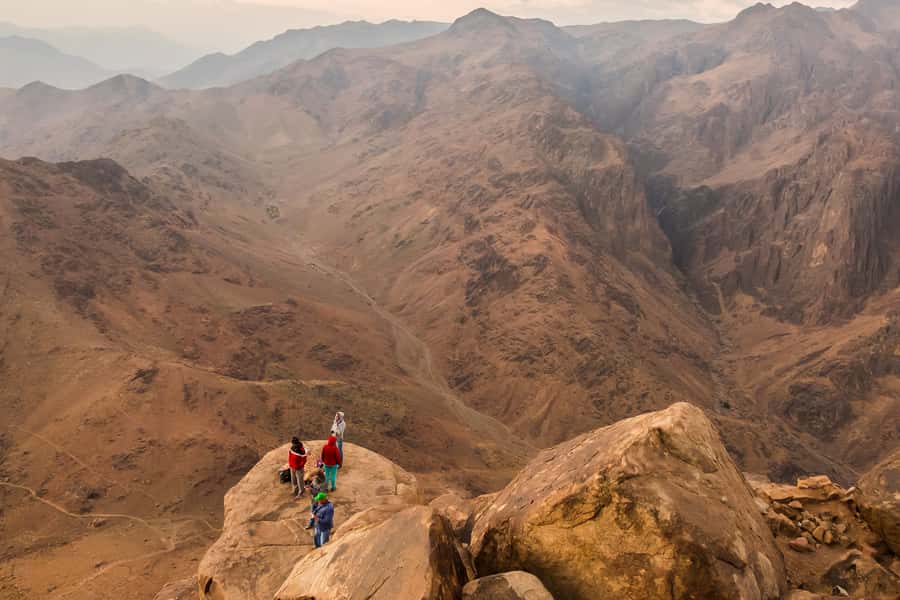
The walk down is easier on the lungs but not always on the knees. Uneven stone makes it important to watch every step, and fatigue can make a simple descent careless. Use the pauses, drink water, and do not rush just because the difficult part appears to be over.
The route is warmer once the sun is up. You may start the climb in heavy layers, then find yourself removing them on the way down. Keep clothing easy to reach rather than buried at the bottom of your bag.
At the base, you have time to rest and eat breakfast. Breakfast is not listed as included, so order a breakfast box from your hotel before departure and collect it before pickup. This is one of the most useful small preparations you can make. After the descent, a sandwich, fruit, and a drink are far more welcome than a plan to find food later.
The group then heads to St. Catherine’s Monastery. This is also the point when tiredness can affect your visit. Some people still have the energy to explore, while others sit outside or skip the interior after being awake all night.
Inside St. Catherine’s Monastery
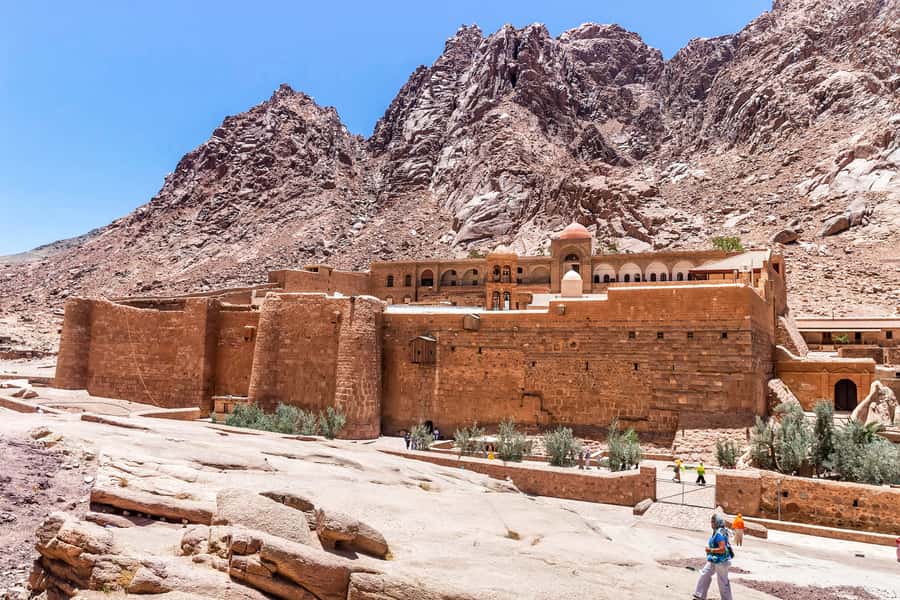
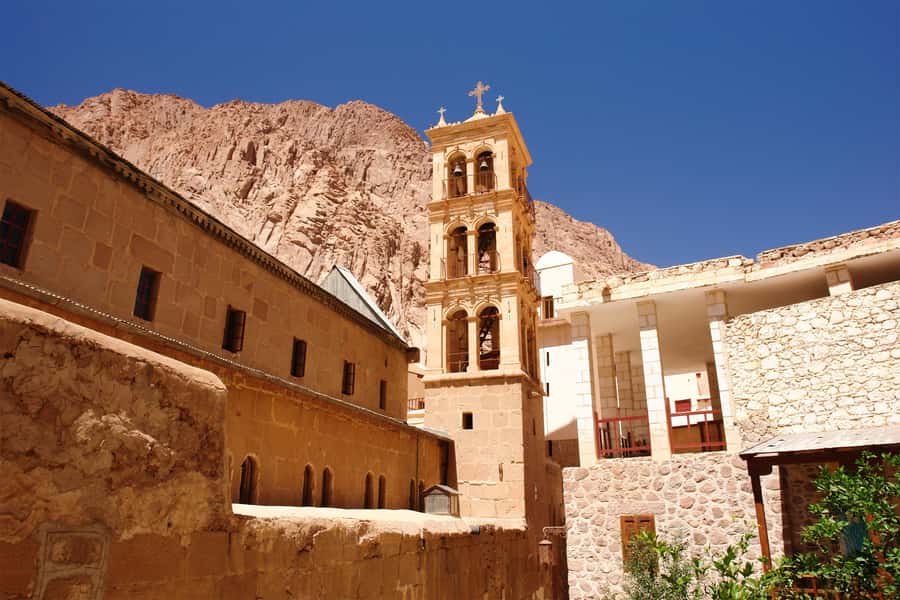
The monastery is a UNESCO World Heritage Site and is described as the oldest functioning Christian monastery in the world. It lies at the foot of Mount Sinai, making the visit feel connected to the climb rather than like a separate sightseeing stop.
The complex includes a sixth-century church beside the site associated with the burning bush. You can also see old manuscripts in the library, religious icons, and a small museum collection. The material gives context to the mountain’s importance across Christianity, Judaism, and Islam.
I would pay attention during the guide’s explanation, but also protect a little time to look for yourself. Some visits have felt rushed because the bus must leave on schedule, while other guides have given useful detail about the church, manuscripts, and religious traditions.
The monastery is not open every day. It closes on Sundays and on various Christian holidays, including dates in May, June, July, August, September, November, and December. Check the exact date before paying, because a closed monastery would change the value of the day.
This stop is especially worthwhile if you care about religious art, early Christian sites, or the history of pilgrimage. If your main goal is only the sunrise, you may find the monastery visit difficult after the climb. Plan for a short rest before entering and keep your expectations realistic.
What $50 buys you
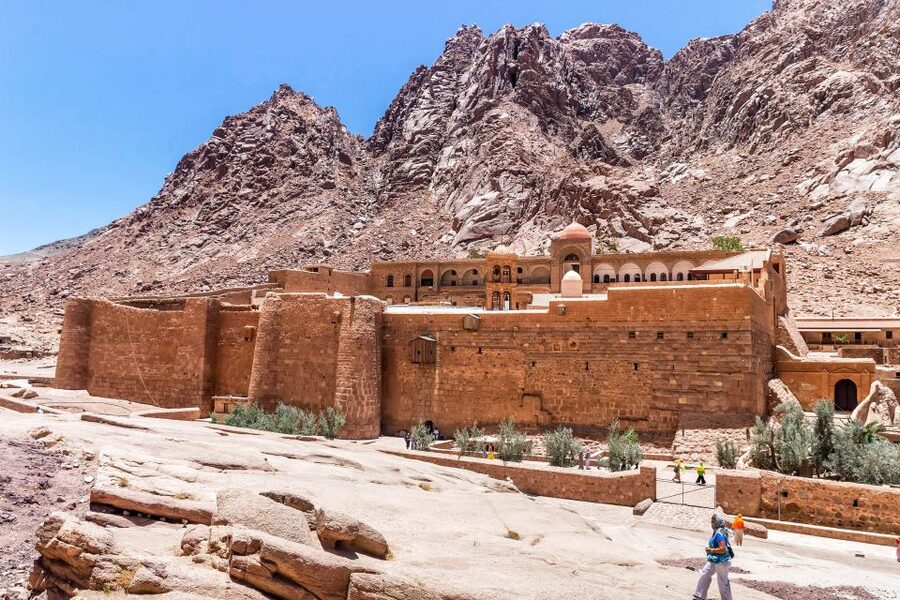
At $50, this is strong value if you want both Mount Sinai and St. Catherine’s Monastery without arranging separate transport. The package includes pickup and drop-off from Sharm El Sheikh, a clean air-conditioned vehicle, water, an Egyptologist guide, and a Bedouin trekking guide.
The price does not cover extra drinks, snacks, toilets, personal purchases, camel rides, or a summit blanket. Those costs are not huge individually, but they add up when you are cold, thirsty, and tired. I would carry small cash and avoid assuming that the included water will cover the entire walk.
The main compromise is comfort. You may spend part of the journey in a crowded bus, and the total day can stretch beyond 17 hours if checkpoints or transfers take longer. Some transport experiences have been smooth and punctual. Others included smoking breaks, awkward seats, or too many hotel pickups.
The guides help balance that weakness. Good support on a dark mountain is worth real money. They speak English, Russian, or Arabic, and several guides have also managed multiple languages during the same trip. Their presence makes the climb feel organized rather than like a loose crowd heading uphill.
Free cancellation up to 24 hours before departure and the option to reserve now and pay later make the booking less risky. Those features are useful if your Sharm plans may change, but they do not remove the need to confirm your pickup location and monastery opening date.
Who should book this mountain trip?
I would choose this trip if you want a physically active day with a strong religious and cultural element. It suits adults and teenagers aged 14 and over who can handle several hours of walking on rough, steep ground and then remain alert for a monastery visit.
You do not need to be a serious mountaineer. People with moderate fitness have completed the route, especially when they used the regular rest stops. But you should be honest about shortness of breath, bone pain, knee problems, and how your body handles poor sleep.
The trip is not suitable for children under 14, pregnant women, wheelchair users, elderly people, or anyone with serious breathing difficulty. If you have a medical condition, discuss the climb with a doctor before booking. A camel can help on part of the route, but it cannot replace the final stair section.
I would also avoid booking this as your first activity immediately after a late arrival in Egypt. The loss of a full night’s sleep is part of the bargain. Give yourself recovery time afterward if your schedule allows.
What to pack for Mount Sinai
Keep your bag light, but do not cut the essentials. I would take:
- Hiking shoes with a firm sole
- A headlamp or strong flashlight, plus spare batteries if possible
- Warm layers, including a hat, gloves, and windproof jacket
- Water and a hotel breakfast box
- Tissues and small cash
- Passport
- Phone, power bank, and a small bag for rubbish
Comfortable clothes matter more than appearance. Jeans can work, but flexible trousers are better on high steps. Phone lights are useful in an emergency, but a hands-free headlamp lets you see the ground and keep both hands free.
Do not rely on the shops for every need. You can buy hot drinks and snacks along the path, but you should arrive prepared for high prices, limited choices, and short stops.
Should you book this Mount Moses tour?
Book it if the thought of climbing through the night for sunrise feels exciting rather than punishing. The best parts are clear: striking dawn views, thoughtful Bedouin support, a meaningful mountain, and a monastery visit that adds real historical and religious context.
Skip it if you need comfort, privacy, or a relaxed sightseeing pace. The transport can be crowded, the climb is genuinely strenuous, and the monastery may receive less time than you want because everyone is tired and the return schedule is tight.
For most reasonably fit adults, I think the $50 price is fair. Confirm the pickup time, check the monastery calendar, order your breakfast box, bring serious cold-weather clothing, and carry a proper light. Do that, and this becomes a demanding but memorable day rather than an avoidable test of poor preparation.
FAQ
How long does the Mount Moses tour take?
The tour lasts about 16 to 17 hours, including hotel pickup and return. Security checkpoints, transfers, and hotel pickups can make the day longer.
What time is pickup from Sharm El Sheikh?
Pickup is scheduled between 8:00 PM and 9:00 PM. You should wait at the main gate of your hotel along the highway, not at the reception area.
How difficult is the Mount Sinai climb?
The climb is physically demanding. The uphill walk takes around two to three hours, followed by about 750 steep, uneven stone steps to the summit. The descent takes around two hours.
Can I ride a camel all the way to the summit?
No. A camel can take you through the earlier part of the route, but you must climb the final 750 steps on foot.
What should I wear for the sunrise?
Bring warm layers, a jacket, hat, gloves, and hiking shoes. The summit can be far colder and windier than Sharm, with winter temperatures reported between minus 2 and minus 10 degrees Celsius.
Is breakfast included?
No. You should pre-order a breakfast box from your hotel and collect it before the tour begins.
Is St. Catherine’s Monastery always open?
No. The monastery is closed on Sundays and on certain Christian holidays. Check the opening date before booking the tour.
Newly listed around Sharm El Sheikh
- Full-Day Hike Tour at St. Catherine’s Monastery★ 5.0 · 23 reviews
- Mount Sinai Sunrise and St. Catherine’s Monastery Trip from Dahab★ 4.0 · 26 reviews
- St Catherine Monastery and Mt Sinai Sunrise Tour from Dahab★ 4.5 · 23 reviews
- 1-Day Jeep Excursion from Dahab to Small Colored Canyon★ 4.5 · 19 reviews
- 3-Day Expedition in the Sinai Desert Climb Seek and Find★ 5.0 · 41 reviews
- Tiran Island: Full-day Snorkeling, Diving Boat Trip★ 3.5 · 15 reviews
- Sharm El Sheikh: Trip to Luxor & Tutankhamun Tomb by Plane★ 4.4 · 151 reviews
- Sharm: Introductory Dive from the Shore & PADI Courses★ 4.4 · 19 reviews
Morning, compared.
Morning or Sunset Sights Guided Tour with Shopping
Read our review →
Sharm ElSheikh: ATV Quad & Buggy Adventure Sunrise or Sunset
Read our review →
Morning Quad Bike Tour, Camel Ride and Transfer
Read our review →
Luxury Sunrise Balloon Ride in Luxor with Hotel Pickup
Read our review →
Giza Sunrise Pyramid Guided Tour With Camel Ride & Breakfast
Read our review →
Sunrise Hot Air Balloon Over the Historical sites in Luxor
Read our review →
Browse the lists this tour appears in