
Reviewed · MARSA ALAM TOURS
From Marsa Alam: Private Day Trip to Luxor by Car
Ancient Egypt rewards an early start. This private Marsa Alam to Luxor trip packs Karnak Temple, the Valley of the Kings, the Colossi of Memnon, and Hatshepsut’s cliffside temple into one demanding but memorable day. I like the private air-conditioned car and the chance to work with guides such as Ragab, Aziz, or Said, who explain the sites rather than simply point at them. I also like that entrance fees, lunch, drinks in the car, and hotel transfers are included. The main drawback is the road time: you may spend more than five hours each way in the car.
This is a serious outing, not a gentle sightseeing loop. Pickup can be around 2:00 or 3:00 in the morning, depending on your hotel, and the full day may run close to 19 hours. Still, arriving ahead of large coach groups, having a guide adjust the pace, and seeing Luxor’s major monuments in one private trip can make the long haul worthwhile.
In This Review
- Key points to know before booking
- The long road from Marsa Alam to Luxor
- Karnak Temple and the Great Hypostyle Hall
- Lunch beside the Nile
- The Colossi of Memnon
- Three tombs in the Valley of the Kings
- Hatshepsut’s temple beneath the cliffs
- What the private format really gives you
- Is $375 a fair price?
- Who should book this Luxor day trip?
- Should you book it?
- FAQ
- How much does the private Luxor day trip from Marsa Alam cost?
- What is included in the tour price?
- Are drinks included at the restaurant?
- Which sights are included?
- Is Tutankhamun’s tomb included?
- What languages are available?
- What should I bring?
Key points to know before booking
- Expect a very early pickup: Your exact time depends on your Marsa Alam hotel, and you should confirm it the day before.
- The drive is the trade-off: The route can take more than five hours each way, with checkpoints and stops along the way.
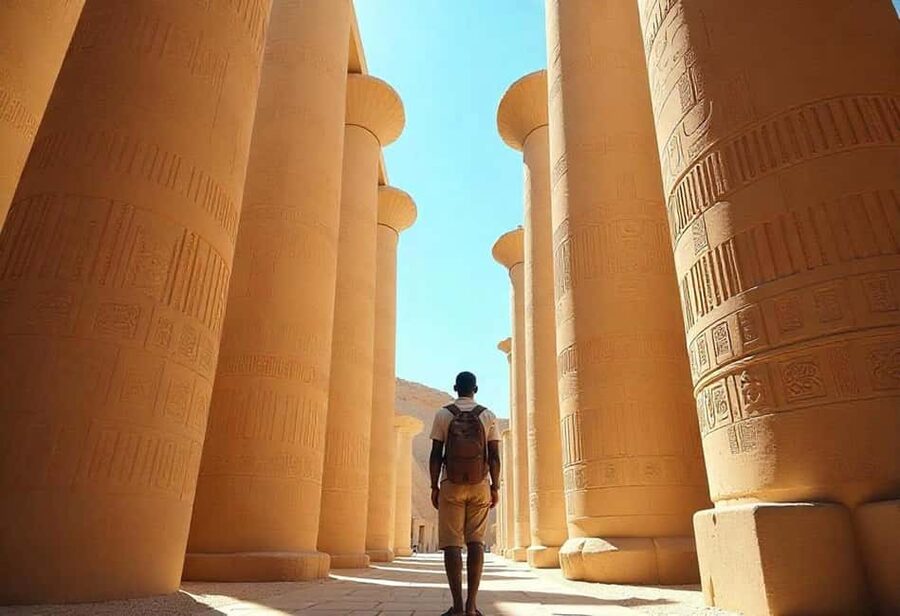
- Karnak is the grand opener: Its immense columns and vast religious complex provide the day’s biggest sense of scale.
- You visit three Valley of the Kings tombs: Extra tombs, including Tutankhamun’s, are not part of the listed entrance package.
- Guiding is a major strength: Ragab, Aziz, Azizi, and Said are praised for clear explanations, patience, humor, and flexibility.
- Pack light and dress for walking: Bring identification, cash, sunglasses, comfortable shoes, and light clothing. Large bags are not allowed.
The long road from Marsa Alam to Luxor
The first thing to understand is geography. Luxor is not just around the corner from Marsa Alam, so this day trip asks a lot of you before the monuments even appear. Pickup may happen at 2:15 or 2:55 in the morning, with the exact time sent after you provide your hotel room number to FTS Travels.
The vehicle is air-conditioned, and drinks are provided during the journey. Some cars have blackout curtains, a useful touch when you are trying to sleep after leaving before dawn. I would still bring a small travel pillow if you have one. One useful suggestion from the experience is to provide bed pillows in the car, which tells you something about the length of the ride.
The route can include a drive through Safaga and several checkpoints. The published maps may make the journey look closer to four hours, but actual reports put it at more than five hours each way. Build your expectations around a long day in transit, not a quick transfer followed by sightseeing.
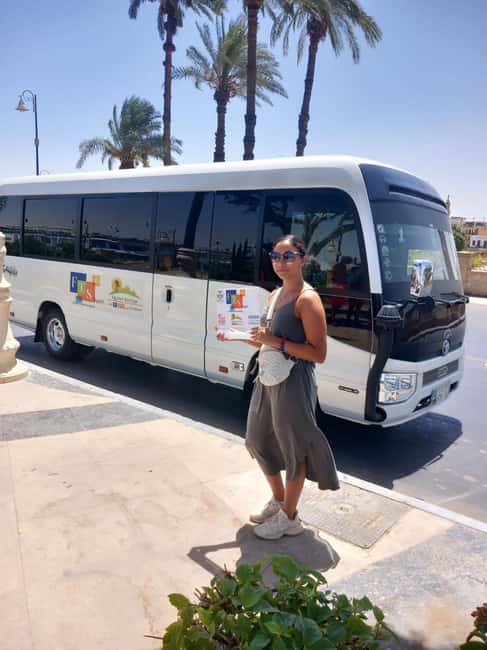
The private format helps. You are not waiting for a full coach to fill, and the car can stop as needed within the tour’s arrangements. The driver may be separate from the English-speaking guide, with the guide joining you in Luxor. One important practical point is that the driver may not speak English, so direct questions about ancient sites are best saved for your guide.
A few more Marsa Alam outings to price up
- Marsa Alam: Ancient Cairo & Giza Pyramids Day Trip by Plane
★ 4.3 · 106 reviews - Luxor Day Trip from Hurghada Small Group & Tutankhamun Tomb
★ 4.8 · 5,366 reviews - From Aswan: Abu Simbel Temple Day Trip with Hotel Pickup
★ 4.4 · 2,807 reviews
Karnak Temple and the Great Hypostyle Hall
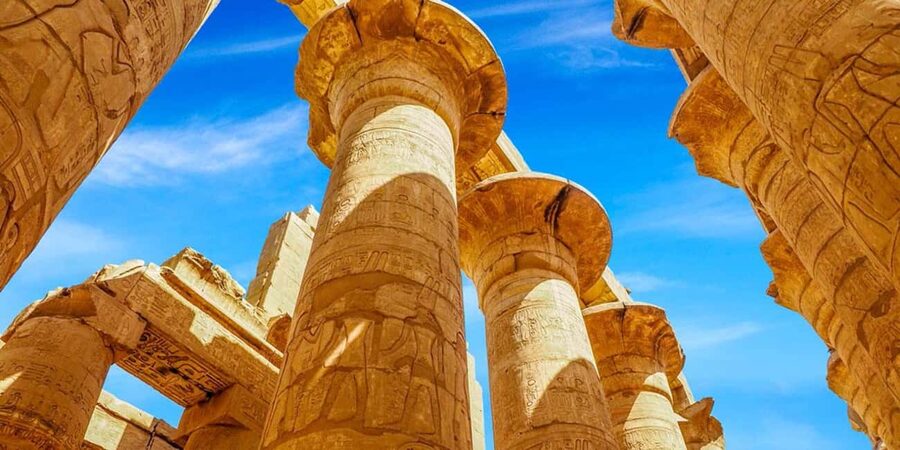
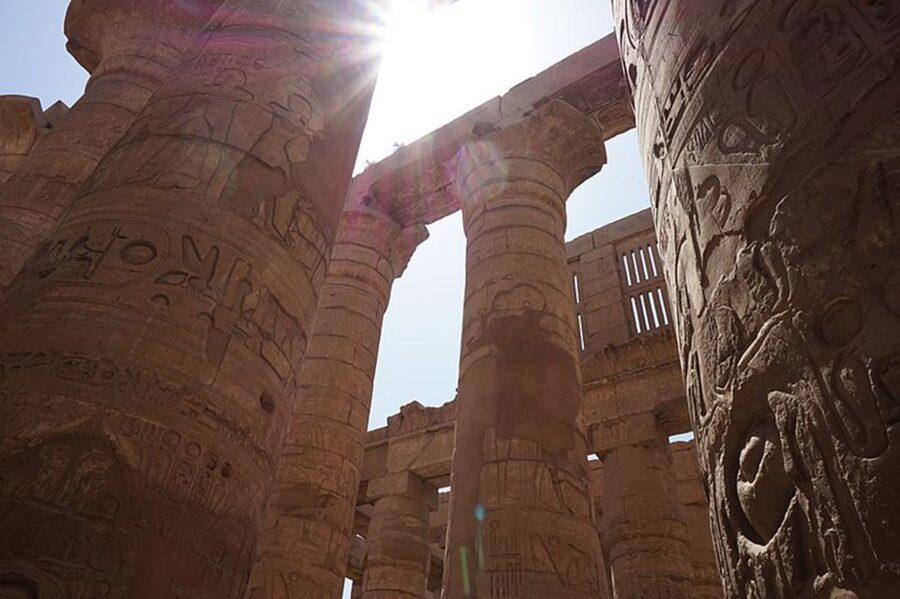
Karnak is a strong first stop because it gives you scale before detail. The complex is spread across broad grounds, with statues, gateways, courtyards, and long lines of columns. The most famous section is the Great Hypostyle Hall, described here as the largest room in any religious building in the world.
That claim sounds abstract until you walk among the columns. The stone forest changes your sense of size. Look up at the carved surfaces, then look down the rows and notice how the design directs your eye toward the sacred center. Your guide should help explain why statues were placed where they were and how the different parts of the complex served religious purposes.
This is where a good guide earns the fee. Guides named Aziz, Azizi, Ragab, and Said receive especially warm praise for explaining ancient Egypt in a clear, lively way. Ragab is described as patient and easy to follow, while Aziz is praised for answering questions and changing the pace to suit the group.
Karnak can also be tiring. You will walk across open ground, and the early start may catch up with you by this point. Wear shoes that can handle uneven surfaces and bring sunglasses. Give yourself time to look, but do not feel you must study every carved wall. The complex is too large for that on a packed day.
Lunch beside the Nile
After Karnak, lunch is served at a fine dining restaurant on the banks of the Nile. Lunch is included in the $375 price, but drinks at the restaurant are not, so keep some Egyptian cash with you.
The riverside setting offers a useful pause between major monuments. You can sit down, eat, and recover before the afternoon visits. It also breaks up the day so the itinerary does not become one long run of temples and tombs.
The included meal adds value, particularly because arranging a separate restaurant stop would be awkward on such a tight schedule. Just remember that included lunch does not mean every drink is covered. Bottled water and other drinks in the car are included, but restaurant beverages are a separate expense.
The Colossi of Memnon
The Colossi of Memnon are a short, striking stop. These two statues of Pharaoh Amenhotep III rise about 60 feet above the ground, making them easy to appreciate even when you have limited time.
The statues are damaged, but that is part of their appeal. They are not polished museum objects. You are looking at huge surviving figures that once marked the entrance to a much larger temple complex. Your guide can place them in the setting of Amenhotep III’s reign and explain what the pair represented.
This stop is less physically demanding than Karnak or the Valley of the Kings. It is a good chance to stretch your legs, take photographs, and reset before entering the tombs. Do not expect a long visit. The appeal is the immediate impact of the statues rather than a large collection of things to inspect.
Same base, a completely different sort of day:
- Marsa Alam: Sea and Desert Horse Riding Tour
★ 4.8 · 344 reviews - Marsa Alam: Royal Seascope Submarine Cruise with Pickup
★ 4.2 · 241 reviews - Marsa Alam: Elite vip Turtle bay snorkeling with BBQ Lunch
★ 4.4 · 198 reviews - Nefertari Cruise Marsa alam with lunch/dinner & hotel pickup
★ 4.5 · 158 reviews
Three tombs in the Valley of the Kings
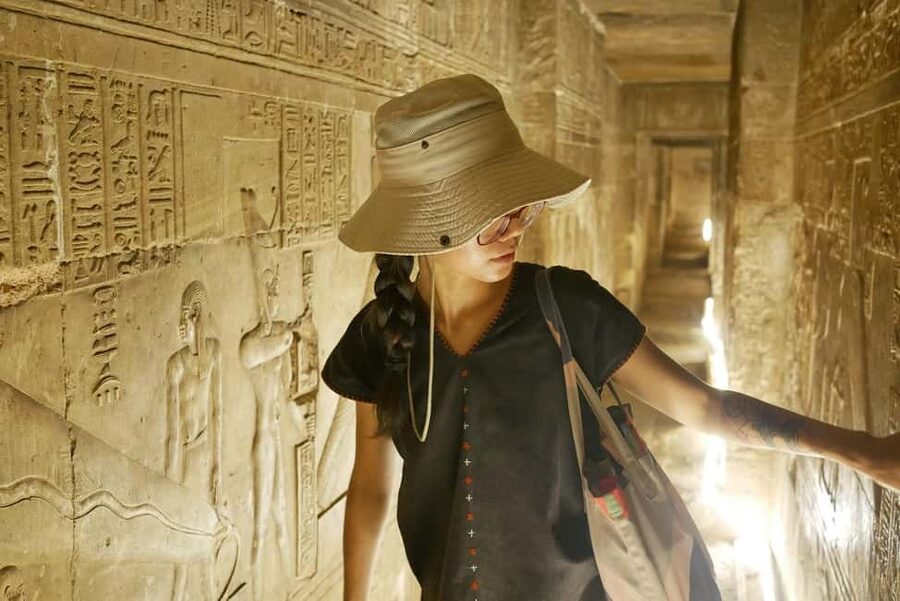
The Valley of the Kings is where the day becomes more intimate. Instead of towering columns and open courtyards, you enter tombs cut into the surrounding mountains. The decoration moves indoors, with painted scenes and symbols intended to guide pharaohs into the afterlife.
Your ticket includes visits to three tombs. The exact tombs can depend on the site arrangements, so ask your guide which ones are open and which are included before you start. The standard visit does not include every tomb in the valley.
Tutankhamun’s tomb requires an extra payment. If the famous young pharaoh is a priority for you, the additional ticket may be worth it. The tomb is famous, but its fame can also create unrealistic expectations. The main value is seeing the burial place connected to one of Egypt’s best-known discoveries, not expecting the full collection of treasures associated with the king.
Tomb visits involve steps, narrow passages, and time spent standing or walking. Comfortable clothing matters here, as does carrying only a small amount. Large bags are not allowed, and there is no reason to burden yourself with them on this trip.
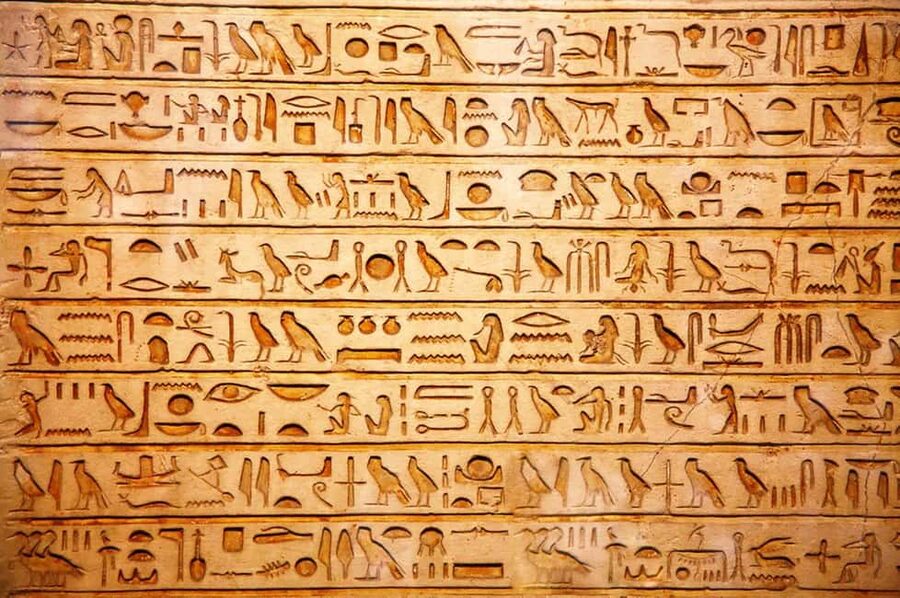
Your guide’s role is especially useful in the Valley of the Kings. Painted figures can look like a stream of similar symbols if you do not know what you are seeing. A guide can point out the purpose of the scenes, explain the burial beliefs, and help you notice how each tomb differs.
Families can manage this stop, but you need realistic expectations. A report from a family with children under seven described the outing as possible, helped by clean toilet stops along the route. The physical strain remains real, especially after the early pickup and long drive.
Hatshepsut’s temple beneath the cliffs
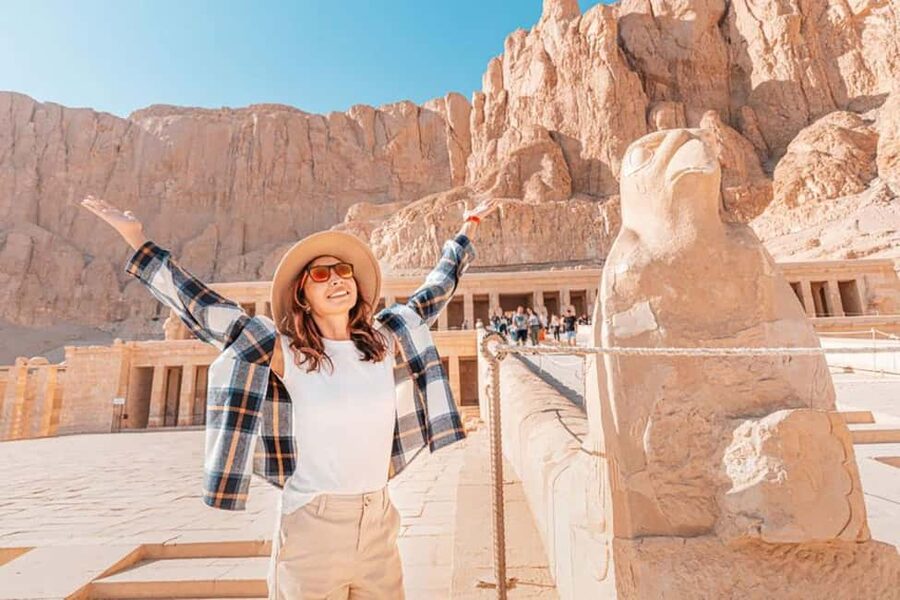
The Temple of Hatshepsut is one of the most memorable stops because of its setting. Its terraces rise against sandstone cliffs, with broad horizontal lines that contrast sharply with the nearby desert.
Hatshepsut’s story also gives your guide an opportunity to explain the complexity of Egyptian rule. She was a woman who ruled as pharaoh, and the temple reflects her effort to present legitimate royal authority. This is more interesting than treating the site as a simple collection of columns and statues.
Walk slowly enough to notice the way the temple fits into the cliffs. The setting does much of the visual work, but the carved reliefs and formal terraces reward explanation. The heat and exposed paths can make this another tiring stop, so carry water for the walking portions and keep your sunglasses handy.
The visit follows the Valley of the Kings, which is sensible from a route point of view but demanding for your body. By then, you may have been awake for many hours. A flexible guide such as Aziz or Ragab can make a difference by giving you time to look around after the main explanation instead of rushing you through every detail.
What the private format really gives you
The word private can sound like marketing shorthand, but here it has practical value. You get roundtrip transportation from your Marsa Alam accommodation, a private English-speaking guide, and a car rather than a large group coach.
The guide may join you after the road transfer in Luxor, while another driver handles the journey from Marsa Alam. That arrangement is worth knowing in advance. It does not reduce the value of the archaeological guiding, but it means the person driving you may not be the person explaining the monuments.
The best guides named in the experience are praised for much more than facts. Ragab is described as professional and attentive. Aziz is praised for humor, patience, and a good sense of pace. Said is credited with making ancient Egypt simple and enjoyable. Those qualities matter after a five-hour drive, when your attention may be fading.
The car also lets you arrive before some large tour buses. That can make the first visits feel calmer, though it does not guarantee empty monuments. Your guide can adapt the explanations to your interests and leave you time for photographs, which is harder in a large fixed group.
Is $375 a fair price?
At $375 per person, this is not a budget transfer. It is a full private day with transport from Marsa Alam, an English-speaking guide, entrance fees for the listed sights, lunch, and drinks in the vehicle.
The value depends on what you would otherwise need to arrange. A separate private car, driver, guide, tickets, lunch, and a return transfer would take time and coordination. Here, those main pieces are bundled together, and the private arrangement can help you see the major Luxor sights without changing hotels.
The price makes more sense for two or more people sharing the experience, especially if you value a private pace and direct guiding. Solo visitors need to weigh the cost against the fact that much of the day is spent on the road. You are paying not only for the monuments but also for the convenience of reaching them from the Red Sea coast in one day.
Lunch is included, but restaurant drinks, personal spending, the optional Felucca ride, and any extra tomb ticket are not. The FTS scarf is available only if you select that add-on. Bring cash for those possible extras.
Who should book this Luxor day trip?
I would recommend it to you if Luxor is high on your Egypt wish list and you are staying in Marsa Alam without enough time for an overnight visit. It is also a good match if you prefer a private guide, want the main ancient sites in one outing, and accept that the drive will dominate the day.
Families can do it, particularly with a patient guide and sensible expectations. The clean toilet stops and private pace help, but the early departure and nearly 19-hour day can be hard on young children.
I would think twice if you dislike long drives, need a relaxed schedule, or want to explore Luxor’s sights at length. The itinerary covers the major highlights, but it does so at speed. You will see a lot, yet you will not have endless time at each monument.
To prepare, wear comfortable shoes and light, comfortable clothing. Take sunglasses, cash, and your passport or ID card. Leave large luggage at your accommodation. Once you arrive at the hotel, send your room number to the local partner by email and confirm the pickup time the day before. A delay of up to 10 minutes is possible.
Should you book it?
Book this trip if you see the long road as the price of reaching Egypt’s greatest ancient sights from Marsa Alam. The strongest reasons are the private vehicle, included major entrance fees, and guides who can turn Karnak, the tombs, and Hatshepsut’s temple into connected stories.
Skip it if five hours in a car each way sounds miserable. This is a physically demanding day, but for many people the chance to stand beneath Karnak’s columns and enter the Valley of the Kings is worth the alarm clock, the checkpoints, and the tired ride home.
FAQ
How much does the private Luxor day trip from Marsa Alam cost?
The listed price is $375 per person.
What is included in the tour price?
The price includes hotel transfers in an air-conditioned vehicle, a private English-speaking guide, drinks in the vehicle, entrance fees for the listed sights, and lunch.
Are drinks included at the restaurant?
No. Drinks in the vehicle are included, but drinks at the restaurant are not.
Which sights are included?
The itinerary includes Karnak Temple, the Colossi of Memnon, three tombs in the Valley of the Kings, and the Temple of Hatshepsut.
Is Tutankhamun’s tomb included?
No. Tutankhamun’s tomb requires an extra payment.
What languages are available?
The listed tour languages are English, German, and Arabic.
What should I bring?
Bring your passport or ID card, comfortable shoes, sunglasses, comfortable clothes, and cash. Large bags and luggage are not allowed.
Newly listed around Marsa Alam
- Marsa Alam: Sunrise Horseback with Breakfast★ 4.3 · 18 reviews
- Marsa Alam: Pirates Premium Boat to turtle bay with lunch★ 4.7 · 16 reviews
- Marsa Alam: Sea and Desert Camel Riding Tour★ 4.4 · 89 reviews
- Marsa Alam Bedouin Nights: Jeep Safari, Dinner & Stargazing★ 4.8 · 59 reviews
- Marsa Alam: Ancient Cairo & Giza Pyramids Day Trip by Plane★ 4.3 · 106 reviews
- Marsa Alam: Nefertari Sunset/Morning Cruise & Snorkeling★ 4.0 · 85 reviews
- Dolphin House Samadai Reef Boat Snorkeling Trip from Marsa Alam★ 4.5 · 67 reviews
- Marsa Mubarak snorkeling with dugong and turtles – marsaalam★ 4.5 · 88 reviews
Marsa Alam Tours, compared.


Elite vip Turtle bay snorkeling with BBQ Lunch
Read our review →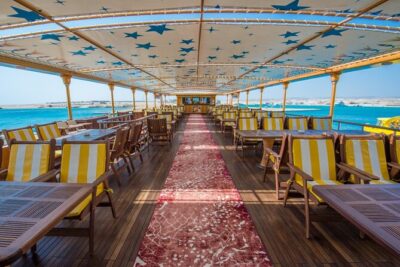
Nefertari Cruise Marsa alam with lunch/dinner & hotel pickup
Read our review →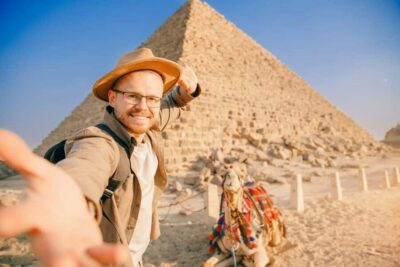
Ancient Cairo & Giza Pyramids Day Trip by Plane
Read our review →

Marsa Mubarak snorkeling with dugong and turtles – marsaalam
Read our review →
Browse the lists this tour appears in